
Understanding The Wheel of Fortune in Life Cycles and Decision Making
The Wheel of Fortune tarot card embodies the cyclical nature of life, emphasizing turning points, timing, and the interplay between fate and personal responsibility. This article explores how to interpret the Wheel of Fortune across different contexts such as love, career, money, advice, challenges, personality, outcomes, and spiritual reflections. Using the traditional Rider-Waite-Smith imagery and symbolism, readers learn to navigate the card’s meaning in both upright and reversed positions. By anchoring interpretations to the card’s visual elements and understanding its dynamic energy, learners gain practical methods for integrating this powerful archetype into their tarot practice and life decision-making.
Cards explored in this article
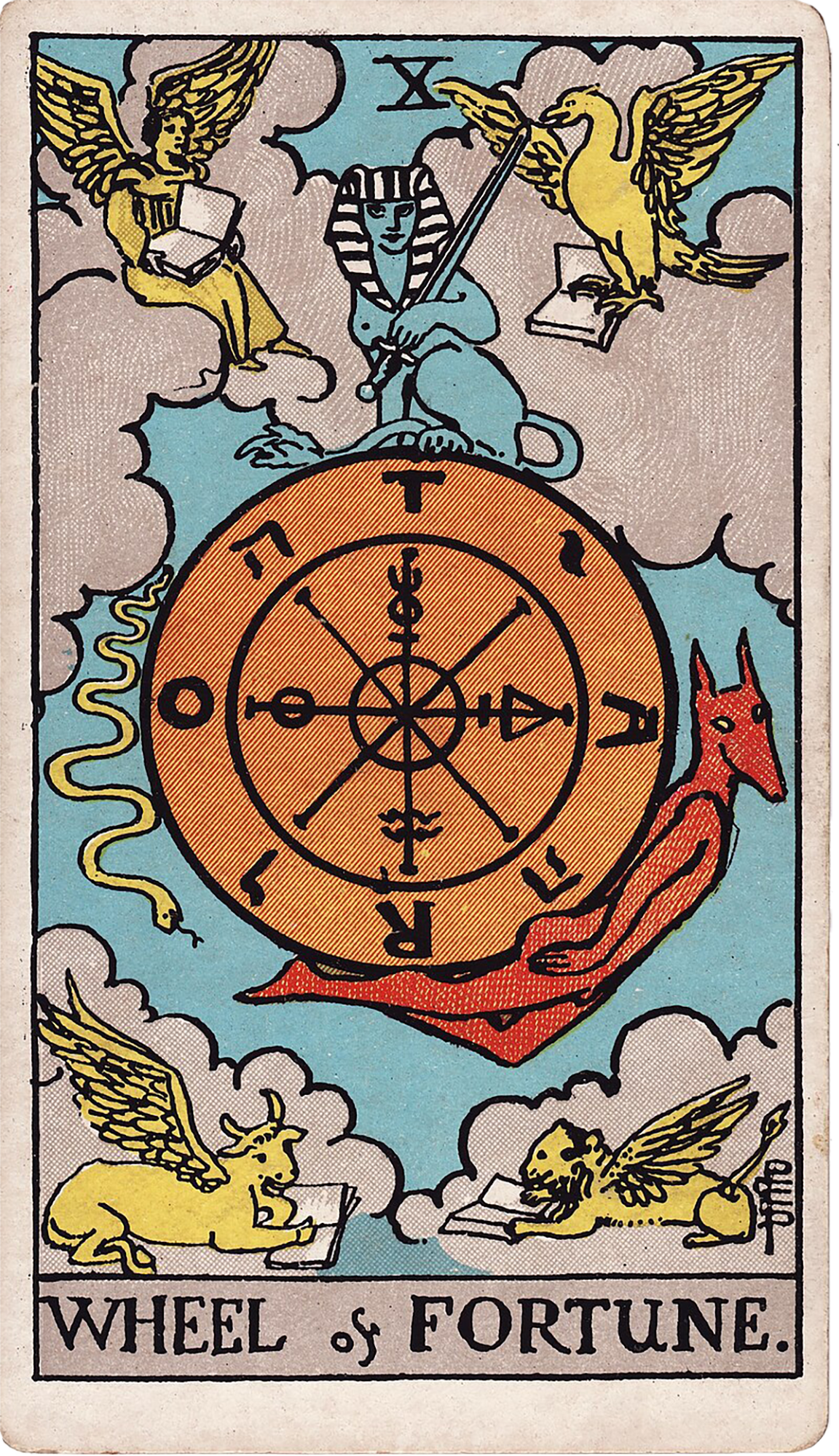 Wheel of Fortune
Introduction to the Wheel of Fortune and its Symbolism
The Wheel of Fortune is one of the Major Arcana cards, rich with symbolism that illustrates the cycles of life and the concept of destiny entwined with free will. The Rider-Waite-Smith version depicts a large wheel surrounded by symbols of the four evangelists—angel, eagle, lion, and bull—representing the fixed signs of the zodiac and suggesting stability within movement. Inside the wheel, letters spell out T-A-R-O and the alchemical symbols for mercury, sulfur, water, and salt emphasize transformation and the elements of life. This card invites the reader to acknowledge that life is a series of rises and falls, and that adaptability and timing are crucial. The presence of sphinx and snake figures further emphasize wisdom, challenges, and the cyclical nature of karma.
Interpreting the Wheel of Fortune Upright in Different Contexts
When the Wheel of Fortune appears upright, it signals a turning point or an important cycle beginning or ending. It encourages engaging with the present moment and working with circumstances as they are, rather than wishing for control over all variables. In love, the upright Wheel of Fortune may indicate a significant shift in relationship dynamics, such as a new phase of growth or an unexpected reunion. It encourages openness to change and suggests that timing is critical—actions taken now can influence the course of the relationship. For career readings, this card often marks a turning point—perhaps a new opportunity, a change in direction, or the culmination of efforts leading to advancement. The card advises adapting to new conditions and being ready to seize opportunities as they arise. In financial contexts, the upright Wheel of Fortune can signify fluctuations in money flow but also points to a moment where conscious choices and good timing can balance risk and reward. It does not promise effortless gain but suggests that awareness and adaptability will bring progress. When drawing this card as advice, the emphasis is on embracing change and recognizing where your actions can influence outcomes. It urges not to wait for perfect certainty but to act proportionately and with awareness of the wider cycles at play. As a challenge, the upright card might highlight the need to break free from stagnation by identifying a pivotal moment and responding appropriately rather than resisting change. If representing a person, the upright Wheel of Fortune describes someone who is adaptable, aware of life’s rhythms, and able to navigate change with grace. For outcome readings, this card promises movement—situations rarely stay static when the Wheel appears. The result will likely involve transformation, with consequences tied to how well you work with the moment. Spiritually, the upright Wheel of Fortune invites reflection on karma, destiny, and the lessons embedded in life’s cycles. It encourages surrender to the flow without resignation, balancing acceptance with conscious choice.
Understanding the Wheel of Fortune Reversed in Various Life Areas
The reversed Wheel of Fortune draws attention to resistance against the natural flow of change or recurring patterns that are difficult to break. It may suggest poor timing, blaming external forces, or internal struggles to accept responsibility. In love, the reversal might highlight repeated relationship difficulties or reluctance to move forward. It warns against blaming fate and encourages introspection to identify where change is blocked. Career-wise, a reversed Wheel can indicate delays, setbacks, or cycles of frustration. The key message is to avoid frustration by recognizing patterns and adjusting expectations or strategies rather than waiting passively. Regarding money, the reversed position may signal financial ups and downs caused by repeating mistakes or poor timing. It urges a review of spending habits and financial planning to overcome negative cycles. As advice, the reversed card encourages self-examination regarding resistance to change and suggests consciously breaking old patterns or beliefs that hinder progress. As a challenge, it points to difficulty in recognizing the right moment to act or difficulty accepting change, which may result in feeling stuck. Representing a person, the reversed Wheel of Fortune may describe someone struggling with acceptance or caught in repetitive behaviors that limit growth. For outcomes, reversal implies delays or complications, but not necessarily failure. It indicates that the process may be internal or psychological, requiring patience and diligence. Spiritually, reversal invites deeper examination of karmic patterns and inner resistance. It suggests the need for healing and transformation before the next cycle can begin.
Techniques for Reading the Wheel of Fortune Card Effectively
Reading the Wheel of Fortune effectively involves several key techniques: 1. Visual Anchoring: Focus on the card’s imagery—the wheel, the four creatures, the sphinx, and the snake. Each element offers clues about stability, change, wisdom, and challenge. 2. Contextualization: Always anchor interpretation by the question or reading context. The card’s meaning shifts significantly in love versus career or spiritual reflection. 3. Position Considerations: Note whether the card is upright or reversed, as the energy and message will differ considerably. 4. Timing Awareness: The Wheel often relates to timing and cycles. Ask if the querent is at a beginning, middle, or end phase of a situation. 5. Holistic Approach: Combine the card’s message with the querent’s narrative and intuition. The Wheel encourages balance between fate and personal agency. 6. Questioning: When the Wheel appears, ask what cycles are ending or beginning, where adaptation is needed, and what choice or boundary could facilitate progress. 7. Avoiding Fatalism: The card does not dictate fate as fixed but highlights opportunities to consciously participate in change. Applying these techniques helps avoid common mistakes such as assuming the card predicts inevitable good or bad luck, ignoring the querent’s role, or reading the card in isolation from the question.
Common Mistakes and How to Avoid Them with the Wheel of Fortune
Several common misinterpretations can arise with the Wheel of Fortune card: - Assuming the card guarantees sudden good fortune or a lucky break. The card emphasizes cycles and timing, not guaranteed outcomes. - Viewing the card as purely fate-driven and neglecting the querent’s agency in decisions and response. - Ignoring the card’s reversal nuance which can reveal internal blocks or necessary delays rather than disaster. - Reading the card without considering its position in the spread or the question which can lead to generic or inaccurate interpretations. - Overlooking the symbolic elements on the card that provide rich insight into the card’s broader meaning. To avoid these, always connect the card’s symbolism to the querent’s situation, consider upright and reversed meanings, and use the card as a guide for engagement with life’s cycles rather than a fixed prediction.
Practical Example of a Wheel of Fortune Single-Card Reading
Consider a querent asking about their career and drawing the upright Wheel of Fortune. The reader notes the card’s symbolism: the wheel signifying cycles, the sphinx on top representing wisdom and balance, and the four creatures symbolizing stability amidst change. The interpretation focuses on a turning point in the career path. The querent is advised to recognize the opportunity presented now and to adapt to changes without trying to control every detail. The card suggests taking the next proportionate step rather than waiting for perfect certainty, using available resources wisely. If the card had been reversed, the reader would explore whether the querent is resisting necessary changes or caught in repeated career frustrations. The reading would shift toward identifying internal blocks and encouraging a change in mindset or approach. This example demonstrates how context, position, and symbolism combine to enhance understanding of the Wheel of Fortune.
Reflection and Integrating the Wheel of Fortune Lessons
The Wheel of Fortune invites readers and querents alike to reflect on their relationship with change, timing, and responsibility. It challenges us to balance acceptance of the cycles beyond our control with deliberate, conscious action where possible. Integration requires ongoing reflection: How do you respond to life’s inevitable ups and downs? Where could greater honesty or clearer boundaries move you forward? Are there repetitive patterns you need to recognize and transform? By using the Wheel of Fortune as a mirror of life’s cyclical nature, tarot learners can deepen their understanding of timing and adaptability, enriching both their readings and personal growth.
Practice questions
• What cycles in your life are currently turning, and how can you engage with them consciously?
• In what areas might you be resisting necessary change or clinging to familiar patterns?
• How do you balance accepting fate with taking responsibility for your choices?
• Where could clearer boundaries or more deliberate decisions help you move forward?
• What lessons does the symbolism of the Wheel of Fortune reveal about your current situation?
Comments
Sign in to comment.
Continue learning
Understanding the Synergy Between The Empress and The Emperor in Tarot Card Combinations
This article delves into the intricate synergy between The Empress and The Emperor cards in Tarot, focusing on how their combined energies modify and enrich readings across various...
Exploring The High Priestess in Career Relationships and Personal Growth
The High Priestess card in the tarot deck invites readers to explore intuition, hidden knowledge, and inner wisdom across various life contexts. This article examines how The High...
Using the Five Card Cross Tarot Spread to Navigate Career Changes with Confidence
The Five Card Cross Tarot Spread is a versatile and insightful tool for navigating career changes. This article guides learners through the method step-by-step using a practical ex...
Exploring The Hierophant in Modern Spiritual Practices and Personal Development
The Hierophant tarot card symbolizes structured wisdom, tradition, and the pursuit of knowledge through established systems. This article explores how The Hierophant’s upright and...
Unlocking Personal Ambition and Emotional Balance with The Chariot and Queen of Cups
The Chariot and Queen of Cups together represent a compelling combination of disciplined ambition and emotional maturity. This article guides learners through understanding how the...
Understanding The Tower in Tarot for Navigating Sudden Change and Crisis
The Tower card in Tarot symbolizes sudden, often disruptive change that destroys false foundations and compels honest reassessment. This article provides a comprehensive exploratio...
Understanding The Hanged Man in Personal Sacrifice and Spiritual Growth
The Hanged Man tarot card embodies the themes of intentional pause, surrender, and gaining new perspectives that foster personal sacrifice and spiritual growth. In this article, we...
Discovering The Hermit in Meditation and Self Reflection Practices
The Hermit tarot card, a symbol of introspection and deliberate solitude, offers profound lessons for meditation and self-reflection practices. This article unpacks its upright and...
Unlocking Emotional Balance with The Lovers and Temperance in Tarot Combinations
This article explores the dynamic interplay between The Lovers and Temperance cards in Tarot readings, focusing on how their combination unlocks emotional balance and integration....
Understanding the Court Cards of Pentacles for Practical Wisdom and Grounded Ambition
The Court Cards of Pentacles—Page, Knight, Queen, and King—offer a rich framework for understanding practical wisdom, grounded ambition, and stewardship of material resources. Anch...