
Understanding The Wheel of Fortune in Personal Growth and Life Cycles
This article provides an in-depth exploration of the Wheel of Fortune Tarot card as a symbol of turning points, cycles, and change. Focusing on its upright and reversed positions, it unpacks how the card's themes of timing, adaptation, and responsibility manifest across different life contexts such as love, career, money, and spiritual growth. The article guides learners to apply practical reading techniques anchored in Rider-Waite-Smith symbolism, avoid common interpretive pitfalls, and deepen their understanding of the card’s nuanced message. Through single-card readings, readers learn how to recognize the Wheel as an invitation to conscious engagement with life's inevitable shifts rather than passive fate.
Cards explored in this article
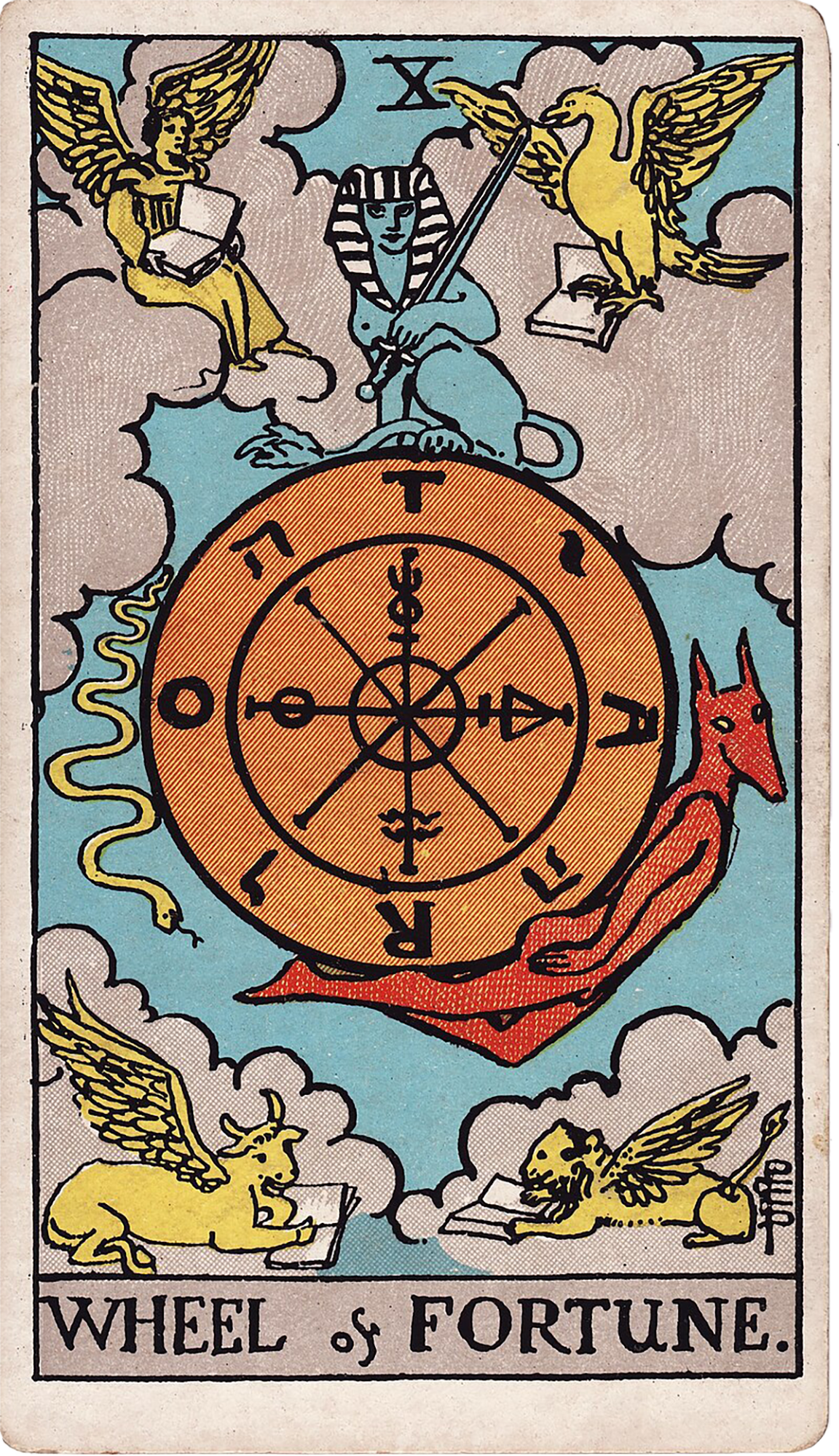 Wheel of Fortune
Introduction to the Wheel of Fortune in Tarot
The Wheel of Fortune card in the Tarot deck is a powerful emblem of life's cyclical nature, change, and the interplay of fate and free will. Traditionally depicted in the Rider-Waite-Smith deck with a large wheel surrounded by symbolic figures—such as the sphinx, the snake, and the four evangelists—this card invites a deeper understanding of timing, fortune, and the dynamics that shape personal growth and life cycles. The card’s upright position suggests a turning point or opportunity to adapt, while its reversal highlights resistance or distortion of these energies. By studying the specific imagery and symbolism on the Wheel of Fortune card, readers can better grasp the card’s lessons and apply them effectively across various contexts.
The Upright Wheel of Fortune Meaning and Symbolism
When the Wheel of Fortune appears upright, it signals a moment where external circumstances are shifting, presenting either a challenge or an opportunity. The card does not promise easy success or control but emphasizes the importance of timing, adaptability, and working constructively with current realities. The central wheel in the card’s imagery represents cyclical change—seasons, life phases, or karmic cycles—reminding us that events are often beyond our control yet still influenceable through conscious choices. The sphinx sitting atop the wheel symbolizes wisdom and balance, encouraging careful deliberation during transitions. Upright, the card asks where clearer boundaries, honesty, or a deliberate choice may advance the situation rather than passively waiting for fate to unfold.
The Reversed Wheel of Fortune Meaning and Symbolism
In reversed position, the Wheel of Fortune suggests blockages, delays, or internalized resistance to change. Unlike a simple 'bad luck' warning, the reversed card points to repeated patterns, poor timing, or an exaggerated expression of the card’s themes. The wheel may feel stalled or spinning in an unproductive cycle, and the reading invites reflection on where personal responsibility is being bypassed or distorted. This position can also indicate a psychological or private process of recognizing an old pattern but not yet fully letting it go. The reversal highlights the need to identify whether resistance, recovery, excess, or a temporary pause characterizes the situation, often requiring careful attention to surrounding cards for clarity.
Applying the Wheel of Fortune to Love and Relationships
In love readings, the Wheel of Fortune signals a turning point in relational dynamics. Upright, it encourages embracing change—perhaps a new phase of commitment, a shift in understanding, or the arrival of unexpected developments. It advises adapting with honesty and conscious choice rather than assumption or resistance. For example, a couple may face life changes that require renegotiating boundaries or expectations, and the card suggests working with these evolving circumstances constructively. Reversed, the Wheel may highlight repeating unhealthy patterns, delays in emotional growth, or blaming external factors for relationship challenges. It prompts the querent to ask where they may be resisting necessary change or avoiding deeper honesty. The image of the wheel turning yet stalled suggests the relationship cycle is stuck and requires conscious intervention to move forward.
The Wheel of Fortune’s Role in Career and Professional Life
Career contexts often involve cycles of opportunity, challenge, and transformation, which the Wheel of Fortune exemplifies vividly. Upright, the card invites awareness of timing and encourages taking the next proportionate step with available resources. It may indicate a visible turning point, such as a promotion, job change, or the completion of a significant project phase. The key is not forcing control but aligning with the natural flow of circumstances, as symbolized by the wheel’s constant movement. When reversed, the card suggests delays, resistance to change in career direction, or repeated professional setbacks. This could manifest as reluctance to leave a comfort zone or blaming external 'fate' for failures rather than taking actionable responsibility. The reversal calls for reflection on internal blocks affecting career progress and a reconsideration of one's adaptability and openness to change.
Interpreting the Wheel of Fortune for Money and Finances
Financial readings involving the Wheel of Fortune focus on cycles of gain and loss, risk and reward, and the timing of investments or expenditures. Upright, the card advises working prudently with current conditions, recognizing when a financial turning point has arrived. It cautions against waiting for perfect certainty and encourages taking deliberate, measured steps aligned with visible opportunities. Reversed, the card warns of repeating financial mistakes, poor timing, or a tendency to externalize blame for monetary difficulties. The wheel’s stalled motion reflects a need to reevaluate spending habits, investment decisions, or saving patterns. It encourages the querent to identify where responsible choices can break a negative cycle and regain control within changing circumstances.
Using the Wheel of Fortune as Advice and Challenge
As advice, the Wheel of Fortune urges embracing change with flexibility and awareness of timing. It challenges the reader to move beyond passivity and engage with life’s natural rhythms through deliberate decisions and honest boundaries. The imagery suggests that wisdom lies in balancing acceptance of uncontrollable forces with personal responsibility. As a challenge, the card may highlight areas where resistance to change causes stagnation. It invites identifying which patterns or beliefs keep the wheel from turning smoothly and calls for reassessment. Practically, this might mean reassessing expectations, adopting new perspectives, or taking incremental steps to break unproductive cycles. The challenge is to navigate uncertainty without fear or blame.
The Wheel of Fortune as a Person in the Spread
When representing a person, the Wheel of Fortune characterizes someone who embodies change, unpredictability, or pivotal influence in the querent’s life. Upright, this person might be a catalyst for growth—someone who brings new opportunities, challenges, or turning points. They may embody wisdom and adaptability, encouraging others to embrace life’s cycles. Reversed, the figure may symbolize someone resistant to change or stuck in repetitive patterns, possibly influencing the querent’s life toward delay or confusion. Alternatively, this person could be undergoing internal transformation but not yet outwardly manifesting it. Understanding this figure’s role requires attention to the broader context of the reading.
Outcome and Spiritual Reflection with the Wheel of Fortune
As an outcome card, the upright Wheel of Fortune suggests that a turning point will bring new circumstances requiring active engagement. Success depends on adaptability, willingness to learn from the moment, and recognizing which next step is proportionate rather than forcing outcomes. The outcome is not predetermined but shaped by the querent’s conscious choices within the cycle. Spiritually, the card invites reflection on life’s impermanence, the role of fate versus free will, and the wisdom of balanced acceptance. It encourages meditating on the cyclical nature of personal growth, recognizing that setbacks and advances are parts of larger life rhythms. The symbolism reminds learners that spiritual progress involves navigating change with honesty, timing, and a sense of surrender balanced by responsibility.
Practical Techniques and Common Mistakes in Reading the Wheel of Fortune
To interpret the Wheel of Fortune effectively, start by closely observing its Rider-Waite-Smith imagery: the central wheel with its rotating spokes, the sphinx holding a sword (wisdom and balance), the descending snake (transformation or chaos), and the four winged creatures representing fixed elements and knowledge. This symbolism anchors the card’s meaning in cycles, timing, and the interplay of fate and free will. A common mistake is to treat the Wheel solely as a predictor of luck or external forces, neglecting the card’s emphasis on conscious choice and responsibility. Another error is to assume reversal means guaranteed misfortune; instead, reversed Wheel of Fortune encourages identifying where energies are blocked or distorted. When reading the card, ask: What turning point is visible now? Where might deliberate choice or clearer boundaries influence the situation? What patterns need recognition or release? Use these questions to anchor the message within the querent’s specific context rather than relying on generic fortune-telling. Finally, remember that the Wheel’s message is dynamic; it invites ongoing engagement with life’s cycles rather than a fixed prediction.
Practice questions
• Where in my life am I experiencing a turning point or cyclical change?
• How am I adapting to changes that feel outside my control?
• In what ways might I be resisting necessary transformation or repeating old patterns?
• What deliberate choices can I make to work constructively with current circumstances?
• How does the symbolism of the Wheel of Fortune inspire me to balance acceptance and responsibility?
• Where could clearer boundaries or deeper honesty move my situation forward?
• What timing considerations should I be mindful of in my decisions?
Comments
Sign in to comment.
Continue learning
Understanding the Synergy Between The Empress and The Emperor in Tarot Card Combinations
This article delves into the intricate synergy between The Empress and The Emperor cards in Tarot, focusing on how their combined energies modify and enrich readings across various...
Exploring The High Priestess in Career Relationships and Personal Growth
The High Priestess card in the tarot deck invites readers to explore intuition, hidden knowledge, and inner wisdom across various life contexts. This article examines how The High...
Using the Five Card Cross Tarot Spread to Navigate Career Changes with Confidence
The Five Card Cross Tarot Spread is a versatile and insightful tool for navigating career changes. This article guides learners through the method step-by-step using a practical ex...
Exploring The Hierophant in Modern Spiritual Practices and Personal Development
The Hierophant tarot card symbolizes structured wisdom, tradition, and the pursuit of knowledge through established systems. This article explores how The Hierophant’s upright and...
Unlocking Personal Ambition and Emotional Balance with The Chariot and Queen of Cups
The Chariot and Queen of Cups together represent a compelling combination of disciplined ambition and emotional maturity. This article guides learners through understanding how the...
Understanding The Tower in Tarot for Navigating Sudden Change and Crisis
The Tower card in Tarot symbolizes sudden, often disruptive change that destroys false foundations and compels honest reassessment. This article provides a comprehensive exploratio...
Understanding The Hanged Man in Personal Sacrifice and Spiritual Growth
The Hanged Man tarot card embodies the themes of intentional pause, surrender, and gaining new perspectives that foster personal sacrifice and spiritual growth. In this article, we...
Discovering The Hermit in Meditation and Self Reflection Practices
The Hermit tarot card, a symbol of introspection and deliberate solitude, offers profound lessons for meditation and self-reflection practices. This article unpacks its upright and...
Unlocking Emotional Balance with The Lovers and Temperance in Tarot Combinations
This article explores the dynamic interplay between The Lovers and Temperance cards in Tarot readings, focusing on how their combination unlocks emotional balance and integration....
Understanding the Court Cards of Pentacles for Practical Wisdom and Grounded Ambition
The Court Cards of Pentacles—Page, Knight, Queen, and King—offer a rich framework for understanding practical wisdom, grounded ambition, and stewardship of material resources. Anch...