
Understanding The Wheel of Fortune in Tarot for Embracing Change and Opportunity
The Wheel of Fortune tarot card symbolizes cycles, change, and the interplay of fate and free will. This article explores its upright and reversed meanings, focusing on how to interpret it in different contexts including love, career, and spirituality. By anchoring interpretations to the card’s classic Rider-Waite-Smith imagery and symbolism, readers learn practical techniques to navigate turning points, recognize timing, and avoid common pitfalls in tarot readings. Emphasizing the card’s lessons in adaptability and conscious choice, this guide helps learners apply the Wheel of Fortune’s wisdom for personal growth and decision-making.
Cards explored in this article
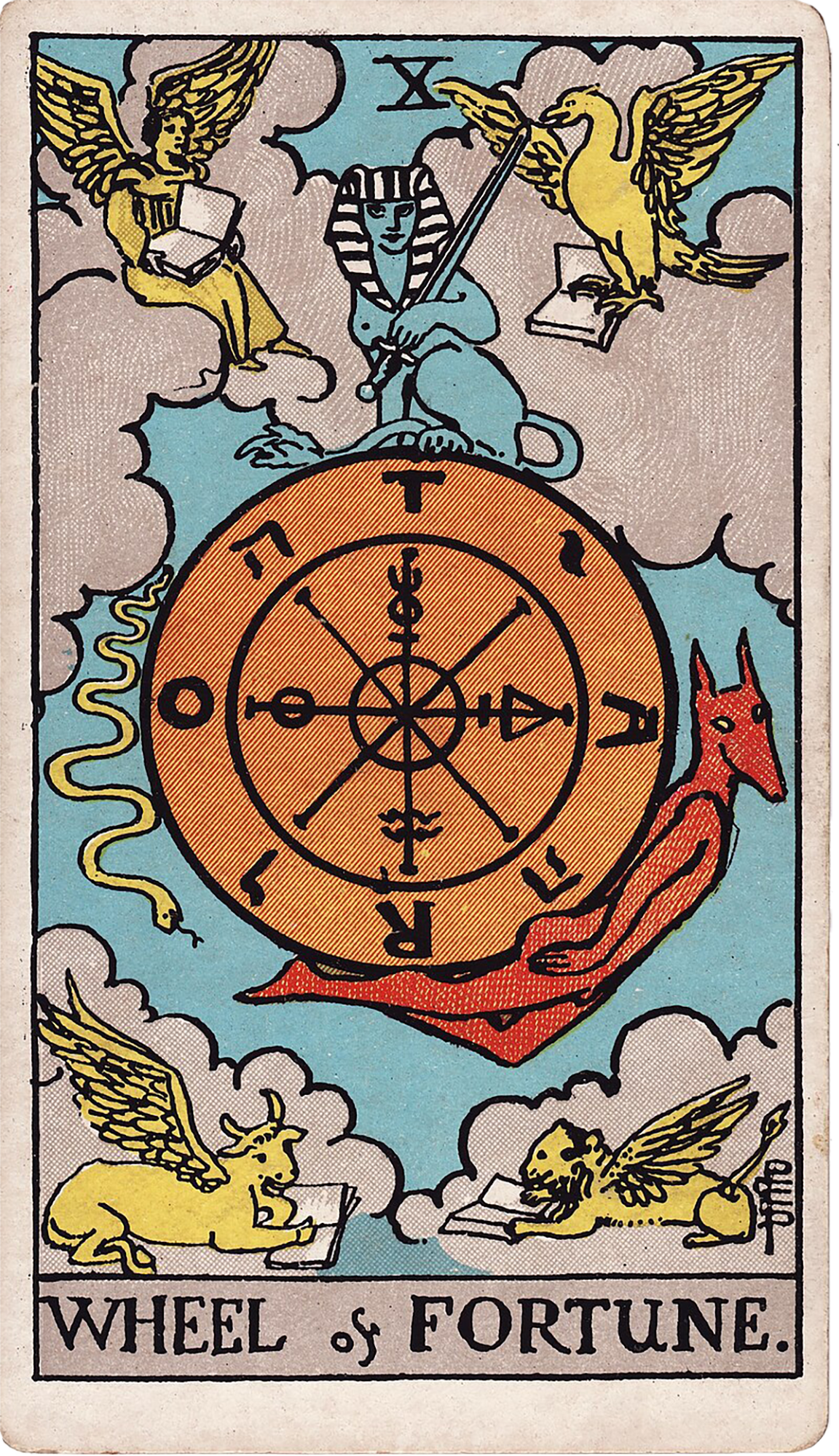 Wheel of Fortune
Introduction to the Wheel of Fortune Tarot Card
The Wheel of Fortune is one of the Major Arcana cards, traditionally numbered X (10). In the Rider-Waite-Smith deck, it depicts a large wheel revolving with symbolic creatures around it, representing the cyclical nature of life and the forces of fate and chance. This card highlights the concept that life is in constant motion, and change is both inevitable and essential. The Wheel’s imagery—often including figures like the sphinx, Anubis, and the four evangelists—invites the reader to consider the interplay between destiny and personal agency. Understanding this card is crucial for grasping how cycles and timing affect human experience.
Core Symbolism and Traditional Interpretation
The Wheel of Fortune’s central symbol is the turning wheel, signifying cycles of ups and downs, fortune, and fate. The four creatures in the corners—an angel, an eagle, a lion, and a bull—represent the fixed signs of the zodiac (Aquarius, Scorpio, Leo, Taurus), emphasizing stability amid change and the cosmic order. The sphinx atop the wheel symbolizes wisdom and the mysteries of fate, while Anubis below relates to transformation and the underworld. Upright, the card suggests a pivotal moment where the querent faces change and must navigate it consciously. Reversed, it warns of resistance to change, stagnation, or misalignment with the natural cycles. The card doesn’t promise ease but encourages adaptability and awareness.
Technique for Reading the Wheel of Fortune in Single-Card Spreads
When the Wheel of Fortune appears alone, its message centers on timing, change, and the dynamics of fate versus free will. Begin by observing the card’s imagery: note the direction of the wheel’s spin, the expressions of the figures, and the presence of symbolic elements like the letters on the wheel (T-A-R-O, or R-O-T-A). Then ask: What cycle is turning in the querent’s life? Which part of their situation is in flux? Because this card emphasizes process over outcome, encourage the querent to identify where deliberate action and acceptance meet. Upright, it invites movement forward with awareness; reversed, it signals blocks or internal resistance. Always consider the querent’s question and life context.
Interpreting The Wheel of Fortune Upright in Love Contexts
In love readings, the upright Wheel of Fortune indicates a significant turning point in relationships or emotional patterns. It may signal new opportunities for connection or a shift in how one approaches intimacy. This card encourages embracing change without trying to control every outcome, recognizing that relationships evolve in cycles. It invites asking where clearer boundaries or honest communication could advance the situation. For singles, the card may herald the arrival of a meaningful connection at the right time. For those in relationships, it suggests adapting to new phases, whether deepening commitment or reevaluating dynamics. The card reminds learners not to expect effortless love but to engage with its changes constructively.
The Wheel of Fortune Upright in Career and Money Readings
Career and financial interpretations of the upright Wheel of Fortune revolve around timing, opportunity, and adapting to shifts in circumstances. It may indicate that a project, job, or financial situation is at a pivotal moment where external forces align to bring change. Readers should emphasize working with available resources and recognizing when to take deliberate next steps rather than waiting for certainty. The card encourages letting go of rigid control and accepting that some aspects are beyond direct influence. This can be a prompt to seize new roles, investments, or strategies that align with the querent’s evolving path. It also cautions against blaming fate or procrastinating when timely action is required.
Understanding The Wheel of Fortune Reversed in Different Contexts
When reversed, the Wheel of Fortune draws attention to resistance to change, repeated negative patterns, or poor timing. In love, it might indicate cycles of unhealthy relationship dynamics or reluctance to move forward. In career or finance, reversal often signals delays, missed opportunities, or internal blocks preventing progress. It is not inherently negative but highlights that the positive qualities of adaptability and timing are currently inaccessible or distorted. The reversed card invites deeper self-reflection: where is the querent clinging to old patterns? How might blaming external forces mask personal responsibility? This perspective shifts the reading from predicting misfortune to identifying areas for conscious correction.
Applying The Wheel of Fortune as Advice and Challenge
As advice, the Wheel of Fortune urges acceptance of change and encourages the querent to work with the flow of life’s cycles rather than against them. It suggests vigilance about timing and readiness to act when the moment is right. The card prompts honest evaluation of which part of the situation needs clearer boundaries, deliberate choices, or deeper honesty. As a challenge, it may reveal fear of uncertainty, resistance to letting go, or blaming fate for difficulties. The key lesson is balancing acceptance with responsibility—recognizing what can be influenced and what must be surrendered. Practical techniques include journaling about recurring patterns and consciously choosing the next appropriate step instead of waiting passively.
Seeing The Wheel of Fortune as a Person or Outcome Card
When representing a person, the Wheel of Fortune often signifies someone who embodies change, adaptability, and unpredictability. This individual might bring new energy or opportunities but can also be inconsistent or challenging to pin down. As an outcome card, the Wheel indicates a turning point where circumstances are ripe for transformation. It suggests that the final result depends on the querent’s ability to respond consciously to changing dynamics rather than trying to force a fixed outcome. The outcome may not be fully predictable but will align with the natural cycles represented by the card, emphasizing growth through change.
Spiritual Reflection with The Wheel of Fortune
Spiritually, the Wheel of Fortune invites reflection on the nature of impermanence, karma, and the dance between destiny and free will. The card encourages learners to view life’s events as part of a larger, interconnected cycle and to cultivate equanimity in the face of ups and downs. It symbolizes the opportunity to break karmic cycles through conscious choice and awareness. Meditation on the card’s imagery—such as the winged creatures and the eternal wheel—can deepen understanding of cosmic order and personal transformation. This reflection aids in embracing life’s flow with wisdom and grace, recognizing that change is a catalyst for spiritual evolution.
Common Mistakes and Practical Tips for Readers
One common mistake in interpreting the Wheel of Fortune is assuming it guarantees good luck or a simple solution. Instead, it signals a turning point that requires active engagement and adaptability. Another error is ignoring the reversed meaning, which offers valuable insight into blocks and resistance rather than mere misfortune. Readers should avoid deterministic thinking and instead focus on cycles and timing as dynamic processes. Practically, always root interpretation in the card’s vivid imagery and the querent’s unique context. Asking probing questions such as ‘What cycle is ending or beginning here?’ or ‘Where can I take responsible action now?’ can deepen the reading. Encouraging journaling and follow-up readings can help track how the card’s lessons unfold over time.
Practice questions
• What cycles or turning points are currently influencing my life?
• Where am I resisting necessary changes or clinging to outdated patterns?
• How can I better recognize and work with timing in my decisions?
• In what areas can I balance acceptance of fate with taking personal responsibility?
• What lessons from the Wheel of Fortune’s symbolism resonate most with my current situation?
Comments
Sign in to comment.
Continue learning
Understanding the Synergy Between The Empress and The Emperor in Tarot Card Combinations
This article delves into the intricate synergy between The Empress and The Emperor cards in Tarot, focusing on how their combined energies modify and enrich readings across various...
Exploring The High Priestess in Career Relationships and Personal Growth
The High Priestess card in the tarot deck invites readers to explore intuition, hidden knowledge, and inner wisdom across various life contexts. This article examines how The High...
Using the Five Card Cross Tarot Spread to Navigate Career Changes with Confidence
The Five Card Cross Tarot Spread is a versatile and insightful tool for navigating career changes. This article guides learners through the method step-by-step using a practical ex...
Exploring The Hierophant in Modern Spiritual Practices and Personal Development
The Hierophant tarot card symbolizes structured wisdom, tradition, and the pursuit of knowledge through established systems. This article explores how The Hierophant’s upright and...
Unlocking Personal Ambition and Emotional Balance with The Chariot and Queen of Cups
The Chariot and Queen of Cups together represent a compelling combination of disciplined ambition and emotional maturity. This article guides learners through understanding how the...
Understanding The Tower in Tarot for Navigating Sudden Change and Crisis
The Tower card in Tarot symbolizes sudden, often disruptive change that destroys false foundations and compels honest reassessment. This article provides a comprehensive exploratio...
Understanding The Hanged Man in Personal Sacrifice and Spiritual Growth
The Hanged Man tarot card embodies the themes of intentional pause, surrender, and gaining new perspectives that foster personal sacrifice and spiritual growth. In this article, we...
Discovering The Hermit in Meditation and Self Reflection Practices
The Hermit tarot card, a symbol of introspection and deliberate solitude, offers profound lessons for meditation and self-reflection practices. This article unpacks its upright and...
Unlocking Emotional Balance with The Lovers and Temperance in Tarot Combinations
This article explores the dynamic interplay between The Lovers and Temperance cards in Tarot readings, focusing on how their combination unlocks emotional balance and integration....
Understanding the Court Cards of Pentacles for Practical Wisdom and Grounded Ambition
The Court Cards of Pentacles—Page, Knight, Queen, and King—offer a rich framework for understanding practical wisdom, grounded ambition, and stewardship of material resources. Anch...