
Using Wands Court Cards to Plan and Pace Creative Projects
This article teaches how to use the Wands court cards—Page of Wands, Knight of Wands, Queen of Wands and King of Wands—to design realistic timelines, choose pacing strategies, and translate symbolic insight into concrete creative project steps. Anchored in Rider‑Waite‑Smith imagery, each court card is treated as both a developmental stage and a role someone plays on a team. You will get spreads to map idea-to-launch processes, interpretation logic for upright and reversed positions, three concrete examples (solo musician, short film, novelist), common mistakes and troubleshooting tools to keep momentum balanced.
Cards explored in this article
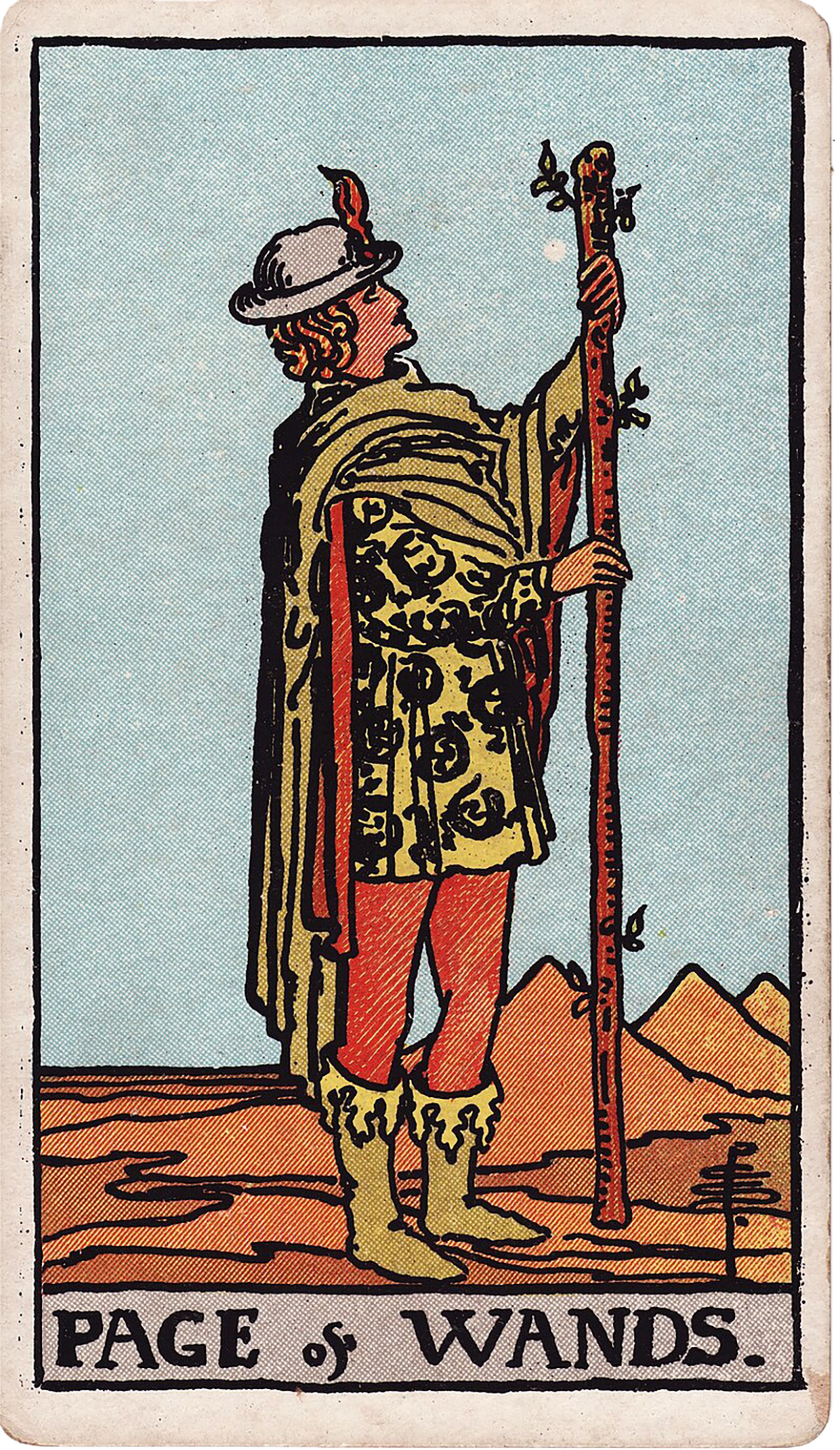 Page of Wands
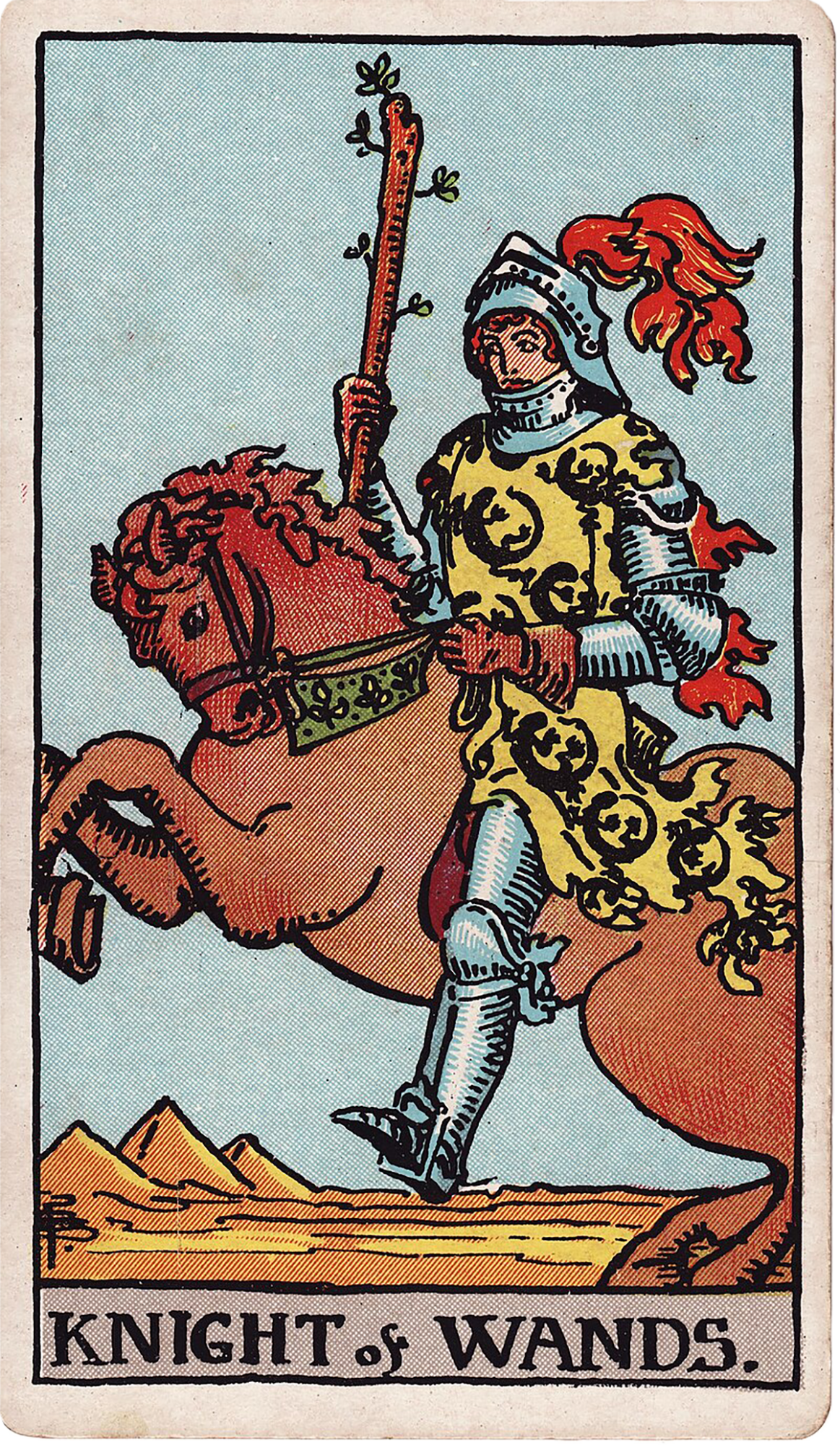 Knight of Wands
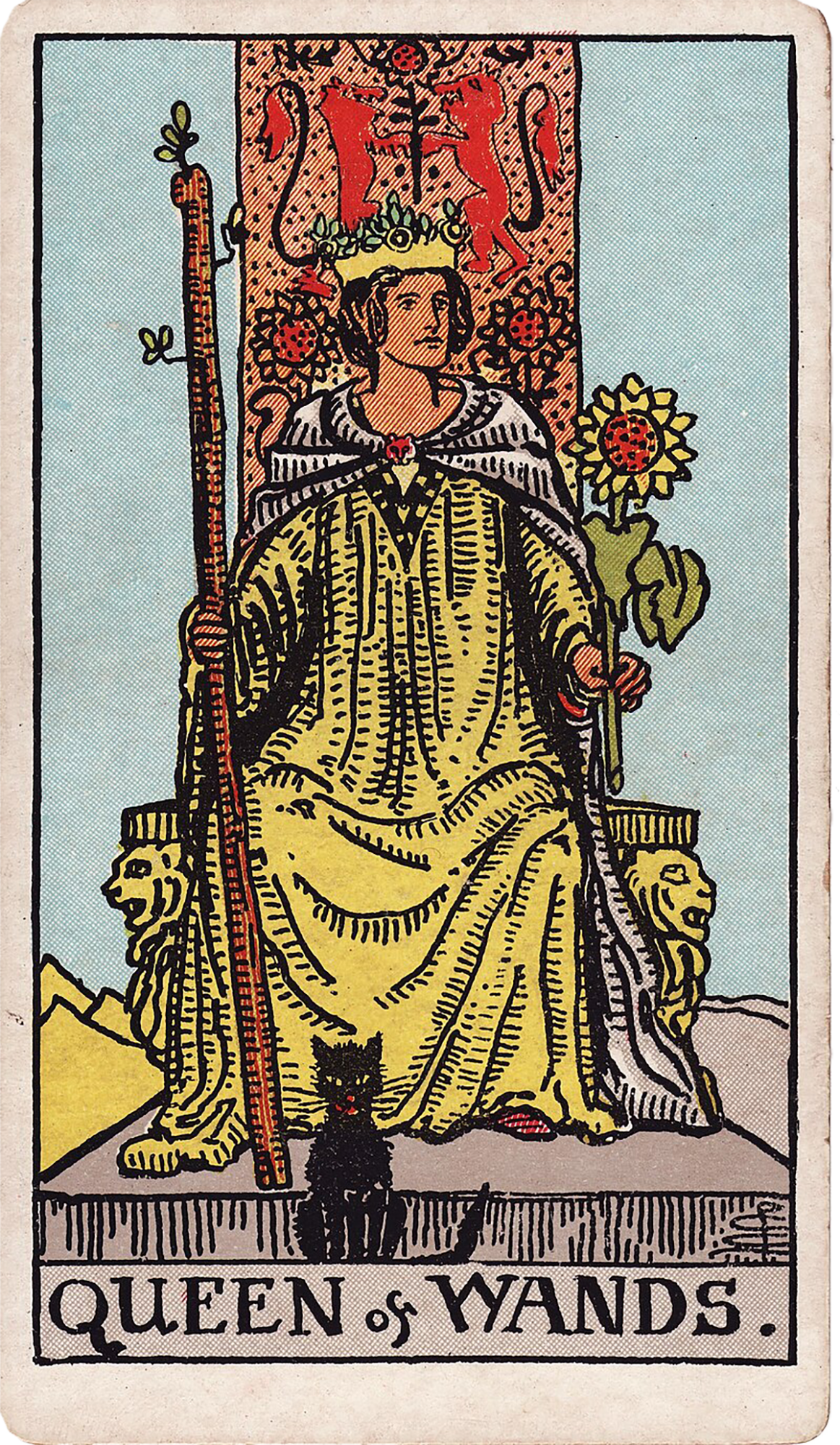 Queen of Wands
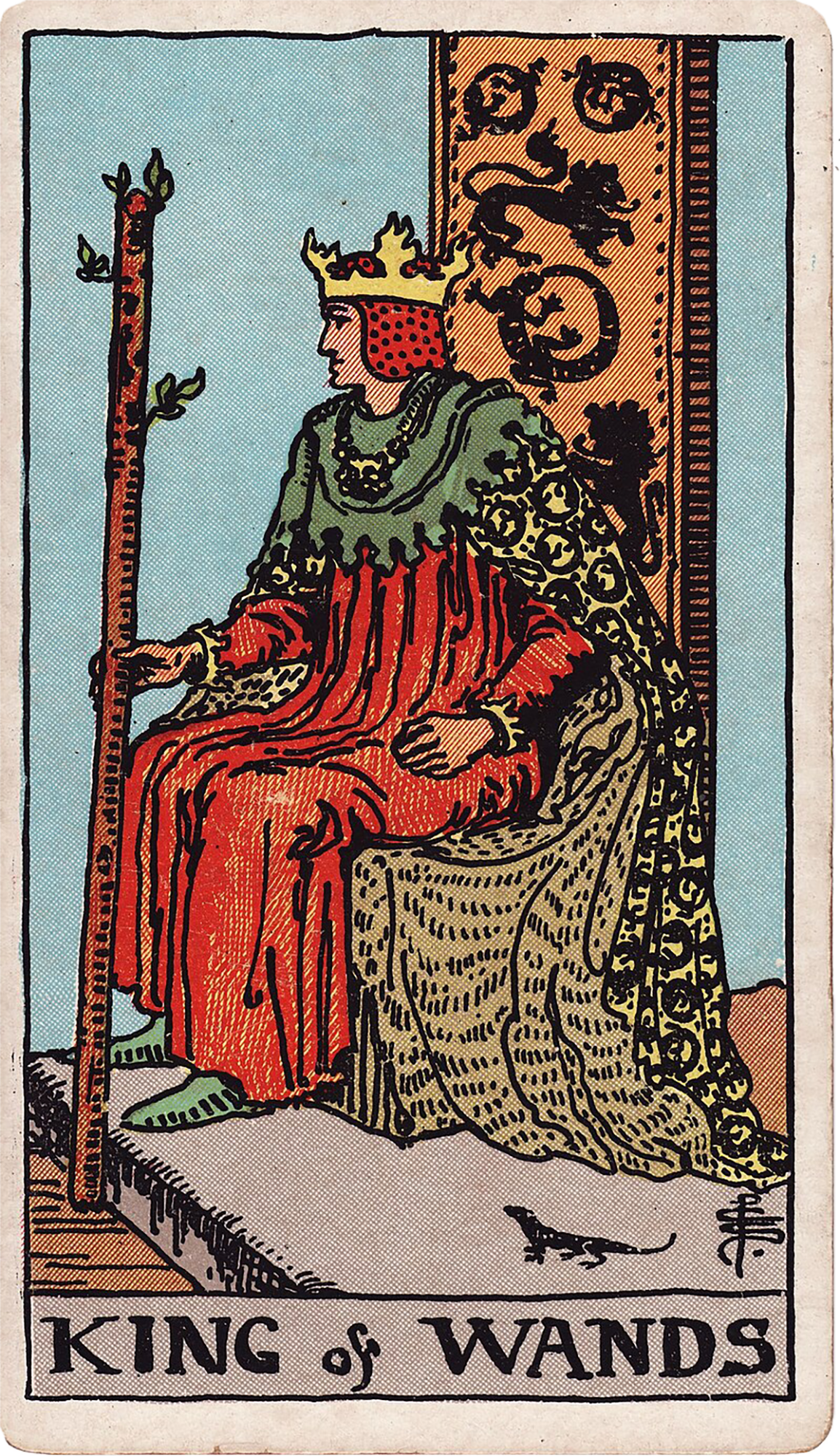 King of Wands
Why use Wands court cards to plan creative projects
Wands represent fire: initiation, enthusiasm, identity and the way energy is directed. The Wands court cards are particularly well suited to planning creative work because they model the lifecycle of creative energy in personified form. Instead of treating court cards only as people you might meet, read the Page of Wands, Knight of Wands, Queen of Wands and King of Wands as roles, stages, and tempos you can intentionally move between. That makes them practical tools for pacing: seeing when to experiment, when to sprint, when to steward and when to hold vision and responsibility. This article will repeatedly anchor interpretation to the Rider‑Waite images for these four cards so you can translate visual cues into project actions.
Reading the imagery: what each card visually tells you
When you look at the Rider‑Waite versions of these court cards, each image contains direct cues about speed, focus, confidence and relational stance. Use the pictures as a checklist for what a stage needs. Page of Wands — imagery notes and cues: The Page stands in an open, often barren landscape, holding a sprouting wand and gazing at it with curiosity. The sprout signals an idea or message that has life but needs tending. The Page’s youthfulness and exploratory posture say: try, prototype, send a message, test assumptions. As a planning signal, the Page asks for low‑cost experiments, clarity about the minimal viable form of an idea, and short feedback loops. Knight of Wands — imagery notes and cues: The Knight rides forward with obvious momentum; the horse’s raised leg and flowing cloak evoke speed and movement. This card is about decisive energy and forward motion. In a project, it signals the sprint phase: commit, execute, remove blockers and accept that some polish will come later. But the Knight’s forward ride also warns that direction matters; speed without alignment creates rework. Queen of Wands — imagery notes and cues: Seated, holding her wand and often with a sunflower and a black cat at her feet, the Queen presents warmth, visible confidence and hospitable leadership. The sunflower gestures toward growth and outward-facing creativity; the black cat conjures independent intuition and boundaries. As a pacing indicator she suggests steady stewardship, curatorial choices, nurturing contributors and public-facing presence without losing autonomy. King of Wands — imagery notes and cues: The King sits as a sovereign of creative force, often depicted with salamander imagery (a symbol of transformed fire) on his robe and a posture of responsible authority. The King integrates vision with delegation and strategy. When he appears in a planning reading, think long-term sustainability, infrastructure, business decisions, and accountable leadership for the energy you set in motion. Read the images first, then layer the upright/reversed meanings: upright cards invite constructive expression (beginning, momentum, leadership, maturity); reversed positions highlight blockages (immaturity, recklessness, burnout/insecurity, domination/miscommunication).
Mapping court ranks to project phases and pacing
A simple, practical mapping uses the progression Page → Knight → Queen → King as both a timeline and a shifting role-set. Use this mapping as a template you can adapt to team dynamics or solo practice. 1) Page of Wands — Initiation and discovery - Function: scout, tester, prototyper. Think experiments and discovery sprints. - Typical tasks: brainstorm micro‑tests, outline core idea, create the first prototype or pitch, identify assumptions to validate. - Pacing advice: keep tasks small and cheap, schedule short bursts of focus with immediate feedback. 2) Knight of Wands — Momentum and execution - Function: doer, rapid deployer. Think production sprints, focused execution, visible momentum. - Typical tasks: create primary deliverables, remove technical blockers, schedule concentrated work blocks. - Pacing advice: allow longer, uninterrupted sprints but maintain checkpoints to ensure direction. 3) Queen of Wands — Stewardship and curation - Function: editor, community manager, creative director. Think refinement, public presence and nurturing collaborators. - Typical tasks: edit, design details, choose promotion strategy, coordinate contributors and beta testers. - Pacing advice: alternate production sprints with reflection and outreach windows to prevent burnout. 4) King of Wands — Leadership and scale - Function: strategist, steward of sustainability. Think launch strategy, responsibility for outcomes, delegation. - Typical tasks: finalize launch plan, allocate resources, set policy and systems for ongoing support. - Pacing advice: operate on longer time horizons, with scheduled reviews and delegation checkpoints. This order is not rigid. Teams can embody multiple cards simultaneously (a Queen may be building a prototype; a Page may steward social media). Read the cards as functions and tempos to be moved through intentionally rather than a mandatory ladder to climb.
Practical reading method to plan and pace a project
Use this reproducible spread to convert symbolic reading into a concrete action plan. The spread is four positions mapped to the court cards and a set of clarifiers you can pull as needed. Four‑card Pacing Spread (core): - Position 1 — Page of Wands: what to experiment with now (first 1–4 weeks) - Position 2 — Knight of Wands: where to apply concentrated energy (next 2–8 weeks) - Position 3 — Queen of Wands: what needs stewardship and community/quality work (concurrent/after execution) - Position 4 — King of Wands: what systems, delegation or leadership decisions secure the project's long-term success How to read the spread step-by-step: 1) Shuffle with an intention: "I want a practical plan and pacing for [project X]." Ask for clear, actionable steps. 2) Lay the four cards left to right, corresponding to the Page → Knight → Queen → King sequence. 3) Read each card visually first: note posture, background, animals, flora, direction of gaze or motion. Translate images into verbs (test, ride, nurture, govern). 4) Add clarifiers as needed: for timing, pull a small Minor Arcana card for each position (e.g., Ace or Two for short windows, Six to Ten for longer windows). If you want obstacles, pull a clarifying card for each position's reversed meaning. 5) Translate to tasks: for each position, write 3 specific tasks aligned to the card’s function and tempo. Use timeboxes (e.g., Page tasks = 1–2 hour tests; Knight tasks = multi-day focused work; Queen tasks = scheduled reviews and stakeholder outreach; King tasks = weekly leadership check-ins and delegation lists). 6) Set measurement criteria: how will you know a Page test succeeded? What metric moves you to a Knight sprint? Define pass/fail criteria to avoid spinning forever at the Page stage. Timing heuristics and indicators: - Page stage: look for curiosity, unanswered questions, low overhead win conditions. Use 1–4 week windows or less. - Knight stage: signs you’ve validated assumptions and need momentum. Use 2–8 week sprints with daily progress checks. - Queen stage: when edges require taste, UX, or community input. Use recurring weekly reviews and public-facing touchpoints. - King stage: when resources, legalities, or ongoing support demand systems. Plan monthly or quarterly governance reviews. Reading reversals in the spread: Treat reversals as operational warnings, not moral failings. A reversed Page signals tests that never finish or fear of starting; a reversed Knight signals rash decisions and frequent mid‑project abandonments; a reversed Queen signals hidden insecurity or burnout; a reversed King signals micro‑management or lack of communicated vision. For each reversal pull one clarifier: ask "what lightweight action would unblock this role?" and create a single, specific intervention.
Three applied examples: translating cards into plans
Example 1 — Solo musician releasing an EP - Spread result: Page of Wands upright, Knight of Wands upright, Queen of Wands reversed, King of Wands upright. - Translation: The Page upright says the musician has a strong new idea and should run quick demos and social teases (Page tasks: record rough demos, test one song live, solicit feedback from 3 fans). The Knight upright says commit to an intense production sprint—book focused studio days, finalize 3 tracks in 4 weeks. The Queen reversed warns of potential burnout and overperforming in public; schedule explicit rest and set boundaries for social media. The King upright indicates it’s time to set systems for release: delegate distribution, plan revenue splits, and schedule a sustainable promotional calendar. - Action plan: Week 1–2 Page tests (demo + feedback), Weeks 3–6 Knight sprint (studio sessions), ongoing Queen management (weekly limits on social hours; enlist a manager or peer for public tasks), King actions (contract with distributor, timeline for launch and sustainable post‑launch upkeep). Example 2 — Small team producing a short film - Spread result: Page of Wands reversed, Knight of Wands upright, Queen of Wands upright, King of Wands reversed. - Translation: Page reversed signals lack of clear brief or immature pre‑production ideas—start by simplifying the treatment and agreeing on a single concept. Knight upright encourages concentrated shooting schedule and decisive production choices. Queen upright supports strong leadership in post‑production and festival strategy. King reversed warns of poor delegation or domineering creative control; establish clear roles and a decision matrix. - Action plan: Immediate: simplify the script to a single testable concept (Page unblock). Next 4 weeks: intensive shoot schedule and daily checklists (Knight). Post‑production: schedule weekly creative reviews with a trusted editor (Queen). King reversal resolution: appoint a production manager with veto‑power for logistics and a separate creative lead to protect the director's vision. Example 3 — Novelist outlining a first draft - Spread result: Page upright, Knight reversed, Queen upright, King upright. - Translation: Page upright suggests curiosity-driven exploration—write sketches and character letters as small experiments. Knight reversed shows a pattern of abandoning drafts or chasing new ideas; set timeboxed sessions and defined daily word goals to develop follow‑through. Queen upright advises nurturing voice and reader relationship—use beta readers and steady revision. King upright recommends creating infrastructure for long-term writing (submission plan, agent outreach, consistent schedule). - Action plan: First month: Page tasks (character sketches, scene outlines, 500–800 word experiments). Then impose Knight structure but mitigate reversal by micro‑sprints: 90 minute focused writing windows daily. Queen tasks: monthly critique circle and stylistic revision windows. King tasks: prepare a query and submission timeline for after the second draft.
Common mistakes and how to avoid them
Mistake 1 — reading court cards only as people: Many readers default to "this person shows up" rather than seeing court cards as roles or tempos. Fix: ask whether the card represents a role, a stage, or a person, then prioritize the functional reading for planning. Mistake 2 — forcing a linear progression: Projects are not strictly chronological. You may loop between Page tests and Knight sprints multiple times, or have Queen stewardship running concurrently with Knight execution. Fix: allow circular movement and schedule explicit re‑entry points from Queen back to Knight or Page when new feedback requires rework. Mistake 3 — ignoring reversed cards’ operational messages: Treating reversals as simply 'bad' leads to moralizing. Fix: translate reversals into a single, lightweight intervention. Example: Page reversed → commit to one 2‑hour experiment; Knight reversed → schedule a brief retrospective and cut one feature. Mistake 4 — over‑relying on timing for exact dates: Court cards suggest tempo, not exact calendars. Fix: convert card prompts into timeboxed tasks with explicit criteria for advancement rather than fixed dates. Mistake 5 — not using imagery details: Overlooking the sunflower on the Queen or the Page’s gaze means missing clues. Fix: make image note-taking part of your reading protocol—record 3 visual cues and convert each cue into a verb or task. Mistake 6 — inadequate systems for King energy: The King asks for governance; readers often fail to set concrete systems (delegation lists, legal or financial tasks). Fix: set at least two operational items whenever King energy appears (e.g., contract templates, budget reviews).
Interpretation logic: combining suit meaning, court rank and orientation
Interpretation works as a layering process. Start with the suit: Wands call attention to energy direction, motivation, identity and creative impulse. Next layer the court rank: Page (initiation/learning), Knight (momentum/action), Queen (stewardship/creative leadership) and King (mature direction/systems). Finally, add orientation: upright invites constructive expression; reversed highlights where the process is stuck or exaggerated. Concrete interpretation formula you can use when reading: 1) Visual verb — pick a verb from the image (Page: test; Knight: charge; Queen: curate; King: govern). 2) Operational noun — translate the verb into a concrete task category (test → prototype; charge → produce; curate → edit/community; govern → systems/delegate). 3) Timebox — assign a realistic window or sprint length based on the rank. 4) Acceptance criteria — define what success looks like so movement to the next stage is measurable. Example: Card = Knight of Wands upright. Visual verb = charge. Operational noun = produce core deliverable. Timebox = 3‑week sprint. Acceptance criteria = 3 finished deliverables and passing smoke tests. If Knight reversed, intervention = reduce sprint scope, require one mid‑sprint checkpoint and eliminate one feature.
Staging the work: journaling, checkpoints and rituals
Turn readings into living project artifacts with a few practical practices: - Visual note capture: After a reading, take a photo of each court card and annotate three verbs per card. Store these with your project plan. - Sprint ritual: Use the Knight card as a signal to begin a focused sprint—light a candle if you work with ritual, or simply set a calendar block labeled "Knight Sprint". Close the sprint with a short retrospective using Queen‑style questions: what nourished quality, what drained energy? - Checkpoints and pass/fail criteria: For each Page test, set one binary criterion (did we learn X?). For Knight sprints, set 1–3 measurable outputs. For Queen stewardship, commit to stakeholder checks and quality thresholds. For King governance, set two structural checks like budget review and delegation audit. - Re‑reading cadence: Pull this four‑card spread at the start of each major project phase (concept, production, pre‑launch, launch). Use it again after retrospectives to see whether roles have shifted. These small procedures convert symbolic insight into reproducible process.
Putting it into practice and next steps
Begin with a single project and the four‑card spread. Use the imagery to create verbs and then translate those verbs into timeboxed tasks with acceptance criteria. Commit to one Knight sprint per month, one Queen stewardship review per sprint, and one King governance checklist per quarter. Keep the Page stage intentionally cheap and iterative: allow ideas to fail forward. If you work in a team, assign court roles explicitly for phases: who will embody the Page for the next two weeks? Who will be the Knight during production? This clarifies responsibility and reduces the confusion that leads to Knight reversals (hasty starts) and King reversals (micro‑management). Over time you will notice patterns: a person who appears as Page in many spreads may need mentoring around follow‑through; a persistent Knight reversal may require shifting tasks or improving rituals for stopping and reflecting. Tarot is a tool for making internal dynamics visible and translating them into external workflows. When you ground a reading in the Rider‑Waite imagery of the Page of Wands, Knight of Wands, Queen of Wands and King of Wands and then deliberately convert symbolic cues into timeboxed tasks, your planning becomes both imaginative and operationally useful.
Practice questions
• Which Wands court card most often shows up when you think about starting a creative project, and what does its imagery (gaze, posture, animals, plants) ask you to do differently?
• For a current project, map one specific task to each court card: what is a 1–2 week Page test, a 2–6 week Knight sprint, a Queen stewardship task, and a King systems check?
• When a court card appears reversed in your readings, what one lightweight intervention could you commit to immediately to unblock that role?
• Who on your team naturally embodies each court role, and where do you need to add ritual or structure to support that person?
• How will you measure advancement from Page to Knight for your next creative idea—what concrete acceptance criteria will you use?
Comments
Sign in to comment.
Continue learning
Harnessing the Power of The Magician and Ace of Wands: Igniting Creativity and Manifestation in Tarot Readings
The combination of The Magician and the Ace of Wands in tarot readings offers a potent blend of creative energy and manifestation power. This article delves into the ways these car...
Advanced Techniques for Combining The Moon and The Star to Enhance Intuition in Tarot Readings
This article explores advanced techniques to combine the symbolism and energy of The Moon and The Star Tarot cards to enhance intuition during Tarot readings. Drawing from traditio...
Enhancing Clarity in Complex Choices with the Five Card Cross Tarot Spread
The Five Card Cross Tarot Spread is a practical tool designed to clarify complex choices by breaking down the decision into manageable parts. This article explores each position in...
Tracing the Origins and Evolution of The Fool Card in Tarot History
The Fool card holds a foundational place in tarot tradition, symbolizing beginnings, openness, and the embrace of uncertainty. This article traces its origins from early European d...
Understanding The Hermit Card in Solitude Reflection and Guidance
This article offers an in-depth exploration of The Hermit tarot card as a single-card reading in different contexts such as love, career, money, advice, challenge, person, outcome,...
Unlocking the Creative Flow with The Magician and The Empress in Tarot Combinations
This article delves into the powerful synergy between The Magician and The Empress in Tarot combinations, focusing on how their combined symbolism unlocks creative flow across vari...
Using the Seven Card Horseshoe Spread to Uncover Career Growth and Opportunity
This article presents an in-depth guide to the Seven Card Horseshoe Tarot Spread with a focus on career growth and opportunity. Using the cards The Fool, The Magician, The Empress,...
Understanding the Many Facets of The Moon in Emotional and Intuitive Tarot Readings
The Moon card in the Tarot deck embodies themes of intuition, uncertainty, dreams, and emotional complexity. This article offers a comprehensive exploration of The Moon’s upright a...
Unlocking Advanced Intuition Techniques Using The High Priestess The Moon and The Hermit
This article examines advanced intuition development in tarot reading by focusing on The High Priestess, The Moon, and The Hermit cards. It offers practical techniques for beginner...
Mastering Intuition with The High Priestess The Hermit and The Moon in Tarot Readings
This article delves into mastering intuition through three powerful Tarot cards: The High Priestess, The Hermit, and The Moon. It guides readers from beginner to advanced reading t...