
Doorways Thresholds and Gateways in Tarot Imagery
This article examines how doorways, thresholds, and gateways function as a visual and interpretive family of symbols in Tarot. Using the supplied images of The Fool, The High Priestess, The Tower, and The World, it explains how to read liminal imagery on multiple levels: literal, psychological, ritual, and narrative. The piece offers practical techniques for spotting threshold cues in a reading, a focused spread for working with transitions, example readings using only the supplied cards, and a list of common mistakes to avoid. Readers will learn a step-by-step interpretive logic that moves from observation to nuanced meaning-making while keeping RWS symbolism accurate and contextually grounded.
Cards explored in this article
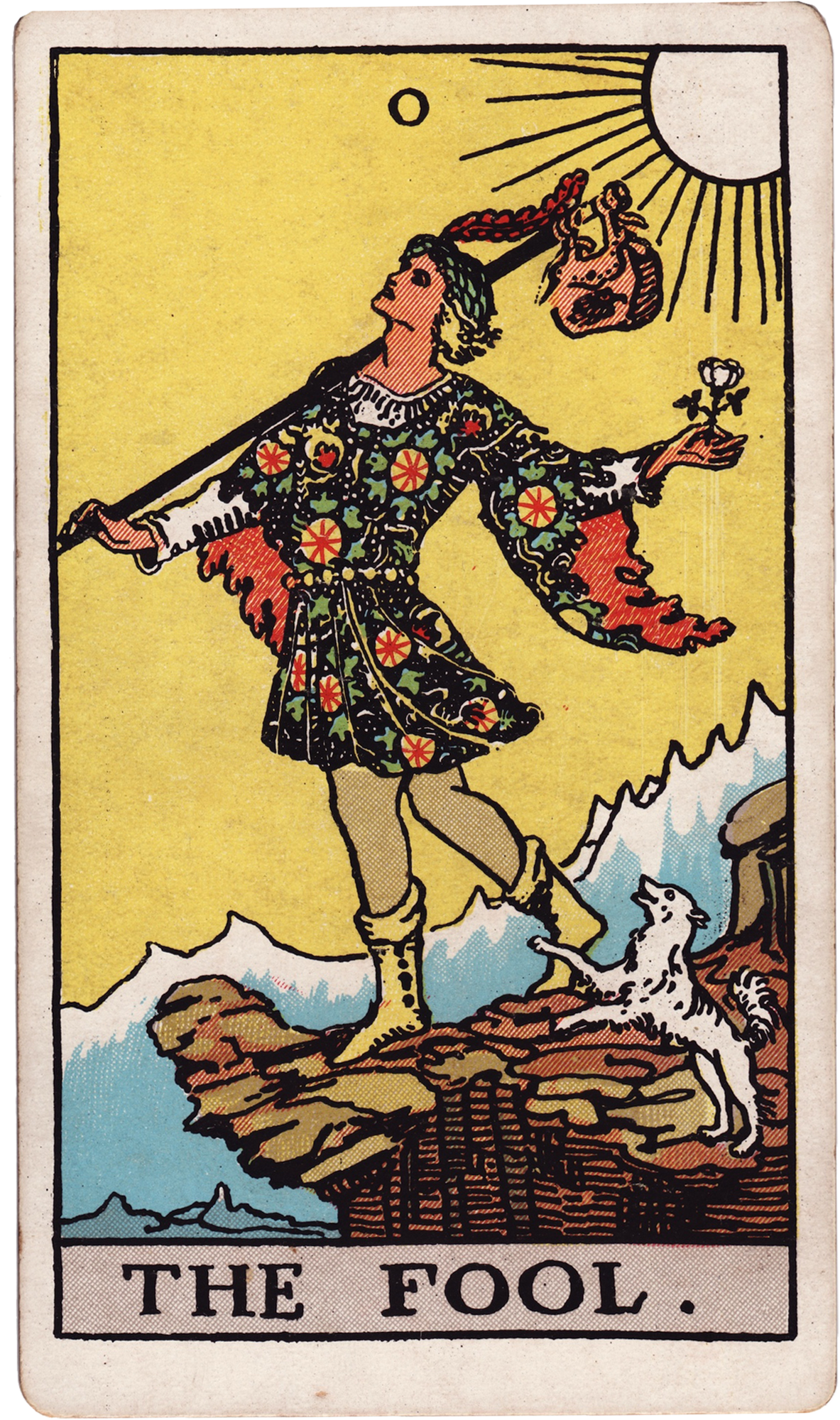 The Fool
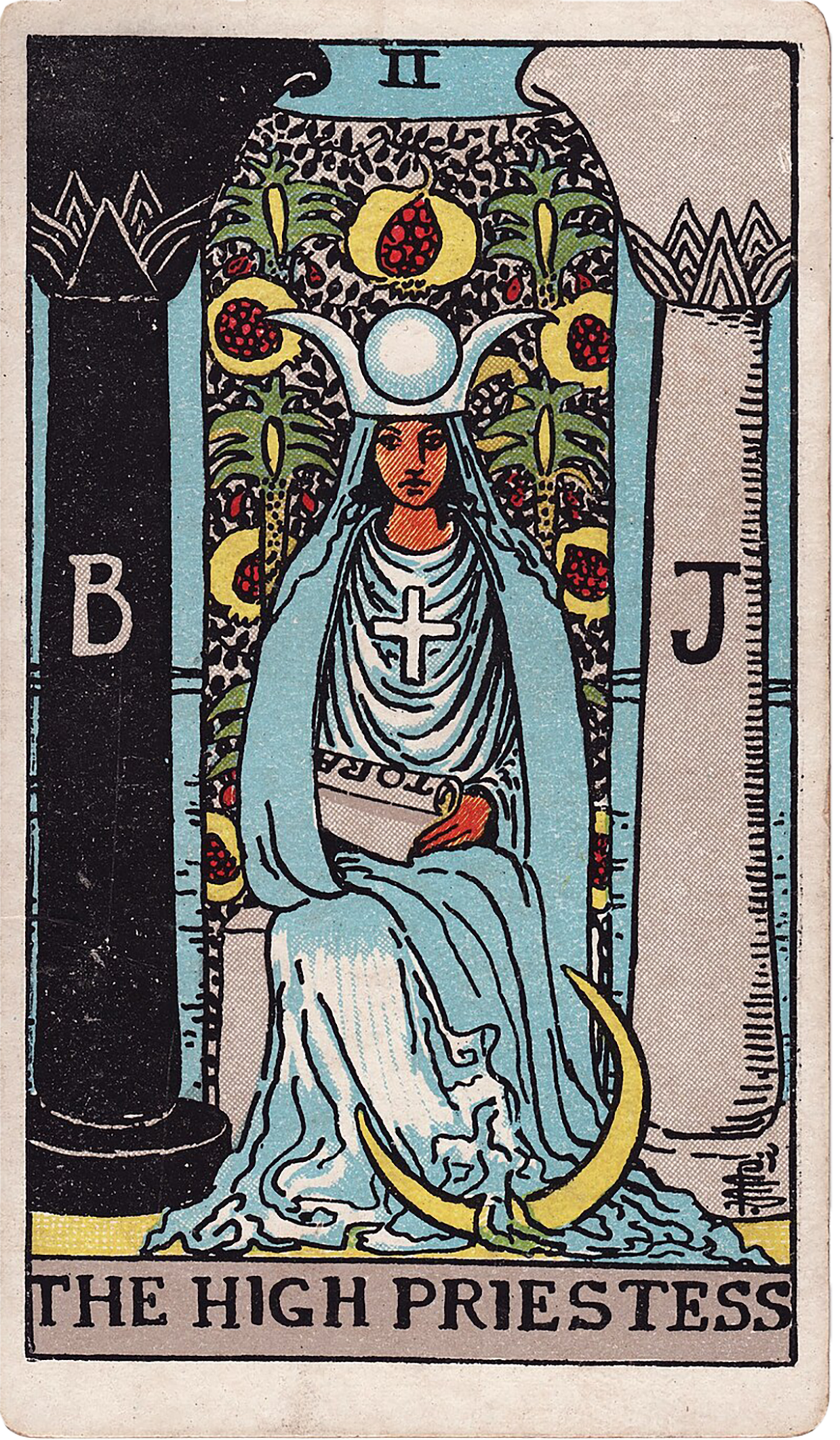 The High Priestess
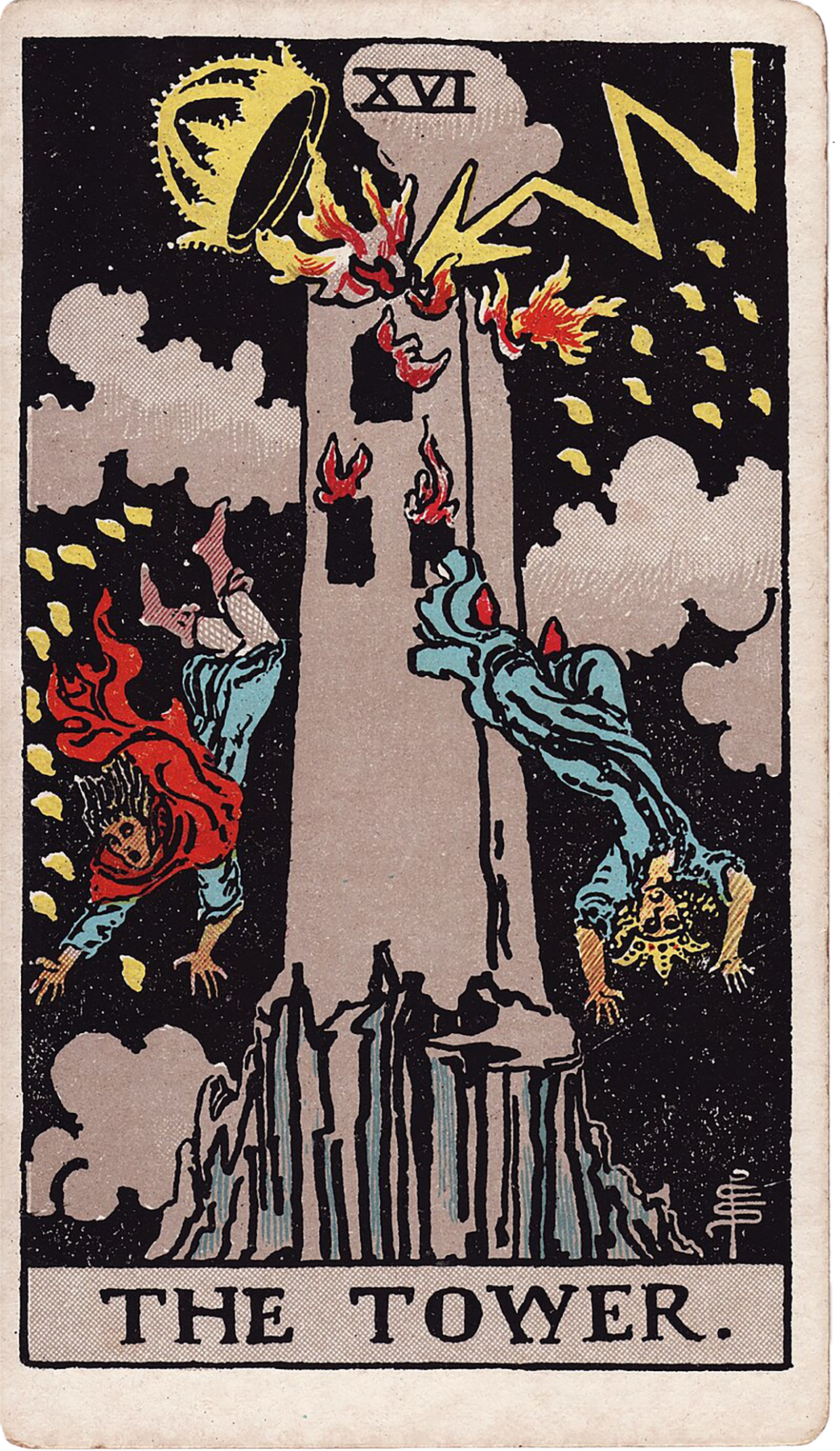 The Tower
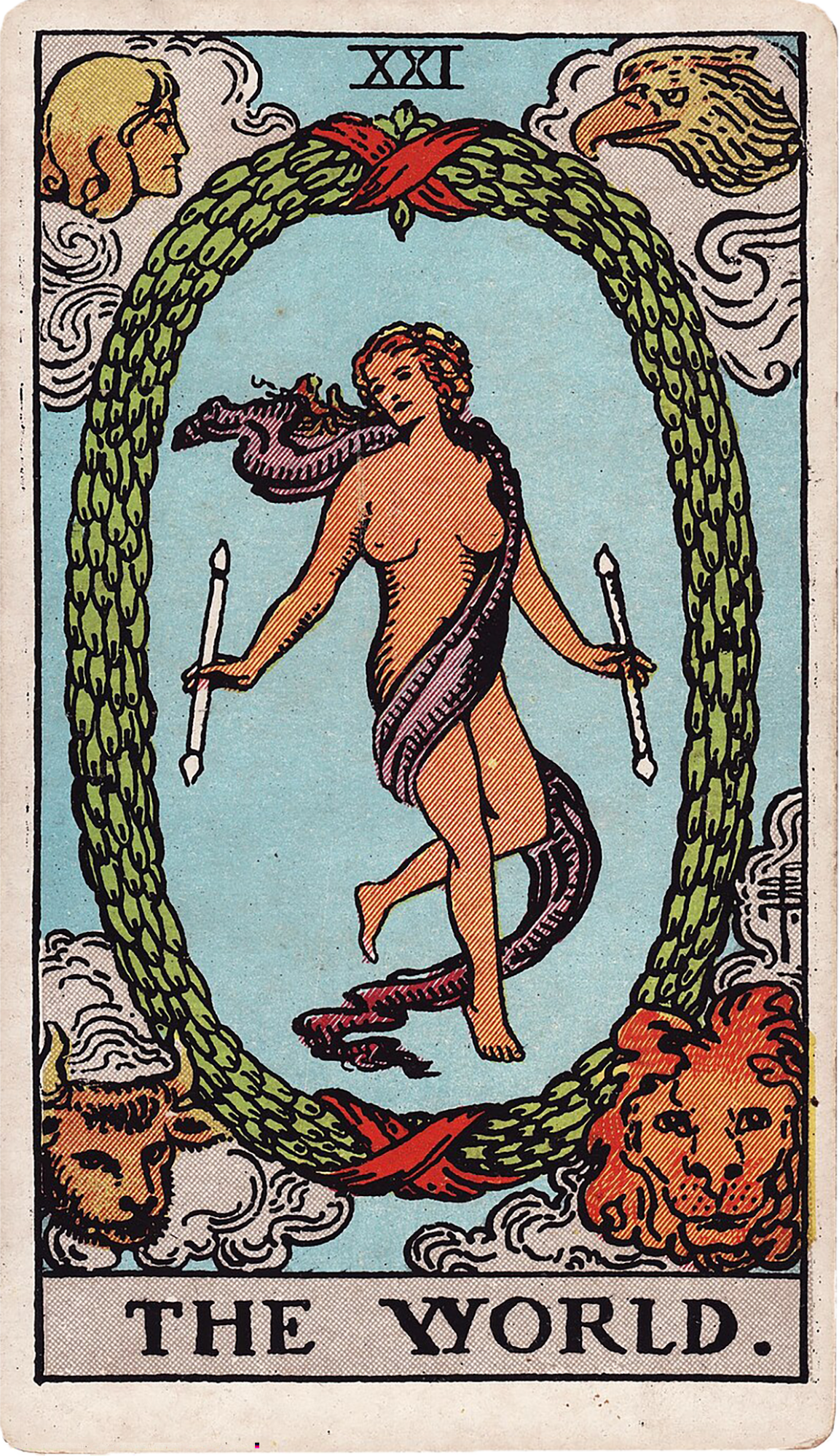 The World
Introduction to Threshold Imagery
Tarot is built from repeated visual motifs. Among the most fertile of these are doorways, thresholds, and gateways — the images that mark passages between states. These motifs appear as literal doors, implied borders, openings, and transitional gestures. They form a coherent symbolic family that signals movement: beginnings, endings, crossings, and liminal suspension. In this article we study that family through four cards whose imagery invites threshold reading: The Fool, The High Priestess, The Tower, and The World. The goal is practical: to train your eye and your interpretive process so you can use threshold symbolism reliably in readings. We will ground every step in the supplied card texts and Rider-Waite-Smith (RWS) visual language: The Fool's step off a cliff with a small dog and a white rose; The High Priestess seated between two pillars with a veil and moon symbolism; The Tower struck by lightning with figures tumbling from its gate; The World wrapped by a wreath with a dancing figure and the four living creatures. Each of these is a doorway-type image: The Fool at the threshold of a new journey, The High Priestess guarding a hidden inner chamber, The Tower exposing and destroying a false threshold, and The World completing a circuit so that a new gate can be passed. Keep in mind that this is a learning article, not a book of predictions. We will work on methods you can practice and apply to readings.
What Counts as a Doorway Threshold or Gateway in Tarot Imagery
Before interpreting, define your terms. A doorway is usually a framed opening that marks a passage (a literal door, arch, or portal). A threshold is the line you cross — the lip of a doorway, the cliff-edge, a change in posture or direction. A gateway is an emphasized transition point often guarded, ritualized, or marked by boundary figures. In Tarot images these can be explicit (a drawn door) or implicit (a figure stepping off a ledge, a veil suggesting a hidden inner room, a broken tower implying an entry by force). Look for elements that mimic the function of a doorway: framing pillars or columns, a line or border, a garment or veil that separates two spaces, a wreath or circle that encloses, or the motion of entering/exiting. Consider directionality (who faces toward the opening?), scale (is the opening wide, narrow, obstructed?), and guardianship (is there a gatekeeper, guardian animal, or protective symbol?). Using the supplied cards as examples: The Fool presents an implicit threshold — the cliff-edge acts like a threshold line. The High Priestess provides a guarded doorway — she sits between Boaz and Jachin; behind her a veil with pomegranates suggests a concealed temple chamber. The Tower shows a breached structure — the toppled crown and falling figures indicate a threshold forced open by crisis. The World shows a completed circuit — the wreath is often read as a gateway that both contains and releases the central figure into the next cycle.
Visual Reading Technique Step by Step
To interpret threshold imagery consistently, follow a disciplined visual method. Use the supplied cards to practice each step until the process becomes second nature. 1) Inventory the threshold cues. Scan the image for objects that function like doors or boundaries: cliffs, veils, wreaths, pillars, gates, frames. With The Fool look at the cliff edge, the traveler's posture, and the small dog; with The High Priestess note the pillars, the veil, the crescent moon; with The Tower see the lightning, the broken crown, the falling figures; with The World consider the wreath, the garland, and the orientation of the dancing figure. 2) Note agency and direction. Who is crossing, who is stationed at the boundary, and which way do they face? The Fool faces forward, stepping toward the unknown; the High Priestess is stationary, a guardian between worlds; the Tower's figures are propelled outward by force; the World rotates within its circle, finishing a dance. Ask: is this a voluntary crossing, an invitation, an enforced ejection, or a completion that opens the next gate? 3) Assess openness and safety. Is the gate welcoming, closed, guarded, or breached? The High Priestess's veil suggests restricted access and inner knowledge available only to those initiated. The Tower shows violent breach and danger. The Fool's threshold is deceptively open yet risky. The World suggests safe, sanctioned passage — a recognized completion. 4) Read movement against timing and question. Threshold imagery might point to imminent action, advice about when to wait, or commentary on the nature of transition. Combine what you see with the card's upright/reversed context. For instance, The Fool upright encourages beginning despite uncertainty; reversed it suggests avoidance or recklessness about a threshold. The High Priestess upright invites listening before crossing; reversed indicates blocked intuition or secrecy. 5) Translate metaphorically. Move from concrete features to psychological, relational, and ritual meanings. A cliff can mean a daring leap; a veil can mean private knowledge; a wreath can mean successful integration. Keep your translations anchored to the image cues and the supplied card meanings so your metaphors remain grounded and useful.
Card Studies Anchored to Threshold Themes
Use the supplied cards as case studies in how thresholds behave. The Fool as Threshold: The Fool's cliff-edge is one of the clearest threshold images in RWS. The card's upright text emphasizes starting before certainty, choosing curiosity over paralysis, and engaging with what is available now. Visually, the Fool's step is both invitation and risk: his forward posture, the white rose (innocence/purity), and the small dog (instinct/companion) create a narrative of beginning. Read the cliff as the physical threshold between the known path and the void of potential. - Upright interpretive moves: Encourage a small, proportionate first step; notice which cautionary elements are present (the dog can be ally or distraction); ask what simple action would advance the situation. - Reversed interpretive moves: When The Fool is reversed, the cliff can represent reckless stepping or frozen inaction at the threshold. Ask if someone is avoiding the first step because uncertainty is unbearable, or if they're leaping without preparing for consequences. The High Priestess as Gateway: The High Priestess is almost archetypal gatekeeper. In RWS she sits between two pillars (often read as Boaz and Jachin), wears a crown, and has a veil with pomegranates behind her. Her imagery marks a doorway into inner knowledge and the unconscious. The upright text directs the reader to listen beneath appearances and trust quiet discernment; reversed it points to secrecy or mistaking projection for intuition. - Upright interpretive moves: Read the card as a threshold of initiation. Who is allowed to pass beyond the veil? Is the querent being asked to listen rather than act? The pillar pair suggests balanced structure; the moon and veil point to cycles and hidden content emerging in time. - Reversed interpretive moves: A blocked gateway — access to inner knowing feels closed or confusion is being mistaken for knowing. Ask whether the querent is guarding information excessively or ignoring an intuitive boundary. The Tower as Forced Gateway: The Tower dramatizes a threshold blown open. Lightning, flames, and falling figures indicate sudden removal of a structure that once defined the threshold. The upright text emphasizes responding honestly to sudden truth and rebuilding from what remains real; reversed it often indicates fear of necessary change or delayed collapse. - Upright interpretive moves: Read the Tower as emergency passage — a threshold that was always unstable and now must be crossed. The image asks what false security is being dismantled and what must be salvaged. - Reversed interpretive moves: A threshold that is feared, postponed, or being superficially repaired. Ask if the person is trying to restore the old gate rather than accept the necessary crossing. The World as Culminating Gateway: The World wraps a central figure in a wreath and includes the four living creatures — classical RWS signs of completion and integration. The image acts like a ceremonial gate that confirms completion before subsequent re-entry into the cycle. The upright text emphasizes integration and allowing achievement to become a foundation; reversed it suggests incomplete closure or perfectionism. - Upright interpretive moves: Read the card as successful crossing — the threshold has been passed and the gate now opens onto the next round. Note the celebratory, rhythmic dance and the wreath's closure that also functions as a portal. - Reversed interpretive moves: The gate is nearly closed but not fully; something remains to be addressed before you can move forward without repetition.
Practical Reading Method for Threshold Questions
For readings focused on a transition, use a compact, repeatable spread that centers threshold elements. The Threshold Spread (5 cards) is easy to remember and works well with the supplied cards as practice. - Position 1 Situation: What is at the threshold right now? (Look for imagery that shows the nature of the boundary.) - Position 2 Gatekeeper: What is guarding this passage? (This may be a person, an inner voice, or a principle.) - Position 3 Invitation: What is being asked if you pass the threshold? (Opportunity, risk, price.) - Position 4 Obstacle: What threatens a safe crossing? (Hidden risks, illusions, timing issues.) - Position 5 Outcome: What is the likely next field of experience if passage occurs? (Integration, new cycle, crisis-response.) Work the spread like this with the supplied cards as example practice. Imagine laydown combinations and anchor interpretation to image and upright/reversed meanings. Example 1: The Fool in Position 1 + The High Priestess in Position 2 + The World in Position 5. Read: The immediate situation is a nascent beginning (Fool) at a visible threshold. The gatekeeper (High Priestess) suggests that inner listening and initiation are required before moving into completion. The World as outcome indicates that if the querent honors the inner threshold they will likely achieve meaningful integration and a new cycle. Pay attention to the Fool's upright advice: take a proportionate step now while honoring the High Priestess's counsel to listen. Example 2: The Fool reversed in Position 1 + The Tower in Position 4. Read: There is potential for action but the Fool reversed points to reckless or stalled impulse. The Tower as obstacle warns that a collapse may happen if the person leaps without preparation — or that an enforced crisis may push them across the boundary. Combine the reversal texts: ask where recklessness or avoidance is creating risk, and what smaller step could be taken instead. Example 3: The High Priestess reversed in Position 2 + The World reversed in Position 5. Read: The gateway is blocked or secretive; intuition is confused or withheld. The World reversed suggests that closure will be delayed until hidden matters are addressed. Ask: what needs to be disclosed, or what inner work must finish before the gate opens?
Common Mistakes and How to Avoid Them
When working with threshold imagery beginners often commit predictable errors. Below are common mistakes with corrective technique. 1) Mistaking any boundary for the same thing. Not every border functions the same. A veil implies initiation; a cliff implies a leap; a wreath implies completion. Train to distinguish framed openings (doors, arches), liminal lines (edges, thresholds), and protective circles (wreaths, rings). 2) Over-literalizing. Seeing a literal door and insisting the querent must physically travel misses psychological and ritual meanings. Always translate the image into multiple registers: literal, interpersonal, inner process, and mythic. Ask which register fits the question best. 3) Forcing narrative closure. Not every threshold in a spread requires immediate crossing. The High Priestess often asks for waiting and listening; the World demands integrative work. Resist pushing an outcome because it would be tidy. 4) Ignoring upright/reversed context. The same image can counsel a step or warn of distortion. Always pair your visual read with the supplied upright/reversed meanings. For example, The Fool upright recommends a next proportionate step; reversed it indicates blocked access or risky overextension. 5) Over-relying on single-card symbolism. Read thresholds relationally. How does a gate (High Priestess) interact with a breach (Tower)? Combine image action, position in the spread, and question context to avoid shallow answers. 6) Confusing theatrics with agency. The Tower is dramatic but not always catastrophic in readings. The supplied Tower text emphasizes rebuilding from what remains real; this helps you frame crisis as opportunity for honest restructuring rather than only disaster.
Interpretation Logic and Synthesis
A reliable interpretive logic helps you move from vision to counsel. Use these steps as a template when a reading centers on thresholds. 1) Observe: Name the threshold cues plainly ("cliff edge, veil, breach, wreath"). This grounds your reading in visual facts. 2) Contextualize: Note card position, upright/reversed meaning, and the querent's question. The supplied card texts should modulate your read — The Fool's emphasis on proportionate action, The High Priestess's encouragement to listen, The Tower's demand for honest response to sudden truth, The World's integration focus. 3) Translate across registers: Offer a literal reading, then an emotive/psychological reading, then a practical action recommendation. For instance: "Literally, the image is a cliff; psychologically, it represents risk and possibility; practically, begin with a small, intentional step and consult your inner voice for timing." 4) Weigh risk and timing: Thresholds always carry timing sensitivity. Use the High Priestess to counsel waiting or the Fool to counsel acting, but temper with the Tower's warning about unstable structures and the World's requirement for completion. 5) Offer proportionate advice: Give the querent a next small move rather than a grand pronouncement. If The Fool appears, suggest a concrete small step. If the High Priestess appears, suggest practices to listen (journaling, dreamwork, quiet observation). If the Tower appears, recommend damage control and honest inventory of what's real. If the World appears, recommend rituals to mark completion and plan next steps. 6) Reassess with follow-up questions: Encourage the querent to test an action and report back; thresholds often need iterative work. Use future readings to track whether the gate remains guarded, has been breached, or has been successfully passed.
Exercises and Practice Suggestions
Developing fluency with threshold imagery is practice-driven. Try these exercises using the supplied cards. Exercise 1 Visual Journaling: Shuffle the four supplied cards and draw one daily. Spend five minutes listing all doorway cues you see and three possible metaphorical meanings. Write a one-sentence action based on the card's upright or reversed text. Exercise 2 Paired Contrast: Lay The High Priestess next to The Tower. Describe how the cards’ thresholds differ in tone, agency, and permission. Repeat with The Fool next to The World. This sharpens your ability to read thresholds relationally. Exercise 3 Mini-Readings: Use the Threshold Spread once per week on a small decision. Record how the image cues map onto real-world outcomes. Over months you will learn which image cues correspond to which types of transitions in your life or your querent's life. Exercise 4 Icon Detail Drill: Focus exclusively on one card (for example The High Priestess) and list every object that functions as boundary or gatekeeping: pillars, veil, crescent, scroll, water symbolism. For each object, write a short line about how it modifies the gate (e.g., "veil = selective access; crescent = cyclical timing").
Conclusion and How to Keep Learning
Doorways, thresholds, and gateways are essential lenses for reading Tarot because much of life is about crossing from one state to another. The supplied cards present a compact seminar: The Fool gives us the peril and possibility of beginnings; The High Priestess teaches guarded initiation and inner timing; The Tower shows forced, often painful crossings that reveal structural falsehoods; The World celebrates completion that opens a regulated new gate. Keep practicing the visual steps: inventory cues, note agency and direction, evaluate openness and safety, and translate into multiple registers. Anchor every interpretation in the supplied upright/reversed texts so your counsel remains measured and practice-oriented rather than speculative. Over time you will gain an embodied sense of thresholds — a feel for when a gate asks for patience, when it demands action, and when collapse offers a hidden gift. Remember: this article is a study guide. Use it to refine your eye and your method, and treat readings as iterative, conversation-based work rather than singular pronouncements.
Practice questions
• Where in my life am I standing at an image similar to The Fool's cliff edge, and what would a proportionate first step look like?
• What might the veil behind The High Priestess be protecting in my current situation, and who or what serves as gatekeeper?
• How have Tower-type forced thresholds shown up before, and what did those events reveal about the safety of my old structures?
• What evidence would indicate that a World-level integration has occurred for this issue?
• When I see a doorway image in a reading, how do I decide whether the better counsel is to wait and listen or to act and step forward?
• Am I prone to over-literal or over-metaphorical readings of threshold imagery, and how can I balance the two approaches?
• Which small practice (journaling, ritual marking, consultative question) could I use to test the advice suggested by The High Priestess in a real situation?
• How does the interaction between any two of the supplied cards change the threshold story (for example, The Fool plus The Tower versus The Fool plus The High Priestess)?
Comments
Sign in to comment.
Continue learning
Harnessing the Power of The Magician and Ace of Wands: Igniting Creativity and Manifestation in Tarot Readings
The combination of The Magician and the Ace of Wands in tarot readings offers a potent blend of creative energy and manifestation power. This article delves into the ways these car...
Advanced Techniques for Combining The Moon and The Star to Enhance Intuition in Tarot Readings
This article explores advanced techniques to combine the symbolism and energy of The Moon and The Star Tarot cards to enhance intuition during Tarot readings. Drawing from traditio...
Enhancing Clarity in Complex Choices with the Five Card Cross Tarot Spread
The Five Card Cross Tarot Spread is a practical tool designed to clarify complex choices by breaking down the decision into manageable parts. This article explores each position in...
Tracing the Origins and Evolution of The Fool Card in Tarot History
The Fool card holds a foundational place in tarot tradition, symbolizing beginnings, openness, and the embrace of uncertainty. This article traces its origins from early European d...
Understanding The Hermit Card in Solitude Reflection and Guidance
This article offers an in-depth exploration of The Hermit tarot card as a single-card reading in different contexts such as love, career, money, advice, challenge, person, outcome,...
Unlocking the Creative Flow with The Magician and The Empress in Tarot Combinations
This article delves into the powerful synergy between The Magician and The Empress in Tarot combinations, focusing on how their combined symbolism unlocks creative flow across vari...
Using the Seven Card Horseshoe Spread to Uncover Career Growth and Opportunity
This article presents an in-depth guide to the Seven Card Horseshoe Tarot Spread with a focus on career growth and opportunity. Using the cards The Fool, The Magician, The Empress,...
Understanding the Many Facets of The Moon in Emotional and Intuitive Tarot Readings
The Moon card in the Tarot deck embodies themes of intuition, uncertainty, dreams, and emotional complexity. This article offers a comprehensive exploration of The Moon’s upright a...
Unlocking Advanced Intuition Techniques Using The High Priestess The Moon and The Hermit
This article examines advanced intuition development in tarot reading by focusing on The High Priestess, The Moon, and The Hermit cards. It offers practical techniques for beginner...
Mastering Intuition with The High Priestess The Hermit and The Moon in Tarot Readings
This article delves into mastering intuition through three powerful Tarot cards: The High Priestess, The Hermit, and The Moon. It guides readers from beginner to advanced reading t...