
Reading Motion and Direction in Tarot Imagery for Clearer Meanings
This article teaches a practical visual grammar for reading motion and direction in Tarot images, anchored to three Major Arcana cards: The Fool, The Chariot, and the Wheel of Fortune. You will learn to spot vectors, trajectories, rotations, and pauses in imagery; translate them into actionable meanings; avoid common mistakes; and apply a step-by-step method to single-card and multi-card readings. Exercises and examples show how motion combines with upright and reversed contexts to refine interpretation without turning readings into fixed predictions.
Cards explored in this article
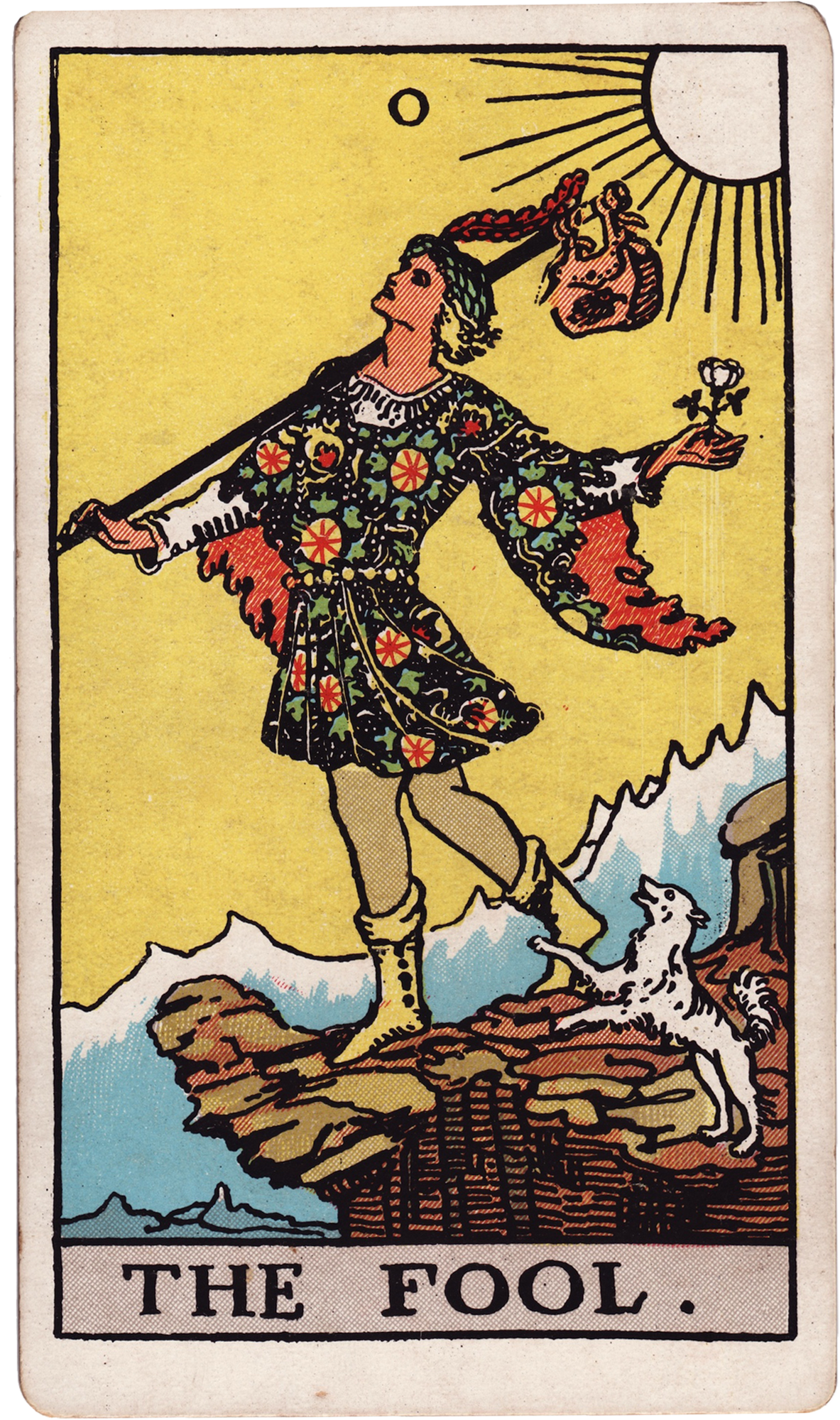 The Fool
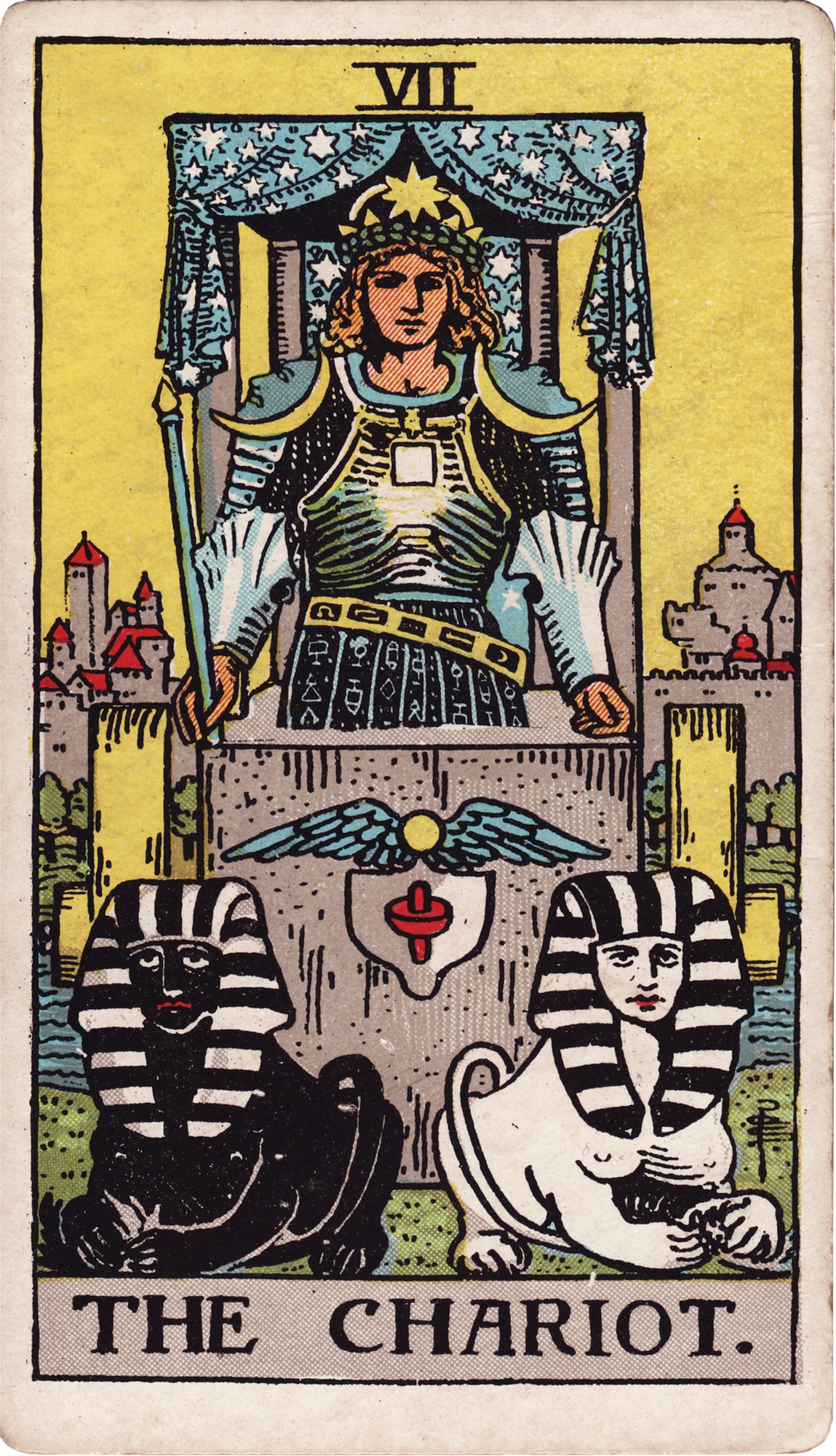 The Chariot
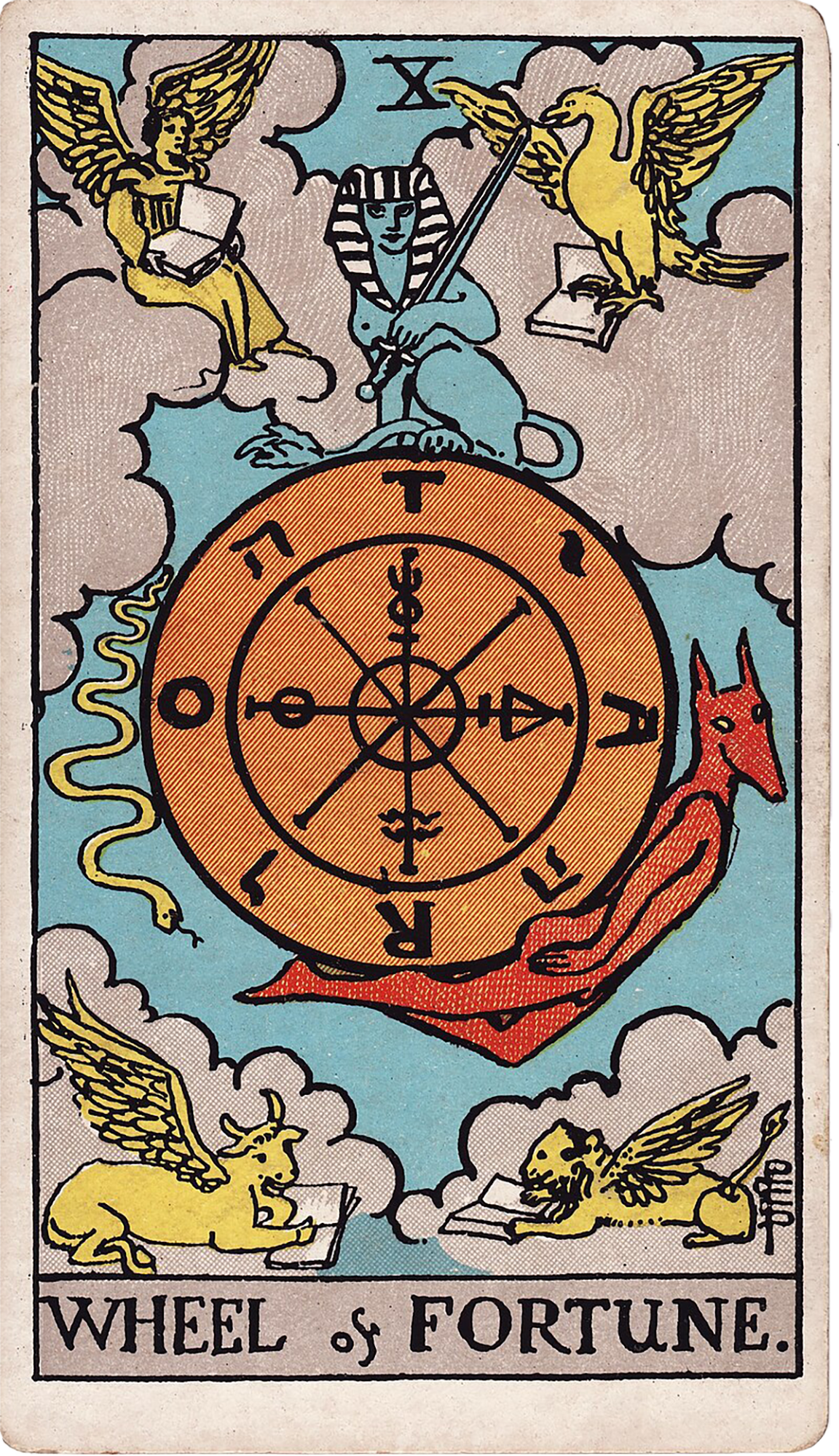 Wheel of Fortune
Introduction: Why motion and direction matter
Tarot images are built to be read visually. Motion and direction — the way figures move, look, or are arranged — create implicit narratives that help a reader decide not only what is present, but where it is heading. In the Rider-Waite-Smith (RWS) tradition the Major Arcana especially use pose, gaze, landscape, and symbolic vehicles to show psychological and situational dynamics. This article uses three supplied cards — The Fool, The Chariot, and Wheel of Fortune — to show how to translate movement cues into clear, practical meanings. Learners will gain a repeatable technique that treats imagery as a grammar of motion rather than only as a list of keywords.
A visual grammar of motion: basic elements
Treat imagery like a sentence. The basic parts of motion grammar are: - Vectors and direction: where a figure points, steps, or looks. A rightward vector often feels forward or future-directed in Western layouts; leftward can feel retrospective. Vertical vectors (up/down) carry meanings of rise/fall or aspiration/decline. - Gaze and eye-line: where a figure looks creates intention. A figure looking ahead indicates planned movement. Averted gaze can signal hesitation, inward focus, or avoidance. - Limbs and posture: feet, hands, and torso tell whether motion is active (striding, reaching) or passive (standing, receiving). Gesture quality (open, clenched, pushing) refines intention. - Vehicles and animals: chariots, horses, dogs, wheels, sphinxes, animals' orientation and tension show how motion is propelled or resisted. - Background topology: roads, cliffs, stairs, horizons, and the relative placement of elements (foreground vs background) imply scale and imminent consequences. - Rotational vs linear motion: rotation (wheels, circles) signals cycles and recurring patterns; linear motion signals a journey, direction, or trajectory. - Pause and tension: frozen or balanced poses indicate deliberation or stalemate; motion lines are energetic and suggest momentum. Using these elements together creates a fine-grained reading of a card's dynamic energy rather than relying on a single keyword.
Reading The Fool: forwardness, threshold, and naïve momentum
The Fool in RWS is the textbook image of motion as a beginning. Key visual cues: a youth stepping at the edge of a precipice, a small dog at the heels, a knapsack over a staff, a white rose of purity, and a bright sun. In the upright context supplied, The Fool 'emphasizes starting before every detail is known' and encourages working with what is available now. Translate the motion cues as follows: - Direction: The Fool often faces right and steps forward. This vector indicates movement toward the future, curiosity, and initiation. If the figure physically leans off a cliff, the implied motion is committed action with potential risk. - Dog's placement: The small dog at the Fool's heels can either be urging onward or warning. If the dog looks up and tugs back, that registers as caution within momentum. If it runs forward, it intensifies impulsiveness. - Horizon and sun: a clear sky and rising sun push the scene toward optimism, reinforcing the upright instruction to identify the next proportionate step. - Upright nuance: connect motion to purposeful improvisation. Ask: where could a deliberate, small step align with this forwardness? Which boundary or clearer choice would make momentum sustainable? - Reversed nuance: the supplied reversed notes for The Fool describe recklessness, avoidance of consequences, or refusing to begin. In motion terms, a reversed Fool may show hesitation (stalling before the edge), misdirected step (stepping inward, not forward), or an over-accelerated step (rushing past warning signs). The reversed image can also feel internalized: the motion exists as fantasy rather than action. Always ask whether the image shows a blocked, distorted, or exaggerated forward movement.
Reading The Chariot: aligned will, opposing forces, and forward drive
The Chariot in RWS illustrates controlled motion. You find a charioteer, a canopy of stars, and two creatures (sphinxes or horses) typically of opposing colors. Key motion cues and how to read them: - Dual propulsion: Contrasting animals indicate internal or external forces to be aligned. If the creatures pull in opposite directions, motion is contested; if they are coaxed forward, motion is disciplined. - Stance of the charioteer: an upright, forward-facing driver with a firm grip implies deliberate direction and discipline. A relaxed or turned head softens the forwardness. - Background: city gates behind the chariot suggest leaving a known place and entering a public or contested arena. - Upright nuance: the supplied upright meaning emphasizes choosing a direction and aligning impulses. Read motion here as intentional, harnessed energy aimed at a clear target. Ask: which impulses need to be named and coordinated for success? Where would a clearer boundary or decisive act help? - Reversed nuance: the Chariot reversed points to scattered force or loss of direction. Motion cues may come across as frantic, resisted, or forced. The animals might appear misaligned; the driver may look strained. Interpret reversed motion as an energy either being misapplied (pushing too hard) or blocked (unable to convert will to movement). Look to neighboring cards to determine whether reversal suggests a temporary pause, correction, or deeper fragmentation.
Reading Wheel of Fortune: rotation, cycles, and timing
Wheel of Fortune centers on rotation and timing. RWS imagery features a central wheel with letters, mythic figures, and symbolic creatures in the corners — the picture literally depicts circular motion. Read its motion language this way: - Rotational vector: Rotation implies cyclical change, turning points, and events that return or spiral. Directionality is less linear and more about phases and timing. - Peripheral figures: Figures on or around the wheel (the sphinx, Anubis, the descending serpent) show ascent and descent as part of the same motion. Where a figure is on the wheel's circumference signals whether the situation is rising into opportunity or falling into challenge. - Upright nuance: Wheel of Fortune upright emphasizes recognizing a turning point and using timing wisely. The motion suggests that a phase is changing; the practical question is where deliberate choice fits into a larger turning. - Reversed nuance: a reversed Wheel of Fortune highlights resistance to change or repeated patterns. Here the wheel's rotation may look stalled, slipping, or returning without apparent progress. Read reversed motion as a blocked cycle or a misread timing — someone might be trying to force a phase that needs patient rotation.
Types of motion and their interpretive meanings
Classifying motion helps you pick a reading angle rapidly. Common motion categories and shorthand meanings: - Linear forward movement: progress, initiative, future orientation (Fool upright, Chariot aligned) - Linear backward movement: review, retreat, reevaluation (Fool reversed or leftward vectors) - Ascent: growth, aspiration, improvement (figures moving upward on Wheel periphery) - Descent: loss, grounding, confrontation with base issues (descending figures on Wheel) - Rotation/cycle: recurring patterns, fate, timing (Wheel of Fortune as archetypal rotation) - Oscillation: indecision, ambivalence, tug-of-war (opposing sphinxes of The Chariot) - Arrested motion: stalemate, reflection, risk of stagnation (a braced charioteer whose animals pull opposite) These shorthand meanings become qualifiers when combined with upright/reversed text: for instance, a linear forward motion paired with The Fool's upright practical advice becomes a suggestion to take a small deliberate next step; the same vector with the Fool reversed becomes a warning about blind leaps.
Step-by-step practical method for readings
Apply motion analysis to your readings with this sequence: 1) Quiet observation: name visible motion cues without interpretation. Example: 'Fool stepping right, dog at heels, cliff at foreground.' 2) Vector mapping: record dominant directions for each card (right, left, up, down, clockwise). Use the RWS tendency where right often equals forward in Western spreads. 3) Energy quality: decide whether motion is active (propulsive), passive (receptive), or conflicted (opposed vectors). The Chariot's animals will usually show conflict or alignment; Wheel shows rotational energy; Fool shows initiation. 4) Temporal sense: is this the start of movement, mid-journey, or a turning point? The Fool often reads as start, the Chariot as in-process propulsion, and Wheel as a pivot. 5) Upright/reversal overlay: combine your motion reading with the supplied upright/reversed meanings. Ask the supplied card questions: for The Fool upright, 'where would a proportionate next step move things forward?'; for The Chariot upright, 'which impulses need alignment?'; for the Wheel upright, 'what timing is at play?' For reversals ask the supplied corrective-style question: 'where is the energy becoming distorted or difficult to access?' 6) Inter-card choreography: in readings with more than one card, map trajectories from card to card. If The Fool faces the same direction that The Chariot will travel, read them as sequentially supportive. If the Wheel is between them and shows descent, consider a intervening cycle or pivot that alters the path. 7) Formulate pragmatic questions: use image-derived verbs. Instead of only saying 'new beginning,' ask 'what small action can the querent take next week that honors the Fool's direction without ignoring consequences?' 8) Check against reality: ask clarifying questions of the querent. Motion readings are sensitive to timing and temperament. Match the implied tempo with the querent's capacity.
Examples applying the method
Example 1 — Two-card spread: The Fool (position A: current energy) + The Chariot (position B: near-future action) - Observation: The Fool faces right, stepping forward. The Chariot faces right too, animals aligned. Motion mapping: consistent rightward vectors. - Interpretation: Current energy is initiated curiosity; near-future shows the possibility of disciplined forward movement if impulses are aligned. Upright overlay: use The Fool's practical prompt to identify the next step, and The Chariot's prompt to ask which internal divisions must be resolved to sustain motion. - Practical reading: The querent may be ready to begin a project; success depends on naming and organizing competing wants (time, resources, relationships). Example 2 — Three-card spread: Past = Wheel of Fortune (reversed), Present = The Fool (upright), Future = The Chariot (reversed) - Observation: Wheel reversed suggests cyclical resistance; The Fool upright shows readiness to start; The Chariot reversed shows possible loss of direction. - Interpretation: A pattern is ending but not cleanly; the querent is ready to begin anyway; however, the near future risks scattered effort or forcing results. Motion logic: rotation has been stuck, initiation is possible, but propulsion may fail unless internal alignment is achieved. - Practical reading: Recommend a small, bounded experiment (The Fool's proportionate step) while pausing to list competing demands that could cause the Chariot reversal.
Common mistakes and how to avoid them
1) Using direction as fate: motion is a reading tool, not a deterministic script. A rightward step does not guarantee success; it shows trajectory to be interrogated. 2) Ignoring gaze and posture: a figure facing forward but with averted eyes sends a different message than one with steady gaze. Combine cues. 3) Over-reading decorative elements: not every background detail is a vector. Learn the RWS iconography to know which motifs usually carry motion weight (vehicles, animals, horizon lines) and which are ornamental. 4) Forcing narrative continuity: if cards show conflicting directions, don't invent seamless storytelling. Treat conflict as meaningful tension, not an error. 5) Neglecting reversal nuance: a reversed card often describes blocked or internalized motion rather than a simple 'bad' sign. Ask where energy is distorted. 6) Applying cultural assumptions: RWS images were made in a specific visual culture; familiar angles like 'right=future' work in many Western contexts but check with the querent's perspective if cultural framing differs. 7) Skipping the querent check: motion readings suggest tempo and risk tolerance. Always calibrate tempo with the querent's real-world capacity and constraints.
Practice exercises
1) Single-card motion inventory: Pull The Fool and list every motion cue you see: gaze, feet, dog, horizon. Write three possible action prompts of increasing scale (micro, medium, bold) that fit the upright meaning. 2) Alignment drill: Pull The Chariot. Sketch or write the two opposing forces and name one practical step to align them (boundary, schedule, conversation). Practice phrasing it as a question the querent can answer: 'Which one small commitment will prove alignment is possible?' 3) Cycle mapping: Pull Wheel of Fortune and draw the wheel's phases as a timeline: what was rising, what was peaking, what is descending? Use the reversed meaning to label where resistance might be delaying change. 4) Choreography practice: Do a three-card spread with these three cards shuffled and drawn at random into past/present/future. Map trajectories and then interview a friend about whether your timing sense matches their experience. 5) Reversal translation: For each reversed card, write two ways the motion could be blocked — one internal (fear, doubt) and one external (logistics, opposition). This helps distinguish psychological vs practical interventions.
Conclusion: motion as a clarifying tool, not a final verdict
Reading motion and direction turns static images into dynamic narratives that offer actionable questions and checks. The Fool, The Chariot, and Wheel of Fortune provide canonical examples: initiation, disciplined propulsion, and cycles. Use the steps above to observe vectors, identify energy quality, and combine those with the upright/reversed prompts supplied by the cards. Always anchor interpretations to practical questions that respect the querent's agency and timing. Motion clarifies likely trajectories; it does not remove the need for judgment, ethical choice, and follow-up. With practice, motion analysis will make your readings clearer, more precise, and more useful to people seeking guidance rather than fixed predictions.
Practice questions
• When you look at The Fool image, which element first suggests motion and why?
• How does the dog in The Fool modify the meaning of the Fool's forward step in a practical reading?
• In a reading where The Chariot is reversed, what observable cues would help you decide whether the issue is internal alignment or external opposition?
• How can you tell, from Wheel of Fortune imagery alone, whether a cycle is beginning, peaking, or ending?
• Describe a small experimental action you could recommend when The Fool is upright but the Wheel of Fortune is reversed in the same spread.
• When two cards point in opposite directions, how do you decide whether to read that as conflict, complement, or transition?
• How would you phrase a clarifying question to a querent when motion cues suggest haste but the querent feels unready?
• Which motion cues do you trust first (gaze, feet, animal behavior, background) and why?
Comments
Sign in to comment.
Continue learning
Harnessing the Power of The Magician and Ace of Wands: Igniting Creativity and Manifestation in Tarot Readings
The combination of The Magician and the Ace of Wands in tarot readings offers a potent blend of creative energy and manifestation power. This article delves into the ways these car...
Advanced Techniques for Combining The Moon and The Star to Enhance Intuition in Tarot Readings
This article explores advanced techniques to combine the symbolism and energy of The Moon and The Star Tarot cards to enhance intuition during Tarot readings. Drawing from traditio...
Enhancing Clarity in Complex Choices with the Five Card Cross Tarot Spread
The Five Card Cross Tarot Spread is a practical tool designed to clarify complex choices by breaking down the decision into manageable parts. This article explores each position in...
Tracing the Origins and Evolution of The Fool Card in Tarot History
The Fool card holds a foundational place in tarot tradition, symbolizing beginnings, openness, and the embrace of uncertainty. This article traces its origins from early European d...
Understanding The Hermit Card in Solitude Reflection and Guidance
This article offers an in-depth exploration of The Hermit tarot card as a single-card reading in different contexts such as love, career, money, advice, challenge, person, outcome,...
Unlocking the Creative Flow with The Magician and The Empress in Tarot Combinations
This article delves into the powerful synergy between The Magician and The Empress in Tarot combinations, focusing on how their combined symbolism unlocks creative flow across vari...
Using the Seven Card Horseshoe Spread to Uncover Career Growth and Opportunity
This article presents an in-depth guide to the Seven Card Horseshoe Tarot Spread with a focus on career growth and opportunity. Using the cards The Fool, The Magician, The Empress,...
Understanding the Many Facets of The Moon in Emotional and Intuitive Tarot Readings
The Moon card in the Tarot deck embodies themes of intuition, uncertainty, dreams, and emotional complexity. This article offers a comprehensive exploration of The Moon’s upright a...
Unlocking Advanced Intuition Techniques Using The High Priestess The Moon and The Hermit
This article examines advanced intuition development in tarot reading by focusing on The High Priestess, The Moon, and The Hermit cards. It offers practical techniques for beginner...
Mastering Intuition with The High Priestess The Hermit and The Moon in Tarot Readings
This article delves into mastering intuition through three powerful Tarot cards: The High Priestess, The Hermit, and The Moon. It guides readers from beginner to advanced reading t...