
Exploring The Emperor Card for Authority Structure and Personal Leadership in Everyday Life
This article provides a comprehensive guide to understanding The Emperor card within the Tarot deck, emphasizing its themes of authority, structure, and leadership. By examining the card's upright and reversed positions, its Rider-Waite-Smith symbolism, and its application across diverse contexts such as love, career, finance, advice, challenges, and spiritual reflection, learners will gain practical insights to deepen their Tarot practice. The article also highlights common interpretive pitfalls, offers techniques for contextual reading, and encourages reflective engagement with this powerful archetype.
Cards explored in this article
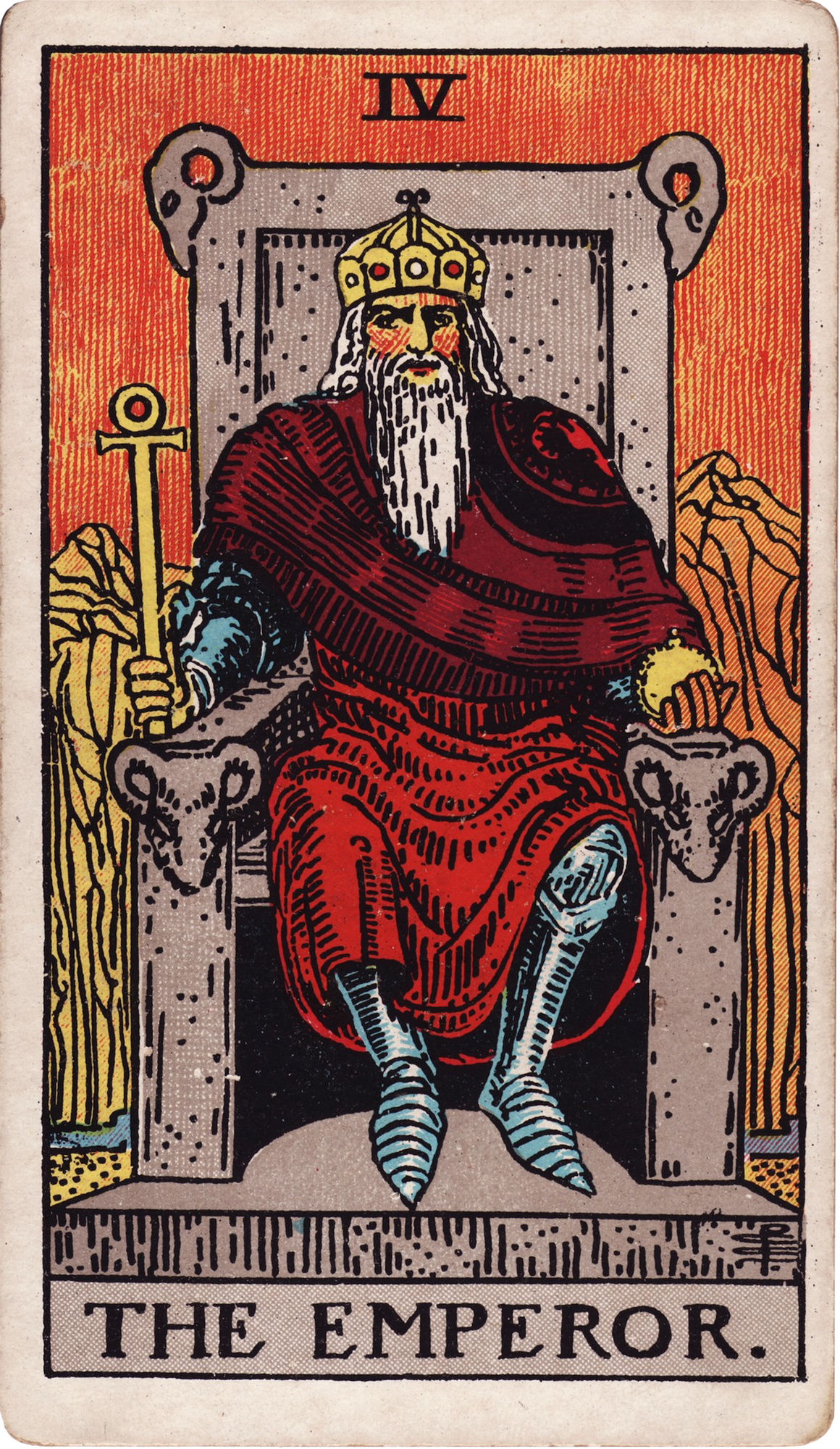 The Emperor
Introduction to The Emperor Card and Its Core Symbolism
The Emperor is the fourth Major Arcana card in the Tarot and represents themes of authority, structure, discipline, and leadership. In the traditional Rider-Waite-Smith deck, The Emperor is depicted seated on a stone throne adorned with ram heads, symbolizing Aries energy — assertive, pioneering, and commanding. He holds a globe in one hand, representing dominion and control over worldly matters, while the other hand grasps a scepter, a symbol of sovereign authority. His robust armor beneath the robes signals protection and readiness to defend his realm. The barren mountains in the background exemplify resilience and stability despite harsh conditions. This imagery collectively evokes a figure who embodies order, responsibility, and tangible power rather than abstract ideas or emotions.
Upright and Reversed Interpretations of The Emperor
When The Emperor appears upright, it emphasizes the constructive qualities of leadership: setting clear boundaries, taking responsibility for one's domain, creating systems that foster stability, and choosing disciplined action over chaos. It does not promise an easy path but highlights the capacity to consciously engage with challenges by implementing order and structure. Practically, this card encourages using available resources and making deliberate choices without waiting for perfect certainty. In contrast, the reversed Emperor signals that these qualities may be blocked or distorted. This can manifest as rigidity, domineering control, fear of vulnerability, or the maintenance of outdated or oppressive structures. The reversal invites careful questioning: where is authority becoming authoritarian? Where is balance lost? Often, the reversed card points to an internal psychological struggle with power and control, signaling resistance to change or the early stages of recognizing a harmful pattern. It is not inherently negative but a prompt to investigate and heal energetic distortions.
Techniques for Reading The Emperor Card in Context
To read The Emperor effectively in a single-card context, begin by observing the card’s imagery closely. Note the throne’s solidity, the ram’s head symbolism, and the figure’s posture and expression which convey dominance and calm authority. Then, consider the card's position—upright or reversed—and apply the corresponding interpretive framework. Next, frame your question or context clearly. Since The Emperor primarily deals with authority and structure, ask where clear boundaries or leadership could influence the situation. Use the card’s message to identify what kind of authority—self-discipline, external leadership, or structural systems—is relevant. Avoid common mistakes such as interpreting The Emperor merely as a figure of external control without acknowledging the internal leadership it represents, or assuming the card dictates rigid behavior instead of a balanced, responsible approach. Contextualize the card’s meaning by asking how its qualities manifest in the particular area of life under consideration.
The Emperor in Love and Relationships
In a love or relationship context, The Emperor upright suggests the need for clear boundaries, dependable leadership, and responsibility within the partnership. It can indicate a partner who is protective, reliable, and values stability, or it may call the querent to embody these traits themselves. The presence of The Emperor urges conscious choices about commitment and the establishment of mutual respect through honest, direct communication. Reversed, The Emperor warns of domineering behavior, controlling attitudes, or emotional rigidity that might stifle intimacy. It invites reflection on whether authority in the relationship is being wielded fairly or whether fear of vulnerability is causing distance. The card challenges the querent to assess where balance can be restored by softening control or opening to mutual emotional leadership.
The Emperor in Career and Profession
When The Emperor appears upright in career readings, it highlights leadership, management, and the creation of structure for success. It may indicate a position of authority, the establishment of systems, or the need for disciplined focus. This card encourages working with current resources and taking deliberate steps to maintain order in professional life. If reversed, The Emperor can suggest issues such as micromanagement, inflexibility in leadership style, or resistance to necessary organizational change. It may also point to an abuse of power or fear of delegating responsibility. The querent is invited to reconsider how authority is exercised—whether it supports growth or creates unnecessary rigidity—and to seek more adaptable and balanced leadership approaches.
The Emperor in Financial Matters
Financially, the upright Emperor recommends structured planning, prudent management, and setting clear financial boundaries. It encourages taking responsibility for budgeting, investing, or saving with discipline and foresight. The card symbolizes control over resources and the creation of stability through well-founded systems. Reversed, it can indicate financial rigidity that leads to stagnation, or conversely, reckless control driven by fear. It may reveal imbalances such as over-controlling money matters or neglecting to adapt to changing financial circumstances. It is a prompt to examine financial authority and flexibility and consider where a more balanced strategy might be needed.
The Emperor as Advice and Challenge
As advice, The Emperor calls for conscious leadership: set clear boundaries, define roles, and take ownership of your actions. It encourages deliberate choice-making and the creation of systems to support goals. When faced with uncertainty, it directs focus toward practical steps rather than waiting for perfect conditions. As a challenge, The Emperor may indicate resistance to authority or difficulty establishing necessary structure. It might point to inner blocks such as fear of responsibility, rigid control, or inflexibility. The challenge is to identify where leadership energy is stuck or distorted and to work toward balance and conscious empowerment.
The Emperor as a Person in Readings
When representing a person, The Emperor often describes someone embodying authority, discipline, and protection—a father figure, a mentor, or a leader. This person is reliable, structured, and values order. They may be traditional or conservative but wield power with a sense of responsibility. If reversed, the personality may become authoritarian, controlling, or domineering. Alternatively, it can indicate someone struggling with their own authority or leadership role, perhaps hiding vulnerabilities behind a mask of control. Paying attention to tone, context, and neighboring cards clarifies whether this figure supports or challenges the querent.
The Emperor in Outcomes and Spiritual Reflection
As an outcome card, The Emperor suggests that the situation will benefit from the establishment of order, clear boundaries, and responsible leadership. Success comes through discipline and conscious engagement with structure rather than impulsivity. In spiritual reflection, The Emperor invites meditation on the role of authority and structure in personal growth. It prompts consideration of how inner leadership and self-discipline support spiritual development. Reflect on where clear boundaries foster stability in your inner life and where control might be an obstacle to openness or vulnerability.
Common Mistakes and Practical Reading Tips
One common error is interpreting The Emperor solely as a symbol of external control, neglecting its deeper theme of internal leadership and responsibility. Another is assuming rigidity or harshness without considering the card’s encouragement of balanced authority. Practical reading tips include: - Always assess whether the card is upright or reversed and apply the nuanced meanings accordingly. - Use the card’s imagery (throne, ram heads, scepter, globe) as visual anchors to deepen interpretation. - Contextualize The Emperor according to the question or life area under discussion. - Ask reflective questions such as: Where is leadership needed here? Where could clearer boundaries improve the situation? Where might authority be misapplied or resisted? - Avoid deterministic readings; instead, view The Emperor as a prompt toward conscious choice and active engagement.
Practice questions
• Where in my life do I need to establish clearer boundaries or take more responsibility?
• How do I perceive authority and leadership, and how might these perceptions influence my decisions?
• In what ways might I be rigid or overly controlling, and how can I cultivate balance?
• What systems or structures could I create or improve to support my personal or professional goals?
• How does vulnerability relate to my experience of power and control?
• Who embodies The Emperor archetype in my life, and what can I learn from their example or challenges?
Comments
Sign in to comment.
Continue learning
Interpreting the Dance of Justice and The Devil: Balancing Morality and Temptation in Tarot Readings
The combination of Justice and The Devil in tarot presents a profound exploration of morality, temptation, and personal accountability. This article unpacks how these cards influen...
Advanced Techniques for Combining The Moon and The Star to Enhance Intuition in Tarot Readings
This article explores advanced techniques to combine the symbolism and energy of The Moon and The Star Tarot cards to enhance intuition during Tarot readings. Drawing from traditio...
Unlocking Life Insights with the Celtic Cross Tarot Spread
This article offers a thorough exploration of the Celtic Cross Tarot Spread, focusing on its application within family and practical life contexts. Using a worked example featuring...
Unlocking Hidden Meanings with The Hermit and The Hanged Man for Spiritual Growth
This article offers an in-depth exploration of The Hermit and The Hanged Man Tarot cards focusing on their roles in spiritual growth. It guides readers through beginner and advance...
Unlocking Personal Insight with the Seven Card Horseshoe Spread
The Seven Card Horseshoe Spread is a practical and insightful Tarot layout ideal for exploring personal and family dynamics. This article breaks down each position—Past, Present, H...
Mastering the Court Cards of Wands for Unlocking Personal Drive and Leadership
The Court Cards of Wands represent a dynamic spectrum of personal energy, ambition, and leadership potential within the Minor Arcana. This article offers a comprehensive exploratio...
Tracing the Origins and Evolution of The Fool Card in Tarot History
The Fool card holds a foundational place in tarot tradition, symbolizing beginnings, openness, and the embrace of uncertainty. This article traces its origins from early European d...
Techniques for Reading Court Cards to Unlock Personality Insights
Court cards in Tarot often represent people, personality traits, or energy patterns within a situation. This article offers a structured approach for beginners and advanced readers...
Unlocking Emotional Transformation with Death and The Moon Tarot Combination
This article explores the rich and complex interaction between the Death and The Moon tarot cards within the Rider-Waite-Smith tradition, focusing on their combined potential to un...
Applying The Star Card to Foster Hope and Renewal in Personal Growth
The Star card in Tarot symbolizes hope, authenticity, and the process of steady renewal. In a single-card reading, The Star encourages embracing what is present, cultivating openne...