
Exploring the High Priestess Card in Dreams Personal Growth and Spiritual Insight
The High Priestess tarot card is a powerful archetype of intuition, mystery, and inner wisdom. This article explores how its meaning shifts when applied to various life contexts including love, career, finances, and spiritual growth. Using the card's upright and reversed interpretations alongside Rider-Waite-Smith symbolism, learners will gain practical methods to integrate the High Priestess into readings. Emphasis is placed on discerning subtle nuances, trusting inner guidance, and employing the card’s lessons to navigate challenges and opportunities. Reflection questions and contextual examples further deepen understanding and application.
Cards explored in this article
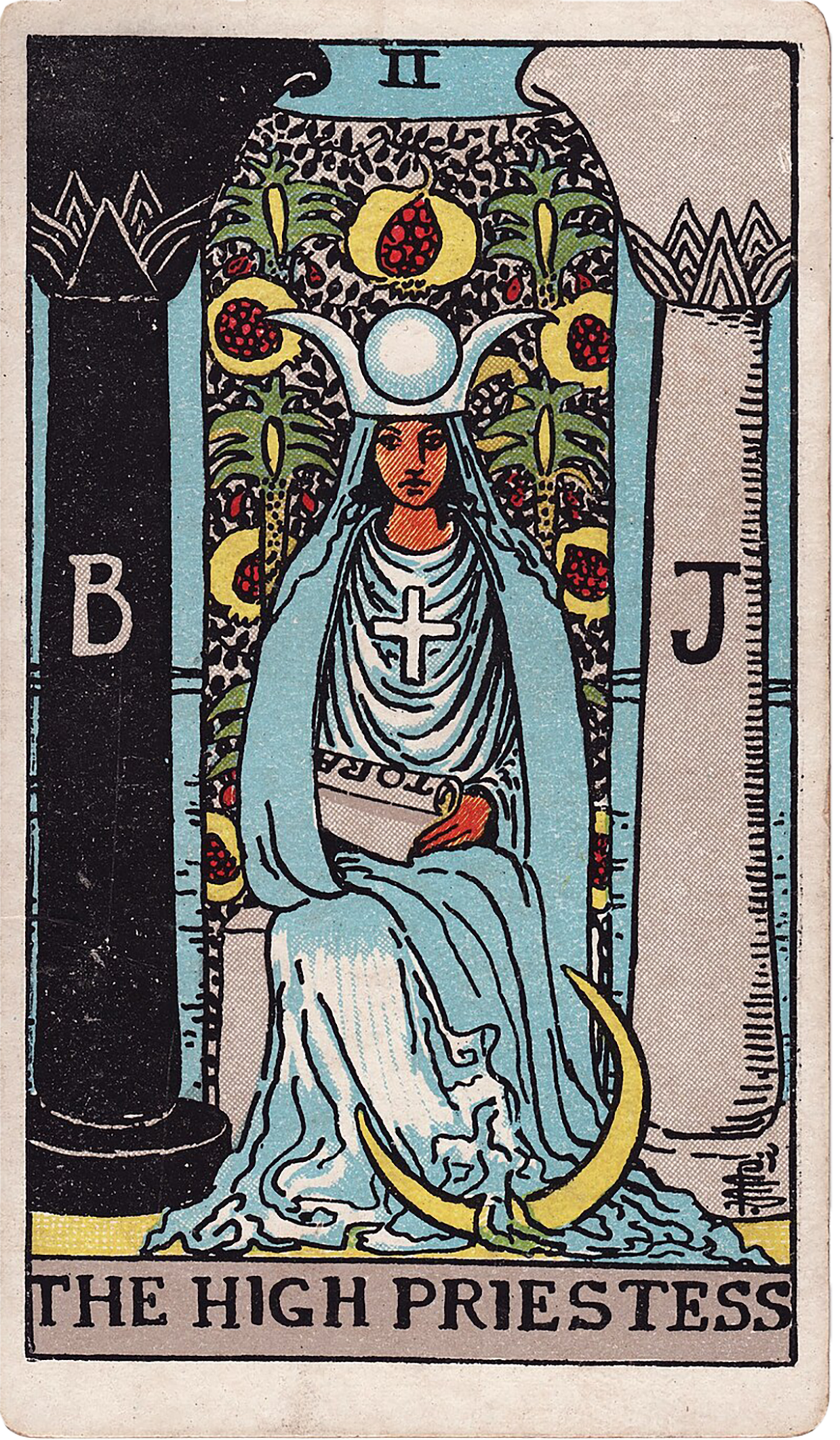 The High Priestess
Understanding the High Priestess Upright and Reversed Meanings
The High Priestess card from the Rider-Waite-Smith deck depicts a seated woman between two pillars, symbolizing balance between dualities such as light and dark, conscious and unconscious. She embodies intuition, hidden knowledge, and the invitation to listen beyond surface appearances. Upright, she encourages quiet discernment, trusting inner wisdom, and engaging consciously with what is revealed. This does not guarantee ease but suggests the value of patience and subtle awareness. When this card appears, ask where deeper honesty, clearer boundaries, or more deliberate choices can help. Practically, it often signals that the core issue is becoming visible enough to act upon with measured sensitivity. In reversal, the High Priestess often points to disconnect from intuition, secrecy, or passive avoidance. It can indicate distorted perception where anxiety or projection masquerades as inner knowing. The reversed card invites reflection on where intuitive energy is blocked or imbalanced rather than forecasting misfortune. Depending on the reading, reversal may show a psychological process of insight and realignment that is still in progress.
Technique for Reading the High Priestess in Different Contexts
When interpreting the High Priestess as a single card in a reading, consider the context carefully to tailor the message. Begin by observing the card’s central symbols—the crescent moon at her feet, the scroll of the Torah partially hidden, the veil decorated with pomegranates—and use these to anchor insights. Next, clarify whether the card is upright or reversed. Then, ask questions aligned with the reading’s focus: For example, "What hidden truth or subconscious factor is influencing this situation?" or "Where can silence and receptivity serve best here?" Avoid rushing to concrete predictions. Instead, emphasize the card’s invitation to step back and reflect, balancing internal awareness with external circumstances. If reversed, explore what intuitive blocks or secrecy might be present and how those could be addressed. Look for clues in the querent’s narrative or surrounding cards if available to deepen nuance.
Applying the High Priestess to Love and Relationships
In a love context, the upright High Priestess suggests that not all is yet visible or consciously understood between partners or within oneself. It calls for listening beneath words and actions to subtle emotional currents and unspoken needs. This card can indicate the value of patience, intuitive empathy, or waiting for clearer signals before making commitments. It also points to the importance of personal boundaries and inner honesty as foundations for connection. Reversed, the High Priestess may highlight secrecy, misunderstandings, or emotional withdrawal. It warns against mistaking anxiety or assumptions for true insight about the relationship. It encourages addressing hidden fears and seeking truthful communication rather than avoidance. In both positions, the card reminds the reader to balance openness with discretion and to respect inner rhythms in relational dynamics.
Interpreting the High Priestess in Career and Work
For career readings, the upright High Priestess advises trusting intuition about projects or workplace dynamics rather than rushing into action based solely on external evidence. It may indicate that important information is forthcoming or that the querent should cultivate discretion and careful observation. This card often points to behind-the-scenes influence, research, or strategic planning. It can also highlight careers connected to knowledge, mystery, or helping others access inner wisdom. The reversed High Priestess warns of possible disconnection from one’s true professional goals or intuitive guidance. It can signal passive avoidance of career decisions or confusion stemming from unexamined fears. Practically, the reversal invites re-engagement with authentic motivation and reflection on hidden assumptions shaping work life.
The High Priestess and Financial Matters
When the High Priestess emerges in financial contexts, the upright card encourages a cautious, informed approach rather than impulsive action. It advises attending to subtle cues, trusting inner evaluation, and allowing financial situations to unfold with deliberation. This might indicate that more information or clarity is needed before making investments or commitments. It promotes self-control and wisdom over haste. The reversed High Priestess in finances suggests possible secrecy, confusion, or denial relating to money. It can reveal unconscious blocks to financial clarity or avoidance of practical realities. Here, the card encourages the querent to examine emotional attitudes toward money and to seek clarity through mindful budgeting or professional advice, rather than relying on guesswork or wishful thinking.
Guidance and Challenges Offered by the High Priestess
As advice, the upright High Priestess encourages quiet reflection, trust in inner knowledge, and patience. It recommends engaging with mysteries rather than forcing answers and approaching situations with balanced discernment. This card challenges the reader to tolerate uncertainty and access wisdom beyond rational analysis. As a challenge, it may indicate resistance to inner truth, fear of vulnerability, or confusion caused by unexamined emotional patterns. The reversed High Priestess particularly points to blocks in accessing intuition or an over-reliance on external validation. Recognizing this allows the querent to focus on restoring connection with their deeper self and nurturing honest communication, both internally and externally.
Person and Outcome Interpretations of the High Priestess
When representing a person, the High Priestess often describes someone who embodies intuition, discretion, and deep knowledge. This individual may be a guide or confidant who helps others navigate emotional or spiritual terrain. Upright, they are calm, perceptive, and balanced; reversed, they might be secretive, withdrawn, or disconnected from their authentic wisdom. As an outcome card, the High Priestess suggests that the situation will unfold through subtle shifts requiring patience and awareness. It may not yield immediate clarity but promises that deeper understanding is emerging beneath the surface. The reversed outcome calls for vigilance about hidden blocks or misinterpretations and signals that more internal work or honesty is needed before progress can be made.
Spiritual Reflection with the High Priestess
Spiritually, the High Priestess invites exploration of the unconscious, sacred mysteries, and the feminine principle of receptivity. Upright, she symbolizes a gateway to deeper spiritual knowledge accessible through meditation, dreams, and quiet contemplation. She encourages learners to honor their inner voice and to cultivate balance between knowing and unknowing. The card’s lunar imagery highlights cyclical rhythms and the importance of tuning into natural inner cycles. When reversed, the card challenges spiritual seekers to examine where fear, doubt, or distraction disrupt connection with deeper wisdom. It suggests the need for cleansing mental and emotional blocks and fostering disciplined practice to regain alignment with intuitive insight.
Common Mistakes and Practical Reading Tips
A frequent mistake with the High Priestess is treating her as a card of passive waiting or magical certainty. Instead, she represents active quietness—an engaged, alert receptivity rather than disengagement. Another error is over-interpreting the card’s mystery as ominous or as a guarantee of hidden enemies or secrets; the card’s symbolism more often points to internal processes than external drama. Practically, always anchor the reading in the card’s visible symbols: the dual pillars (Joachin and Boaz), the scroll partially concealed, the moon and pomegranates. Use these to guide questions about balance, hidden knowledge, and cycles. Check the card’s orientation carefully and tailor interpretations to the querent’s context, emphasizing insight over prediction. When possible, encourage journaling or meditation on the card’s themes to deepen personal connection.
Practice questions
• Where in my life am I being invited to listen more deeply and trust my intuition?
• What boundaries or choices require more honesty and deliberate attention right now?
• How do I tend to respond when I face uncertainty or hidden aspects of a situation?
• In which areas might I be avoiding inner knowing or mistaking fear for insight?
• What practices can help me cultivate balanced discernment and patience?
Comments
Sign in to comment.
Continue learning
Interpreting the Dance of Justice and The Devil: Balancing Morality and Temptation in Tarot Readings
The combination of Justice and The Devil in tarot presents a profound exploration of morality, temptation, and personal accountability. This article unpacks how these cards influen...
Advanced Techniques for Combining The Moon and The Star to Enhance Intuition in Tarot Readings
This article explores advanced techniques to combine the symbolism and energy of The Moon and The Star Tarot cards to enhance intuition during Tarot readings. Drawing from traditio...
Unlocking Life Insights with the Celtic Cross Tarot Spread
This article offers a thorough exploration of the Celtic Cross Tarot Spread, focusing on its application within family and practical life contexts. Using a worked example featuring...
Unlocking Hidden Meanings with The Hermit and The Hanged Man for Spiritual Growth
This article offers an in-depth exploration of The Hermit and The Hanged Man Tarot cards focusing on their roles in spiritual growth. It guides readers through beginner and advance...
Unlocking Personal Insight with the Seven Card Horseshoe Spread
The Seven Card Horseshoe Spread is a practical and insightful Tarot layout ideal for exploring personal and family dynamics. This article breaks down each position—Past, Present, H...
Mastering the Court Cards of Wands for Unlocking Personal Drive and Leadership
The Court Cards of Wands represent a dynamic spectrum of personal energy, ambition, and leadership potential within the Minor Arcana. This article offers a comprehensive exploratio...
Tracing the Origins and Evolution of The Fool Card in Tarot History
The Fool card holds a foundational place in tarot tradition, symbolizing beginnings, openness, and the embrace of uncertainty. This article traces its origins from early European d...
Techniques for Reading Court Cards to Unlock Personality Insights
Court cards in Tarot often represent people, personality traits, or energy patterns within a situation. This article offers a structured approach for beginners and advanced readers...
Unlocking Emotional Transformation with Death and The Moon Tarot Combination
This article explores the rich and complex interaction between the Death and The Moon tarot cards within the Rider-Waite-Smith tradition, focusing on their combined potential to un...
Applying The Star Card to Foster Hope and Renewal in Personal Growth
The Star card in Tarot symbolizes hope, authenticity, and the process of steady renewal. In a single-card reading, The Star encourages embracing what is present, cultivating openne...