
Exploring The Strength Card for Building Inner Courage and Emotional Resilience
The Strength card in tarot represents the profound ability to meet life's challenges with calm courage, patience, and self-respect. This article examines how the Strength card's upright and reversed meanings shift across different reading contexts such as love, career, money, advice, challenges, person, outcome, and spiritual reflection. Drawing directly from the card’s Rider-Waite-Smith imagery, readers will learn practical techniques for incorporating this card into their readings. The article highlights common interpretive pitfalls and offers methods for using the card to build inner courage and emotional resilience rather than predicting fixed outcomes.
Cards explored in this article
 Strength
Introduction to the Strength Card and Its Symbolism
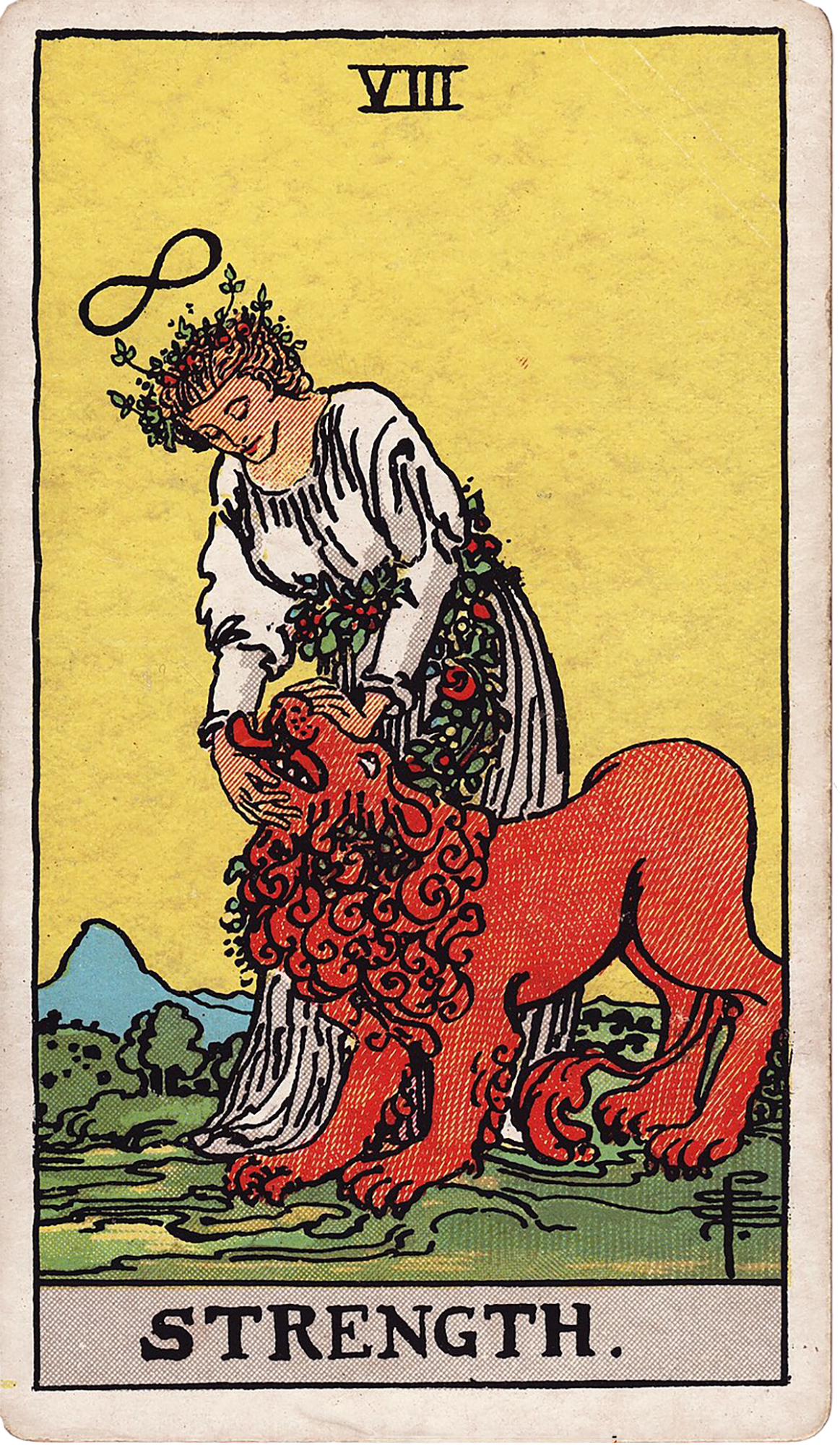
The Strength card, traditionally numbered VIII in the Major Arcana of the Rider-Waite-Smith deck, symbolizes the internal power necessary to face difficulties with grace and perseverance. The card typically depicts a woman gently holding or taming a lion, illustrating the harmony between human patience and primal force. This imagery underscores that true strength is not brute force but the calm mastery of emotions and self-restraint. The infinity symbol above the woman’s head represents infinite potential and balance between physical strength and spiritual insight. When upright, Strength encourages meeting intensity with composed courage and patience, suggesting that challenges require a deliberate and respectful approach rather than domination or haste. Reversed, the card may reveal internalized struggles such as self-doubt or emotional repression. Understanding the visual cues in the card’s artwork is essential for grasping its nuanced meanings across contexts.
Practical Technique for Reading the Strength Card
When the Strength card appears in a reading, begin by observing whether it is upright or reversed, as this affects tone and emphasis. Next, note the surrounding cards for contextual cues, but focus primarily on the internal dynamic the card suggests. Ask yourself: Where am I or the querent required to exercise calm courage? Is there an opportunity to use patience as a form of power? Are emotions being controlled with respect rather than force? Avoid jumping to deterministic predictions; instead, treat the card as an invitation to understand an inner quality or challenge. In readings where certainty is lacking, use the card as guidance for the next proportionate step rather than a final outcome. This method helps keep interpretations grounded and constructive.
Interpreting Strength in Love Contexts
In love readings, the upright Strength card highlights the value of emotional patience and self-respect within relationships. It suggests meeting emotional intensity—be it passion, conflict, or vulnerability—with calm courage rather than reactive force. For example, a querent dealing with a challenging partner might be encouraged to set clearer boundaries or respond with compassionate honesty rather than confrontation. The lion’s subdued posture in the card image reflects the taming of raw emotions through understanding and patience. Reversed, Strength in love can indicate suppressed anger, insecurity, or overcompensation—such as trying to control a partner’s behavior out of fear or mistrust. It might ask the querent to examine where they feel powerless or are denying their own emotional needs. Importantly, the card does not promise that relationship difficulties will vanish but that inner courage can improve how these challenges are faced.
Interpreting Strength in Career Contexts
In a career context, the upright Strength card symbolizes resilience and the ability to maintain composure under pressure. The imagery of the woman taming the lion can reflect mastering workplace challenges through patience and strategic effort instead of aggression or burnout. It may suggest that the querent has begun to see the central issue clearly enough to act deliberately rather than react impulsively. For example, handling a difficult boss or a high-stakes project with calm persistence is emblematic of this card’s lesson. Reversed, Strength may point to self-doubt, fear of failure, or trying to forcibly control situations that require flexibility. It warns against overexertion or losing confidence due to internalized stress. This nuanced perspective helps readers coach querents to cultivate emotional resilience and appropriate boundary-setting in professional life.
Interpreting Strength in Money and Financial Contexts
When Strength appears in money-related questions, it encourages a patient and disciplined approach to financial matters. The upright card suggests working with current resources wisely, resisting impulsive decisions driven by fear or greed. The card’s symbolism reminds us that financial success often requires steady effort and emotional control, such as resisting the temptation to overspend or react hastily to market volatility. In contrast, reversed Strength can highlight anxiety about money, hidden doubts about financial security, or attempts to control finances through forceful means like risky gambles or compulsive spending. It invites reflection on where internal emotional blocks or imbalances obstruct effective money management. The Strength card thus promotes the cultivation of financial resilience through calm, measured steps.
Strength as Advice in Readings
When drawn as advice, the upright Strength card urges the querent to embody calm courage and patience in their current situation. It suggests that the power they need already exists within but requires conscious engagement rather than waiting for external certainty. The card encourages reflection on where a clearer boundary, deeper honesty, or a more deliberate choice might advance the situation. Since Strength emphasizes self-respect over fear, the advice is to respond from a place of inner confidence rather than reactionary impulse. Reversed, the card advises acknowledging emotional blocks, suppressed feelings, or tendencies to overcontrol. It recommends identifying distorted energy patterns and encourages gentle correction and self-compassion rather than harsh judgment or avoidance.
Understanding Strength as a Challenge
When Strength appears as a challenge, upright it points to the difficulty of maintaining calm courage amidst intensity or uncertainty. The struggle is to harness patience without slipping into passivity or frustration. The challenge lies in choosing deliberate, proportionate actions rather than immediate or forceful reactions. The depiction of the lion restrained not by force but by gentle mastery highlights this delicate balance. Reversed, the challenge may be internal—self-doubt, emotional repression, or overexertion. It may indicate that the querent is wrestling with fear or anger that is difficult to access or express constructively. Recognizing these internal obstacles is the first step to moving beyond them. The card encourages viewing such blocks as temporary pauses on the path to greater emotional resilience.
Strength as a Person in the Spread
When representing a person, the Strength card often embodies someone who exemplifies calm courage, patience, and emotional mastery. This individual may be nurturing yet firm, able to handle situations with quiet confidence rather than force. The person may be a source of support who helps others tame their inner ‘lions’ or primal fears. Upright, this figure models self-respect and balanced power. Reversed, the person may struggle with self-doubt, suppressed anger, or controlling tendencies. They might be someone who appears strong on the outside but is internally conflicted or emotionally blocked. In either position, the card invites the reader to consider how this person’s qualities or challenges influence the querent’s situation.
Strength as an Outcome
As an outcome card, upright Strength suggests that the querent will develop or demonstrate the inner courage and patience necessary to navigate their situation effectively. The journey may not become easy, but the card promises the capacity to respond from self-respect rather than fear. The imagery of the woman taming the lion reflects the hopeful possibility of mastering challenges through balanced strength. Reversed, the outcome signals ongoing internal struggles or delayed progress due to emotional blocks or distorted expressions of power. It advises patience and self-awareness as the querent gradually works through these difficulties. The outcome thus emphasizes growth in emotional resilience rather than immediate resolution.
Strength for Spiritual Reflection
Spiritually, the Strength card invites reflection on the nature of true power and courage. It challenges the seeker to consider how patience and self-mastery open paths to deeper spiritual insight and infinite potential, symbolized by the infinity symbol above the woman’s head. Upright, the card encourages embracing vulnerability as a strength and responding to life’s intensity with grace rather than domination. It suggests that spiritual growth involves taming the ego’s ‘lion’—our base instincts and fears—through compassion and inner balance. Reversed, it can highlight spiritual blocks such as fear of change, suppressed emotions, or resistance to the necessary work of self-transformation. The card thus serves as a mirror reflecting where courage and patience are either flourishing or require conscious cultivation on the spiritual path.
Common Mistakes and How to Avoid Them
One common mistake when interpreting the Strength card is equating it with physical power or external dominance. The card’s message is about internal courage, emotional resilience, and patience rather than brute force. Another error is to read the reversed card only as a negative omen; instead, it often points to a needed internal pause or awareness of blocked energy. Avoid forcing the card’s meaning to fit a desired outcome; instead, use it to illuminate emotional dynamics and potential growth areas. In readings, it is also important to anchor interpretations firmly in the card’s imagery—the gentle taming of the lion, the infinity symbol, and the woman’s calm demeanor—rather than relying solely on keywords. This helps maintain a nuanced and authentic reading.
Integrating Strength into Your Reading Practice
To incorporate the Strength card effectively into readings, practice observing its visual elements and relating them to the querent’s circumstances. When the card appears, invite the querent to reflect on where they might practice patience and calm courage. Use open-ended questions, such as 'Where in your life do you feel the need to tame your inner lion?' or 'How might gentleness and self-respect change your approach here?' Document how the card’s meaning shifts across contexts to build a flexible interpretive skillset. Over time, you will deepen your ability to recognize the card’s invitation toward emotional resilience and balanced power, enhancing the transformative potential of your tarot practice.
Practice questions
• Where in my life am I called to meet challenges with calm courage rather than force?
• How do I currently express patience as a form of inner power?
• In what ways might I be suppressing or distorting my emotional strength?
• What boundaries or choices can I make to respond from self-respect rather than fear?
• How can I recognize and work with moments of internal resistance or self-doubt?
• What does the imagery of the woman and lion teach me about balancing strength and compassion?
• How can I apply the card’s lessons across different areas like love, career, and finances?
• What spiritual insights arise when I consider patience and courage as infinite potentials?
Comments
Sign in to comment.
Continue learning
Interpreting the Dance of Justice and The Devil: Balancing Morality and Temptation in Tarot Readings
The combination of Justice and The Devil in tarot presents a profound exploration of morality, temptation, and personal accountability. This article unpacks how these cards influen...
Advanced Techniques for Combining The Moon and The Star to Enhance Intuition in Tarot Readings
This article explores advanced techniques to combine the symbolism and energy of The Moon and The Star Tarot cards to enhance intuition during Tarot readings. Drawing from traditio...
Unlocking Life Insights with the Celtic Cross Tarot Spread
This article offers a thorough exploration of the Celtic Cross Tarot Spread, focusing on its application within family and practical life contexts. Using a worked example featuring...
Unlocking Hidden Meanings with The Hermit and The Hanged Man for Spiritual Growth
This article offers an in-depth exploration of The Hermit and The Hanged Man Tarot cards focusing on their roles in spiritual growth. It guides readers through beginner and advance...
Unlocking Personal Insight with the Seven Card Horseshoe Spread
The Seven Card Horseshoe Spread is a practical and insightful Tarot layout ideal for exploring personal and family dynamics. This article breaks down each position—Past, Present, H...
Mastering the Court Cards of Wands for Unlocking Personal Drive and Leadership
The Court Cards of Wands represent a dynamic spectrum of personal energy, ambition, and leadership potential within the Minor Arcana. This article offers a comprehensive exploratio...
Tracing the Origins and Evolution of The Fool Card in Tarot History
The Fool card holds a foundational place in tarot tradition, symbolizing beginnings, openness, and the embrace of uncertainty. This article traces its origins from early European d...
Techniques for Reading Court Cards to Unlock Personality Insights
Court cards in Tarot often represent people, personality traits, or energy patterns within a situation. This article offers a structured approach for beginners and advanced readers...
Unlocking Emotional Transformation with Death and The Moon Tarot Combination
This article explores the rich and complex interaction between the Death and The Moon tarot cards within the Rider-Waite-Smith tradition, focusing on their combined potential to un...
Applying The Star Card to Foster Hope and Renewal in Personal Growth
The Star card in Tarot symbolizes hope, authenticity, and the process of steady renewal. In a single-card reading, The Star encourages embracing what is present, cultivating openne...