
Exploring the Symbolic Language of the Wheel of Fortune in Tarot
The Wheel of Fortune card in tarot represents cycles, change, and the dynamic forces shaping our lives. This article examines the card’s symbolic language from the Rider-Waite-Smith tradition, emphasizing how the upright and reversed positions convey distinct lessons about adaptation, timing, and internal resistance. Through detailed interpretation techniques and reading strategies, learners will understand how to integrate the card’s imagery and meanings into nuanced, responsible tarot practice.
Cards explored in this article
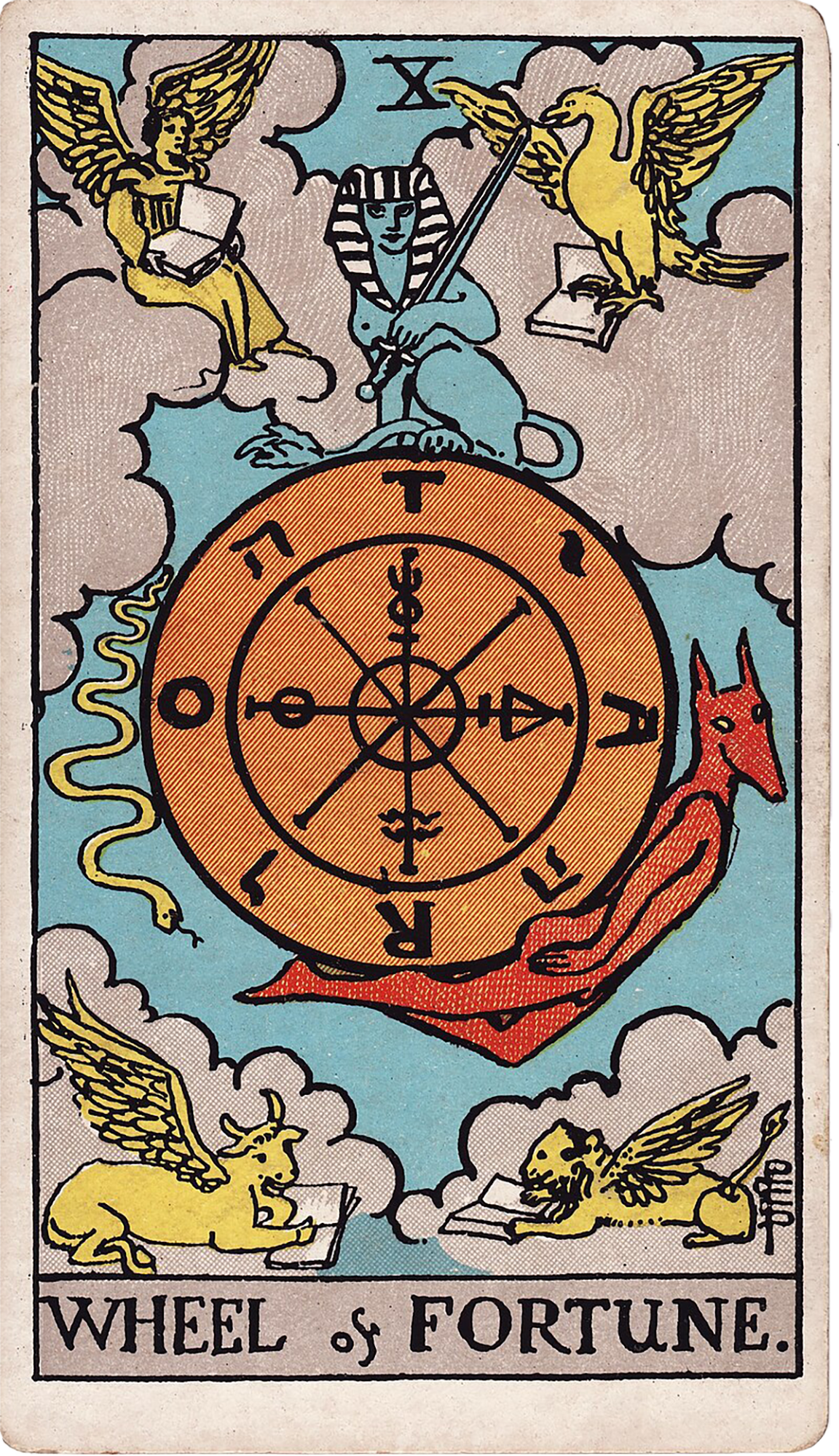 Wheel of Fortune
Introduction to the Wheel of Fortune and Its Symbolic Importance
The Wheel of Fortune is one of the most visually and conceptually rich cards in the tarot deck, positioned as Major Arcana card number ten. Traditionally, it signifies the cycles of life, fate, and the constant flow of change. This card represents the turning point where circumstances evolve, reminding readers that life is rarely static. Instead, it invites an awareness of timing, adaptation, and the forces beyond human control. The symbolism embedded in the card’s imagery—drawn from the Rider-Waite-Smith tradition—draws from ancient motifs of fortune wheels, cycles of nature, and divine intervention, serving as a powerful metaphor for the interplay between destiny and free will. This article explores the symbolic language of the Wheel of Fortune, focusing on both upright and reversed positions, to support learners in decoding its layered meanings during tarot readings.
Analyzing the Imagery of the Wheel of Fortune
The Rider-Waite-Smith Wheel of Fortune card features a large central wheel surrounded by four winged creatures, each holding a book. These figures correspond to the four evangelists and the fixed signs of the zodiac: the angel (Aquarius), the eagle (Scorpio), the lion (Leo), and the bull (Taurus). The wheel’s circular shape symbolizes the ongoing cycles of life, karma, and fate. Inside the wheel are symbols including alchemical signs for mercury, sulfur, water, and salt—elements representing transformation and balance. The letters T-A-R-O appear on the wheel, which can be read in various directions, suggesting the fluidity of meaning and the interconnection of the tarot system itself. Together, these images emphasize the themes of change, the interplay of elemental forces, and the presence of divine order amidst apparent randomness. Recognizing these symbols allows readers to interpret the card beyond surface fortune-telling, situating it in a rich symbolic context.
Upright Wheel of Fortune Meaning and Practical Reading Techniques
When the Wheel of Fortune appears upright, it signals a turning point or a moment when circumstances are shifting in a way that calls for adaptability and timing awareness. The card does not guarantee ease or luck but rather highlights the potential for constructive engagement with change. It encourages readers to identify where clearer boundaries, honest communication, or deliberate choices may support forward movement. Practically, this means recognizing that the ‘central issue’ in a reading has become visible enough to address consciously. A useful technique is to ask: What is the next proportionate step I can take right now? This reframing moves the reading away from passive waiting for fate to active engagement with the situation. Observing which aspects of the card’s lesson—such as acceptance of cycles or readiness to change—are already present in behavior can deepen the reading’s insight. For learners, it is important not to interpret the upright Wheel of Fortune as a promise of guaranteed good outcomes but as a prompt to work skillfully with the flow of events.
Reversed Wheel of Fortune and Its Symbolism of Resistance and Internal Dynamics
In its reversed position, the Wheel of Fortune often points to resistance to change, repeated unhelpful patterns, or poor timing. Rather than signaling an outright negative outcome, the reversed card highlights where the upright qualities are blocked, delayed, or distorted. This can manifest as blaming fate for personal choices or feeling stuck in cycles without recognizing one’s agency. The reversal may also suggest that the issue is becoming more internalized or psychological, marking a phase of introspective correction rather than external change. When interpreting the reversed Wheel of Fortune, it is beneficial to avoid deterministic or fatalistic conclusions. Instead, focus on questions like: Where is this energy difficult to access or express? What patterns am I beginning to see but have not fully transformed? Contextualizing the reversed card with neighboring cards in a spread is essential for discerning whether the reversal indicates resistance, recovery, excess, or a temporary pause in progress.
Common Mistakes in Interpreting the Wheel of Fortune
One frequent error in reading the Wheel of Fortune is to treat it as a purely luck-based or fortune-telling card, expecting it to predict inevitable good or bad outcomes. The card’s true depth lies in its invitation to engage consciously with change rather than passively awaiting fate. Another mistake is ignoring the nuanced differences between upright and reversed positions, which can lead to oversimplified readings. Additionally, failing to consider the card’s surrounding cards and the broader context can cause misinterpretation, such as missing internal psychological dynamics indicated by the reversal. Some readers may also overlook the rich symbolism in the imagery—the four creatures, elemental signs, and letters—and how these details inform the card’s meaning in a given reading. Avoiding these pitfalls requires attentive study of the card’s symbolism, an open mindset, and careful phrasing when sharing interpretations with querents.
Integrating the Wheel of Fortune into Symbolism Studies and Family Symbolism
From the perspective of symbolism studies, the Wheel of Fortune is a profound example of how archetypal imagery communicates complex human experiences of change, fate, and cyclical time. Particularly in family symbolism, the card can represent inherited patterns—cycles repeated across generations—and the dynamics of adapting or resisting these legacies. Its presence in a reading may invite reflection on how family histories influence present circumstances and choices. The card encourages learners to see symbolism not only as abstract but also as deeply connected to lived relational realities. By studying the Wheel of Fortune’s imagery and meanings in the context of family symbolism, readers gain tools to explore how cycles of behavior, timing, and transformation function within personal and collective narratives.
Practical Method for Reading the Wheel of Fortune in Tarot Spreads
To read the Wheel of Fortune effectively, begin by thoroughly examining the card’s imagery—notice the wheel, the four creatures, the elemental symbols, and the letters. Consider whether the card is upright or reversed and reflect on the associated meanings outlined above. In a spread, identify what area of the querent’s life is currently experiencing flux or cyclical influence. Ask constructive questions such as: What turning point is emerging? Where can adaptation or timing be better employed? If reversed, inquire about patterns resisting change or areas where responsibility is being deflected. Cross-reference these insights with neighboring cards to build a coherent narrative. For example, neighboring cards that signify clarity or action may suggest readiness to move forward, while those indicating blockage or conflict may highlight where resistance resides. Record observations about how the querent’s current behavior aligns with the card’s lessons. This structured approach ensures readings are grounded in symbolism and practical interpretation rather than prediction alone.
Conclusion and Reflection on the Wheel of Fortune’s Symbolic Language
The Wheel of Fortune invites tarot learners to engage deeply with symbolism as a living language that reflects human experience of change, timing, and responsibility. Its images are rich with historical and esoteric meaning, and its upright and reversed positions offer complementary perspectives on how we relate to cycles—whether through conscious adaptation or unconscious resistance. Mastering the interpretation of this card enhances a reader’s ability to provide nuanced, empowering guidance that respects both fate’s influence and personal agency. Through ongoing study and practical application, the Wheel of Fortune becomes a vital tool for understanding the dynamics of transformation within individual and collective contexts.
Practice questions
• How does recognizing cyclical patterns in my life or family history affect my interpretation of the Wheel of Fortune?
• In what ways can the imagery of the four creatures and elemental symbols deepen my understanding of change and fate?
• How can I differentiate between times when the Wheel of Fortune indicates external change versus internal psychological shifts?
• What practical steps can I suggest to querents to help them engage constructively with the energy of the Wheel of Fortune upright?
• How might resistance to change show itself in a reversed Wheel of Fortune reading, and how can I address this with empathy and clarity?
Comments
Sign in to comment.
Continue learning
Interpreting the Dance of Justice and The Devil: Balancing Morality and Temptation in Tarot Readings
The combination of Justice and The Devil in tarot presents a profound exploration of morality, temptation, and personal accountability. This article unpacks how these cards influen...
Advanced Techniques for Combining The Moon and The Star to Enhance Intuition in Tarot Readings
This article explores advanced techniques to combine the symbolism and energy of The Moon and The Star Tarot cards to enhance intuition during Tarot readings. Drawing from traditio...
Unlocking Life Insights with the Celtic Cross Tarot Spread
This article offers a thorough exploration of the Celtic Cross Tarot Spread, focusing on its application within family and practical life contexts. Using a worked example featuring...
Unlocking Hidden Meanings with The Hermit and The Hanged Man for Spiritual Growth
This article offers an in-depth exploration of The Hermit and The Hanged Man Tarot cards focusing on their roles in spiritual growth. It guides readers through beginner and advance...
Unlocking Personal Insight with the Seven Card Horseshoe Spread
The Seven Card Horseshoe Spread is a practical and insightful Tarot layout ideal for exploring personal and family dynamics. This article breaks down each position—Past, Present, H...
Mastering the Court Cards of Wands for Unlocking Personal Drive and Leadership
The Court Cards of Wands represent a dynamic spectrum of personal energy, ambition, and leadership potential within the Minor Arcana. This article offers a comprehensive exploratio...
Tracing the Origins and Evolution of The Fool Card in Tarot History
The Fool card holds a foundational place in tarot tradition, symbolizing beginnings, openness, and the embrace of uncertainty. This article traces its origins from early European d...
Techniques for Reading Court Cards to Unlock Personality Insights
Court cards in Tarot often represent people, personality traits, or energy patterns within a situation. This article offers a structured approach for beginners and advanced readers...
Unlocking Emotional Transformation with Death and The Moon Tarot Combination
This article explores the rich and complex interaction between the Death and The Moon tarot cards within the Rider-Waite-Smith tradition, focusing on their combined potential to un...
Applying The Star Card to Foster Hope and Renewal in Personal Growth
The Star card in Tarot symbolizes hope, authenticity, and the process of steady renewal. In a single-card reading, The Star encourages embracing what is present, cultivating openne...