
Exploring the Symbolic Layers and Elemental Associations of the Ace of Swords
This article explores the multi-layered symbolism and elemental correspondences of the Ace of Swords from the Rider-Waite-Smith tarot deck. It provides an educational guide for learners on how to interpret this card’s upright and reversed positions by connecting its imagery to traditional sword symbolism and elemental theory. The article also covers techniques for analyzing the card in spreads, common interpretative pitfalls, and strategies for anchoring readings visually and contextually. Through detailed examination of the Ace of Swords’ iconography and meaning, readers will gain tools for practical, nuanced use in their tarot practice.
Cards explored in this article
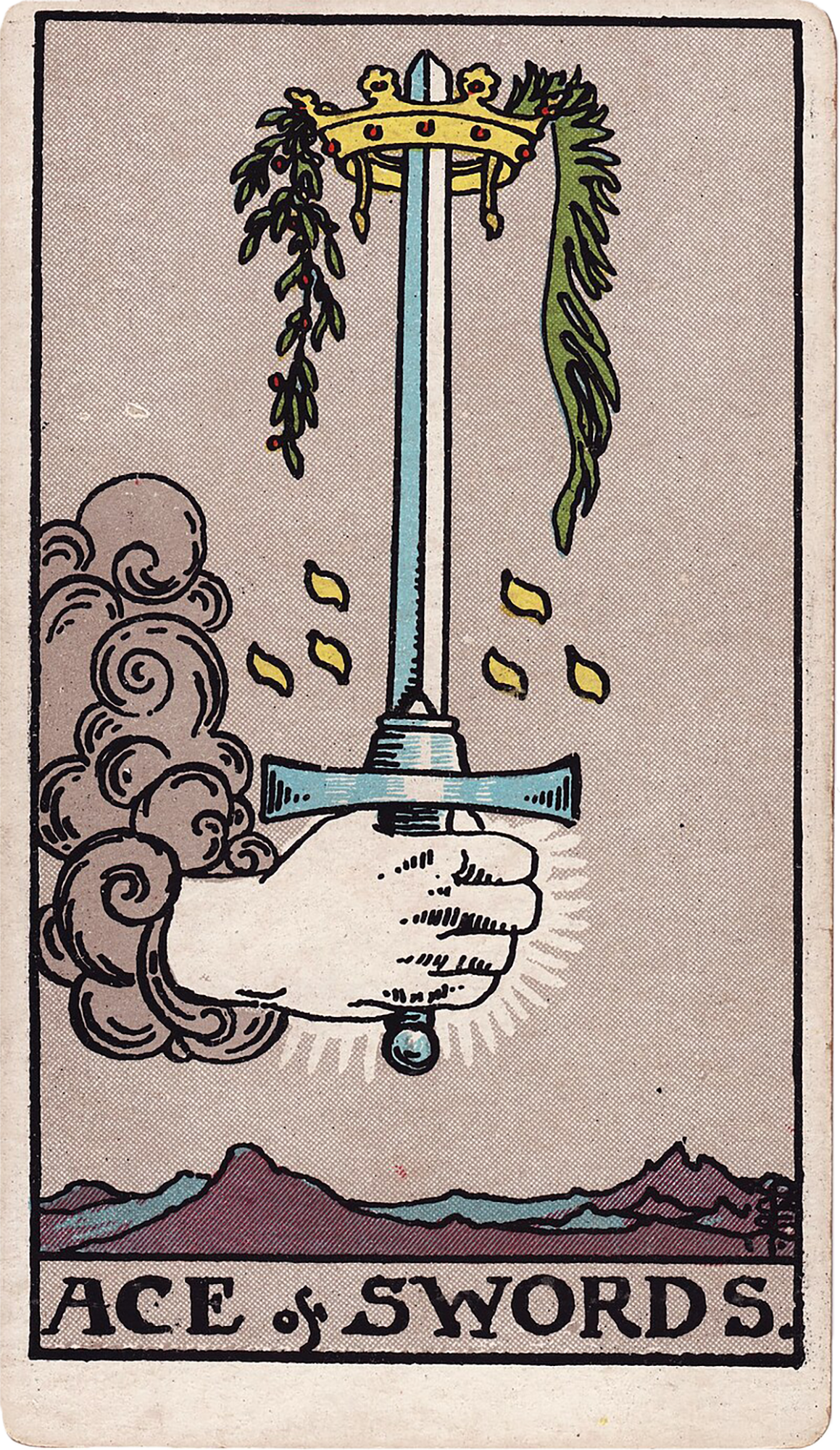 Ace of Swords
Introduction to the Ace of Swords Symbolism
The Ace of Swords is a powerful card within the suit of Swords, representing the realm of intellect, communication, and mental clarity. In many tarot traditions, especially the Rider-Waite-Smith deck, this card appears as a single upright sword crowned with a wreath, often erupting from clouds. The imagery immediately suggests the emergence of insight, truth, and decisive mental breakthroughs. As the first card of the suit, the Ace signals the potential and inception of thought processes or conflict resolution strategies. Its imagery symbolizes cutting through confusion and reaching a moment of clarity or revelation. By examining the sword itself, the crown, and the surrounding elements, we can interpret not only the card’s general meaning but also nuances relevant to specific reading contexts.
Traditional Rider-Waite-Smith Imagery and Its Interpretations
The Rider-Waite-Smith Ace of Swords depicts a hand emerging from a cloud, gripping a sword upright. The sword is sharp and gleaming, symbolizing clarity and precision of thought. The cloud represents the intangible realm of ideas and inspiration, while the hand signifies divine intervention or a sudden gift of insight. The crown of victory atop the sword is encircled by a laurel wreath, traditionally a symbol of triumph and honor. This imagery suggests that intellectual power, when wielded correctly, leads to success and mastery over challenges. The upright sword also reflects justice and truth, often implying that honest communication and strategic decisions will prevail. This card is practical and focused on the present stage of mental activity, asking the querent to identify where clarity has emerged and what actions can be taken to capitalize on this mental breakthrough.
Elemental Associations and Their Influence on Symbolic Layers
In the tarot, the suit of Swords is associated with the element of Air. Air symbolizes intellect, communication, reason, and the breath of life that animates thought. This elemental connection reinforces the Ace of Swords as a card of mental energy, clarity, and the power to cut through illusions. The sword itself is a tool of sharpness and precision, emblematic of Air’s qualities. Understanding this elemental layer helps clarify why the card often appears in readings related to decision-making, truth-seeking, and conflict resolution. It also highlights the card’s potential challenges: Air can sometimes bring cold detachment, harsh criticism, or over-intellectualization. Recognizing this dual nature allows readers to differentiate between constructive intellectual breakthroughs and destructive uses of logic or truth, especially when the card appears reversed.
Upright Ace of Swords: Identifying Constructive Mental Breakthroughs
When the Ace of Swords appears upright, it signals a moment of intellectual clarity or decisive communication. This card often points to a breakthrough that cuts through confusion, enabling the querent to see a problem or situation with fresh eyes. It may also indicate a conversation or decision that is critical to the current phase of a situation. Because the energy of Swords is practical rather than purely abstract, the Ace challenges readers to consider what mental or communicative action is appropriate now. In spreads, the surrounding cards help determine whether this clarity is just beginning to emerge, developing, or reaching resolution. For example, if paired with cards indicating conflict or tension, the Ace suggests a path forward through reason and truth. Common practical interpretations include insight gained through analysis, successful negotiation, or a strategic plan that addresses core issues.
Reversed Ace of Swords: Navigating Confusion and Misused Logic
The reversed Ace of Swords shifts focus to the difficulties inherent in mental processes. Rather than clarity, it signals confusion, harshness, or misuse of truth. This may manifest as premature judgments, intellectual arrogance, or using logic as a weapon rather than a tool for understanding. The reversal can also indicate internal mental struggles that are not visible to others, such as self-doubt or conflicting thoughts. It’s important to note that the reversed card is not simply the opposite of the upright meaning; instead, it points to where the mental process has become stuck or distorted. Readers should explore what needs to be simplified, acknowledged, or communicated more effectively before healthy mental clarity can return. Practically, this might mean slowing down to reassess assumptions or releasing rigid thinking patterns that hinder progress.
Technique for Reading the Ace of Swords in Spreads
To interpret the Ace of Swords effectively, start by observing its position in the spread and the nature of surrounding cards. If it appears upright, ask where clarity or decisive communication is evident or needed. Consider whether the card’s energy is emerging, developing, or resolving a mental challenge. If reversed, look for areas of confusion or mental blockage. To ground interpretations, reference the card’s imagery: the hand as a gift or intervention, the sword as sharp truth, the crown as victory earned through intellect. Avoid treating the Ace as a vague sign of intelligence; instead, link its appearance to specific aspects of thought, communication, or conflict in the querent’s life. Be mindful of common mistakes such as overemphasizing abstract idealism or ignoring the card’s practical call to action.
Common Mistakes and How to Avoid Them
One frequent mistake is interpreting the Ace of Swords solely as intellectual prowess without recognizing its nuanced call for practical application. The card demands action that matches the present stage, not abstract ideals. Another pitfall is equating the reversed card simply with failure or negativity, rather than exploring where mental processes are stuck or misapplied. Readers may also overlook the elemental Air association, missing the balance between clarity and potential coldness or harshness in communication. To avoid these mistakes, always anchor interpretations in the card’s imagery and elemental symbolism, and use the spread context to refine understanding. Encourage querents to reflect on how their thought patterns, communication style, or decision-making may be influencing their situation.
Practical Examples of Interpretation
Consider a querent facing a difficult choice who draws the upright Ace of Swords flanked by cards denoting conflict and strategy. This combination suggests that a clear, honest conversation or a decisive plan can resolve tensions effectively. In contrast, if the Ace appears reversed alongside cards indicating internal struggle or confusion, the reader might advise the querent to pause, reassess assumptions, and avoid rash conclusions. Another example is a creative professional encountering a mental block; the upright Ace of Swords could signify a fresh idea or breakthrough, while the reversed card warns against harsh self-criticism or overthinking. These examples underscore how the card’s symbolism and elemental associations help tailor interpretations to specific life contexts.
Conclusion Reflecting on the Ace of Swords Symbolism and Elemental Layers
The Ace of Swords is a nuanced card rich with symbolic layers that reveal the power and challenges of the mind. Its depiction in the Rider-Waite-Smith tarot connects the practical realities of thought, communication, and conflict management with elemental Air’s qualities of clarity, intellect, and breath. Understanding this card requires recognizing both its constructive potential for insight and its reversed warnings about confusion and misuse of logic. By grounding interpretations in the card’s imagery and elemental meaning and integrating context from surrounding cards, tarot practitioners can unlock deep educational insights that enhance their reading practice. The Ace of Swords ultimately invites learners to wield mental power with precision, honesty, and care.
Practice questions
• How does the imagery of the Ace of Swords help you visualize the concept of intellectual breakthrough?
• In what ways can the elemental association of Air deepen your understanding of the card’s meaning?
• When the Ace of Swords appears reversed, what mental habits or communication issues might it be asking you to examine?
• How can you use the surrounding cards in a spread to determine the stage of mental clarity or confusion represented by the Ace of Swords?
• What practical actions does the Ace of Swords encourage when it appears upright in a reading?
Comments
Sign in to comment.
Continue learning
Interpreting the Dance of Justice and The Devil: Balancing Morality and Temptation in Tarot Readings
The combination of Justice and The Devil in tarot presents a profound exploration of morality, temptation, and personal accountability. This article unpacks how these cards influen...
Advanced Techniques for Combining The Moon and The Star to Enhance Intuition in Tarot Readings
This article explores advanced techniques to combine the symbolism and energy of The Moon and The Star Tarot cards to enhance intuition during Tarot readings. Drawing from traditio...
Unlocking Life Insights with the Celtic Cross Tarot Spread
This article offers a thorough exploration of the Celtic Cross Tarot Spread, focusing on its application within family and practical life contexts. Using a worked example featuring...
Unlocking Hidden Meanings with The Hermit and The Hanged Man for Spiritual Growth
This article offers an in-depth exploration of The Hermit and The Hanged Man Tarot cards focusing on their roles in spiritual growth. It guides readers through beginner and advance...
Unlocking Personal Insight with the Seven Card Horseshoe Spread
The Seven Card Horseshoe Spread is a practical and insightful Tarot layout ideal for exploring personal and family dynamics. This article breaks down each position—Past, Present, H...
Mastering the Court Cards of Wands for Unlocking Personal Drive and Leadership
The Court Cards of Wands represent a dynamic spectrum of personal energy, ambition, and leadership potential within the Minor Arcana. This article offers a comprehensive exploratio...
Tracing the Origins and Evolution of The Fool Card in Tarot History
The Fool card holds a foundational place in tarot tradition, symbolizing beginnings, openness, and the embrace of uncertainty. This article traces its origins from early European d...
Techniques for Reading Court Cards to Unlock Personality Insights
Court cards in Tarot often represent people, personality traits, or energy patterns within a situation. This article offers a structured approach for beginners and advanced readers...
Unlocking Emotional Transformation with Death and The Moon Tarot Combination
This article explores the rich and complex interaction between the Death and The Moon tarot cards within the Rider-Waite-Smith tradition, focusing on their combined potential to un...
Applying The Star Card to Foster Hope and Renewal in Personal Growth
The Star card in Tarot symbolizes hope, authenticity, and the process of steady renewal. In a single-card reading, The Star encourages embracing what is present, cultivating openne...