
Resolve Team Conflict with Court Card Pairings for Clearer Communication
This article teaches a structured approach to resolving team and family conflict by reading court-card pairings. Using the supplied Knight of Wands, King of Cups, and Queen of Swords as visual archetypes, you will learn how to identify roles, interpret pair dynamics, and translate symbolic insight into specific communication practices. The focus is educational and practical: not prediction but training in recognizing behavior patterns, clarifying responsibilities, and coaching clearer, calmer exchanges.
Cards explored in this article
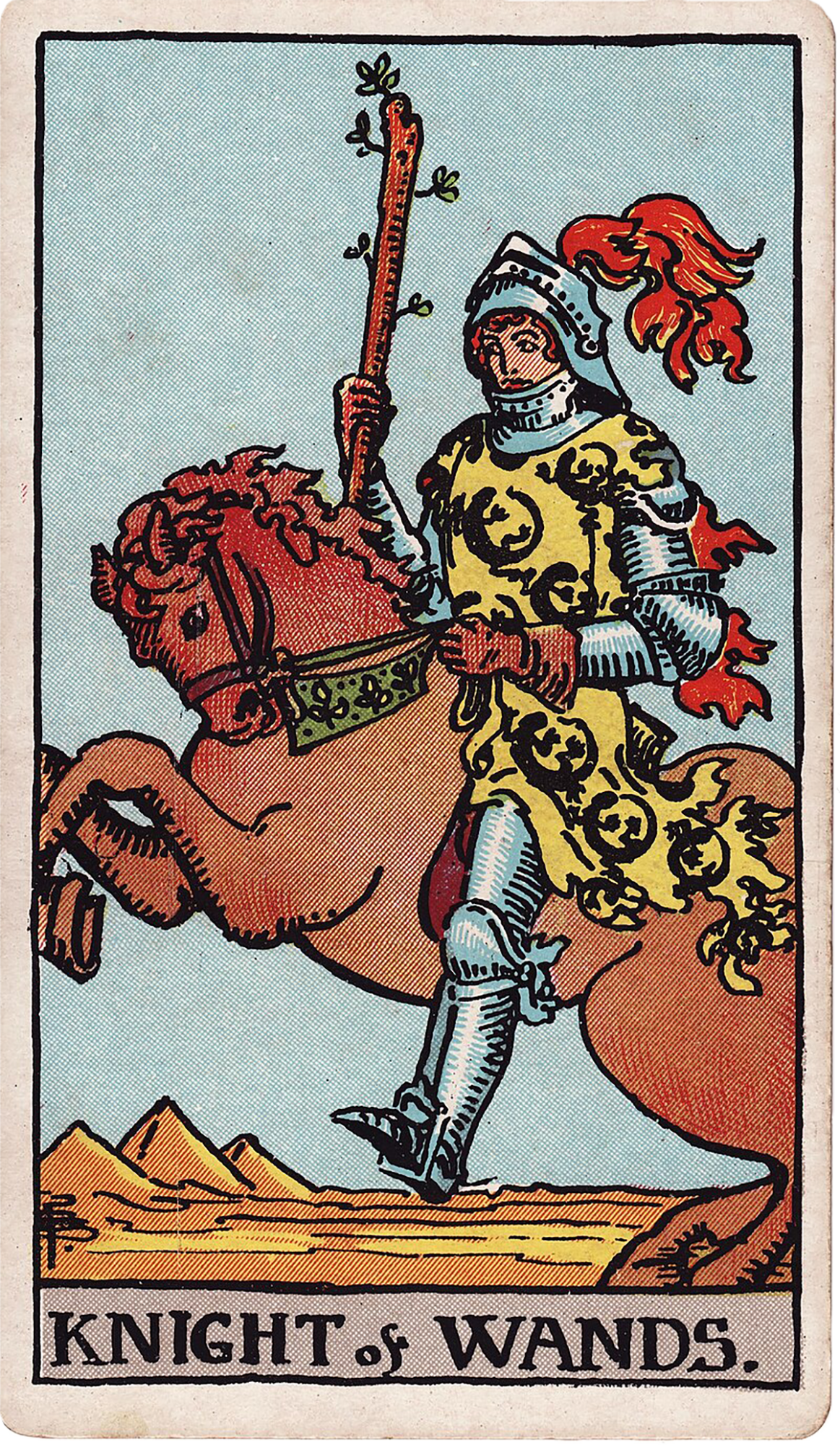 Knight of Wands
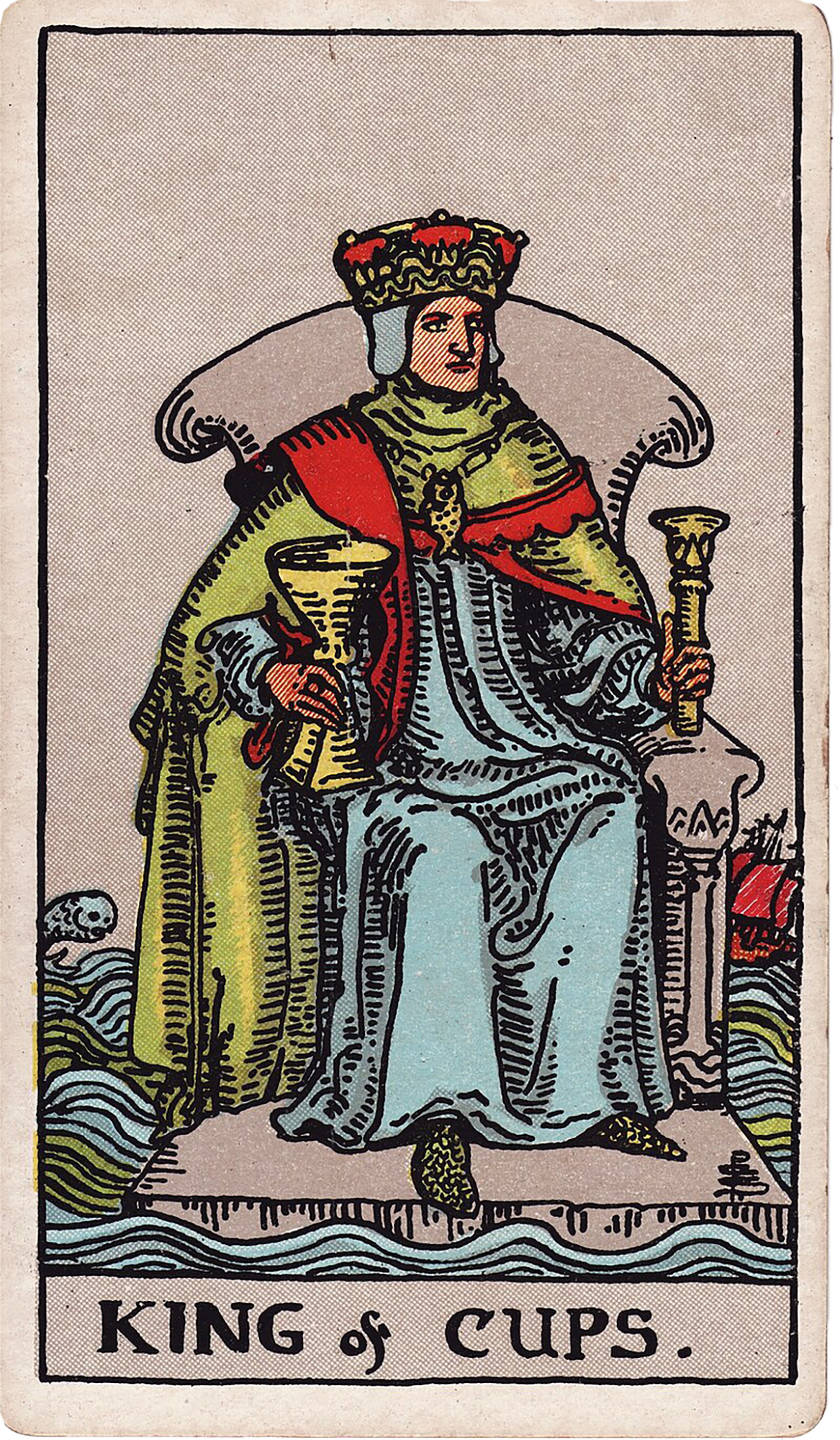 King of Cups
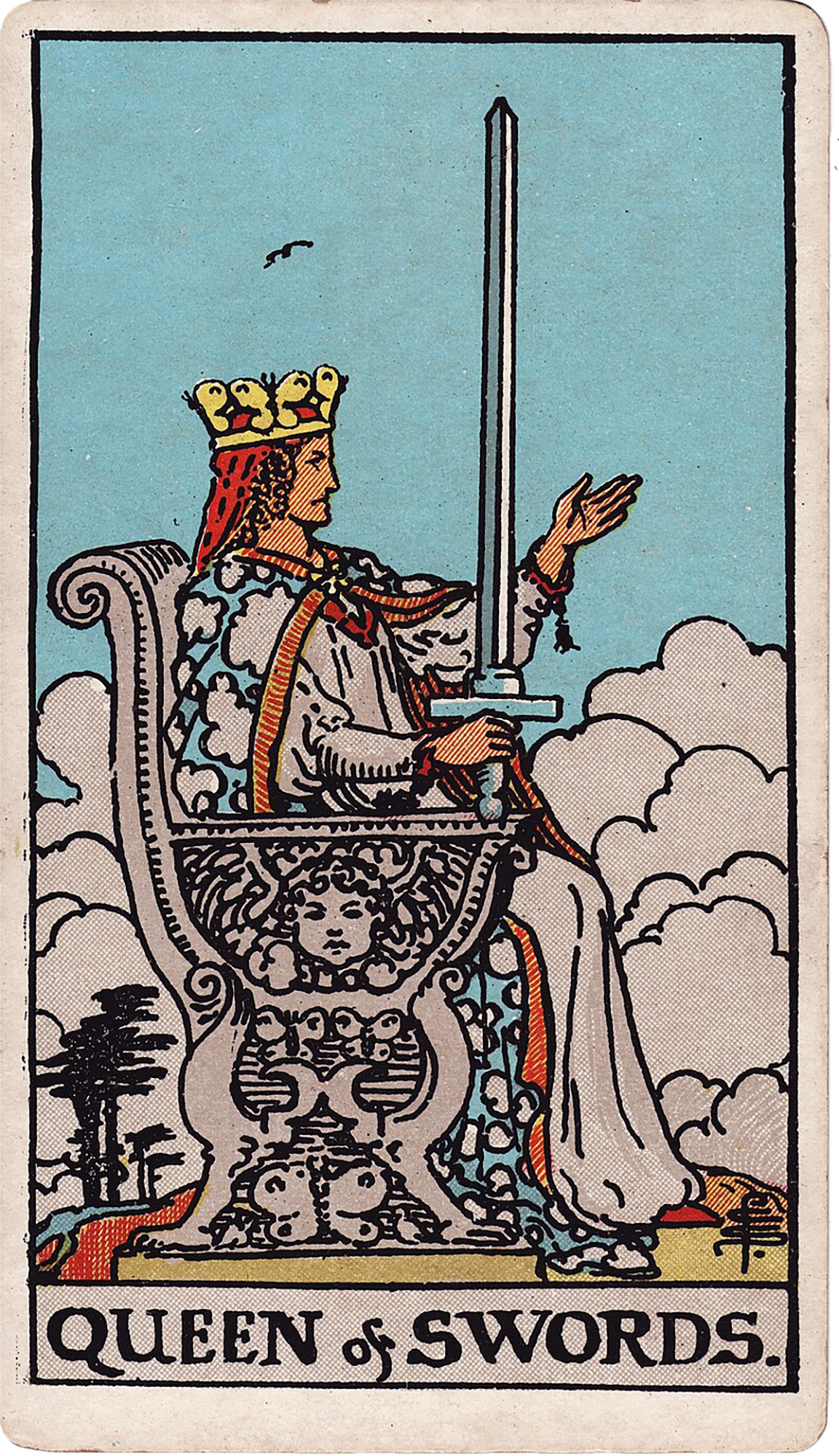 Queen of Swords
Introduction
Court cards are living people in the Tarot deck: representatives of roles, styles of leadership and communication, and the recurring personalities who shape group dynamics. In family and small-team settings these roles often repeat—someone pushes forward, someone holds the emotional field, someone cuts through confusion with clarity. This article explores a court-card pairing technique for resolving conflict using three supplied cards: the Knight of Wands, the King of Cups, and the Queen of Swords. The guidance here is instructional rather than predictive. Use the cards as a diagnostic map and a rehearsal space for better conversation, not as a verdict on people.
Why court-card pairings help with team and family conflict
Pairings reveal interaction patterns. One court card alone names a style; two or more in conversation show how energies cooperate or collide. In a family or small team, conflict often stems from misaligned roles: an impulsive initiative that lacks containment, a calm mediator whose steadiness becomes avoidance, or a brutally honest communicator whose clarity feels like criticism. By mapping who is doing what—through court-card archetypes—you can identify where energy needs to be shifted, contained, translated into language, or given responsibility. The Rider-Waite-Smith visual cues are especially useful in this exercise. Look at the supplied images: the Knight riding forward with a wand, the King steady on his sea-facing throne holding cup and scepter, the Queen upright with sword and an extended hand. These images give you immediate, concrete metaphors to point to during mediation: the Knight's forward horse for momentum, the King's throne on water for emotional steadiness, the Queen's upraised sword for cutting through fog. Anchoring verbal coaching to these pictures reduces abstraction and helps team members recognize their patterns more compassionately.
Reading the supplied cards: imagery and practical lessons
Knight of Wands image and lesson Look at the Knight: armored rider on a rearing horse, clutching a flowering wand, often with salamander motifs and a dry, open landscape behind him. The Knight of Wands embodies forward motion, charisma, urgency and entrepreneurial heat. In a team setting this energy shows up as the person who volunteers bold solutions, pushes timelines, or jumps between projects. The image suggests useful strengths—initiative, confidence, contagious enthusiasm—but also risks: haste, incomplete follow-through, and fuel-for-effect without long-term planning. Concretely, the Knight asks: where does this momentum belong, and how should it be channeled so the team's aims benefit rather than scramble? King of Cups image and lesson The King sits on a throne that seems to float between calm and turbulent water. He holds a cup and a scepter—symbols of feeling-in-command and emotional authority. In teams and families this card names someone who can steady feelings, hold grievance without overreacting, and create safety so difficult subjects can be spoken. The RWS imagery of a stable presence on shifting water is a perfect metaphor for mediation and containment: this person doesn’t eliminate emotion but tolerates it and translates it into actionable care. The King also warns against repression or manipulative soothing: the upright image invites genuine empathy expressed with responsibility. Queen of Swords image and lesson The Queen of Swords sits erect with a sword held upright and a hand extended, often crowned and framed by a sky of clouds and birds. She represents clarity, honest boundaries and communication that values truth over flattery. In a family team she is the one who names problems, sets limits, and refuses to let confusion persist. This clarity is indispensable in conflict, yet the RWS imagery also reminds us of potential coldness: sharpness can wound if not tempered with compassion. The Queen asks: what needs naming now, and how can naming be precise without abandoning relationship?
A practical spread: Court-Card Pairing Spread for Teams
This practical spread uses court-card archetypes to reveal roles, friction points and next actions. You can do it with physical cards or mentally map people onto the cards after discussion. The layout has six positions. The spread is meant as a coaching tool for group reflection, not a fortune-telling rumination. Positions 1. Role A archetype: who is playing this function in the conflict? 2. Role B archetype: who else is playing an identifiable function? 3. Relationship dynamic: how the pair behaves together under pressure. 4. Emotional container: what emotional regulation or support is present or missing? 5. Communication pattern: how messages are sent and received—pinpoint what helps and what harms. 6. Practical next step: a concrete communication move or boundary to test in the next interaction. How to use it with the supplied cards If you physically draw and reveal specific cards, anchor each position to a card. For teaching and practice with this article, run through the spread mapping real people onto the Knight of Wands, King of Cups and Queen of Swords as applicable. Example mappings: a passionate younger sibling as Knight of Wands, a parent who keeps the household emotionally steady as King of Cups, and a pragmatic aunt who insists on clarity as Queen of Swords. Facilitation guidelines - Begin with shared consent: explain that archetype mapping is descriptive and temporary. - Use the images: let participants point to card features as metaphors—"see how the Knight’s horse is rearing? That’s what I feel when deadlines are sprung on me." - Encourage naming without labeling: translate "You’re being the Knight" into "Right now you’re offering momentum; let’s decide how to hold that energy." - Record one concrete next step and a time to evaluate it.
Interpreting pair dynamics: how the three supplied cards interact
Pairings create a relational grammar. Below are common interaction patterns you will find when these three archetypes show up in a team or family conflict. Knight of Wands paired with King of Cups Meaning: heat meets containment. The Knight brings a surge—new plan, demand for speed—while the King provides the emotional environment that either allows the surge to land or lets it fizzle. If the Knight’s motion is acknowledged and given structure by the King’s steady containment, the pair can achieve bold, compassionate action: fast choices that don’t hurt feelings. If the King over-accommodates to avoid waves, the Knight’s impulse may run unchecked and burn out the team. If the King uses steadiness to smother or redirect the Knight’s voice, the Knight may become resentful and act out. Visual cues to discuss: the Knight’s rearing horse (momentum) against the King’s sea-throne (balance on emotion). Knight of Wands paired with Queen of Swords Meaning: action needs translation. The Knight’s ideas need precise delivery. The Queen can make the Knight’s enthusiasm operational by cutting through ambiguity and setting a clear plan. When well-handled the Queen’s sword makes the Knight’s wand purposeful: deadlines, roles, and measurable steps. Trouble arises if the Queen’s precision becomes dismissive—her cutting words can extinguish the Knight’s morale. Or the Knight’s haste can make the Queen feel undermined, prompting overly legalistic responses. Visual anchor: the Queen’s upright sword as a tool that organizes the Knight’s wild motion. King of Cups paired with Queen of Swords Meaning: containment meets clarity. The King supports emotional safety while the Queen translates feelings into boundary-based decisions and policies. This pairing is ideal for mediated conversation: the King soothes and holds, the Queen articulates what must change. The risk is that the Queen’s bluntness can feel like an emotional denial to the King, and the King’s calm can be mistaken for avoidance by the Queen. Their task is to demonstrate how steadiness and truth can be expressed together. Visual anchor: King’s cup (compassion) and Queen’s sword (clarity) as complementary tools.
Examples: short case studies using the three cards
Case 1: A family project gone awry Scenario: Siblings are renovating a family room. One sibling rushes to buy and install items, another avoids the confrontation, and a third insists on redesigning specifications late in the process. Mapping to cards: the rushing sibling as Knight of Wands, the avoiding sibling as King of Cups in an avoidant mode, the specificity-insisting sibling as Queen of Swords. Reading and action: The Knight’s momentum was useful but lacked shared planning; the King’s attempt to keep harmony became passive; the Queen’s demands for clarity were experienced as criticism. The recommended step: the King takes the explicit role of emotional container at the next meeting—invite the Knight to list three priorities and ask the Queen to translate them into two actionable items each, timing who completes what. Script: King opens by naming the goal and inviting the Knight’s priorities, Queen then converts items into a checklist with deadlines. Case 2: Intergenerational tension over childcare Scenario: A parent (King of Cups-like) is trying to maintain calm; a teenager (Knight of Wands-like) is rebelling and making impulsive choices; a grandparent (Queen of Swords-like) cuts through with lists and criticisms. Mapping and intervention: The Knight needs contained outlets for energy (clear tasks or short freedoms), the King must validate feelings without rescuing or smoothing all consequences, and the Queen needs to deliver rules in a way that connects consequences to values rather than moralizing. Communication move: agree on one weekend trial where the Knight takes a supervised responsibility; the King frames it as a trust-building experiment; the Queen writes the responsibilities and consequences in neutral language.
Common reading mistakes and how to avoid them
Mistake 1: Treating court cards as fixed personalities Correction: Court cards describe roles that change with context. Someone can be a Knight in one conflict and a King in another. Use them as situational instruments rather than labels. Mistake 2: Confusing honesty with cruelty Correction: The Queen of Swords models clarity, not callousness. Ask: does the message preserve dignity? Teach people how to use sharp truth with a scalar tone—facts first, intent second, care third. Mistake 3: Ignoring reversals and process Correction: Reversed archetypal patterns matter. A reversed Knight of Wands looks like recklessness or burnout, a reversed King of Cups can show emotional manipulation or withdrawal, and a reversed Queen of Swords looks like cutting bitterness. If you only read upright strengths you miss the energy that is blocking resolution. Mistake 4: Using the cards as a substitute for negotiation Correction: Tarot mapping clarifies roles and suggests language, but it should feed negotiation, not replace it. Always turn symbolic insight into a concrete, time-bounded experiment.
Practical communication techniques inspired by the cards
Translate archetypal energy into micro-practices you can try in the next difficult conversation. From the Knight of Wands: Structured channeling - Before offering a proposal, outline one sentence of intent, three steps, one resource needed, and one possible roadblock. - Agree to a short trial: "Let's try this for two weeks, then evaluate." - Designate an accountable follow-up moment. From the King of Cups: Emotional containment and reflective validation - Use a brief framing statement: "I see this is important to you; I want us to try a calm test." - Reflect feelings without solving: "It sounds like you're frustrated and excited—both matter here." - Offer safe boundaries: "I can hold this conversation for thirty minutes; after that we take a break if needed." From the Queen of Swords: Clear naming and boundary-setting - Use precise language: "When X happens, Y is the consequence." - Separate facts from interpretation: "Fact: the tiles were installed without approval. Interpretation: that felt dismissive. Consequence: we'll pause further purchases until we sign off." - Use neutral, action-oriented directives rather than moral language. Sample script combining all three "I appreciate the push to move forward (Knight energy). I want us to try this for two weeks with a clear checklist (Queen clarity). I'll help hold the space for this trial and check in about how people are feeling midweek (King containment)."
Exercises to practice the method
Exercise 1: Role-mapping in real time At the start of a family meeting, ask each participant to choose which card image best fits their current mode. Spend five minutes describing why. The goal is self-awareness rather than judgement. Notice shifts: someone who picks Knight early may later take Queen moves as the conversation demands. Exercise 2: Turn a complaint into a Queen statement Take a recurring complaint and rewrite it in three steps: fact, feeling, request. Use the Queen’s sword imagery to trim emotional embellishment and leave a clear ask. Exercise 3: Two-week Knight trial Identify a Knight-style initiative someone proposes. Write a two-week experiment with a single metric of success, emotional check-ins led by a King-type person, and a Queen-style written checklist. Reassess at the end with a focus on what to keep, modify, or stop. Exercise 4: Practice reversing unhelpful patterns If the Knight tends toward recklessness, practice pausing: take three breaths and name one small practical next step. If the King tends toward avoidance, practice naming a limit aloud. If the Queen tends toward cutting, practice a compassionate preface before the hard fact.
Conclusion and next steps
Court-card pairing is a practical, visual method for diagnosing and shifting the dynamics that cause family and team conflict. The Knight of Wands, King of Cups and Queen of Swords offer three essential tools: momentum, containment, and clarity. Use the spread and exercises here to move from complaint to testable action. Remember that the cards describe roles, not destinies. The real work is in translating symbolic insight into agreed, bounded experiments—short trials with evaluation. Start small, use the images as neutral metaphors, and treat each conflict as a rehearsal for better communication.
Practice questions
• Which of the three supplied images feels most like how you behave under pressure, and why?
• Think of a recent conflict in your family or team. Which card would you assign to each person involved and what changed when you viewed them that way?
• When you picture the Knight of Wands' rearing horse and flowering wand, what practical impulse does that suggest about your next step?
• How might the King of Cups' throne-on-water image help you stay steady while difficult feelings arise?
• What would a Queen of Swords phrasing of your most frequent complaint sound like when reduced to fact, feeling, and request?
• Which pattern (reckless Knight, withdrawn King, or cutting Queen) shows up most often in your group, and what micro-practice will you commit to change it this week?
• How can you convert symbolic observations from a court-card pairing into a time-limited experiment the group can try?
Comments
Sign in to comment.
Continue learning
Interpreting the Dance of Justice and The Devil: Balancing Morality and Temptation in Tarot Readings
The combination of Justice and The Devil in tarot presents a profound exploration of morality, temptation, and personal accountability. This article unpacks how these cards influen...
Advanced Techniques for Combining The Moon and The Star to Enhance Intuition in Tarot Readings
This article explores advanced techniques to combine the symbolism and energy of The Moon and The Star Tarot cards to enhance intuition during Tarot readings. Drawing from traditio...
Unlocking Life Insights with the Celtic Cross Tarot Spread
This article offers a thorough exploration of the Celtic Cross Tarot Spread, focusing on its application within family and practical life contexts. Using a worked example featuring...
Unlocking Hidden Meanings with The Hermit and The Hanged Man for Spiritual Growth
This article offers an in-depth exploration of The Hermit and The Hanged Man Tarot cards focusing on their roles in spiritual growth. It guides readers through beginner and advance...
Unlocking Personal Insight with the Seven Card Horseshoe Spread
The Seven Card Horseshoe Spread is a practical and insightful Tarot layout ideal for exploring personal and family dynamics. This article breaks down each position—Past, Present, H...
Mastering the Court Cards of Wands for Unlocking Personal Drive and Leadership
The Court Cards of Wands represent a dynamic spectrum of personal energy, ambition, and leadership potential within the Minor Arcana. This article offers a comprehensive exploratio...
Tracing the Origins and Evolution of The Fool Card in Tarot History
The Fool card holds a foundational place in tarot tradition, symbolizing beginnings, openness, and the embrace of uncertainty. This article traces its origins from early European d...
Techniques for Reading Court Cards to Unlock Personality Insights
Court cards in Tarot often represent people, personality traits, or energy patterns within a situation. This article offers a structured approach for beginners and advanced readers...
Unlocking Emotional Transformation with Death and The Moon Tarot Combination
This article explores the rich and complex interaction between the Death and The Moon tarot cards within the Rider-Waite-Smith tradition, focusing on their combined potential to un...
Applying The Star Card to Foster Hope and Renewal in Personal Growth
The Star card in Tarot symbolizes hope, authenticity, and the process of steady renewal. In a single-card reading, The Star encourages embracing what is present, cultivating openne...