
The Four of Swords in Rest Recovery and Workplace Boundaries
This article presents a detailed, practical guide to reading the 4 of Swords as a single‑card lesson across everyday contexts, with special focus on rest, recovery and workplace boundaries. Anchored to the supplied 4 of Swords imagery and the provided upright and reversed card texts, it explains symbolism, how meanings shift by context (love, career, money, advice, challenge, person, outcome, spiritual reflection), reading techniques, common mistakes, and step‑by‑step methods to clarify whether the card asks for deliberate pause, warns of premature return to activity, or teaches boundary skills for the workplace.
Cards explored in this article
 4 of Swords
Introduction: Why the 4 of Swords matters right now
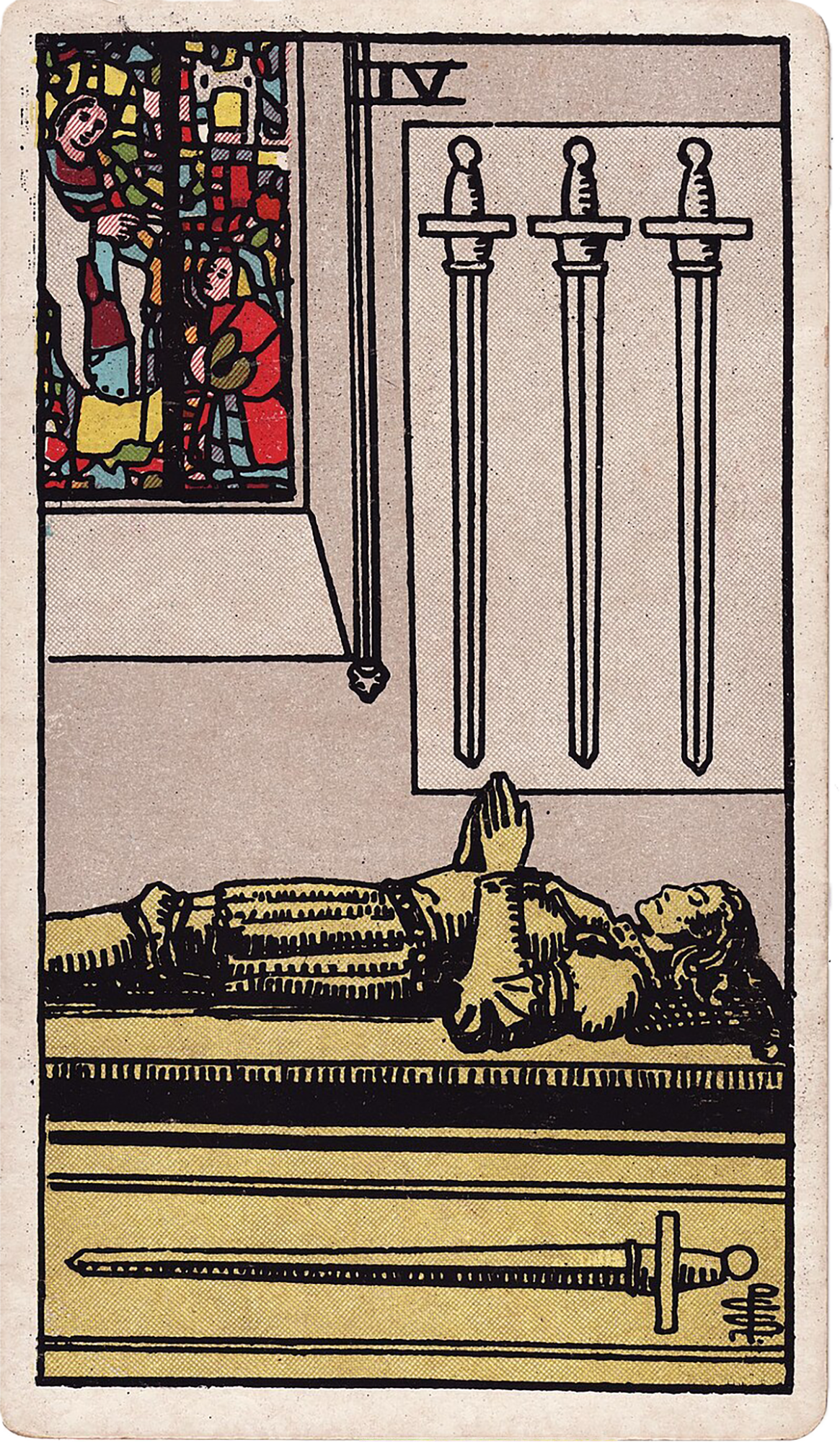
The supplied 4 of Swords image will appear to anyone reading this article: a recumbent figure in a chapel‑like setting, three swords mounted or suspended above, a single sword laid beneath. The card's upright description you were given begins: "Upright, 4 of Swords highlights deliberate pause, recovery and mental restoration after conflict or strain." The reversal draws attention to restlessness, burnout and premature return to activity. Together these frames make the 4 of Swords a vital card when contemporary life combines high cognitive load, blurred work‑life lines, and chronic stress. This article treats the 4 of Swords as a single‑card lesson: the card itself supplies the story. We explore the card's Rider‑Waite‑Smith symbolism, how that imagery maps to concrete scenarios, and practical reading methods that help learners distinguish restorative pause from avoidance or forced inactivity.
Reading from the image: key Rider‑Waite‑Smith symbolism to notice
Start every interpretation by looking closely at the supplied 4 of Swords image. Important RWS details and what they suggest: - The recumbent figure: restful, still, or in prayer — a voluntary or enforced pause. This posture signals withdrawal from external conflict into an interior space for recovery. - The sarcophagus or stone couch: sanctuary and temporary suspension. It's not permanent death but a protected place of convalescence. - Three swords on the wall or above: past conflicts, mental strain, active engagements set aside for now. Their placement above the figure suggests those elements are acknowledged but not currently being engaged. - One sword lying beneath the figure: a readiness to resume when healed; the capacity to reengage is present but kept quiet. - The stained glass or chapel windows (often showing a knight in RWS): an idealized past or a model of virtue — the idea of recuperation after service, or the expectation to recover before returning. Swords are the suit of thought, communication, decisions and consequences of mental habits. The RWS tableau places those mental processes into a context of rest rather than action. Every interpretive move should tie back to these visual cues: pause, sanctuary, acknowledged conflict, readiness to return.
Upright and reversed: use the supplied card texts as primary anchors
The supplied upright text states that the card "highlights deliberate pause, recovery and mental restoration after conflict or strain" and that it is practical—"it asks for a response that fits the present stage rather than an abstract ideal." When you see the supplied 4 of Swords upright in a single‑card pull, begin with that core: this is a moment for recuperation tailored to the immediate needs. The supplied reversed text directs attention to restlessness, burnout, forced inactivity or returning to activity before readiness. It points to a stuck process: "the lesson is understood intellectually but not yet lived consistently" or an internal issue that is not obvious to others. Use these supplied passages as your primary interpretive reference. Upright: recovery and constructive pause. Reversed: problematic pause or avoidance, or a forced/incomplete rest that needs unraveling.
How the 4 of Swords shifts by context: principles for readers
When you interpret the 4 of Swords across different question areas (love, career, money, advice, challenge, person, outcome, spiritual reflection), two rules keep the reading grounded: 1) Start with the imagery and supplied text. Every contextual meaning must flow from the card’s visual logic and the upright/reversed frames. 2) Ask stage questions: is this card describing a beginning of recovery, an ongoing convalescence, a risk of relapse, or a call to set boundaries? The supplied biography of the card emphasizes that the card's energy can be starting, developing, under pressure, or moving toward resolution—use your spread or clarifying method to determine the stage. Below are specific context translations that keep to those two rules.
Love and relationships: what the 4 of Swords asks for
Upright in love: The supplied upright text—deliberate pause and mental restoration—becomes a call for intentional space. This can be a relationship sabbatical to process conflict, a request for quiet while grief or stress is worked through, or a mutual agreement to step back from heated exchanges. Look at the image: the chapel suggests a protective container. The three swords above the figure are the arguments or emotional disturbances momentarily shelved. The one sword beneath implies the capacity for reengagement once healing occurs. Practical cues: If you’re reading for a querent who wants clarity about a partner, ask: "Is this pause mutual or one‑sided? Is the person using rest to heal or to avoid? How long might this needed gap be?" Clarify with timing or activity questions, and consider a follow‑up clarifier about communication patterns. Reversed in love: The supplied reversed text warns of restlessness, burnout, or returning too quickly. In relationships this can show someone who insists on returning to normal before wounds are closed, or someone who appears withdrawn but is actually ruminating or avoiding. The image’s single sword beneath becomes worrying: it may be thrust forward prematurely. Ask whether the break reflects avoidance (fear of conflict) or an enforced separation (external pressures like work or illness). Common misread: Confusing necessary solitude for rejection. The RWS imagery emphasizes sanctuary, not abandonment; communicate that the card often recommends containment and conversation about boundaries rather than permanent severance.
Career and workplace boundaries: the card as a rule and a tool
This is the article’s focal area. Upright: The 4 of Swords upright, per the supplied description, asks for a "response that fits the present stage"—in the workplace that often reads as authorized pause, medical leave, a negotiated reduction in duties, or an explicit boundary that creates a protected space to recover. Use the tomb/sanctuary image as a metaphor for a physical or procedural buffer—an office policy, a temporary shift in role, or a clear 'do not disturb' agreement for focused recovery. Concrete workplace examples: - An employee returning from burnout draws the upright 4 of Swords: recommend a phased return, a written plan for reduced hours and limited meetings, and clear communication channels so co‑workers know what to expect. - A manager who feels overwhelmed draws the card upright: it's a green light to model boundaries—set email hours, decline non‑urgent late calls, or assign an acting lead. Reversed in workplace contexts: The supplied reversed text’s emphasis on forced inactivity or premature return is crucial. Reversed might mean someone is clocking in despite poor capacity (risking errors and relapse), or HR is pushing a quick return without accommodation. It can also indicate that the worker is 'resting' by hiding from accountability. The image’s swords above the figure can become intrusive—past conflicts or unresolved issues keep reappearing in new forms. Advice to readers: when the 4 of Swords appears in workplace spreads, always pair it with procedural questions: "What policies are in place for convalescent return? Who needs to be informed? Does the person have a concrete plan for phased duties?" The card often recommends documentation and negotiated timelines as the 'stone couch' that holds recovery.
Money and practical resources: reading the 4 of Swords
Upright: Financially, the 4 of Swords asks for stabilization rather than speculative action. The sanctuary imagery suggests conserving resources, paying down acute liabilities, or creating an emergency buffer. It favors secure, low‑activity approaches—arrangements that allow the querent to rest without financial collapse, such as short‑term disability, a temporary reduction in expenses, or an emergency savings drawdown. Reversed: Watch for unsustainable inertia or reckless haste. The reversed description’s warning about returning before ready can look like trying to resume full financial risk (investments, major purchases) while still recovering financially. Alternatively, reversed may show someone refusing to file for benefits or support because of pride or denial, which prolongs recovery. Practical reading method: Ask for concrete numbers and timelines when the card appears for finance issues. If upright, map out minimal viable budgets. If reversed, ask whether there are social supports or benefits being ignored and what administrative steps are preventing recovery.
Advice and challenge positions: how the 4 of Swords instructs
As advice (upright), the supplied 4 of Swords recommends a protocol of rest: schedule it, name the boundaries, and set a measurable endpoint or check‑in. Because the card is "practical"—as the supplied text emphasizes—advice must include concrete steps: an agreed phone‑call schedule, a return‑to‑work date, daily restorative practices, or delegation plans. As a challenge (reversed), the card points to resistance to rest or the social/institutional obstacles that make rest impossible. The imagery—conflict symbols above and readiness below—becomes a tension to be resolved: either remove the obstacles (delegate tasks, renegotiate deadlines) or heal the querent’s internal permission structure so they can actually rest. Technique: Turn the card into an action checklist. For advice: list three immediate boundary actions and one longer‑term measure. For challenge: list what’s preventing rest (external expectations, finances, identity) and the smallest first step to shift each item.
Person and outcome positions: decoding people and endings
Person: When the 4 of Swords represents a person, anchor your reading to the supplied imagery. This is someone who is contemplative, recovering, or in a period of withdrawal. They may be caring, introverted, or in convalescence. If reversed, the person could be restless, emotionally closed, or prematurely reengaging before healing is complete. Important nuance: the RWS figure looks like a knight at rest—so this person may be duty‑oriented and accustomed to service but currently shelved. Outcome: Upright as an outcome, the 4 of Swords promises stability through rest—a resolution that comes because recovery was respected. Expect a measured, stepwise return to activity. Reversed as an outcome warns of relapse or unresolved stress continuing; the final state may require a repeat cycle of rest or a different approach to healing (therapy, structural workplace change) before durable recovery.
Spiritual reflection and practice: beyond the immediate
Spiritually, the 4 of Swords invites contemplative practice as an instrument of clarity. The RWS chapel imagery and the prayerful posture suggest rituals that create sacred time for processing. Meditation, journaling to integrate conflict lessons, or a spiritual retreat fit this card upright. Reversed spiritual readings highlight spiritual bypassing or ritual that is performed intellectually, not embodied. The supplied reversed text’s note that the issue may be "understood intellectually but not yet lived" applies here; the remedy is small embodied practices: breathwork, somatic rest, or short daily rituals that reconnect belief to bodily experience.
Technique: step by step single‑card methods and clarifiers
Use the following practical single‑card protocol when the 4 of Swords is drawn: 1) Observe: Describe what you see in the supplied image. Don’t leap into meaning—note posture, swords, setting. 2) Locate the stage: Ask is this a beginning of rest, a prolonged convalescence, or a risky lull? Ask the querent or use a timing clarifier. 3) Upright or reversed anchor: Read the supplied upright/reversed descriptions out loud and ask which phrase resonates. 4) Contextual question: Reframe the querent’s question to focus on concrete actions. For workplace issues ask about policies, documentation and phased plans. For relationships ask about mutuality and consent to space. For money ask about emergency buffers and benefits. 5) Clarifiers: Pull one clarifier card (or ask a clarifying question) specifically about the obstacle to full recovery (if reversed) or about the structure that will hold the pause (if upright). If you only have the 4 of Swords, use binary questions: Yes/No or Timing. 6) Action plan: Convert the reading into 1–3 concrete steps with time markers: who will do what and by when. Because the supplied upright text emphasizes practicality, make the plan practical: designate rest hours, delegate responsibilities, schedule a check‑in. This method moves the 4 of Swords from abstraction into implementable care and boundary practices.
Common mistakes students make and how to avoid them
Mistake 1: Reading the 4 of Swords as laziness. Remedy: Always connect the image to context—rest in the card is restorative, not indulgent. Ask: "Is rest recommended or is withdrawal avoidance?" Mistake 2: Treating reversal as simply 'bad.' Remedy: Reversed shows a stuck process. Identify what is stuck and offer micro‑steps to dislodge it. Mistake 3: Forgetting Swords are mental. Remedy: Even when the card points to physical rest, remember it's primarily about cognition, communication, and decision boundaries—interpretations should include psychological and communicative elements. Mistake 4: Not specifying time or conditions. Remedy: Because the RWS imagery suggests a temporary sanctuary, always ask for endpoints or check‑ins—otherwise readers supply ambiguous advice. Mistake 5: Ignoring workplace policy or structural reality. Remedy: For career readings, pair intuitive counsel with pragmatic steps: who to contact in HR? What paperwork is needed?
Examples and short case studies anchored to the image
Case 1 — Employee on sick leave (Upright): A querent draws the supplied 4 of Swords after asking about returning to work. Begin by noting the stone couch and the single sword beneath—this suggests readiness exists but only after structured rest. Action plan: negotiate a phased return for 3 weeks, a reduced meeting schedule and a written plan. Follow up: clarify with HR and set a two‑week review. Case 2 — Team lead overwhelmed (Reversed): The 4 of Swords appears reversed for a manager feeling pressured to take on more projects. Use the supplied reversed text to identify forced inactivity or burnout. The problem might be that the manager appears to be resting but is actually ruminating and unproductive. Action plan: implement explicit boundaries (no email after 6 PM), offload tasks to a deputy, and schedule a short restorative break with accountability. Case 3 — Relationship cooling (Upright): A querent worries a partner’s silence means the relationship is over. The supplied upright description suggests the silence is restorative, not final. Ask whether the pause is mutual and whether there is communication about return. Recommend an agreed boundary and a check‑in date. Each case ties back to the RWS image: rest is deliberate, temporary, and held within a structure.
Concluding practice and how to use this card in learning
Treat the supplied 4 of Swords as a tutor in boundary craft and staged recovery. When you practice, pull this single card with a focused question: "What does rest look like here?" Use the step‑by‑step technique above and always translate the visual details into concrete actions. Over time you'll recognize whether the card in a given position asks for protection, signals dangerous inactivity, or points to needed institutional supports. As the upright text said: this card is practical—let your reading be practical too.
Practice questions
• Looking at the supplied 4 of Swords image, what three visual details stand out first and what do they suggest about the querent's state?
• If the 4 of Swords appears upright for a workplace question, what are three specific boundary measures you could recommend?
• When the 4 of Swords appears reversed in a relationship reading, how can you distinguish avoidance from necessary solitude?
• What would a one‑week, one‑month, and three‑month plan for recovery look like if the card appears upright for health or burnout?
• Which parts of your reading rely on symbolism and which on the querent's concrete situation? How can you check your symbolic inferences?
• How does remembering that Swords govern thought and communication change the way you interpret physical rest in the 4 of Swords?
• What clarifying question would you ask if the 4 of Swords appears but the querent insists they cannot pause because of financial pressure?
• How can you turn a reversed 4 of Swords into an actionable list of next steps rather than a vague warning?
• In what ways might institutional structures (HR policies, labor laws, healthcare) be the 'stone couch' that the 4 of Swords asks you to use?
• How will you document a return‑to‑work or relationship check‑in after advising rest so the pause remains contained and intentional?
Comments
Sign in to comment.
Continue learning
Interpreting the Dance of Justice and The Devil: Balancing Morality and Temptation in Tarot Readings
The combination of Justice and The Devil in tarot presents a profound exploration of morality, temptation, and personal accountability. This article unpacks how these cards influen...
Advanced Techniques for Combining The Moon and The Star to Enhance Intuition in Tarot Readings
This article explores advanced techniques to combine the symbolism and energy of The Moon and The Star Tarot cards to enhance intuition during Tarot readings. Drawing from traditio...
Unlocking Life Insights with the Celtic Cross Tarot Spread
This article offers a thorough exploration of the Celtic Cross Tarot Spread, focusing on its application within family and practical life contexts. Using a worked example featuring...
Unlocking Hidden Meanings with The Hermit and The Hanged Man for Spiritual Growth
This article offers an in-depth exploration of The Hermit and The Hanged Man Tarot cards focusing on their roles in spiritual growth. It guides readers through beginner and advance...
Unlocking Personal Insight with the Seven Card Horseshoe Spread
The Seven Card Horseshoe Spread is a practical and insightful Tarot layout ideal for exploring personal and family dynamics. This article breaks down each position—Past, Present, H...
Mastering the Court Cards of Wands for Unlocking Personal Drive and Leadership
The Court Cards of Wands represent a dynamic spectrum of personal energy, ambition, and leadership potential within the Minor Arcana. This article offers a comprehensive exploratio...
Tracing the Origins and Evolution of The Fool Card in Tarot History
The Fool card holds a foundational place in tarot tradition, symbolizing beginnings, openness, and the embrace of uncertainty. This article traces its origins from early European d...
Techniques for Reading Court Cards to Unlock Personality Insights
Court cards in Tarot often represent people, personality traits, or energy patterns within a situation. This article offers a structured approach for beginners and advanced readers...
Unlocking Emotional Transformation with Death and The Moon Tarot Combination
This article explores the rich and complex interaction between the Death and The Moon tarot cards within the Rider-Waite-Smith tradition, focusing on their combined potential to un...
Applying The Star Card to Foster Hope and Renewal in Personal Growth
The Star card in Tarot symbolizes hope, authenticity, and the process of steady renewal. In a single-card reading, The Star encourages embracing what is present, cultivating openne...