
Tracing the Evolution and Symbolism of The High Priestess Card in Tarot History
The High Priestess card stands as one of the most mysterious and profound figures in the tarot deck, embodying intuition, inner knowledge, and the unseen realms. This article traces its origins, explores its evolving symbolism, and clarifies common interpretive questions. Anchored in the Rider-Waite-Smith imagery, it guides learners through upright and reversed meanings, offering practical reading techniques and addressing frequent mistakes. By connecting rich historical tradition with contemporary practice, this article supports tarot students in deepening their understanding of The High Priestess and integrating her lessons into everyday readings.
Cards explored in this article
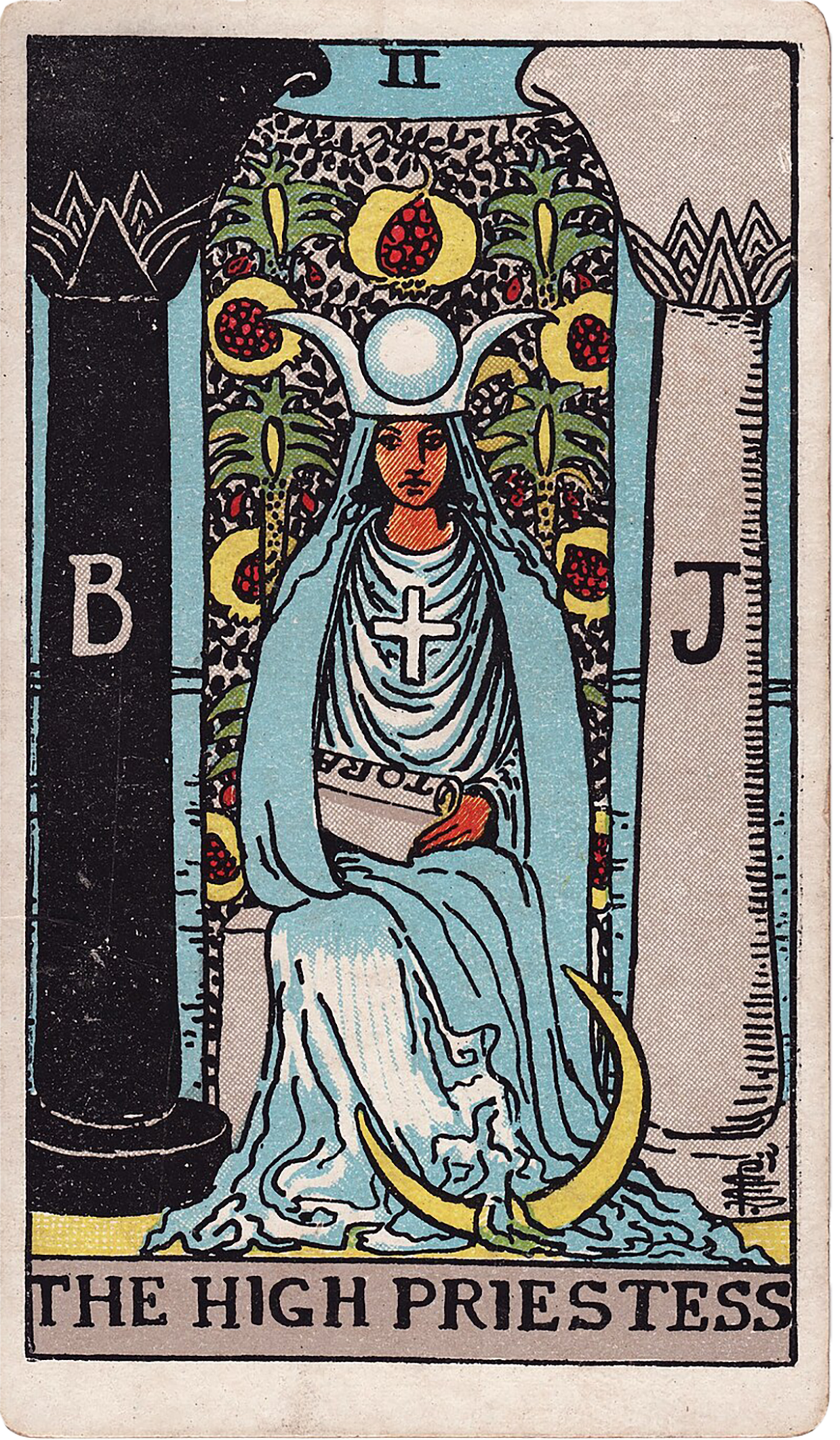 The High Priestess
Introduction to The High Priestess Card
The High Priestess is the second Major Arcana card, traditionally numbered II, and represents a gateway to deeper knowledge beyond the obvious. She invites the seeker to listen beneath surface appearances, encouraging patience, reflection, and trust in inner wisdom. In the Rider-Waite-Smith deck, this card presents a serene woman seated between two pillars—Boaz and Jachin—symbols drawn from Solomon’s Temple, representing duality and balance. Behind her, a veil decorated with pomegranates hints at hidden mysteries and fertility of the subconscious mind. Traditionally, the card is associated with feminine wisdom, intuition, and the realm of the unseen.
Historical Origins and Evolution of The High Priestess
The High Priestess traces her roots to various mythological and religious archetypes, such as the Egyptian goddess Isis, the Greek Persephone, and early priestess figures symbolizing secret knowledge. In early tarot decks like the Tarot of Marseille, she appears as La Papesse or The Popess, indicating a female religious figure or the embodiment of divine wisdom. Over centuries, especially with the development of occult tarot in the 18th and 19th centuries, her image evolved to emphasize esoteric knowledge and the mysteries of the subconscious. The Rider-Waite-Smith deck, designed in 1909 by Arthur Edward Waite and illustrated by Pamela Colman Smith, refined her symbolism into a more accessible and layered figure. Here, she is less a religious authority and more a guardian of secrets and spiritual knowledge, emphasizing introspection and the power of silence.
Symbolism in the Rider-Waite-Smith High Priestess Card
The Rider-Waite-Smith High Priestess card is rich with symbols that communicate her role as mediator between conscious and unconscious realms: - The Pillars: The black pillar (Boaz) and white pillar (Jachin) reflect duality—dark and light, masculine and feminine, severity and mercy. Together, they frame the gateway to hidden knowledge. - The Veil: Behind the High Priestess is a veil decorated with pomegranates. In mythology, pomegranates are often linked to the cycle of life, death, and rebirth, and here they signify fertility, abundance, and the mysteries just out of reach. - The Crescent Moon: At her feet rests a crescent moon, symbolizing intuition, the cyclical nature of time, and connection to the subconscious mind. - The Scroll: She holds a scroll partially concealed, sometimes inscribed with the word "TORA," suggesting sacred law or divine knowledge that is not entirely revealed. - Blue Robes and Crown: Her blue robes connect her to the spiritual and emotional realm; the triple lunar crown atop her head references the waxing, full, and waning moon, reinforcing her link to the feminine and cycles. These symbols collectively instruct readers to seek knowledge beyond the visible, trust inner guidance, and embrace the tension between revealing and concealing.
Interpreting The High Priestess Upright in Tarot Readings
When The High Priestess appears upright in a reading, it emphasizes qualities of listening beneath surface appearances and trusting quiet discernment. This does not guarantee that the situation will become easy, but rather that the querent has the capacity to work constructively with subtle information. The card urges engagement with what is currently available rather than waiting for certainty. It encourages asking questions like: Where would clearer honesty or more deliberate choice move this situation forward? Which aspects of my intuition or inner knowledge are already present? Practical examples include moments when a direct response is not yet possible, but reflection and patience can reveal hidden factors. The High Priestess suggests that the querent is entering a phase where conscious engagement with the subconscious messages is needed. A common mistake is to interpret this card as passive waiting or indecision. Instead, it is an active invitation to deepen awareness and discernment, using the card’s lesson of quiet power.
Understanding The High Priestess Reversed
The reversed High Priestess often signals a blockage or distortion of the upright qualities. It may indicate secrecy, disconnection from intuition, or passive avoidance. Anxiety and projection can be mistaken for genuine inner knowing, causing confusion. Reversal is not inherently negative; it might reflect a temporary pause, an internalized process, or the early stages of recognizing an old pattern that requires change. The question to ask is not “What disaster is coming?” but “Where is this energy difficult to access or imbalanced?” In practice, this could mean the querent is ignoring intuitive signals or feeling overwhelmed by hidden emotions. It highlights the need to gently reconnect with inner wisdom and acknowledge what is being resisted. Context and neighboring cards help clarify whether this reversed energy points to resistance, recovery, or excess.
Common Questions and Misconceptions About The High Priestess
Learners often ask whether The High Priestess signifies a prediction or a passive state. The card is not a deterministic forecast but a guide to inner processes. It signifies potential and capability, not a fixed outcome. Another frequent question is how to differentiate between intuition and wishful thinking. The High Priestess teaches discernment—a quiet, grounded inner knowing rather than loud or anxious thoughts. Many wonder if the card encourages secrecy in communication. Rather than promoting secrecy, it values measured disclosure and understanding the right timing to reveal information. It invites curiosity balanced with respect for privacy and inner boundaries.
Practical Techniques for Reading The High Priestess
To read The High Priestess effectively, begin by closely observing the card’s symbolism and connecting it to the querent’s situation. Ask where deeper listening or waiting might be necessary. Encourage the querent to reflect on their dreams, instincts, and subtle feelings. Use journaling or meditation to cultivate awareness of inner messages. When reversed, explore what blocks may be preventing access to intuition. Suggest gentle self-inquiry rather than forcing answers. In spreads, consider how The High Priestess relates to neighboring cards to identify whether the energy is supportive or challenging. Use questions such as “What is hidden here?” or “Where does quiet discernment guide me?” to deepen interpretation. Avoid rushing to conclusions or over-intellectualizing the card. Instead, honor its invitation to patience and inner connection.
The High Priestess in Family History Tradition and Tarot Practice
Within family history and tradition, The High Priestess can symbolize the matriarchal wisdom passed through generations—stories, secrets, and intuitive knowledge often unspoken but deeply influential. For readers exploring family patterns, this card may highlight inherited subconscious beliefs or the need to honor ancestral intuition. It encourages recognizing the unseen forces shaping family dynamics. Practitioners can use The High Priestess to support clients in accessing family legacies, especially those related to feminine lineages or spiritual heritage. It reminds us that much of family history exists beneath the surface and must be approached with reverence and patience.
Conclusion and Integrating The High Priestess Into Your Tarot Journey
The High Priestess remains a pivotal figure in tarot, bridging the worlds of the visible and invisible, conscious thought and unconscious wisdom. By tracing her evolution from ancient archetypes to the richly symbolic Rider-Waite-Smith card, learners gain a holistic understanding of her depth. Approaching The High Priestess with respect for her balance of mystery and knowledge enriches readings and personal growth. Whether upright or reversed, she invites ongoing inquiry into intuition, timing, and inner truth. Use the techniques and reflections offered here as practical tools on your tarot journey and as an encouragement to cultivate patience and trust in your own inner voice.
Practice questions
• How do the symbols of the pillars and veil in The High Priestess card reflect the balance between known and unknown in my own life?
• In what ways can I practice listening beneath surface appearances when The High Priestess appears in a reading?
• How might The High Priestess illustrate family traditions or ancestral wisdom that influence me subconsciously?
• What are common ways I might confuse intuition with anxiety or wishful thinking, and how can I discern the difference?
• When The High Priestess is reversed, how can I compassionately approach the areas where my intuitive access feels blocked or distorted?
Comments
Sign in to comment.
Continue learning
Interpreting the Dance of Justice and The Devil: Balancing Morality and Temptation in Tarot Readings
The combination of Justice and The Devil in tarot presents a profound exploration of morality, temptation, and personal accountability. This article unpacks how these cards influen...
Advanced Techniques for Combining The Moon and The Star to Enhance Intuition in Tarot Readings
This article explores advanced techniques to combine the symbolism and energy of The Moon and The Star Tarot cards to enhance intuition during Tarot readings. Drawing from traditio...
Unlocking Life Insights with the Celtic Cross Tarot Spread
This article offers a thorough exploration of the Celtic Cross Tarot Spread, focusing on its application within family and practical life contexts. Using a worked example featuring...
Unlocking Hidden Meanings with The Hermit and The Hanged Man for Spiritual Growth
This article offers an in-depth exploration of The Hermit and The Hanged Man Tarot cards focusing on their roles in spiritual growth. It guides readers through beginner and advance...
Unlocking Personal Insight with the Seven Card Horseshoe Spread
The Seven Card Horseshoe Spread is a practical and insightful Tarot layout ideal for exploring personal and family dynamics. This article breaks down each position—Past, Present, H...
Mastering the Court Cards of Wands for Unlocking Personal Drive and Leadership
The Court Cards of Wands represent a dynamic spectrum of personal energy, ambition, and leadership potential within the Minor Arcana. This article offers a comprehensive exploratio...
Tracing the Origins and Evolution of The Fool Card in Tarot History
The Fool card holds a foundational place in tarot tradition, symbolizing beginnings, openness, and the embrace of uncertainty. This article traces its origins from early European d...
Techniques for Reading Court Cards to Unlock Personality Insights
Court cards in Tarot often represent people, personality traits, or energy patterns within a situation. This article offers a structured approach for beginners and advanced readers...
Unlocking Emotional Transformation with Death and The Moon Tarot Combination
This article explores the rich and complex interaction between the Death and The Moon tarot cards within the Rider-Waite-Smith tradition, focusing on their combined potential to un...
Applying The Star Card to Foster Hope and Renewal in Personal Growth
The Star card in Tarot symbolizes hope, authenticity, and the process of steady renewal. In a single-card reading, The Star encourages embracing what is present, cultivating openne...