
Tracing The Historical Origins And Common Questions About The High Priestess Card
The High Priestess card is a profound symbol in Tarot, representing intuition, hidden knowledge, and inner discernment. This article traces its historical origins, explores its traditional Rider-Waite-Smith symbolism, and addresses common questions learners face. By closely examining the upright and reversed depictions of the High Priestess card, readers gain practical techniques for interpretation rooted in family history, tradition, and psychological insight. This educational guide helps readers navigate common pitfalls and apply the card’s lessons thoughtfully in readings.
Cards explored in this article
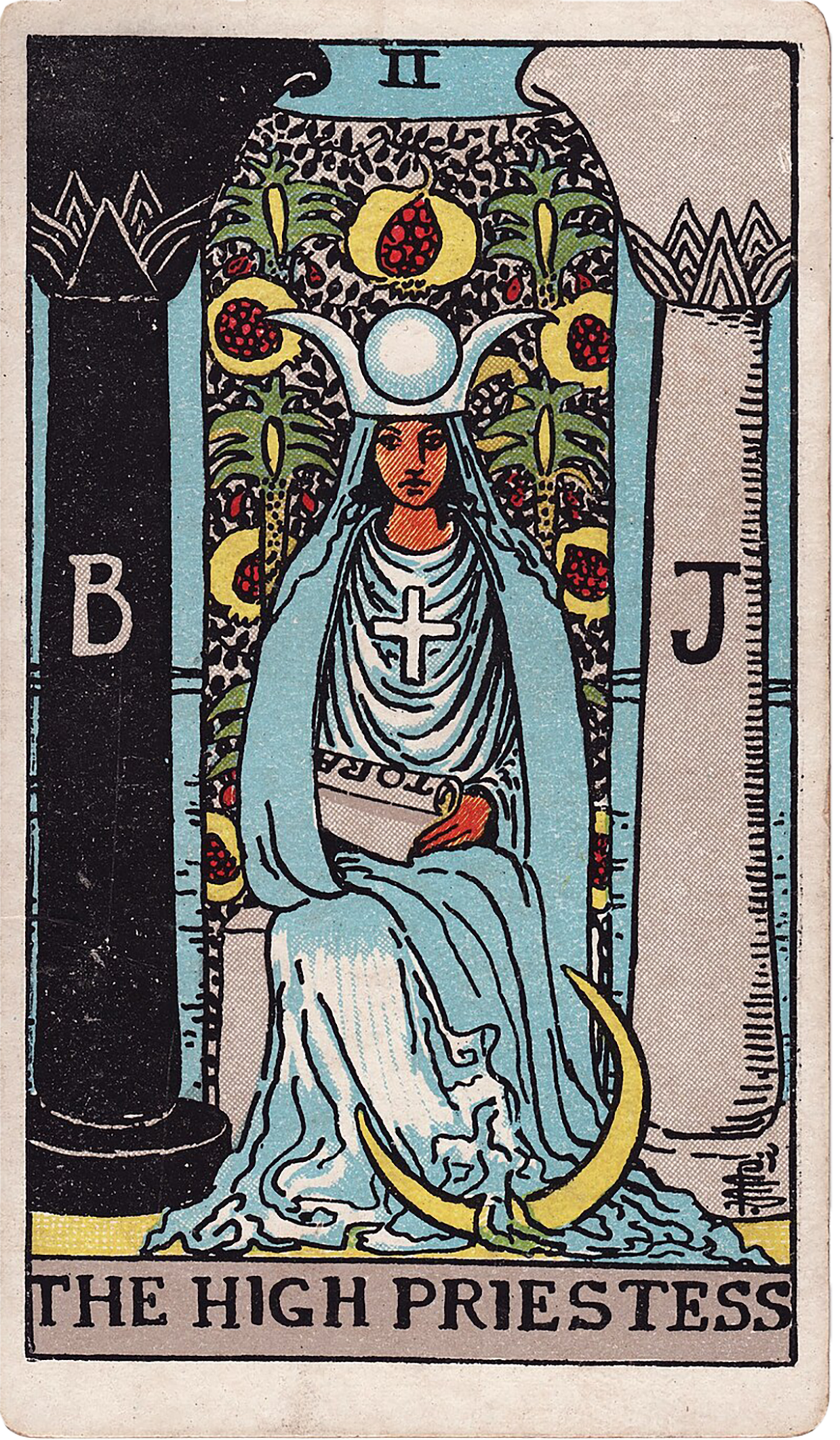 The High Priestess
Historical Origins Of The High Priestess Card
The High Priestess card traces its roots back to some of the earliest Tarot decks, evolving alongside Western esoteric traditions. In the Tarot de Marseille and earlier Italian decks, the card was often called 'La Papessa' or 'The Popess,' suggesting a female religious figure imbued with secret wisdom. This association has been debated, as no female pope exists historically, but the imagery points to the archetype of the spiritual feminine and hidden knowledge. The Rider-Waite-Smith deck, designed by Arthur Edward Waite and illustrated by Pamela Colman Smith in 1909, redefined the card as the High Priestess, emphasizing intuition, mystery, and the unconscious. This shift reflects Waite’s connections to the Hermetic Order of the Golden Dawn and the growing interest in esoteric symbolism in the early 20th century. The card’s pillars, veil, and pomegranate motifs draw from various traditions, including Kabbalah, Greek mythology, and ancient fertility symbols, linking the High Priestess to an enduring lineage of feminine spiritual authority.
Symbolism In The Rider-Waite-Smith High Priestess Card
The supplied High Priestess card image is rich with symbolism that guides interpretation. Central to the card is the seated woman between two pillars labeled 'B' and 'J,' representing Boaz and Jachin of Solomon’s Temple. These pillars symbolize duality and balance—strength and establishment, severity and mercy. The High Priestess wears a crown resembling the lunar phases, reinforcing her connection to intuition, the subconscious, and the cyclical nature of knowledge. Behind her is a veil decorated with pomegranates, representing fertility, abundance, and the mysteries hidden behind the visible world. The crescent moon at her feet underscores the influence of the unconscious mind and the feminine principle. Together, these elements emphasize the card’s core theme: the invitation to look beyond surface appearances and trust inner wisdom. The figure’s calm demeanor encourages quiet discernment and patience.
Understanding The Upright High Priestess Card In Readings
When the High Priestess appears upright in a reading, she signals a need to tune into intuition and subtle information that is not immediately obvious. This card invites the querent to listen beneath surface appearances and allow knowledge to emerge naturally rather than forcing clarity prematurely. The card suggests that the situation’s complexity requires patience and deeper honesty—asking where a clearer boundary or more deliberate choice might move things forward. Practically, the upright High Priestess encourages working with what is present now rather than waiting for perfect certainty. For example, in a family tradition context, she may indicate that ancestral insights or private family knowledge are relevant but require respectful discernment. The reader should note that this card does not promise ease but rather highlights the quality needed to navigate challenges effectively.
Common Questions About The High Priestess Card
Learners frequently ask what the High Priestess means in matters of secrecy, intuition, and personal growth. One common question is whether the card predicts hidden secrets or conspiracy. While the High Priestess can point to hidden information, she primarily encourages inner reflection and intuitive understanding rather than external uncovering. Another question involves the difference between intuition and wishful thinking. The High Priestess urges discernment—distinguishing genuine inner knowing from anxiety or projection. The reversed card often raises questions about disconnection from intuition or avoidance. Here, the card may highlight where intuition is blocked or distorted rather than absent. Finally, many ask how to apply the High Priestess in practical readings. The key is to balance waiting with taking proportionate steps and to use the card’s symbolism to identify which part of its lesson is already at work in the querent’s behavior.
Interpreting The Reversed High Priestess Card
The reversed High Priestess card often signals challenges with inner knowing and secrecy. Rather than outright negative predictions, the reversal suggests that the qualities of the upright card are blocked, delayed, or unbalanced. This might manifest as passive avoidance, mistaking anxiety for intuition, or a disconnect from one’s deeper self. The supplied reversed High Priestess image directs us to explore where energy is becoming distorted or difficult to access. In psychological terms, the reversal can indicate that the querent is beginning to recognize an old pattern but has not yet fully transformed it. In family and tradition readings, it may suggest private issues becoming more internalized or a need to confront hidden dynamics. As with all reversed cards, context and neighboring cards refine the interpretation—whether indicating resistance, recovery, excess, or temporary pause.
Practical Techniques For Reading The High Priestess Card
Effective readings with the High Priestess involve a balance of observation, questioning, and patience. First, carefully observe the card’s imagery: note the pillars, veil, lunar symbols, and posture of the figure. Ask what these symbols reveal about the querent’s situation—where might hidden knowledge or intuition be relevant? Next, pose guiding questions such as 'What is emerging beneath the surface?' or 'Where could more deliberate choice help?' When the card appears reversed, ask 'Where might inner knowing be blocked or distorted?' and 'How is the querent processing private or internal issues?' Avoid rushing for definitive answers; instead, invite reflection and openness to subtle insights. Practicing journaling or meditating on the card’s imagery can deepen understanding. Finally, integrate the High Priestess’s lesson by encouraging the querent to trust their inner voice while remaining engaged with present realities.
Common Mistakes When Working With The High Priestess
Beginners often make several common mistakes interpreting the High Priestess. One is treating the card as a simple signal of secrecy or mystery without integrating its invitation to inner listening and patient discernment. Another error is confusing intuition with fantasy or wishful thinking—interpreters must differentiate genuine inner knowing from emotional projection. Additionally, some readers expect the High Priestess to deliver quick answers, overlooking the card’s emphasis on gradual revelation and subtle engagement. When reversed, a frequent mistake is viewing the card as purely negative rather than recognizing it as a nuanced signal about blocks or imbalances in intuition. Finally, failing to connect the card’s symbolism to the querent’s specific context—such as family traditions or psychological patterns—can lead to overly generic readings. Anchoring interpretation in the supplied Rider-Waite-Smith imagery helps avoid these pitfalls.
Integrating The High Priestess In Family History And Tradition Readings
The High Priestess is particularly resonant in readings focused on family history and tradition. Her symbolism encourages respect for ancestral wisdom, the mysteries embedded in family narratives, and the importance of quiet reflection on inherited patterns. In this context, the card asks the querent to recognize which parts of family knowledge have remained veiled and how those hidden elements might be influencing present dynamics. The upright card suggests that engaging consciously with these traditions, even if incomplete or imperfectly understood, can provide guidance and stability. The reversed card may highlight resistance to confronting family secrets or difficulty trusting inherited intuition. Using the High Priestess as a guide, readers can facilitate deeper exploration of lineage and spiritual inheritance while avoiding rushed judgments or assumptions.
Practice questions
• How do the symbols on the High Priestess card reflect her role as a guardian of hidden knowledge?
• In what ways can trusting intuition be both a strength and a challenge when interpreting this card?
• How might the High Priestess’s teachings apply when navigating complex family histories or traditions?
• What are some signs that intuition is being blocked or distorted, as suggested by the reversed High Priestess?
• How can you balance patience and action when the High Priestess appears in a reading?
Comments
Sign in to comment.
Continue learning
Interpreting the Dance of Justice and The Devil: Balancing Morality and Temptation in Tarot Readings
The combination of Justice and The Devil in tarot presents a profound exploration of morality, temptation, and personal accountability. This article unpacks how these cards influen...
Advanced Techniques for Combining The Moon and The Star to Enhance Intuition in Tarot Readings
This article explores advanced techniques to combine the symbolism and energy of The Moon and The Star Tarot cards to enhance intuition during Tarot readings. Drawing from traditio...
Unlocking Life Insights with the Celtic Cross Tarot Spread
This article offers a thorough exploration of the Celtic Cross Tarot Spread, focusing on its application within family and practical life contexts. Using a worked example featuring...
Unlocking Hidden Meanings with The Hermit and The Hanged Man for Spiritual Growth
This article offers an in-depth exploration of The Hermit and The Hanged Man Tarot cards focusing on their roles in spiritual growth. It guides readers through beginner and advance...
Unlocking Personal Insight with the Seven Card Horseshoe Spread
The Seven Card Horseshoe Spread is a practical and insightful Tarot layout ideal for exploring personal and family dynamics. This article breaks down each position—Past, Present, H...
Mastering the Court Cards of Wands for Unlocking Personal Drive and Leadership
The Court Cards of Wands represent a dynamic spectrum of personal energy, ambition, and leadership potential within the Minor Arcana. This article offers a comprehensive exploratio...
Tracing the Origins and Evolution of The Fool Card in Tarot History
The Fool card holds a foundational place in tarot tradition, symbolizing beginnings, openness, and the embrace of uncertainty. This article traces its origins from early European d...
Techniques for Reading Court Cards to Unlock Personality Insights
Court cards in Tarot often represent people, personality traits, or energy patterns within a situation. This article offers a structured approach for beginners and advanced readers...
Unlocking Emotional Transformation with Death and The Moon Tarot Combination
This article explores the rich and complex interaction between the Death and The Moon tarot cards within the Rider-Waite-Smith tradition, focusing on their combined potential to un...
Applying The Star Card to Foster Hope and Renewal in Personal Growth
The Star card in Tarot symbolizes hope, authenticity, and the process of steady renewal. In a single-card reading, The Star encourages embracing what is present, cultivating openne...