
Tracing the Origins and Symbolism of The Hierophant in Tarot Tradition
The Hierophant card stands as a powerful symbol of tradition, spiritual authority, and the pursuit of established wisdom within the Tarot deck. Rooted in historical and religious archetypes, this card invites learners to explore the balance between conformity and personal insight. This article traces The Hierophant’s origins, explores its traditional Rider-Waite-Smith symbolism as reflected in the supplied Tarot card image, and offers practical guidance for interpretation. We also address common questions and pitfalls in readings, helping readers deepen their understanding of how The Hierophant can reflect family, tradition, and the process of learning within life’s systems.
Cards explored in this article
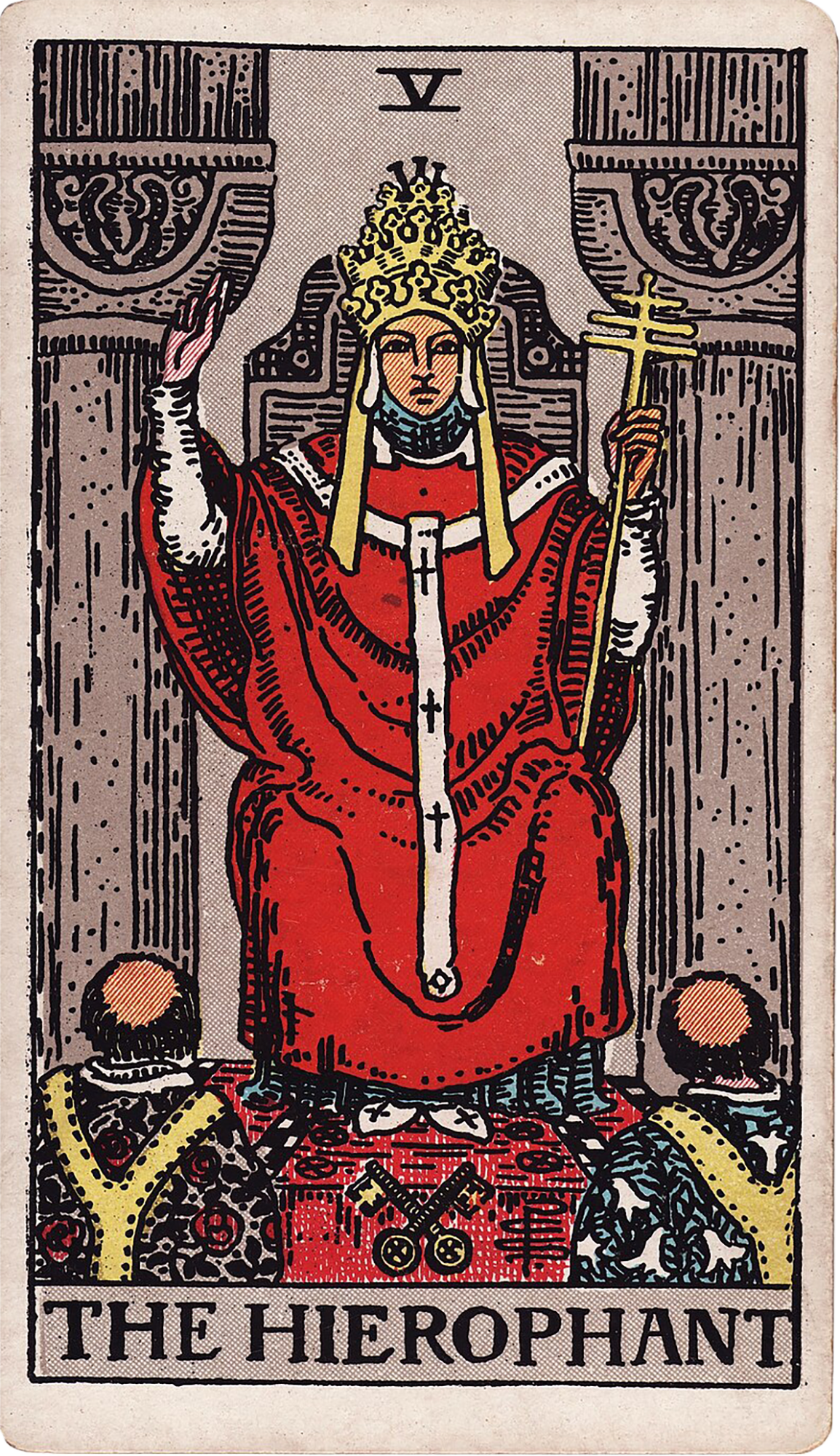 The Hierophant
The Historical and Cultural Origins of The Hierophant
To understand The Hierophant, it is essential to trace its roots beyond Tarot into religious and social traditions. The word “Hierophant” derives from the ancient Greek ἱεροφάντης (hierophántēs), meaning “one who reveals sacred mysteries.” Historically, the term referred to priests in Eleusinian Mysteries, ancient rites that imparted secret spiritual knowledge. In Tarot, The Hierophant symbolizes a similar figure of authority, gatekeeping spiritual or societal laws and conventions. In the Rider-Waite-Smith deck, The Hierophant is often equated with the Pope or a formal spiritual leader, reflecting Christian ecclesiastical authority but also representing broader themes of institutional knowledge, ritual, and moral guidance. During the 15th century, when Tarot cards first appeared as playing cards, this figure symbolized the institutional Church, which was a dominant societal force. Over time, The Hierophant evolved to represent organized systems of learning and belief, including religious doctrine, cultural traditions, and codified ethics.
Symbolism in the Rider-Waite-Smith Hierophant Card
The supplied image of The Hierophant card presents rich symbolism grounded in the Rider-Waite-Smith tradition. The Hierophant sits on a throne between two pillars, reminiscent of the pillars Boaz and Jachin from the Temple of Solomon, symbolizing balance and gateway to sacred knowledge. He wears a triple crown, signifying spiritual authority on earth, in heaven, and in the underworld, and holds a staff topped with a triple cross, reinforcing his role as a mediator between divine guidance and earthly followers. His right hand is raised in a traditional blessing gesture, suggesting the transmission of wisdom. At his feet, two acolytes or followers kneel, symbolizing the act of learning and accepting teachings from established wisdom. The keys at his feet form a cross pattern, representing the unlocking of mysteries through knowledge and tradition. These elements collectively emphasize The Hierophant’s role in teaching, guiding, and upholding systems of rules and values. Upright, the card encourages learning from established wisdom and seeking qualified mentorship. Reversed, it warns of dogma, blind conformity, or rebellion without understanding.
Interpreting The Hierophant Upright in Practical Readings
When The Hierophant appears upright, it highlights the importance of engaging with traditional structures and learning from authoritative sources. This card invites the querent to respect the rules and seek guidance from qualified teachers, mentors, or institutions. In the supplied card image, the central figure’s composed and dignified posture reminds readers that wisdom is not chaotic but grounded in order. Upright, The Hierophant encourages practical steps such as enrolling in a course, consulting a spiritual advisor, or understanding cultural norms before making decisions. The card also asks the reader to consider: Where can clearer boundaries or more deliberate choices improve the situation? For example, in a family context, The Hierophant might signify the value of shared traditions or the need to understand inherited beliefs before challenging them. It often signals that the fundamental issue has become visible enough to engage consciously, encouraging action rather than passivity. Common mistakes include over-reliance on external authority or assuming the card guarantees ease. Instead, it stresses the quality of disciplined learning and conscious choice, which might involve effort and discernment.
Understanding The Hierophant Reversed and Its Nuances
The reversed Hierophant shifts the focus from constructive tradition to potential pitfalls. Rather than a mere negative omen, it indicates that the upright qualities are blocked, misapplied, or in a state of internal conflict. Reversed, the card can highlight dogma, empty ritualism, or institutions that demand obedience without true wisdom. It may also represent rebellious attitudes that reject tradition without fully understanding it, creating tension or confusion. In the supplied Tarot card, a reversal invites the reader to ask where the energy of guidance and learning is becoming distorted. Is there a rejection of valuable lessons due to stubbornness or fear? Or is the querent beginning to recognize old patterns and preparing for change? The reversal may also point to a more private, psychological process rather than external events. It can mark the beginning of recovery or resistance to imposed structures. Interpreting The Hierophant reversed requires sensitivity to context and surrounding cards, looking for clues whether it signals a temporary pause or deeper transformation.
Common Questions and Misinterpretations About The Hierophant
Learners often ask whether The Hierophant signals strict religious adherence or dogmatic control. While the card certainly embodies organized tradition, it is not confined to religion alone. The Hierophant can represent any established system—from educational institutions to social norms—that structures human behavior. Another frequent question concerns whether the card guarantees following tradition. The Hierophant encourages learning about rules and systems but does not dictate blind obedience. The card asks readers to understand before choosing consciously whether to comply or innovate. Misinterpretations also arise when the card is seen as purely positive or negative. The Hierophant’s value lies in its quality of disciplined engagement with tradition; this can manifest constructively or problematically depending on context. Finally, some readers struggle with the card’s complexity and symbolic density. Focusing on the key visual elements in the supplied card—the triple crown, crossed keys, blessing gesture, and pupils—can anchor understanding and prevent superficial readings.
Practical Techniques for Reading The Hierophant
To effectively interpret The Hierophant, start by observing the key symbols in the supplied card image. Note the figure’s posture, the presence of followers, and the sacred keys. These elements frame the card’s core message about learning, authority, and spiritual or social structure. Ask clear, open questions when this card appears. For example: What established wisdom is relevant here? Where can I seek qualified guidance? Which rules or boundaries need conscious attention? Consider the card’s orientation—upright or reversed—and how that modifies the message. Upright invites constructive engagement with structure; reversed signals potential blockages or distorted traditions. Look for contextual cues in the reading related to family traditions, social expectations, or formal learning. This can help differentiate between healthy respect for systems and problematic conformity or rebellion. Avoid rushing to judgment or treating The Hierophant as a predictor of outcomes. Instead, view it as a guide to a process involving conscious choice, discipline, and understanding of inherited systems.
Connecting The Hierophant to Family History and Tradition
The Hierophant is deeply connected to family history, tradition, and inherited values. In a reading, it may point to the influence of family beliefs, religious upbringing, or cultural rituals that shape identity. The card encourages reflection on which traditions empower or limit personal growth. It asks: How do family values serve as a foundation for current choices? Are there inherited patterns that require conscious re-evaluation? The supplied card image, with its clear depiction of a teacher and pupils, can symbolize the transmission of knowledge across generations. It invites the querent to consider their role as both learner and potential teacher within family or community systems. Embracing the upright qualities of The Hierophant may involve honoring family traditions while discerning which aspects to uphold or transform. Conversely, reversal may reveal tensions with inherited norms or the need to break free from unexamined dogma.
Practice questions
• What established wisdom or tradition am I currently engaging with in my life?
• Where could clearer boundaries or more deliberate choices improve my understanding or situation?
• How do family or cultural traditions influence my beliefs and decisions?
• Am I open to learning from qualified guidance, or am I resisting due to fear or misunderstanding?
• In what ways might I be conforming to dogma without true understanding?
• How can I balance respect for tradition with personal authenticity and insight?
Comments
Sign in to comment.
Continue learning
Interpreting the Dance of Justice and The Devil: Balancing Morality and Temptation in Tarot Readings
The combination of Justice and The Devil in tarot presents a profound exploration of morality, temptation, and personal accountability. This article unpacks how these cards influen...
Advanced Techniques for Combining The Moon and The Star to Enhance Intuition in Tarot Readings
This article explores advanced techniques to combine the symbolism and energy of The Moon and The Star Tarot cards to enhance intuition during Tarot readings. Drawing from traditio...
Unlocking Life Insights with the Celtic Cross Tarot Spread
This article offers a thorough exploration of the Celtic Cross Tarot Spread, focusing on its application within family and practical life contexts. Using a worked example featuring...
Unlocking Hidden Meanings with The Hermit and The Hanged Man for Spiritual Growth
This article offers an in-depth exploration of The Hermit and The Hanged Man Tarot cards focusing on their roles in spiritual growth. It guides readers through beginner and advance...
Unlocking Personal Insight with the Seven Card Horseshoe Spread
The Seven Card Horseshoe Spread is a practical and insightful Tarot layout ideal for exploring personal and family dynamics. This article breaks down each position—Past, Present, H...
Mastering the Court Cards of Wands for Unlocking Personal Drive and Leadership
The Court Cards of Wands represent a dynamic spectrum of personal energy, ambition, and leadership potential within the Minor Arcana. This article offers a comprehensive exploratio...
Tracing the Origins and Evolution of The Fool Card in Tarot History
The Fool card holds a foundational place in tarot tradition, symbolizing beginnings, openness, and the embrace of uncertainty. This article traces its origins from early European d...
Techniques for Reading Court Cards to Unlock Personality Insights
Court cards in Tarot often represent people, personality traits, or energy patterns within a situation. This article offers a structured approach for beginners and advanced readers...
Unlocking Emotional Transformation with Death and The Moon Tarot Combination
This article explores the rich and complex interaction between the Death and The Moon tarot cards within the Rider-Waite-Smith tradition, focusing on their combined potential to un...
Applying The Star Card to Foster Hope and Renewal in Personal Growth
The Star card in Tarot symbolizes hope, authenticity, and the process of steady renewal. In a single-card reading, The Star encourages embracing what is present, cultivating openne...