
Two of Wands meanings for career love travel and long term planning
This article teaches how to read the 2 of Wands as a single-card lesson across multiple life contexts. Anchored to the supplied 2 of Wands image and its upright and reversed statements, it explains symbolism, how interpretation shifts between love, career, finance, advice, challenge, person and outcome, and gives step-by-step practical methods, examples and common mistakes for learners.
Cards explored in this article
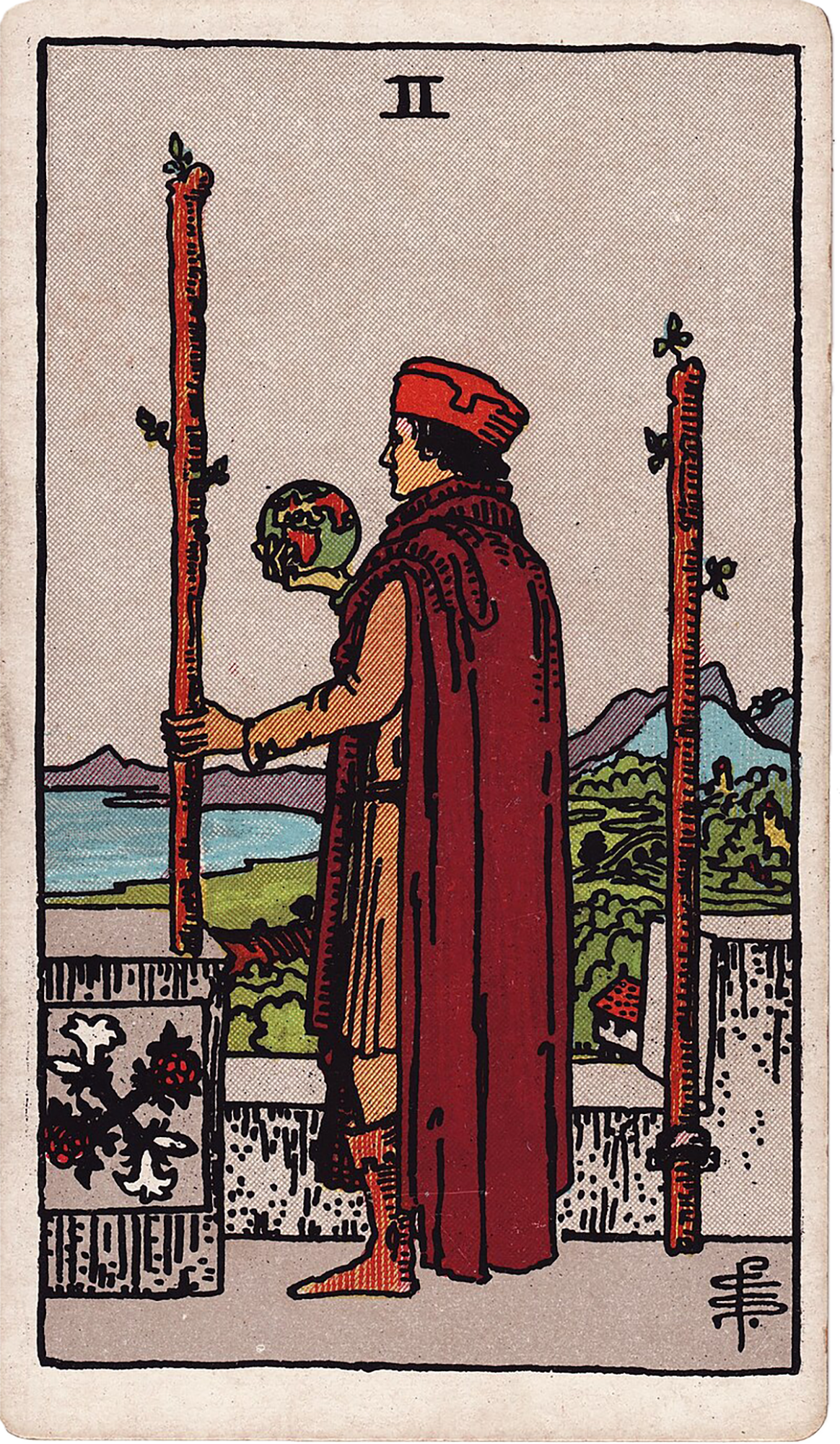 2 of Wands
Introduction and how to use this lesson
This is a single-card lesson focused only on the supplied 2 of Wands. Use the image that will be shown alongside this article and the card text provided: Upright, 2 of Wands highlights moving from inspiration to strategy, comparing options and deciding how far to expand beyond familiar territory. The card is practical: it asks for a response that fits the present stage rather than an abstract ideal. Consider where this pattern is already visible and what action would strengthen its constructive side. In many spreads, the upright card shows that the situation can be handled through the skills associated with Wands: motivation, creativity, ambition, initiative, identity and the way energy is directed. It can still contain effort or discomfort, but it usually makes the core task easier to name. Use the surrounding cards to see whether this energy is beginning, developing, reaching pressure, or moving toward resolution. Reversed, 2 of Wands draws attention toward fear of expansion, poor planning, indecision or keeping possibilities theoretical because action feels risky. The reversal may show too much of the card's usual energy, too little of it, or a situation where the lesson is understood intellectually but not yet lived consistently. It can also indicate that the issue is occurring internally and is not obvious to other people. Rather than treating the reversed card as the opposite of the upright meaning, examine where the process has become stuck. Ask what needs to be simplified, acknowledged, practiced, released, or communicated before the healthier expression of Wands can return. This article is written for learners. It treats the 2 of Wands as a prompt, not a prediction. You will find: symbolism tied to the Rider-Waite-Smith image, context-by-context interpretations, technique for single-card readings, example mini-readings, common mistakes, and reflection prompts you can use to practice.
Visual language and Rider-Waite-Smith symbols to anchor meaning
Always begin a reading by looking closely at the card's image. The supplied 2 of Wands shows a figure standing on a battlement, holding a globe and looking out across a landscape with water, ships and distant mountains. One wand is fixed to the wall beside him; another is in his hand. His stance is watchful, poised between safety and the unknown. Color and props matter: the cloak or garment color (traditionally red) signals energy and will; the globe is literal planning and world-directed ambition; the ships on the water suggest trade, travel, long-distance projects and movement between places; the battlement marks the boundary of known territory and current achievement; the two wands form a gateway between what has been established and what could be pursued. Use these concrete visual cues when you interpret the card in a specific context. Why these symbols matter for learners: the globe points to strategy and options rather than immediate action or explosive new energy (which you might expect from other Wands cards). Ships and water tip the interpretation toward travel, commerce, or projects that cross borders or bring outside elements home. The castle wall means the querent has already achieved something — they are not starting completely from scratch — and must choose how far to expand. Keep these visual anchors firmly in mind; they are the evidence you will point to when a querent asks why you read the card the way you do.
Upright meaning in plain language
When the supplied 2 of Wands appears upright it is a transitional, strategic card. It asks 'Where will you take what you already have?' Instead of raw inspiration it wants plans, options considered, and realistic next steps. The card encourages comparison between familiar territory (the battlement) and the open possibilities (ships, sea, mountains). Practically, it's about evolving vision into a workable plan: choosing markets, deciding to travel or expand, comparing two offers, or selecting a direction for a long-term project. It affirms that the core skills needed — motivation, initiative and creative identity — are available, but they must be applied in a practical sequence. Expect some effort and decisions; the upright 2 of Wands rarely promises instant comfort. Instead it offers agency: the chance to shape the future with intention.
Reversed meaning in plain language
The supplied reversed 2 of Wands draws attention to hesitation, fear of expansion, or planning that stays theoretical. A reversed reading does not automatically mean 'failure' — more often it signals internal blocks (doubt, perfectionism, dread), poor planning details, or a mismatch between ambition and follow-through. The reversal can show too much planning without action, or action without clear plan. It may also indicate that the issue is private; the person looks decisive on the outside but is conflicted internally. When you see the reversed 2 of Wands, ask where the hesitation originates (fear, lack of data, overwhelm, responsibility) and what small practical steps would simplify the process back into a productive cycle.
Two of Wands in love and relationships
Upright: In love, the supplied 2 of Wands suggests a relationship at a crossroads where choices matter. The image of the figure holding a globe while standing within a protective wall shows someone assessing possibilities: stay and develop the known relationship, or expand by forming a new connection, moving together, or introducing long-term planning (engagement, relocation, long-distance logistics). For single querents, the card often indicates comparing options — potential partners or life paths — and encourages thoughtful selection rather than impulsive pursuit. The ships and sea can indicate long-distance attraction or a relationship that involves travel or cultural differences. Use the globe and battlement to explain: the querent has a foundation and is deciding on expansion. Reversed: With the supplied reversed card, romantic hesitation predominates. The querent may imagine options without committing, or fear that expanding (moving in together, marriage, travel to be with someone) will jeopardize safety. It can point to a person who talks about grand plans but never moves beyond talk, or a partner who becomes controlling when expansion threatens the status quo. Guide learners to ask: is fear of loss holding this person back? What small, low-risk steps would demonstrate reliability and reduce anxiety? The reversed 2 of Wands calls for concrete communication about goals and a plan to test viability.
Two of Wands for career and work
Upright: Career readings with the supplied 2 of Wands often highlight strategy, choice between roles, or a decision to expand — new markets, promotion, starting a business, or taking on a leadership role. The castle wall indicates that the querent already has a platform (skills, reputation, a current job) and is considering how far to take it. The globe suggests broader horizons: international clients, remote teams, or projects requiring coordination across borders. Read the card as permission to plan ambitiously but practically: compare options, research logistics, set milestones and pick a timeline. Emphasize tangible next steps — interviews to schedule, markets to test, contacts to call. Reversed: Reversed in career, the supplied 2 of Wands often signals indecision, fear of responsibility, or a plan that lacks specificity. It might show a person paralyzed by choices, endlessly researching job possibilities without applying, or someone afraid to accept leadership because of perceived risk. It can also indicate poor planning — missing budget or time estimates. For practice, ask what minimal viable step the querent can take to break the stalemate: a short call, a one-page business model, or a pilot project.
Two of Wands for money and finance
Upright: Financially the supplied 2 of Wands is about allocation and expansion. It suggests choosing between investment options, funding a project that reaches beyond local boundaries, or considering how to use capital for growth rather than short-term consumption. The image's ships suggest commerce and trade income streams; the globe implies a global or strategic view of assets. The card favors deliberate choices over speculative gambles: calculate expected returns, forecast cashflow, and select a manageable scale for growth. Reversed: In its reversed position, the supplied 2 of Wands warns of financial inertia or reckless overreach masked as planning. The querent may daydream about lucrative ventures without the numbers, or freeze because the choices seem too risky. It can also mean overplanning to procrastinate. Practical remedy: create a simple budget for the chosen option, run conservative scenarios, and commit to a clearly timed experiment with caps on loss.
Advice and action steps when the card appears
Treat the supplied 2 of Wands as an instruction manual for the next phase. Upright advice: move from inspiration to solid strategy. Translate vision into measurable choices: list the top two paths, research pros and cons, set a 30/90/180-day plan for the chosen path and identify one immediate action (send the email, book the ticket, draft the proposal). Use the globe as a prompt: think globally but act locally — test small with intention. Reversed advice: identify the smallest action that proves a plan is workable. If fear is the problem, reduce the scale; if overplanning is the problem, set a deadline and follow it. In both orientations, communication matters: tell a trusted person your plan to harvest accountability and reality-checks.
Challenges, blocks and common mistakes
Common mistakes when reading or experiencing the supplied 2 of Wands include: 1) mistaking it for immediate action energy: the 2 of Wands is strategic, not the impulsive ‘act now’ energy of some other Wands cards. 2) Over-emphasizing travel: while ships and water suggest travel and commerce, the card’s core is choice and planning; travel is one possible expression, not the only one. 3) Treating reversal as permanent defeat: the reversed card often names a specific block that can be resolved with simpler planning or emotional work. 4) Ignoring the querent’s context: the card assumes existing achievement — the reader should check whether the client actually has a platform or needs a different starting card. 5) Reading the globe as omnipotence: it is a prompt for strategy, not a guarantee that expansion will succeed. In practice, always pair interpretation with a small set of concrete next steps.
Reading the card as a person or personality
When the supplied 2 of Wands represents a person it describes someone outwardly composed, strategic, and forward-thinking. This person stands at the edge of what they know and looks outward — a planner, a manager, an entrepreneur, or someone with international life experience. They can be confident but also private about internal doubts. If reversed, the person may be indecisive, talkative about plans but not acting, or secretly fearful of responsibility. Use the battlement and globe imagery as descriptors in a reading: 'Imagine someone who holds their world in their hands but hesitates to step off the wall.' That image helps clients recognize traits or people in their life.
Outcome and timing considerations
Outcome: Upright, the supplied 2 of Wands points to a successful directional choice when backed by strategy. It promises progress through careful choices and steps. Reversed, the likely outcome is stalled plans or the need for reconfiguration unless the querent addresses the block. Timing: the 2 of Wands is not a speed card. It suggests deliberation and phased action, so outcomes often appear over weeks to months rather than immediately. Anchor time expectations to the querent's specific plan: a pilot might take 30–90 days; choosing between jobs can take several weeks of interviews and negotiation; moving or international decisions usually take months. Use the card to temper expectations: growth is planned, not instant.
Spiritual reflection and inner work
Spiritually, the supplied 2 of Wands asks: where do you direct your will? Are your choices aligned with your authentic identity or with fear and social expectation? The globe can be used metaphorically: whose world are you carrying? Upright invites integration — harness ambition with centered intention. Reversed invites inner inquiry: what stories about risk are you repeating? What reassurance do you seek from external sources? Suggested spiritual practices include journaling about imagined futures, a small ritual of commitment (lighting a candle while writing one achievable step), and contemplative mapping: draw two paths and note the emotions each path evokes. The card supports clarity through honest evaluation rather than inspirational bypassing.
Practical single-card reading method for learners
Step-by-step method using the supplied 2 of Wands: 1) Look: Spend 30–60 seconds observing the image closely. Note the globe, battlement, ships and the two wands. 2) Name: State aloud one sentence combining image and position: 'The 2 of Wands upright asks me to choose which direction to expand from a secure place.' 3) Contextualize: Decide which context you are reading for (love, career, finance, etc.). Anchor each interpretation to the image (e.g., 'ships' = travel or external markets). 4) Ask clarifying questions: If upright — 'Which two options need comparison? What is a reasonable first step?' If reversed — 'What fear or missing detail is stopping forward motion?' 5) Give one practical action: Offer one concrete, time-bound action the querent can take in the next 72 hours. 6) Follow-up: Suggest one small check-in (self-review after two weeks) to see whether the step created new clarity. This method keeps readings actionable and anchored to the card's visual cues. Practice exercise: Take 10 readings by drawing the supplied 2 of Wands for different people or hypothetical scenarios. For each, write a 3-sentence answer: 1) what choice is present, 2) one likely obstacle, 3) one next step.
Mini case examples and interpretation logic
Example 1 — Career (upright): A client who runs a local crafts business draws the supplied 2 of Wands upright. Look at the globe and ships: interpret as exploring online sales or international markets. Action: research 2 marketplaces, compare fees and shipping logistics, and commit to listing 3 items in the first marketplace within 30 days. Interpretation logic: globe = market expansion; battlement = existing local success; ships = commerce/trade. Example 2 — Love (reversed): A querent contemplating moving to live with a partner draws the supplied 2 of Wands reversed. The reversal suggests internal hesitation; perhaps fear of losing independence or doubts about partner’s reliability. Action: schedule a frank conversation setting expectations and a 3-month trial period with agreed checkpoints. Interpretation logic: reversed globe = ideas about expansion not enacted; battlement = fear of leaving known safety. Example 3 — Money (upright): Someone considering investing in a startup draws the supplied 2 of Wands upright. Interpretation: compare investment options, request a one-page financial projection, and choose one pilot investment with capped exposure. Interpretation logic follows from the card's practical, strategic energy.
How to avoid overreading and integrate with other cards later
Because this is a single-card lesson, be cautious about certainty. Do not overread: the 2 of Wands is a prompt to plan, not a guarantee of success. When you later pull supporting cards, use them to refine details: a card showing movement could confirm travel; a card showing conflict might indicate negotiation issues. For learners, practice stating interpretations as probabilities and prompts rather than fate: 'This card suggests X; possible obstacle Y. Consider testing this with action Z.' That cautious language reduces client anxiety and increases practical usefulness.
Conclusion and next steps for practice
The supplied 2 of Wands is an excellent study card for learners because it sits between intention and action. Use the image — globe, battlement, ships, two wands — to ground every interpretation. Practice the single-card method above, run through the mini-examples, and try the two-week follow-up model: one small action, one check-in. Over time you will learn to spot when the 2 of Wands is urging a plan, naming a fear, or pointing toward expansion that needs simplification. Remember: the card is about choices made from a platform; reading it well means translating visual symbolism into a practical, time-bound plan for the querent.
Practice questions
• Looking at the supplied 2 of Wands image, what immediate three words come to mind and why?
• Where in your life do you already have a 'battlement' — a secure base — that could support expansion?
• If fear is keeping you from expanding, what is one minimal-risk step you can take this week to test the idea?
• When you plan, do you prefer to stay in theory? How could you add an accountability measure to force a small practical test?
• Which visual element of the supplied card (globe, ships, wall, wands) feels most relevant to your current question and what specific action does that suggest?
Comments
Sign in to comment.
Continue learning
Interpreting the Dance of Justice and The Devil: Balancing Morality and Temptation in Tarot Readings
The combination of Justice and The Devil in tarot presents a profound exploration of morality, temptation, and personal accountability. This article unpacks how these cards influen...
Advanced Techniques for Combining The Moon and The Star to Enhance Intuition in Tarot Readings
This article explores advanced techniques to combine the symbolism and energy of The Moon and The Star Tarot cards to enhance intuition during Tarot readings. Drawing from traditio...
Unlocking Life Insights with the Celtic Cross Tarot Spread
This article offers a thorough exploration of the Celtic Cross Tarot Spread, focusing on its application within family and practical life contexts. Using a worked example featuring...
Unlocking Hidden Meanings with The Hermit and The Hanged Man for Spiritual Growth
This article offers an in-depth exploration of The Hermit and The Hanged Man Tarot cards focusing on their roles in spiritual growth. It guides readers through beginner and advance...
Unlocking Personal Insight with the Seven Card Horseshoe Spread
The Seven Card Horseshoe Spread is a practical and insightful Tarot layout ideal for exploring personal and family dynamics. This article breaks down each position—Past, Present, H...
Mastering the Court Cards of Wands for Unlocking Personal Drive and Leadership
The Court Cards of Wands represent a dynamic spectrum of personal energy, ambition, and leadership potential within the Minor Arcana. This article offers a comprehensive exploratio...
Tracing the Origins and Evolution of The Fool Card in Tarot History
The Fool card holds a foundational place in tarot tradition, symbolizing beginnings, openness, and the embrace of uncertainty. This article traces its origins from early European d...
Techniques for Reading Court Cards to Unlock Personality Insights
Court cards in Tarot often represent people, personality traits, or energy patterns within a situation. This article offers a structured approach for beginners and advanced readers...
Unlocking Emotional Transformation with Death and The Moon Tarot Combination
This article explores the rich and complex interaction between the Death and The Moon tarot cards within the Rider-Waite-Smith tradition, focusing on their combined potential to un...
Applying The Star Card to Foster Hope and Renewal in Personal Growth
The Star card in Tarot symbolizes hope, authenticity, and the process of steady renewal. In a single-card reading, The Star encourages embracing what is present, cultivating openne...