
Uncovering Historical Origins And Common Questions About The Hierophant Card
The Hierophant card, a significant figure in the Tarot’s Major Arcana, embodies tradition, guidance, and structured wisdom. This article delves into its historical origins rooted in religious and cultural archetypes, explores its traditional Rider-Waite-Smith symbolism, and answers common questions about interpreting the card upright and reversed. It offers practical advice for readers on how to integrate The Hierophant’s lessons into family, society, and personal development contexts, while addressing common interpretive challenges and techniques for nuanced readings.
Cards explored in this article
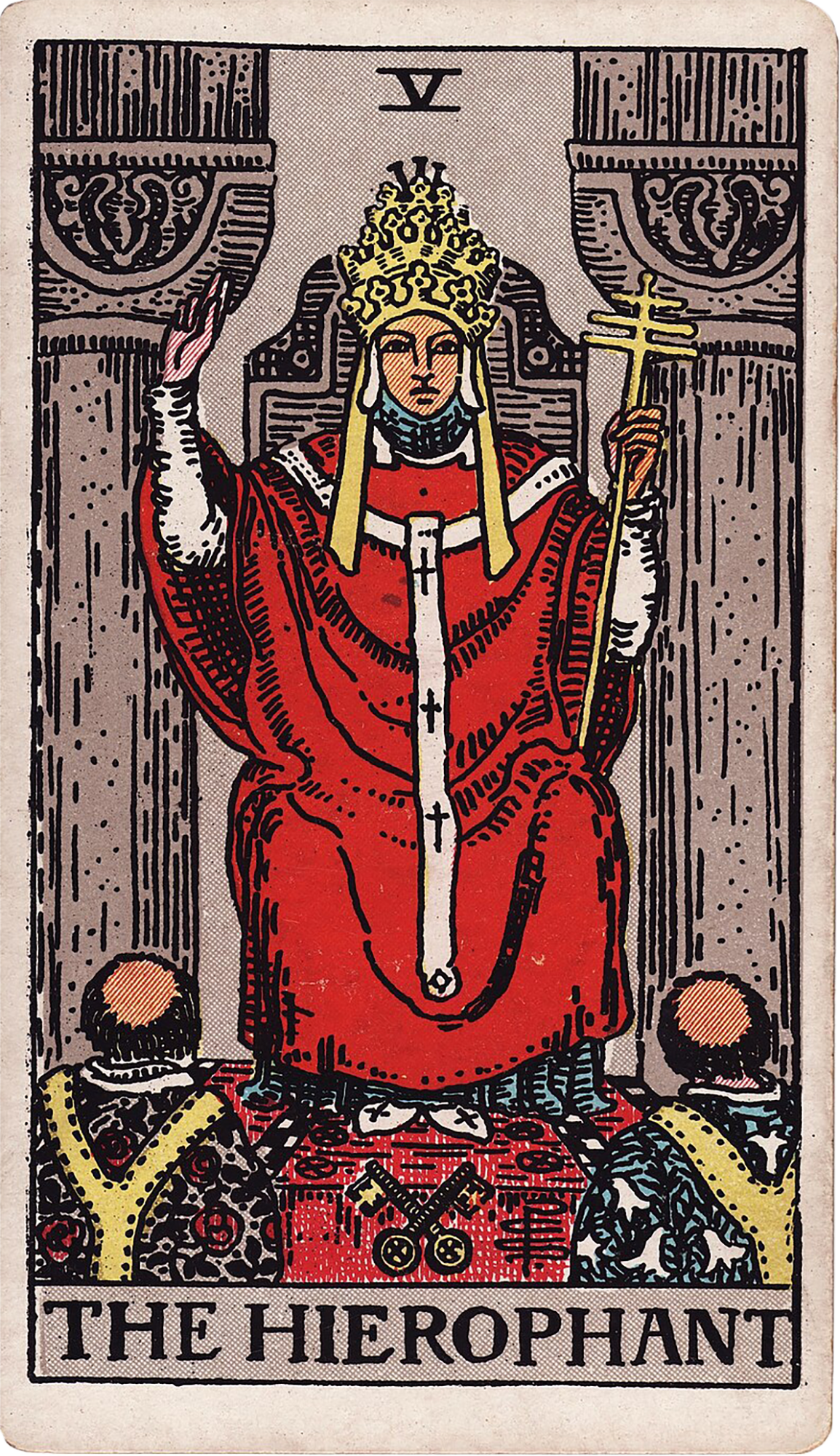 The Hierophant
Historical Origins of The Hierophant Card
The Hierophant card has deep roots in religious and societal traditions dating back to antiquity. The term "Hierophant" itself is derived from the ancient Greek 'hierophantes,' meaning "one who reveals sacred things." This figure historically served as a priest or religious leader who guided initiates through hidden mysteries, especially within mystery schools like those of Eleusis. In Tarot decks, particularly the Rider-Waite-Smith deck, The Hierophant is depicted as a pontiff figure symbolizing established institutions, orthodox wisdom, and the transmission of spiritual knowledge. The card’s imagery echoes Christian religious leaders, often resembling a pope or high priest with traditional vestments, a triple cross staff, and two acolytes seated before him. This iconography emphasizes the role of The Hierophant as a bridge between divine teachings and human understanding. Over time, The Hierophant has evolved in Tarot to symbolize structured learning, social conformity, and the examination of inherited belief systems. Its historical foundation reminds readers that this card is as much about external structures—such as family traditions, religious faith, and societal norms—as it is about the inner journey of understanding the frameworks we live within.
Upright Hierophant Symbolism and Meaning
When The Hierophant appears upright in a Tarot reading, it highlights the value of learning from established wisdom and seeking guidance from qualified sources. The Rider-Waite-Smith card shows the figure seated on a throne between two pillars, representing balance and authority. The triple cross staff indicates spiritual authority across multiple planes—physical, mental, and spiritual. The two acolytes kneeling before him represent the willingness to submit to tradition and learn foundational truths. This card encourages readers to recognize when following rules, customs, or advice can be constructive rather than restrictive. It invites conscious engagement with existing systems, such as family values, religious practices, or educational structures. Rather than blindly accepting these, the upright Hierophant suggests understanding the 'why' behind traditions and using this knowledge to make deliberate choices. Practically, the upright card can signal that the situation has matured enough for conscious involvement. It might suggest consulting a mentor, teacher, or community leader, or reaffirming one's connection to cultural or familial roots. The card also asks readers to consider where clearer boundaries, honesty, or deliberate choices might help progress. It is a card of learning the rules before deciding whether to follow or reform them.
Reversed Hierophant Symbolism and Meaning
Reversed, The Hierophant card shifts focus toward challenges related to dogma, conformity, or rigid institutional authority. Instead of constructive learning, the reversed card points to blind obedience, empty ritual, or rebellion without insight. The energy of the upright card is blocked or distorted—what was once useful tradition may now feel confining or outdated. In the Rider-Waite-Smith imagery, the reversal can be interpreted as turning away from the structured authority, indicating questioning or rejecting established norms. However, this rejection is not inherently negative; it may reflect the need to break free from unhelpful patterns or to explore personal spirituality beyond institutional religion. The reversed Hierophant can also highlight internal psychological processes—a private struggle with inherited beliefs or family expectations. It can mark the beginning of awareness around these patterns, though change may not yet be fully implemented. When reading reversed, it is important to look at neighboring cards for clues whether the card points to resistance, recovery, excess, or temporary pause. This nuanced approach avoids oversimplifying the reversal as simply 'bad' and instead focuses on where the card’s energy is difficult to access or express.
Common Questions About The Hierophant Card Answered
Several frequent questions arise among Tarot learners regarding The Hierophant’s role and interpretation: 1. Does The Hierophant always mean religion? Not necessarily. While the card’s symbolism is rooted in religious leadership, it broadly represents any structured system of knowledge or tradition, including education, family customs, social institutions, and mentorship. 2. Is it bad when The Hierophant appears reversed? Reversal signals a shift or blockage of the card’s upright energy. It can indicate rebellion, questioning authority, or unhealthy conformity—not inherently bad, but a cue to examine where dogma or rigidity may be causing problems. 3. How do I differentiate between following tradition and blindly conforming? The Hierophant upright encourages understanding the rules before deciding whether to follow them. Blind conformity lacks this awareness. Look for cards that suggest insight or openness to change in combination with The Hierophant. 4. Can The Hierophant relate to family? Yes, family traditions and inherited values are core themes. The card may highlight the influence of family beliefs, expectations, or cultural heritage that shape your choices. 5. How can I use The Hierophant in practical readings? Use the card as a prompt to seek guidance, clarify boundaries, or engage more consciously with established systems. Ask where tradition serves you and where it may need reviewing or balancing.
Practical Reading Techniques and Interpretation Logic
To effectively incorporate The Hierophant into Tarot readings, consider these practical tips: - Anchor interpretation in the Rider-Waite-Smith imagery: the seated pontiff, the staff, the two acolytes, and the dual pillars all speak to authority, balance, and teaching. - Contextualize the card’s message relative to the question and other cards. For example, paired with cards like The Lovers or The Devil, The Hierophant may highlight choices about tradition versus personal freedom. - When upright, ask where established wisdom can be applied or where mentorship would help. Reflect on boundaries and conscious commitment. - When reversed, explore areas where dogma, rebellion, or outdated structures are influencing the situation. Look for signs of internal psychological shifts or external institutional challenges. - Avoid rigidly defining the card as 'good' or 'bad.' Instead, focus on the energy—whether constructive or blocked—and how the querent can engage with it consciously. - Use reflection questions such as: "What traditions influence my current choices?" or "Where do I feel constrained by rules or expectations?" to deepen understanding. By staying grounded in the card’s symbolism and open to nuance, readers can provide insightful guidance that honors both historical depth and contemporary relevance.
Integrating The Hierophant’s Lessons into Family and Tradition
The Hierophant invites reflection on how family history and cultural traditions shape identity and decision-making. It encourages learners to approach inherited wisdom not as an unquestionable rule but as an opportunity for conscious engagement. Families often transmit values, rituals, and expectations that can either support or limit personal growth. In readings focused on family, The Hierophant may signal the need to honor these legacies or to critically assess which traditions serve well-being. This card reminds us that traditions are living frameworks, adaptable over time rather than fixed dogma. It also points to the importance of qualified guidance—mentors, elders, or teachers—who help navigate complex family dynamics. By recognizing where tradition provides clarity and where it may cause conflict, querents can make more deliberate choices about how to carry their heritage forward or redefine it. Whether it means embracing rituals with new meaning or respectfully challenging outdated norms, The Hierophant supports balanced dialogue between past and present.
Practice questions
• What established traditions or beliefs currently influence my decisions?
• Where might I be following rules or customs without fully understanding their purpose?
• In what areas could seeking qualified guidance or mentorship help me?
• How do I balance respect for family or societal norms with my personal values?
• When have I felt constrained by dogma or empty ritual, and how can I address this?
• What conscious choices can I make to engage more authentically with established systems?
Comments
Sign in to comment.
Continue learning
Interpreting the Dance of Justice and The Devil: Balancing Morality and Temptation in Tarot Readings
The combination of Justice and The Devil in tarot presents a profound exploration of morality, temptation, and personal accountability. This article unpacks how these cards influen...
Advanced Techniques for Combining The Moon and The Star to Enhance Intuition in Tarot Readings
This article explores advanced techniques to combine the symbolism and energy of The Moon and The Star Tarot cards to enhance intuition during Tarot readings. Drawing from traditio...
Unlocking Life Insights with the Celtic Cross Tarot Spread
This article offers a thorough exploration of the Celtic Cross Tarot Spread, focusing on its application within family and practical life contexts. Using a worked example featuring...
Unlocking Hidden Meanings with The Hermit and The Hanged Man for Spiritual Growth
This article offers an in-depth exploration of The Hermit and The Hanged Man Tarot cards focusing on their roles in spiritual growth. It guides readers through beginner and advance...
Unlocking Personal Insight with the Seven Card Horseshoe Spread
The Seven Card Horseshoe Spread is a practical and insightful Tarot layout ideal for exploring personal and family dynamics. This article breaks down each position—Past, Present, H...
Mastering the Court Cards of Wands for Unlocking Personal Drive and Leadership
The Court Cards of Wands represent a dynamic spectrum of personal energy, ambition, and leadership potential within the Minor Arcana. This article offers a comprehensive exploratio...
Tracing the Origins and Evolution of The Fool Card in Tarot History
The Fool card holds a foundational place in tarot tradition, symbolizing beginnings, openness, and the embrace of uncertainty. This article traces its origins from early European d...
Techniques for Reading Court Cards to Unlock Personality Insights
Court cards in Tarot often represent people, personality traits, or energy patterns within a situation. This article offers a structured approach for beginners and advanced readers...
Unlocking Emotional Transformation with Death and The Moon Tarot Combination
This article explores the rich and complex interaction between the Death and The Moon tarot cards within the Rider-Waite-Smith tradition, focusing on their combined potential to un...
Applying The Star Card to Foster Hope and Renewal in Personal Growth
The Star card in Tarot symbolizes hope, authenticity, and the process of steady renewal. In a single-card reading, The Star encourages embracing what is present, cultivating openne...