
Uncovering the Historical Evolution and Common Questions About The High Priestess Card
The High Priestess card embodies intuition, hidden knowledge, and the subtle power of inner wisdom. This article traces the card’s historical roots, explores its evolving symbolism within Tarot tradition—especially in the Rider-Waite-Smith deck—and offers practical guidance for interpreting both upright and reversed positions. By anchoring the discussion in the supplied imagery, learners will gain clarity on common questions, reading techniques, and interpretation challenges associated with this enigmatic Major Arcana card.
Cards explored in this article
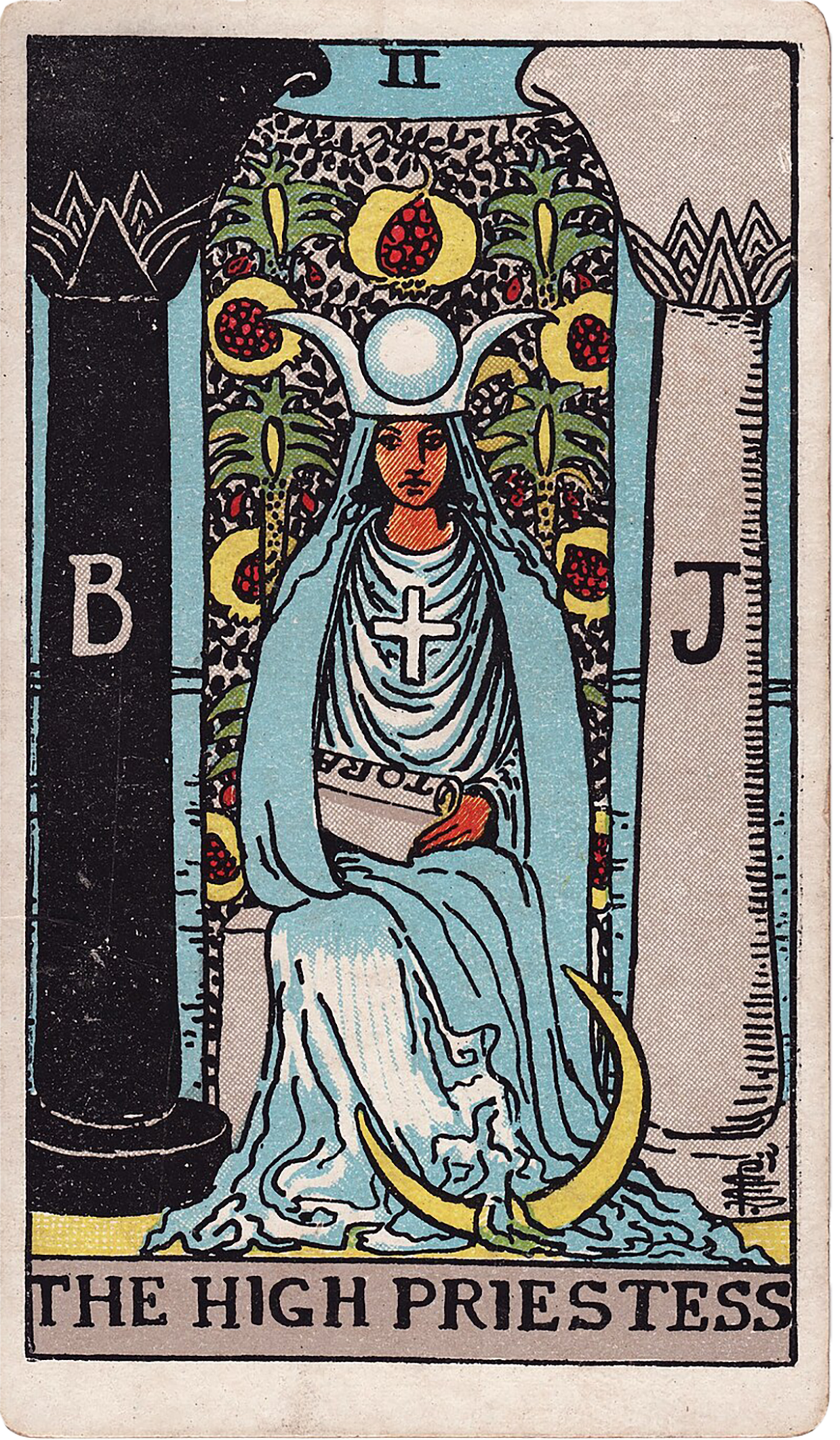 The High Priestess
The Historical Origins and Evolution of The High Priestess
The High Priestess card is steeped in layers of historical and mythological meaning that predate the structured Tarot decks we use today. Early Tarot decks of the 15th century featured cards like the Papessa or the Popess, often interpreted as a female counterpart to the Pope. This figure was ambiguous and occasionally controversial, reflecting medieval attitudes about women and spiritual authority. Over time, the card evolved from this religious, hierarchical figure into a symbol of mystery, wisdom, and the subconscious. The Rider-Waite-Smith deck, designed by A.E. Waite and illustrated by Pamela Colman Smith in 1909, crystallizes this evolution. Here, The High Priestess sits between two pillars labeled B and J, referencing the pillars Boaz and Jachin from Solomon’s Temple—symbols of duality, balance, and threshold. Her crown resembles the triple moon, linking her to lunar cycles and feminine intuition. She holds a scroll marked with the word "TORA," which implies divine law but also secret knowledge, hinting at the card’s theme of hidden wisdom. This transformation reflects a broader shift from overt religious symbolism to a more esoteric, psychological, and spiritual meaning. The High Priestess invites seekers to look inward, to trust intuition, and to engage with subtle truths that are not immediately apparent in the material world.
Understanding The High Priestess Upright Meaning Through Imagery
The upright High Priestess card provided in the image offers a profound visual story that enhances its interpretation. Her seated posture and serene expression communicate calm authority and contemplative stillness. The veil decorated with pomegranates behind her symbolizes the boundary between the conscious and unconscious realms, with pomegranates representing fertility, abundance, and hidden secrets. Her scroll suggests that knowledge is present but must be approached with patience and discretion. The moon at her feet connects her to intuition and cycles of change, reinforcing that understanding and insight arise in their own time. Upright, the card encourages listeners to pay attention beneath surface appearances—listening to what is not said directly and trusting quiet discernment. Practically, when this card appears upright in a reading, it is a prompt to engage with your internal guidance. It advises working with what is currently available rather than waiting for absolute certainty. Often, the card indicates that the situation’s central issue has emerged enough to act consciously but with care. Questions such as where a clearer boundary or deeper honesty could improve the scenario are useful here.
Exploring The High Priestess Reversed and Its Complexities
The reversed High Priestess card, as shown in the supplied image, shifts the focus toward challenges related to the card’s upright qualities. Reversal does not denote misfortune automatically; instead, it often signals blocked intuition, secrecy that is unhelpful, or confusion between true inner knowing and anxiety-driven projection. When reversed, the card may highlight that the seeker is disconnected from their intuition or avoiding facing inner truths. It can suggest passive avoidance or resistance to engaging with important internal messages. Psychologically, it points to the process of recognizing old patterns that have not yet been fully integrated or transformed. In practical readings, the reversed card invites asking where the energy of quiet discernment is distorted or difficult to access. It can mark a temporary pause or a call to examine secrecy and privacy issues more critically. Reading this card effectively means considering surrounding cards to clarify whether the reversal signals resistance, recovery, or imbalance.
Common Questions About The High Priestess and How to Approach Them
Learners often approach The High Priestess with several common questions. One frequent query is whether the card implies passivity or inaction. The High Priestess does not advocate inactivity but rather deliberate, conscious engagement with subtle information. It teaches patience and listening as active processes. Another common question concerns the card’s relationship to secrecy—is the card suggesting hidden agendas or deception? The card points to information that is not yet fully revealed, which can be protective or empowering rather than deceptive. It asks the reader to respect boundaries and timing rather than rush toward exposure. Questions about gender arise too. While traditionally depicted as a woman, The High Priestess symbolizes qualities accessible to all genders: intuition, mystery, receptivity, and inner wisdom. Avoid rigid gender assumptions and focus on the card’s archetypal themes. Finally, learners wonder how to differentiate between true intuition versus wishful thinking or projection. The High Priestess encourages cultivating quiet discernment, which requires practice and honesty. It is not about immediate answers but deepening awareness over time.
Practical Techniques for Reading The High Priestess Card
Working with The High Priestess card effectively involves several practical techniques anchored in its imagery and meaning: 1. Visualization: Encourage clients or yourself to imagine sitting beside The High Priestess, absorbing the calm and silence she embodies. This helps cultivate a receptive state. 2. Boundary Awareness: Notice the pillars and veil in the card image. Ask where boundaries are needed in the situation and where deeper honesty or clearer communication can help. 3. Journaling: Use the card as a prompt to write down subtle impressions, dreams, or intuitive flashes rather than rushing to conclusions. 4. Timing: Recognize that The High Priestess often advises patience. Identify what steps are proportionate and possible now rather than forcing certainty. 5. Reversal Reflection: When the card appears reversed, reflect on what internal blocks or distortions might be present. Consider psychological defenses or avoidance. By repeatedly anchoring interpretation in the card’s rich symbolism—such as the scroll, moon, and pillars—readers enhance accuracy and depth.
Avoiding Common Mistakes and Misinterpretations
Interpreters sometimes misread The High Priestess by assuming it always indicates mysticism or supernatural insight. While the card relates to the unseen, it is equally about everyday intuition and practical inner wisdom. Another frequent error is treating the reverse as inherently negative or as a sign of failure. Instead, the reversal reflects dynamic processes—blocks, delays, or internal struggles—that call for nuanced understanding. Overemphasizing passivity is also a pitfall. The High Priestess invites active listening and conscious choice, not passive waiting. Finally, ignoring the card’s context in a spread can lead to rigid or simplistic readings. Interactions with nearby cards are crucial to refining meaning. Returning to the supplied images and traditional Rider-Waite-Smith symbols helps maintain grounded and balanced interpretations.
Integrating The High Priestess Card Into Family History and Tradition Readings
In readings focused on family history and traditions, The High Priestess card can be especially powerful. She may represent the matriarchal wisdom passed down through generations or the subconscious patterns influencing family dynamics. Her association with hidden knowledge and secrecy reminds readers that family stories often contain unspoken truths or emotional undercurrents. When upright, the card invites uncovering these subtle layers with respect and gentle inquiry. In reversed position, it may signal resistance to acknowledging family patterns or challenges in accessing inherited wisdom. Using The High Priestess in this context encourages patience and discernment, asking where deeper honesty within the family narrative could promote healing or clarity. It also honors the tradition of listening carefully to the quiet voices of ancestry, which often guide present choices.
Practice questions
• How does The High Priestess card challenge me to trust my inner wisdom in daily life?
• In what ways might I be avoiding or blocking the intuitive messages this card offers?
• How can I use the imagery of the pillars and veil to understand boundaries in my current situation?
• What family traditions or hidden histories might The High Priestess be inviting me to explore?
• How do I balance patience and action when working with the lessons of The High Priestess?
Comments
Sign in to comment.
Continue learning
Interpreting the Dance of Justice and The Devil: Balancing Morality and Temptation in Tarot Readings
The combination of Justice and The Devil in tarot presents a profound exploration of morality, temptation, and personal accountability. This article unpacks how these cards influen...
Advanced Techniques for Combining The Moon and The Star to Enhance Intuition in Tarot Readings
This article explores advanced techniques to combine the symbolism and energy of The Moon and The Star Tarot cards to enhance intuition during Tarot readings. Drawing from traditio...
Unlocking Life Insights with the Celtic Cross Tarot Spread
This article offers a thorough exploration of the Celtic Cross Tarot Spread, focusing on its application within family and practical life contexts. Using a worked example featuring...
Unlocking Hidden Meanings with The Hermit and The Hanged Man for Spiritual Growth
This article offers an in-depth exploration of The Hermit and The Hanged Man Tarot cards focusing on their roles in spiritual growth. It guides readers through beginner and advance...
Unlocking Personal Insight with the Seven Card Horseshoe Spread
The Seven Card Horseshoe Spread is a practical and insightful Tarot layout ideal for exploring personal and family dynamics. This article breaks down each position—Past, Present, H...
Mastering the Court Cards of Wands for Unlocking Personal Drive and Leadership
The Court Cards of Wands represent a dynamic spectrum of personal energy, ambition, and leadership potential within the Minor Arcana. This article offers a comprehensive exploratio...
Tracing the Origins and Evolution of The Fool Card in Tarot History
The Fool card holds a foundational place in tarot tradition, symbolizing beginnings, openness, and the embrace of uncertainty. This article traces its origins from early European d...
Techniques for Reading Court Cards to Unlock Personality Insights
Court cards in Tarot often represent people, personality traits, or energy patterns within a situation. This article offers a structured approach for beginners and advanced readers...
Unlocking Emotional Transformation with Death and The Moon Tarot Combination
This article explores the rich and complex interaction between the Death and The Moon tarot cards within the Rider-Waite-Smith tradition, focusing on their combined potential to un...
Applying The Star Card to Foster Hope and Renewal in Personal Growth
The Star card in Tarot symbolizes hope, authenticity, and the process of steady renewal. In a single-card reading, The Star encourages embracing what is present, cultivating openne...