
Uncovering the Historical Origins and Common Questions About The Emperor Card in Tarot Tradition
The Emperor card stands as a powerful emblem of authority, structure, and leadership within the tarot tradition. This article delves into the historical origins of The Emperor, tracing its place in tarot’s lineage and cultural symbolism. By closely examining the upright and reversed meanings of the provided Emperor card imagery, readers learn to navigate common questions about family dynamics, leadership challenges, and personal boundaries. Detailed guidance on interpretation techniques, common missteps, and practical approaches to reading this card empowers learners to integrate its lessons consciously and effectively in their tarot practice.
Cards explored in this article
 The Emperor
Introduction to The Emperor Card and Its Role in Tarot Tradition
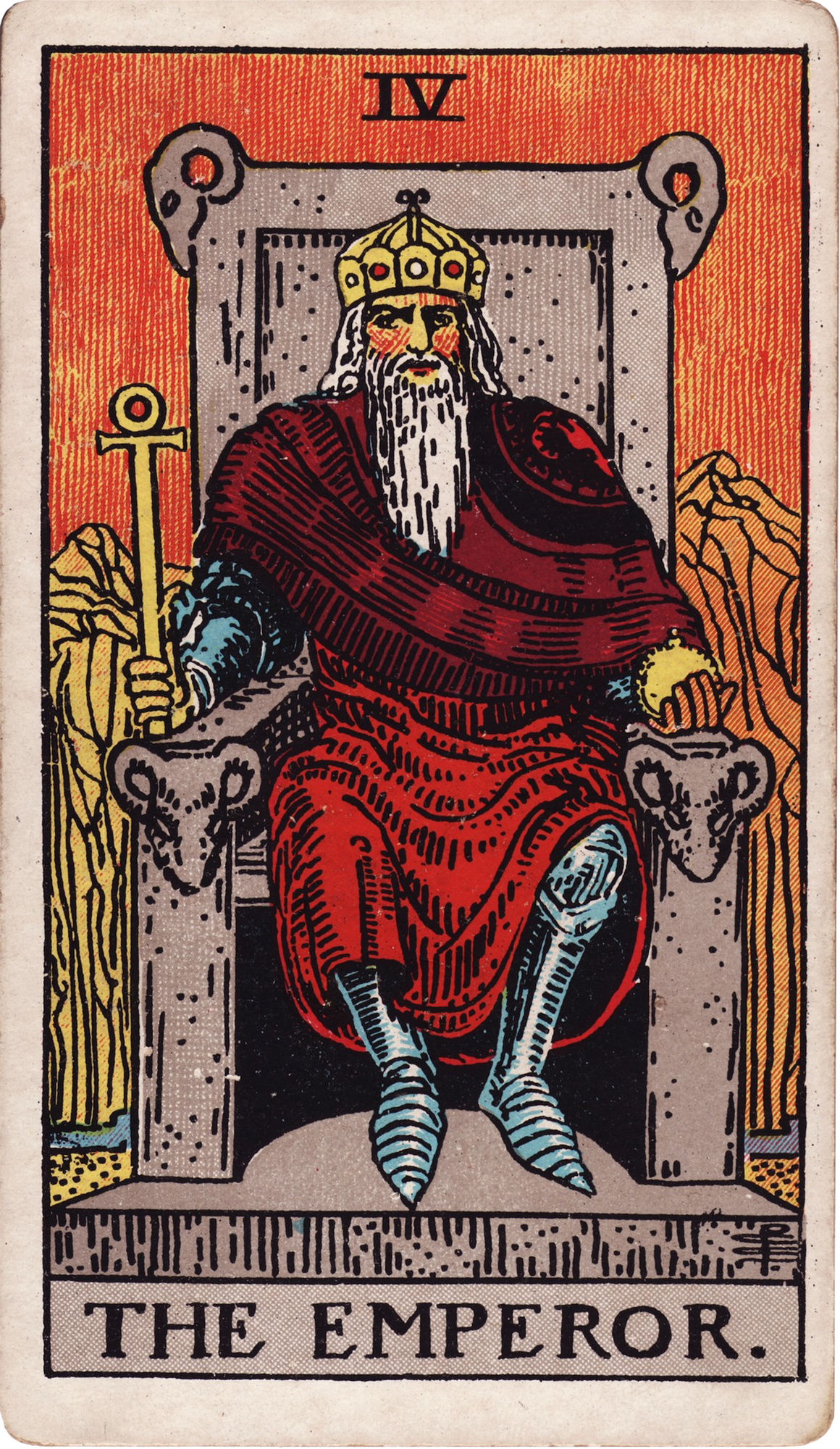
The Emperor is one of the four principal archetypes found in the Major Arcana of the tarot deck, traditionally symbolizing authority, structure, and paternal influence. Often depicted as a mature, regal figure seated on a throne adorned with ram motifs, The Emperor embodies the qualities of leadership, order, and protection. It represents the principle of disciplined governance, both externally in societal structures and internally within personal boundaries. The card’s significance is deeply rooted in historical imagery and cultural understandings of power, making it a rich subject for study within tarot’s historical and symbolic framework.
Historical Origins of The Emperor Card Within Tarot and Broader Symbolism
The figure of The Emperor in tarot draws from medieval and Renaissance ideals of rulership and patriarchal authority. The Rider-Waite-Smith depiction, which the supplied card imagery reflects, borrows heavily from classical iconography—such as the throne and scepter—rooted in European monarchic imagery. The ram heads on The Emperor’s throne reference the astrological sign Aries, symbolizing initiative, leadership, and assertiveness. Historically, tarot cards evolved in the 15th century as playing cards but acquired rich symbolic and esoteric meanings by the 18th and 19th centuries, when occultists like A.E. Waite and Pamela Colman Smith crafted the Rider-Waite deck. The Emperor, in this tradition, channels the archetypal father figure, representing not only social order but also the internalized voice of discipline and responsibility.
Symbolism and Imagery in the Supplied Emperor Card
The supplied Emperor card visually emphasizes his role as a firm yet fair leader. His posture is upright, signaling stability and confidence. The throne adorned with ram heads underscores his Aries energy—bold, action-oriented, but also protective. The scepter in his right hand symbolizes sovereign power, while the orb in the left represents the world or domain under his control. The barren landscape behind him can be interpreted as a metaphor for the challenge of maintaining order in a harsh environment. Together, these images communicate the card’s primary lesson: leadership requires clear boundaries, responsibility, and disciplined action, even when the conditions are not ideal.
Upright Meaning of The Emperor Card in Practical Readings
When The Emperor appears upright in a reading, it often signals a need to establish or reinforce structure, authority, and clear boundaries. This card encourages the querent to take responsibility for their situation by choosing deliberate, disciplined leadership over chaos or passivity. Importantly, the card does not promise an automatic solution but points to the quality needed to engage the challenge effectively. For example, in family-related questions, The Emperor might represent a paternal figure, the importance of tradition, or the necessity of setting rules that protect and support the household. Practically, it suggests working with available resources rather than waiting for ideal conditions, making the card a call to action grounded in what is present and known.
Reversed Meaning and Its Nuanced Interpretations
The reversed Emperor card shifts the focus to potential distortions of its upright qualities. Rather than constructive leadership, the reversal can highlight rigidity, excessive control, or fear of vulnerability. It may indicate structures or roles that no longer serve the querent's growth or family dynamics. The reversal is not inherently negative; it often signals a blockage or internalization of The Emperor’s energy, suggesting reflection on where authority is misused or where openness is needed. In readings, it can mark the beginning awareness of old patterns—such as authoritarian parenting or self-imposed limits—that the querent is starting to see but has not yet fully transformed. The reversed card invites looking closely at the surrounding cards for further clues about whether the energy is being resisted, corrected, or temporarily paused.
Common Questions About The Emperor Card Related to Family and Tradition
Many querents ask about The Emperor when exploring family dynamics, inheritance of traditions, or leadership roles. Common questions include: How can I bring more order and stability to my family? What role does my paternal figure or authority figure play in my life? Am I upholding family traditions in a healthy way? The Emperor advises grounding answers in responsibility and clear boundaries. It encourages constructive leadership that balances firmness with fairness, not domination. Understanding that The Emperor’s role is not to dictate blindly but to create systems that support growth helps clarify these inquiries. Learners should remember to integrate the card’s lessons without assuming it represents a specific person but rather the archetypal energy present in the querent’s environment or psyche.
Techniques for Reading The Emperor Card Effectively
Effective reading of The Emperor involves several key techniques. First, always consider the card’s position in the spread and the question asked. Relate the card’s symbolism—such as the ram-headed throne and the barren landscape—to the querent’s situation to understand how authority or structure manifests. Next, compare upright and reversed appearances carefully; the reversal often points to internal or subtle issues with leadership or control rather than obvious external ones. When reading about family or tradition, explore whether the card points to inherited patterns or conscious choices about governance and boundaries. Avoid overgeneralizing or immediately assuming The Emperor represents a specific person; instead, focus on the quality of order, discipline, and responsibility at play. Finally, use the card’s prompt questions—for example, where clearer boundaries or more deliberate choices could help—to engage the querent in self-reflection.
Common Mistakes to Avoid When Interpreting The Emperor
A frequent error is interpreting The Emperor strictly as a rigid or authoritarian figure, which can limit the card’s richer meanings. Overemphasizing dominance or external control misses the card’s core lesson about responsible, balanced leadership. Another mistake is reading the reversed Emperor as purely negative or disastrous; instead, see it as an invitation to explore distorted or blocked energies. Additionally, some readers mistake the card for predicting familial conflict when it often encourages constructive engagement and the establishment of healthy boundaries. Finally, neglecting the card’s astrological and symbolic nuances—like the Aries association and the barren landscape—can result in superficial interpretations. Maintaining a nuanced, context-sensitive approach helps avoid these pitfalls.
Practical Examples of The Emperor Card in Family and Tradition Readings
Consider a querent asking how to manage conflicts within a family business. The upright Emperor suggests adopting clear roles, responsibilities, and rules to create order and prevent chaos. The card encourages stepping into a leadership role with disciplined fairness rather than emotional reaction. Conversely, if the card appears reversed, it might indicate that current leadership styles are too rigid or controlling, causing resistance or stagnation. In a question about upholding tradition, The Emperor can highlight the importance of preserving core values while recognizing when inflexible adherence becomes harmful. By anchoring these interpretations in the supplied card’s imagery—such as the firm posture and symbolic objects—learners can visualize how the Emperor’s energy applies practically.
Conclusion and Integrating The Emperor’s Lessons Into Tarot Practice
The Emperor card offers profound insights into leadership, responsibility, and the creation of structure within personal and familial contexts. By understanding its historical origins, symbolism, and nuanced meanings in both upright and reversed positions, readers can approach this card with depth and sensitivity. It challenges querents to engage consciously with authority—whether internal or external—and to cultivate clear boundaries that support growth instead of chaos. Learners are encouraged to reflect on how The Emperor’s qualities manifest in their lives and readings, using the card not as a fixed label but as a dynamic guide toward deliberate action and balanced leadership.
Practice questions
• In what areas of your life could you benefit from setting clearer boundaries or taking more disciplined leadership?
• How do you relate to the archetype of The Emperor within your family or personal history?
• When you see The Emperor reversed in a reading, what patterns of rigidity or control might be present in yourself or others?
• How can you balance the need for order with flexibility and openness in your current situation?
• What symbols on The Emperor card stand out most to you, and how do they resonate with your understanding of authority and responsibility?
Comments
Sign in to comment.
Continue learning
Interpreting the Dance of Justice and The Devil: Balancing Morality and Temptation in Tarot Readings
The combination of Justice and The Devil in tarot presents a profound exploration of morality, temptation, and personal accountability. This article unpacks how these cards influen...
Advanced Techniques for Combining The Moon and The Star to Enhance Intuition in Tarot Readings
This article explores advanced techniques to combine the symbolism and energy of The Moon and The Star Tarot cards to enhance intuition during Tarot readings. Drawing from traditio...
Unlocking Life Insights with the Celtic Cross Tarot Spread
This article offers a thorough exploration of the Celtic Cross Tarot Spread, focusing on its application within family and practical life contexts. Using a worked example featuring...
Unlocking Hidden Meanings with The Hermit and The Hanged Man for Spiritual Growth
This article offers an in-depth exploration of The Hermit and The Hanged Man Tarot cards focusing on their roles in spiritual growth. It guides readers through beginner and advance...
Unlocking Personal Insight with the Seven Card Horseshoe Spread
The Seven Card Horseshoe Spread is a practical and insightful Tarot layout ideal for exploring personal and family dynamics. This article breaks down each position—Past, Present, H...
Mastering the Court Cards of Wands for Unlocking Personal Drive and Leadership
The Court Cards of Wands represent a dynamic spectrum of personal energy, ambition, and leadership potential within the Minor Arcana. This article offers a comprehensive exploratio...
Tracing the Origins and Evolution of The Fool Card in Tarot History
The Fool card holds a foundational place in tarot tradition, symbolizing beginnings, openness, and the embrace of uncertainty. This article traces its origins from early European d...
Techniques for Reading Court Cards to Unlock Personality Insights
Court cards in Tarot often represent people, personality traits, or energy patterns within a situation. This article offers a structured approach for beginners and advanced readers...
Unlocking Emotional Transformation with Death and The Moon Tarot Combination
This article explores the rich and complex interaction between the Death and The Moon tarot cards within the Rider-Waite-Smith tradition, focusing on their combined potential to un...
Applying The Star Card to Foster Hope and Renewal in Personal Growth
The Star card in Tarot symbolizes hope, authenticity, and the process of steady renewal. In a single-card reading, The Star encourages embracing what is present, cultivating openne...