
Uncovering The Historical Origins And Enduring Mysteries Of The High Priestess Card
The High Priestess card holds a unique place in Tarot history and practice, representing intuition, inner wisdom, and the mysteries beyond surface knowledge. This article delves into the origins of The High Priestess, her symbolic elements drawn from tradition and esotericism, and how to interpret her upright and reversed meanings in readings. By anchoring our exploration to the supplied Rider-Waite-Smith imagery, learners gain practical skills for working with The High Priestess in family, tradition, and personal insight contexts. Common misunderstandings are addressed with guidance on balancing intuition and discernment, making this article an essential resource for learners seeking depth beyond basic interpretations.
Cards explored in this article
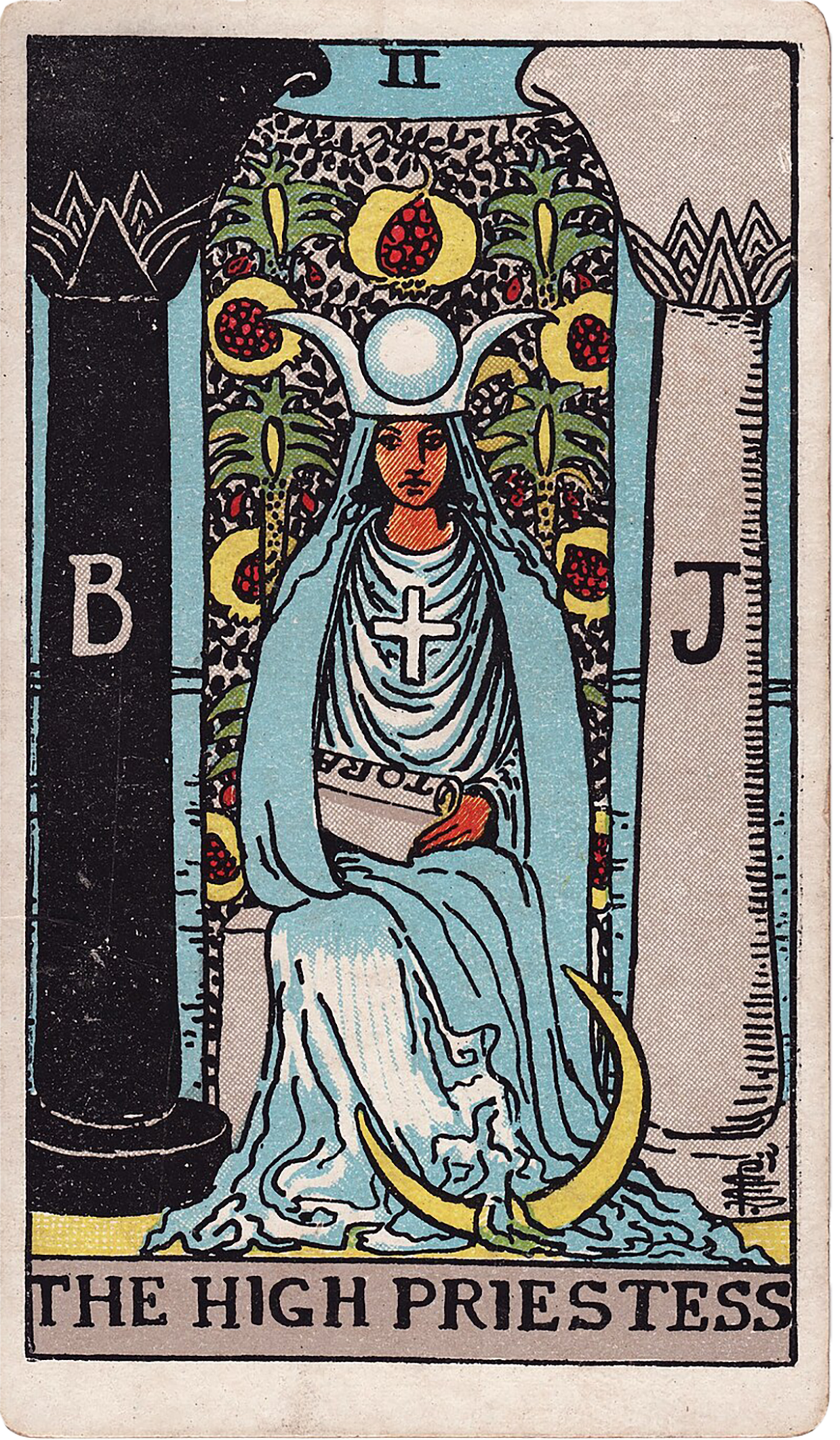 The High Priestess
The Historical Origins of The High Priestess Card
The High Priestess is the second card of the Major Arcana in the Rider-Waite-Smith Tarot deck, often numbered II. Her roots stem from a confluence of historical, religious, and mystical traditions. The card draws inspiration from figures such as the ancient Egyptian goddess Isis, the Greek deity Persephone, and the Jewish Kabbalistic figure Binah, representing understanding and hidden knowledge. In medieval and Renaissance Europe, the High Priestess archetype was linked to the archetypal feminine guardian of secrets and mysteries, often associated with the Virgin Mary or the Sibyls — prophetesses of hidden wisdom. The Rider-Waite-Smith deck, published in 1909 and designed by A.E. Waite with artwork by Pamela Colman Smith, crystallized these influences into a distinct image. The card portrays a serene woman seated between two pillars marked B and J, referencing the pillars Boaz and Jachin from Solomon’s Temple, symbolizing duality and the gateway to esoteric knowledge. The scroll she holds, labeled “TORA,” symbolizes sacred law or hidden wisdom, inviting the seeker to decode profound truths beyond literal interpretation.
Symbolism and Imagery in The High Priestess Card
The symbolism in The High Priestess card is layered and purposeful. The pillars B (Boaz) and J (Jachin) flank her, illustrating balance between severity and mercy, light and darkness, conscious and unconscious realms. The veil decorated with pomegranates behind her represents fertility, abundance, and the boundary between the seen and unseen worlds. Her crown, resembling a triple moon, signifies the cycles of the moon and the connection to feminine intuition and mystery. The water at her feet evokes the subconscious mind and emotional depths, emphasizing that true knowledge often lies beneath surface appearances. The scroll labeled “TORA” is a direct nod to sacred texts but also a symbol of partial revelation—the High Priestess reveals knowledge only to those ready to receive it. The blue robe she wears suggests calmness, wisdom, and spiritual insight. Each element invites the Tarot reader to listen beneath appearances, as the supplied card context emphasizes, fostering quiet discernment rather than impatient action.
Upright Interpretation and Practical Reading Techniques
When The High Priestess appears upright in a reading, as shown in the supplied card image, it emphasizes the quality of listening deeply and trusting intuition. It suggests that the querent should engage with the hidden or less obvious aspects of their situation rather than seeking immediate answers. The card encourages working with what is available now and highlights that the central issue has become clear enough to face consciously. A practical technique is to pause and ask: Where could deeper honesty or a more deliberate choice move this situation forward? For example, in family or tradition contexts, The High Priestess may indicate the value of honoring unspoken family wisdom or ancestral teachings. It may also suggest a moment to observe quietly rather than act impulsively. Common mistakes include rushing the process or trying to force clarity where it is not yet present. Instead, use the card's lesson to take measured steps guided by emerging inner knowledge. Noticing which part of The High Priestess's symbolism is already reflected in your behavior can also be enlightening—for instance, recognizing quiet discernment in decision-making or openness to subtle cues.
Reversed Interpretation and Addressing Common Questions
The High Priestess reversed, as depicted in the supplied card context, shifts the focus. It often points to disconnection from intuition, secrecy, or passive avoidance. Rather than signaling misfortune, the reversal marks where the upright qualities are blocked, delayed, or imbalanced. In practical terms, this means the querent may be struggling to access inner wisdom or mistaking anxiety and projection for genuine knowing. The card may indicate an internal psychological process where hidden patterns or old family traditions are coming to light but not yet fully integrated. A useful reading approach is to ask: Where is this energy becoming distorted or difficult to access? Is there resistance or a need for recovery? For example, in a family history context, the reversal could point to unresolved secrets or avoidance of uncomfortable truths. Surrounding cards help clarify whether this is a temporary pause or a call to conscious change. Avoid assuming the reversal is inherently negative; it is better understood as an invitation to deeper self-examination and balance.
Common Mistakes and How to Avoid Them
One frequent mistake learners make with The High Priestess is equating her purely with psychic phenomena or mystical fortune-telling. While she encourages inner knowing, the card is about discernment and working with visible clues, not passive waiting or magical thinking. Another misconception is ignoring the card’s invitation to deliberate action. The High Priestess does not guarantee that circumstances will become easier but rather that a particular quality—patience, quiet observation, intuition—can be cultivated constructively. Misreading the reversed card as a simple warning of secrets or danger is also common. Instead, consider the reversal as highlighting where the High Priestess’s energy is out of balance or unconscious. To avoid these pitfalls, always anchor interpretation in the visual cues of the card—such as the pillars, veil, scroll, and water—and the practical context of the reading. Reflect on the lesson to integrate rather than predict with certainty.
Integrating The High Priestess in Family History and Tradition Readings
When The High Priestess appears in readings focused on family history and traditions, as the supplied card suggests, she invites exploration of inherited wisdom and unspoken legacies. She encourages honoring the rhythms and cycles passed down through generations, even when they are not immediately visible. For readers, this means paying attention to subtle emotional undercurrents or family dynamics that might be influencing the querent unconsciously. The card may point to the importance of silent knowledge or private stories that shape identity. Practically, ask where the querent might benefit from deeper listening to elders, ancestral memories, or cultural practices. Conversely, reversed, The High Priestess may indicate family secrets or patterns that need conscious recognition and healing. This approach transforms the card from abstract symbolism into a practical tool for connecting personal intuition with collective ancestry.
Practical Exercises to Deepen Connection With The High Priestess
To work effectively with The High Priestess, try the following exercises: 1. Meditation on Symbolism: Focus on the image of the card, especially the pillars, veil, and scroll. Contemplate what hidden knowledge might be accessible through stillness. 2. Journaling Intuition: When the card appears upright, write down intuitive impressions about your situation before seeking external advice. Reflect on how these insights evolve. 3. Boundary Awareness: In readings, ask how clearer boundaries or deeper honesty could bring clarity, as the card context suggests. 4. Recognizing Reversal Energy: When reversed, identify areas of secrecy or emotional avoidance in your life. Explore these gently without judgment. 5. Family Story Exploration: Use the card as a prompt to ask elders or research family lore, particularly about traditions and lessons passed through generations. These methods enhance practical understanding and foster a respectful relationship with The High Priestess’s mysteries.
Practice questions
• In what areas of your life might deeper listening and intuition provide clarity?
• How do you currently respond when faced with hidden or unclear information?
• What family traditions or secrets might The High Priestess be inviting you to explore or honor?
• When you experience disconnection from your intuition, what patterns tend to emerge?
• How can you balance patience with deliberate action when interpreting The High Priestess in readings?
Comments
Sign in to comment.
Continue learning
Interpreting the Dance of Justice and The Devil: Balancing Morality and Temptation in Tarot Readings
The combination of Justice and The Devil in tarot presents a profound exploration of morality, temptation, and personal accountability. This article unpacks how these cards influen...
Advanced Techniques for Combining The Moon and The Star to Enhance Intuition in Tarot Readings
This article explores advanced techniques to combine the symbolism and energy of The Moon and The Star Tarot cards to enhance intuition during Tarot readings. Drawing from traditio...
Unlocking Life Insights with the Celtic Cross Tarot Spread
This article offers a thorough exploration of the Celtic Cross Tarot Spread, focusing on its application within family and practical life contexts. Using a worked example featuring...
Unlocking Hidden Meanings with The Hermit and The Hanged Man for Spiritual Growth
This article offers an in-depth exploration of The Hermit and The Hanged Man Tarot cards focusing on their roles in spiritual growth. It guides readers through beginner and advance...
Unlocking Personal Insight with the Seven Card Horseshoe Spread
The Seven Card Horseshoe Spread is a practical and insightful Tarot layout ideal for exploring personal and family dynamics. This article breaks down each position—Past, Present, H...
Mastering the Court Cards of Wands for Unlocking Personal Drive and Leadership
The Court Cards of Wands represent a dynamic spectrum of personal energy, ambition, and leadership potential within the Minor Arcana. This article offers a comprehensive exploratio...
Tracing the Origins and Evolution of The Fool Card in Tarot History
The Fool card holds a foundational place in tarot tradition, symbolizing beginnings, openness, and the embrace of uncertainty. This article traces its origins from early European d...
Techniques for Reading Court Cards to Unlock Personality Insights
Court cards in Tarot often represent people, personality traits, or energy patterns within a situation. This article offers a structured approach for beginners and advanced readers...
Unlocking Emotional Transformation with Death and The Moon Tarot Combination
This article explores the rich and complex interaction between the Death and The Moon tarot cards within the Rider-Waite-Smith tradition, focusing on their combined potential to un...
Applying The Star Card to Foster Hope and Renewal in Personal Growth
The Star card in Tarot symbolizes hope, authenticity, and the process of steady renewal. In a single-card reading, The Star encourages embracing what is present, cultivating openne...