
Uncovering the Historical Origins and Symbolism of The Hierophant Card in Tarot Tradition
The Hierophant card holds a notable place in Tarot tradition as a symbol of established wisdom, authority, and structured learning. This article delves into the card’s historical origins, its rich symbolism especially in the Rider-Waite-Smith tradition, and how it reflects themes of family, tradition, and societal norms. Through a detailed examination of both upright and reversed positions, readers will gain practical approaches for interpreting The Hierophant in readings, common pitfalls to avoid, and how the card encourages conscious engagement with inherited knowledge and systems. Anchored by the supplied card imagery, this article provides a comprehensive framework to deepen understanding and apply The Hierophant’s lessons thoughtfully in Tarot practice.
Cards explored in this article
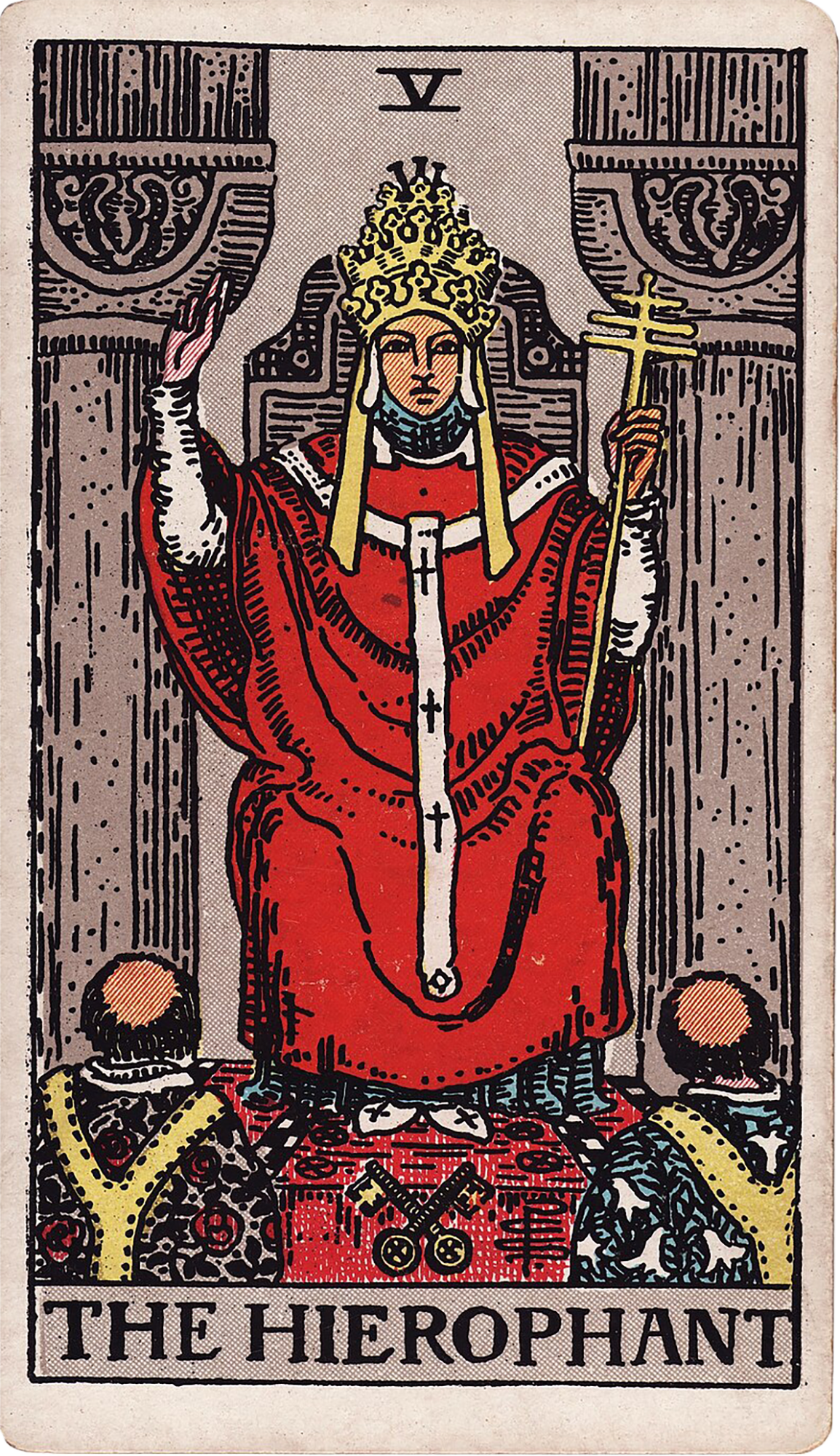 The Hierophant
Introduction to The Hierophant and Its Place in Tarot Tradition
The Hierophant is traditionally the fifth card in the Major Arcana and represents a figure who bridges the sacred and the mundane—often depicted as a spiritual teacher, pope, or wise elder. This card embodies themes such as learning from established wisdom, seeking qualified guidance, and understanding societal or spiritual rules before deciding whether to follow them. In Tarot tradition, The Hierophant serves as a symbol of authority, conventional values, and the transmission of collective knowledge, particularly within structured institutions or family traditions. The depiction of The Hierophant in the Rider-Waite-Smith deck draws heavily on Christian religious iconography, but its underlying archetype is universal, linking to the archetypal teacher, priest, or guru figure found across cultures.
Historical Origins of The Hierophant Card
The term 'Hierophant' originates from ancient Greek religion, where the Hierophant was a priest who revealed sacred mysteries during the Eleusinian Mysteries. This role emphasized initiation into secret knowledge and maintaining religious traditions. When Tarot cards emerged in the 15th century, the equivalent figure was often dubbed The Pope or The High Priest, reflecting contemporary religious authority. Over time, especially in the Rider-Waite-Smith deck created in the early 20th century, the card was renamed The Hierophant to broaden its spiritual scope beyond Christianity and highlight its role as a keeper of sacred knowledge and tradition. The imagery—such as the triple cross staff, keys at the feet, and the two acolytes—links to both spiritual authority and the passing of wisdom through established channels.
Symbolism Embedded in The Hierophant Card
The visual elements of The Hierophant card are rich with symbolism that supports its meaning in readings. The figure typically wears the triple crown or papal tiara symbolizing spiritual authority on three levels: the conscious, subconscious, and superconscious. His hand gesture, often a benediction, indicates blessing and teaching. The crossed keys at his feet represent the keys to heaven or spiritual understanding, hinting at access to hidden wisdom through proper channels. The two acolytes kneeling before him symbolize the transmission of knowledge and the importance of mentorship. Colors like red and white emphasize purity and power combined with passion and worldly engagement. These symbols collectively reinforce the card’s message about learning from tradition, respecting established wisdom, and discerning when to follow or question authority.
Upright The Hierophant Card Interpretation and Practical Reading Techniques
When The Hierophant appears upright in a reading, it encourages the seeker to engage consciously with existing systems—whether these are spiritual beliefs, family traditions, educational institutions, or cultural norms. The card suggests that the questioner benefit from consulting qualified teachers, mentors, or trusted guides to navigate their current situation. It emphasizes learning the rules or frameworks before attempting to change or break them. The card’s lesson is not about blind obedience but about using established wisdom constructively to move forward. Practically, readers can look at how the card’s imagery—such as the acolytes and keys—relates to the querent’s relationships and sources of guidance. A useful technique is to ask where clearer boundaries, deeper honesty, or more deliberate choices could shift the situation, reflecting the card’s theme of conscious engagement rather than passive acceptance.
Interpreting The Hierophant in Reversed Position and Common Challenges
Reversed, The Hierophant often points to challenges surrounding dogma, rigidity, or rebellion without understanding. This position may highlight empty rituals, institutional pressures that demand obedience without wisdom, or a psychological inward turn questioning inherited beliefs. Importantly, a reversed Hierophant is not inherently negative but signals that the upright qualities are blocked, delayed, or expressed without balance. It may indicate resistance to tradition, critical reassessment of family or societal expectations, or internalized conflict over established norms. When interpreting, readers should examine surrounding cards to discern whether the reversal suggests recovery and growth or stubborn excess. Common mistakes include assuming the reversed card automatically means failure or disaster; instead, consider it a nuanced prompt to investigate where energy is becoming distorted or where conscious change is beginning but incomplete.
The Hierophant Card in the Context of Family History and Tradition
Given its strong ties to tradition and authority, The Hierophant naturally connects to questions about family history and inherited values. In readings focusing on family, the card can represent the transmission of cultural or spiritual beliefs across generations, the influence of parental or ancestral authority, and the patterns that shape identity within family systems. It encourages reflection on which traditions serve growth and which may require reevaluation. For example, upright Hierophant energy may suggest embracing family wisdom or seeking elder guidance, while reversed may point to breaking free from restrictive family dogma or questioning long-held patterns. Readers can use the card to explore how family customs impact the querent’s current choices and where conscious engagement or conscious departure from tradition is necessary.
Common Questions and Practical Advice When Working with The Hierophant
Common questions related to The Hierophant often involve guidance on education, spiritual learning, adherence to rules, or navigating institutional systems like religion, law, or cultural traditions. When this card appears, it asks the reader to consider: Where can I seek qualified guidance? What traditions or rules am I currently engaging with, and are they helpful or limiting? How can I make a deliberate choice about following or transforming these systems? Practical advice includes exploring mentorship opportunities, studying the foundations of a situation before acting, and being mindful of conforming to tradition versus exercising personal discernment. Using the card’s imagery as a mirror, readers can ask which aspects of The Hierophant’s lesson—such as clearer boundaries or deeper honesty—are already present in the querent’s behavior and which can be developed.
Avoiding Common Mistakes in Reading The Hierophant Card
One common mistake is interpreting The Hierophant as a purely negative symbol of rigid authority or dogmatism without considering its constructive potential. The card represents a quality that, when used consciously, can be a valuable tool for learning and growth. Another error is assuming that a reversed Hierophant means outright rejection of tradition or automatic conflict. Instead, consider the nuanced ways this energy might be blocked, internalized, or in flux. Readers should avoid overly deterministic conclusions and maintain an open dialogue with the querent about how authority and tradition manifest in their life. Anchoring the interpretation in the card’s imagery—such as the keys representing opening or closing access to wisdom—can help keep readings balanced and grounded.
Conclusion and Integrating The Hierophant into Your Tarot Practice
The Hierophant card invites a deep engagement with the forces of tradition, authority, and structured wisdom. Whether upright or reversed, it challenges seekers to consciously choose how they relate to inherited systems—embracing what supports growth and discerning what requires transformation. Through careful attention to the card’s rich symbolism and historical background, readers can elevate their interpretation beyond surface-level meanings to encompass psychological, spiritual, and social dimensions. For learners, The Hierophant serves as a guidepost reminding us that wisdom is not just found in rules but in the thoughtful application and questioning of those rules. Incorporating this card into practice encourages balanced, deliberate reading techniques that honor both the power of tradition and the necessity of personal authenticity.
Practice questions
• Which aspects of tradition or authority do I find helpful in my current situation, and which feel restrictive?
• How do I engage with mentorship or established wisdom in my personal or professional life?
• In what ways might I be conforming to expectations without conscious choice?
• Where could clearer boundaries or deeper honesty improve my relationships or decisions?
• If The Hierophant energy feels blocked or reversed in my life, what might that reveal about my relationship with family or societal norms?
Comments
Sign in to comment.
Continue learning
Interpreting the Dance of Justice and The Devil: Balancing Morality and Temptation in Tarot Readings
The combination of Justice and The Devil in tarot presents a profound exploration of morality, temptation, and personal accountability. This article unpacks how these cards influen...
Advanced Techniques for Combining The Moon and The Star to Enhance Intuition in Tarot Readings
This article explores advanced techniques to combine the symbolism and energy of The Moon and The Star Tarot cards to enhance intuition during Tarot readings. Drawing from traditio...
Unlocking Life Insights with the Celtic Cross Tarot Spread
This article offers a thorough exploration of the Celtic Cross Tarot Spread, focusing on its application within family and practical life contexts. Using a worked example featuring...
Unlocking Hidden Meanings with The Hermit and The Hanged Man for Spiritual Growth
This article offers an in-depth exploration of The Hermit and The Hanged Man Tarot cards focusing on their roles in spiritual growth. It guides readers through beginner and advance...
Unlocking Personal Insight with the Seven Card Horseshoe Spread
The Seven Card Horseshoe Spread is a practical and insightful Tarot layout ideal for exploring personal and family dynamics. This article breaks down each position—Past, Present, H...
Mastering the Court Cards of Wands for Unlocking Personal Drive and Leadership
The Court Cards of Wands represent a dynamic spectrum of personal energy, ambition, and leadership potential within the Minor Arcana. This article offers a comprehensive exploratio...
Tracing the Origins and Evolution of The Fool Card in Tarot History
The Fool card holds a foundational place in tarot tradition, symbolizing beginnings, openness, and the embrace of uncertainty. This article traces its origins from early European d...
Techniques for Reading Court Cards to Unlock Personality Insights
Court cards in Tarot often represent people, personality traits, or energy patterns within a situation. This article offers a structured approach for beginners and advanced readers...
Unlocking Emotional Transformation with Death and The Moon Tarot Combination
This article explores the rich and complex interaction between the Death and The Moon tarot cards within the Rider-Waite-Smith tradition, focusing on their combined potential to un...
Applying The Star Card to Foster Hope and Renewal in Personal Growth
The Star card in Tarot symbolizes hope, authenticity, and the process of steady renewal. In a single-card reading, The Star encourages embracing what is present, cultivating openne...