
Understanding The Chariot Card for Determination Control and Personal Triumph in Life
The Chariot card in Tarot symbolizes focused determination, control over opposing forces, and the drive toward personal triumph. This article explores The Chariot in its upright and reversed positions, explaining how its core lessons apply across various contexts such as love, career, money, advice, challenges, people, outcomes, and spiritual reflection. Using traditional Rider-Waite-Smith symbolism, readers will learn how to identify where disciplined energy is present or blocked, how to interpret the card’s imagery, and practical methods for integrating this card into readings to nurture direct, deliberate progress.
Cards explored in this article
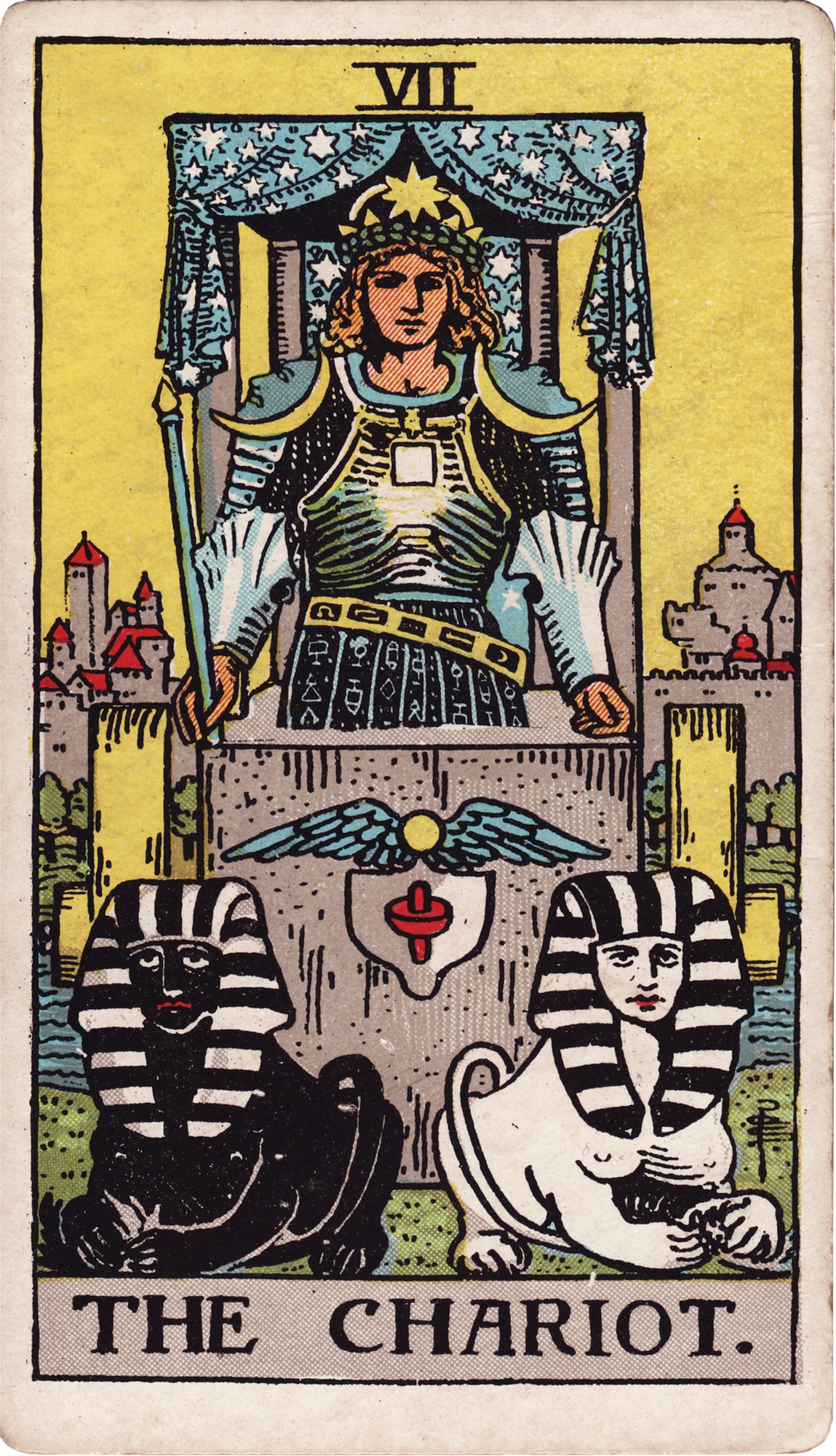 The Chariot
Introduction to The Chariot Card and Its Core Symbolism
The Chariot card in the Rider-Waite-Smith Tarot deck presents a powerful image of a charioteer steering a vehicle pulled by two sphinxes, traditionally one black and one white, representing opposing forces or dualities. The charioteer’s armor and crown signify protection and victory, while the city in the background denotes leaving behind the past and moving forward with clear focus. This card evokes themes of determination, control, willpower, and personal triumph through disciplined effort. Upright, The Chariot encourages choosing a direction, aligning competing impulses, and advancing with deliberate determination. Reversed, it often points to a loss of direction, scattered effort, or internal conflict that obstructs progress. Understanding these foundational symbols is essential before exploring how The Chariot’s message adapts across life’s different contexts.
Technique for Reading The Chariot in a Single Card Context
When The Chariot appears alone in a reading, the first step is to observe whether it is upright or reversed, as this orientation fundamentally shifts its meaning. Next, consider the querent’s question or the reading’s focus to tailor the interpretation. Look closely at the card’s imagery: the sphinxes’ contrasting colors, the charioteer’s posture, the canopy of stars above, and the city behind. These elements highlight themes of control, balancing opposites, and determined forward movement. A practical technique is to ask: Where in the querent’s life is there a need to harness inward conflict and channel energy toward a goal? For example, in career readings, this might mean focusing scattered efforts to advance; in love, it could indicate the necessity to make a clear choice or set boundaries. Avoid interpreting The Chariot as a guarantee of success; rather, see it as highlighting qualities that can help navigate challenges through conscious effort.
The Chariot in Love Contexts
Upright, The Chariot in a love reading signals the importance of choosing a clear direction or making decisive moves in a relationship. It encourages balancing emotional impulses and reason to move forward with confidence, whether that means committing, resolving conflict, or establishing healthy boundaries. The charioteer’s control over the sphinxes reflects the ability to harmonize opposing desires or values within a partnership. Reversed, The Chariot warns of confusion, mixed signals, or forcing a relationship to move faster than it should without resolving inner doubts or emotional conflicts. It suggests the querent may be pushing too hard or struggling to find balance between their needs and their partner’s. This can lead to frustration or even relationship breakdown unless addressed with honesty and reflection. Practical reading advice: Ask the querent where they might be hesitating or where a clearer, more deliberate decision can help love progress. The card urges conscious direction rather than passive drift.
The Chariot in Career and Money Readings
In career contexts, The Chariot upright highlights ambition, focused drive, and the capacity to overcome obstacles by taking control of one’s path. The charioteer’s disciplined posture suggests that success comes not from waiting or relying on external certainty but by engaging directly with the situation and pushing forward with determination. It can also indicate a pivotal moment where the querent must commit to a specific course of action or project. When reversed, The Chariot may indicate scattered efforts, burnout from trying to control too much, or internal conflicts about career choices that prevent clear progress. It signals the need to slow down and resolve uncertainties before moving ahead to avoid unnecessary failures. Regarding money, upright The Chariot often reflects a proactive approach to financial matters—taking charge, making deliberate decisions, and managing competing priorities such as spending versus saving. Reversed, it warns against impulsive or aggressive financial moves made without proper planning, possibly leading to losses or instability. Technique tip: Encourage querents to identify which opposing forces in their work or finances need harmonizing and what practical, proportionate first step The Chariot suggests.
The Chariot as Advice or a Challenge
As advice, The Chariot urges the querent to take deliberate, focused action despite uncertainty. It points to the power of choosing a clear direction and mastering inner distractions or competing impulses to advance goals. Importantly, it stresses working with present realities rather than waiting for perfect conditions. This advice is about willful engagement and conscious control. As a challenge, The Chariot upright asks whether the querent can maintain discipline amid distractions or opposing forces. It highlights the difficulty of integrating conflicting desires or external pressures without losing momentum. If reversed, the card challenges the querent to recognize where their energy is scattered, where impatience or aggression might be sabotaging progress, or where unresolved internal conflicts block forward movement. In practice, use The Chariot as a mirror to examine the querent’s relationship with control and direction: Are they leading their situation or being led by it?
The Chariot as a Person in Readings
When representing a person, The Chariot usually characterizes someone determined, disciplined, and goal-oriented. This individual is often seen as a leader or pioneer who can balance opposing forces within themselves or their environment to achieve success. They may be competitive, confident, and willing to take risks. If reversed, this personality type might manifest as someone struggling with self-control, possibly impulsive or scattered in their efforts. They may exhibit aggression or a tendency to force outcomes prematurely, reflecting inner turmoil or resistance to adapting their approach. Interpreting The Chariot as a person requires attention to context and the querent’s relationship with this figure, as well as the card orientation, to understand whether the traits are strengths or areas needing growth.
The Chariot in Outcome and Spiritual Reflection
As an outcome card, The Chariot suggests that success and forward movement are likely but contingent on the querent’s ability to maintain focus and control over opposing influences. It points to victory achieved through disciplined determination rather than luck. The journey involves consciously choosing a direction and putting in effort despite challenges. In spiritual reflection, The Chariot encourages mastering inner conflicts and directing willpower toward personal growth and triumph over limiting patterns. The black and white sphinxes symbolize the dualities within the self—light and shadow, emotion and logic, desire and restraint—that must be aligned for spiritual progress. Reversed, the card signals a spiritual impasse or internal confusion, inviting honest exploration of where control has been lost or misused. Practitioners can use The Chariot as a meditation image to contemplate the balance of forces within themselves and the nature of their willful progress in life.
Common Mistakes When Interpreting The Chariot
One common error is interpreting The Chariot as a guaranteed sign of success or victory without considering the effort and discipline required. The card emphasizes qualities that can be employed constructively, not automatic outcomes. Another mistake is overlooking the significance of the card’s reversal, treating it as purely negative rather than a nuanced signal of blockage, delay, or internalized struggle that invites reflection. Ignoring the card’s imagery—such as the sphinxes’ contrast, the charioteer’s control, and the city behind—can reduce interpretation to generic phrases that miss the layered symbolism critical for deeper understanding. Finally, applying The Chariot’s message uniformly across contexts without adapting to the question or area of life can lead to vague or irrelevant readings. Always tailor the interpretation to what the querent is experiencing.
Practical Method for Integrating The Chariot into Readings
To effectively integrate The Chariot into a single-card reading, start by clarifying the querent’s focus or question. Determine if the card is upright or reversed and carefully observe the symbolism on the card image provided. Ask yourself: Which forces or impulses must be harmonized? Where is decisive control needed? What next step can be taken now with the resources available? Consider how the themes of determination, control, and direction apply to the querent’s context—be that love, career, money, or personal development. Encourage the querent to reflect on their relationship with willpower and control. Are they resisting necessary decisions? Forcing outcomes too early? Or are they harnessing their energy effectively toward a clear goal? Use open questions to deepen insight. By anchoring your interpretation in both the card’s rich imagery and the querent’s situation, you can provide practical, empowering guidance that emphasizes conscious choice and disciplined progress.
Practice questions
• Where in my life do I need to take clearer control and direction?
• What opposing forces or impulses must I balance to move forward effectively?
• Am I forcing outcomes prematurely or allowing inner conflicts to distract me?
• How do I respond to challenges that require disciplined determination?
• What first deliberate step can I take today to align with my goals?
• In what ways can I harness willpower without losing flexibility or compassion?
Comments
Sign in to comment.
Continue learning
Interpreting the Dance of Justice and The Devil: Balancing Morality and Temptation in Tarot Readings
The combination of Justice and The Devil in tarot presents a profound exploration of morality, temptation, and personal accountability. This article unpacks how these cards influen...
Advanced Techniques for Combining The Moon and The Star to Enhance Intuition in Tarot Readings
This article explores advanced techniques to combine the symbolism and energy of The Moon and The Star Tarot cards to enhance intuition during Tarot readings. Drawing from traditio...
Unlocking Life Insights with the Celtic Cross Tarot Spread
This article offers a thorough exploration of the Celtic Cross Tarot Spread, focusing on its application within family and practical life contexts. Using a worked example featuring...
Unlocking Hidden Meanings with The Hermit and The Hanged Man for Spiritual Growth
This article offers an in-depth exploration of The Hermit and The Hanged Man Tarot cards focusing on their roles in spiritual growth. It guides readers through beginner and advance...
Unlocking Personal Insight with the Seven Card Horseshoe Spread
The Seven Card Horseshoe Spread is a practical and insightful Tarot layout ideal for exploring personal and family dynamics. This article breaks down each position—Past, Present, H...
Mastering the Court Cards of Wands for Unlocking Personal Drive and Leadership
The Court Cards of Wands represent a dynamic spectrum of personal energy, ambition, and leadership potential within the Minor Arcana. This article offers a comprehensive exploratio...
Tracing the Origins and Evolution of The Fool Card in Tarot History
The Fool card holds a foundational place in tarot tradition, symbolizing beginnings, openness, and the embrace of uncertainty. This article traces its origins from early European d...
Techniques for Reading Court Cards to Unlock Personality Insights
Court cards in Tarot often represent people, personality traits, or energy patterns within a situation. This article offers a structured approach for beginners and advanced readers...
Unlocking Emotional Transformation with Death and The Moon Tarot Combination
This article explores the rich and complex interaction between the Death and The Moon tarot cards within the Rider-Waite-Smith tradition, focusing on their combined potential to un...
Applying The Star Card to Foster Hope and Renewal in Personal Growth
The Star card in Tarot symbolizes hope, authenticity, and the process of steady renewal. In a single-card reading, The Star encourages embracing what is present, cultivating openne...