
Understanding The Hermit for Inner Guidance Solitude and Spiritual Growth
The Hermit card in tarot symbolizes a journey inward, calling for solitude, reflection, and the pursuit of inner wisdom. This article examines The Hermit’s upright and reversed meanings from the supplied card imagery, contextualizing its messages across love, career, finances, advice, challenges, personality traits, outcomes, and spiritual reflection. By anchoring interpretations in the card’s traditional Rider-Waite-Smith symbolism—such as the lantern, the mountain, and the hermit’s posture—learners will understand how to apply this archetype to readings with clarity and sensitivity. Practical guidance on technique and common pitfalls ensures readers can confidently integrate The Hermit into their tarot practice for enhanced insight and balanced interpretation.
Cards explored in this article
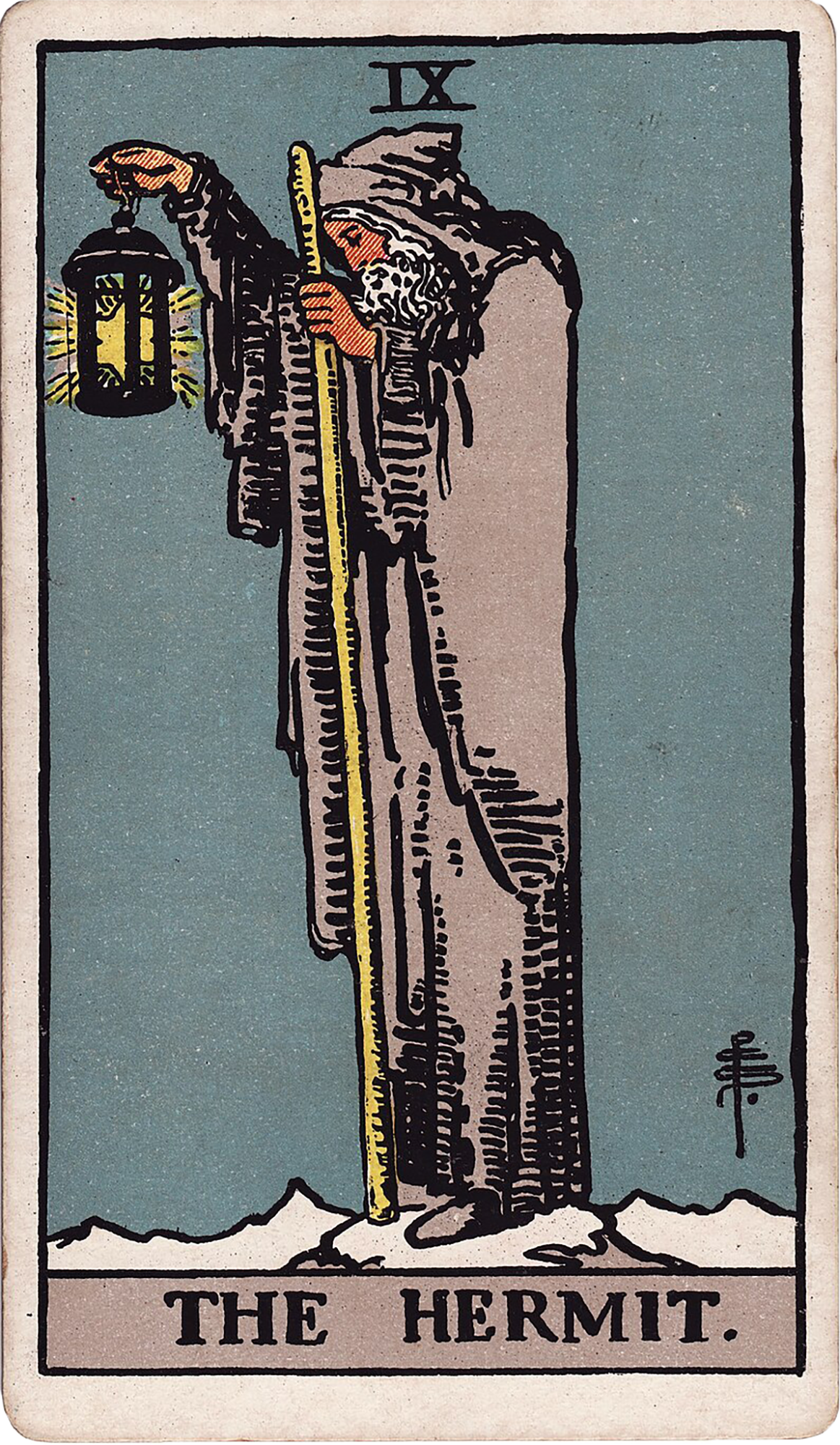 The Hermit
Introduction to The Hermit and Its Symbolism
The Hermit card, numbered IX in the Major Arcana, is a powerful symbol of introspection, wisdom, and spiritual questing. The imagery of the supplied upright card shows an elderly figure cloaked in a gray robe standing alone on a mountain peak. He holds a lantern with a six-pointed star, representing illumination through inner knowledge rather than external sources. His staff symbolizes support during this solitary journey. The mountain setting signifies achievement and the challenges of seeking truth. Traditionally, The Hermit encourages stepping back from external distractions to seek clarity. The card’s upright version emphasizes constructive solitude and conscious reflection, while the reversed version warns of excessive isolation or avoidance. Understanding these symbolic elements is foundational before exploring how The Hermit manifests in different reading contexts.
Technique for Interpreting The Hermit in Single-Card Readings
When The Hermit appears alone in a reading, the first step is to observe its position and posture: the lantern’s light and the hermit’s gaze suggest searching and inner guidance. Begin by assessing whether the card is upright or reversed, as this indicates the quality of reflection or withdrawal being emphasized. Then, consider the question or area of life involved, applying the card’s core themes of solitude, careful thought, and spiritual insight. Avoid expecting immediate ease or resolution; The Hermit implies a process rather than a quick fix. Pay attention to how the seeker might use solitude to gain clarity or how they might be misusing withdrawal to avoid action. This approach ensures a nuanced interpretation that balances encouragement with realistic caution.
The Hermit in Love and Relationships
In love contexts, the upright Hermit suggests a period of introspection about personal needs, boundaries, and emotional honesty. The card encourages the querent to step back from relationship noise to reflect on what truly matters, rather than rushing decisions. Its lantern imagery implies bringing light to hidden feelings or motivations. This can be a time of healthy solitude that strengthens self-understanding before deeper connection. Conversely, reversed, The Hermit may indicate emotional withdrawal, loneliness, or avoidance of intimacy. It can signal someone who is overly isolated or hesitant to open up, perhaps due to fear or unresolved issues. In readings focused on love, ask where solitude serves growth and where it becomes a barrier to connection.
The Hermit in Career and Work
Career interpretations of The Hermit emphasize thoughtful planning, skill development, and strategic retreat. Upright, this card encourages working with current resources and gaining deeper insight into one’s professional path. It may highlight the need to research or study before making a big move, using the lantern as a symbol of illumination through knowledge. The Hermit’s solitude represents focusing without distraction, which can lead to breakthroughs in complex projects. Reversed, the card warns against becoming isolated from colleagues or avoiding necessary collaboration. It may also reflect overthinking that leads to indecision. In career readings, consider whether the seeker is balancing reflection with action or stuck in unproductive withdrawal.
The Hermit and Financial Matters
When The Hermit appears in financial readings, the upright position suggests cautious management and deliberate financial planning. The card advises working with available resources and gaining clarity about financial goals before taking risks. The lantern symbolizes gaining insight into one’s spending habits or investments, encouraging a deeper look rather than impulsive decisions. Reversed, The Hermit may reveal avoidance of financial responsibilities or excessive worry that prevents practical steps. It might also indicate secrecy or reluctance to seek advice. The key question is whether solitude is being used to create clear financial strategies or as a means to escape confronting money issues.
The Hermit as Advice or Challenge
As advice, The Hermit urges deliberate pause and introspection. It suggests that moving forward with clarity requires conscious reflection and possibly solitude. The card reminds the seeker to identify the next proportionate step rather than rushing into action. It encourages honest self-assessment and setting clear boundaries where needed. As a challenge, The Hermit’s upright qualities may be blocked or delayed, indicating resistance to solitude or inner truth. When reversed, the challenge might be excessive withdrawal or avoidance that hinders growth. The lantern in the card asks the reader to illuminate these patterns and explore how they might embrace balanced reflection rather than oscillating between extremes.
The Hermit as a Person or Personality Trait
When The Hermit represents a person in a reading, it often describes someone wise, introspective, and thoughtful. This individual values solitude, inner guidance, and deep understanding. The gray robe and mountain setting suggest maturity and a grounded approach to life’s mysteries. This person may be a mentor, spiritual guide, or simply someone who prefers contemplation over social engagement. Reversed, the personality might manifest as socially withdrawn, overly secretive, or stuck in patterns of isolation. In either case, the card invites reflection on how the seeker relates to these qualities within themselves or others.
The Hermit as an Outcome
As an outcome, The Hermit suggests that resolution or progress will come through inner work rather than external action. The seeker may find clarity by stepping back and assessing the situation from a place of quiet observation. The lantern’s light indicates that insight will emerge gradually and require patience. This outcome often involves increased self-awareness and wiser choices rather than immediate changes. If reversed, the outcome may warn of ongoing withdrawal or difficulties accessing inner guidance. It suggests that the seeker may need to consciously break out of isolation or mental patterns to move forward.
The Hermit and Spiritual Reflection
Spiritually, The Hermit is a profound symbol of the quest for enlightenment through solitude and inner exploration. The lantern represents the light of personal truth and the wisdom that comes from self-discovery. Upright, the card encourages turning inward to listen to intuition and spiritual guidance. It calls for patience and faith in the process of growth, even when the path is uncertain. The mountain symbolizes the heights of spiritual attainment that require perseverance. Reversed, spiritual reflection may be blocked by resistance, fear, or unwillingness to confront inner shadows. The Hermit invites seekers to embrace both the light and dark aspects of solitude as essential to genuine transformation.
Common Mistakes in Reading The Hermit
A common mistake is interpreting The Hermit as purely negative or as a card that guarantees loneliness or isolation. Instead, its upright form highlights constructive solitude and wisdom. Another error is overlooking the reversed card’s nuance; it is not always a warning of disaster but rather a sign to examine imbalances or internal resistance. Readers should avoid treating The Hermit as a call for immediate action; its message is about measured, deliberate steps. Finally, ignoring the card’s imagery—such as the lantern and mountain—can diminish the depth of interpretation. Anchoring insights in symbolism and context keeps readings grounded and meaningful.
Practical Method for Integrating The Hermit in Your Readings
To effectively work with The Hermit, first study the card’s imagery and traditional meanings as presented in the supplied Rider-Waite-Smith deck. When The Hermit appears as a single card, ask: What area of life needs clear, focused reflection? Is solitude being used constructively or as avoidance? Reflect on what the lantern illuminates in the seeker’s current situation. Consider how stepping back might reveal the next small but meaningful step forward. Use the card as a guide to balance contemplation with engagement. Incorporate reflection questions and compare behaviors or feelings with the card’s themes. This approach transforms The Hermit from a static symbol to a dynamic tool for self-awareness and growth.
Practice questions
• In what areas of your life might deliberate solitude provide clarity and insight?
• How do you distinguish between healthy reflection and avoidance or isolation?
• What does the lantern in The Hermit’s hand illuminate about your current challenges?
• Where might you be resisting the inner guidance that requires patience and honesty?
• How can you balance introspection with necessary external action in your decisions?
Comments
Sign in to comment.
Continue learning
Interpreting the Dance of Justice and The Devil: Balancing Morality and Temptation in Tarot Readings
The combination of Justice and The Devil in tarot presents a profound exploration of morality, temptation, and personal accountability. This article unpacks how these cards influen...
Advanced Techniques for Combining The Moon and The Star to Enhance Intuition in Tarot Readings
This article explores advanced techniques to combine the symbolism and energy of The Moon and The Star Tarot cards to enhance intuition during Tarot readings. Drawing from traditio...
Unlocking Life Insights with the Celtic Cross Tarot Spread
This article offers a thorough exploration of the Celtic Cross Tarot Spread, focusing on its application within family and practical life contexts. Using a worked example featuring...
Unlocking Hidden Meanings with The Hermit and The Hanged Man for Spiritual Growth
This article offers an in-depth exploration of The Hermit and The Hanged Man Tarot cards focusing on their roles in spiritual growth. It guides readers through beginner and advance...
Unlocking Personal Insight with the Seven Card Horseshoe Spread
The Seven Card Horseshoe Spread is a practical and insightful Tarot layout ideal for exploring personal and family dynamics. This article breaks down each position—Past, Present, H...
Mastering the Court Cards of Wands for Unlocking Personal Drive and Leadership
The Court Cards of Wands represent a dynamic spectrum of personal energy, ambition, and leadership potential within the Minor Arcana. This article offers a comprehensive exploratio...
Tracing the Origins and Evolution of The Fool Card in Tarot History
The Fool card holds a foundational place in tarot tradition, symbolizing beginnings, openness, and the embrace of uncertainty. This article traces its origins from early European d...
Techniques for Reading Court Cards to Unlock Personality Insights
Court cards in Tarot often represent people, personality traits, or energy patterns within a situation. This article offers a structured approach for beginners and advanced readers...
Unlocking Emotional Transformation with Death and The Moon Tarot Combination
This article explores the rich and complex interaction between the Death and The Moon tarot cards within the Rider-Waite-Smith tradition, focusing on their combined potential to un...
Applying The Star Card to Foster Hope and Renewal in Personal Growth
The Star card in Tarot symbolizes hope, authenticity, and the process of steady renewal. In a single-card reading, The Star encourages embracing what is present, cultivating openne...