
Understanding The High Priestess Card in Intuition Dreams and Inner Wisdom
This article provides an in-depth exploration of The High Priestess tarot card, focusing on its core themes of intuition, inner wisdom, and subtle perception. Using the upright and reversed meanings of the card, it explains how The High Priestess can be interpreted across different life contexts including love, career, finances, personal challenges, and spiritual growth. The article emphasizes practical reading strategies, common pitfalls, and guidance for recognizing the card’s lessons visually and contextually. By anchoring the discussion in the supplied card imagery and Rider-Waite-Smith symbolism, learners gain a vivid, nuanced understanding of this enigmatic archetype.
Cards explored in this article
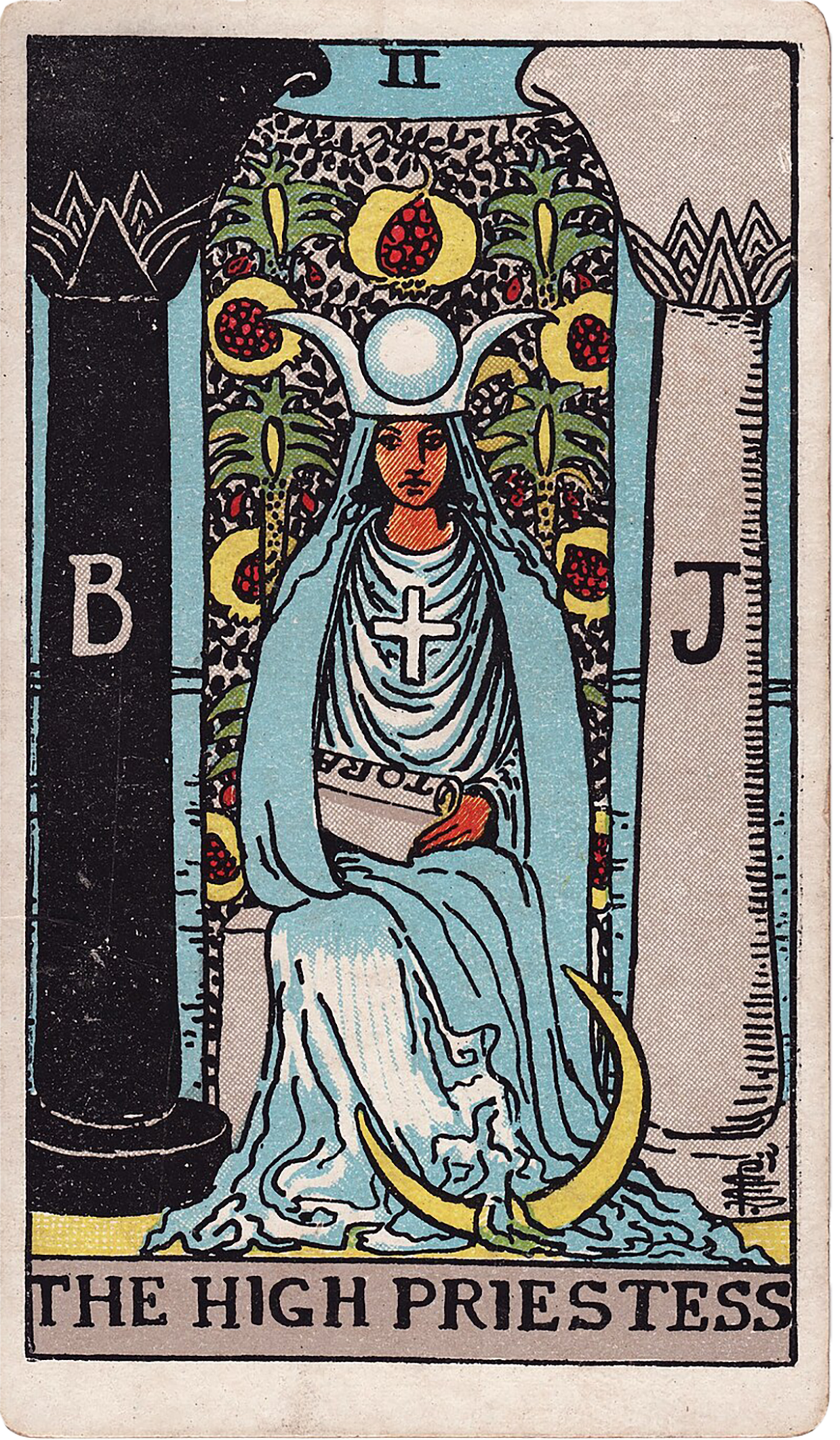 The High Priestess
Introduction to The High Priestess Card and Its Core Symbolism
The High Priestess is one of the most iconic and mysterious cards in the Rider-Waite-Smith tarot deck. Visually, she sits serenely between two pillars marked B and J, symbolizing Boaz and Jachin from Solomon's Temple—representing duality, threshold, and sacred knowledge. She wears a crown reminiscent of the moon, underscoring her connection to intuition, subconscious realms, and the feminine divine. The scroll labeled "TORA" partially concealed in her lap suggests hidden wisdom and esoteric knowledge, inviting the seeker to look beyond surface appearances. Blue and white colors in her robes emphasize purity, spiritual insight, and calm discernment. In the card, water lilies or pomegranates hint at fertility of the mind and secrets guarded within. This visual language supports the card’s key theme: receptive, intuitive knowing rather than active doing. The High Priestess asks the reader to listen inwardly, trust subtle impressions, and allow information to emerge naturally.
Upright The High Priestess in Practical Contexts
When The High Priestess appears upright, it signals a moment to cultivate quiet discernment and patience. It encourages working with what is already revealed, rather than forcing immediate clarity or action. The upright card suggests that the central issue has surfaced enough for conscious engagement, though it may still require reflection to fully understand. Importantly, the card does not promise ease or automatic resolution but invites a thoughtful, measured response. In love contexts, the upright High Priestess can indicate a relationship that benefits from deeper listening and intuition—paying attention to unspoken feelings, hidden motivations, or timing rather than rushing decisions. It suggests a need for subtle emotional wisdom and respecting privacy or boundaries. In career readings, it urges the querent to trust insights that come from reflection or subconscious processing. This may mean waiting for the right moment or gathering more information before making a move. It often points to a skillful use of discretion and strategic patience. Regarding money, the card advises cautious management and resisting impulsive spending. It may also highlight the value of inner knowledge about financial habits and the psychological relationship with resources. As advice, the upright High Priestess teaches to honor one's inner voice, embrace mystery, and avoid premature conclusions. It suggests a time for observation rather than action. When representing a challenge, this card may signal the difficulty of accessing one's intuition or needing to confront hidden truths. It calls for overcoming surface distractions to perceive underlying realities. If the High Priestess describes a person, this is someone introspective, perceptive, possibly private or enigmatic, who prefers to work behind the scenes. As an outcome, the card points to a situation resolving through inner wisdom and subtle guidance rather than overt confrontation. It may also mean that not all information is yet visible.
Reversed The High Priestess and Its Complex Meanings
The reversed High Priestess is often misunderstood as purely negative. However, reversal more accurately indicates that the qualities of the card are blocked, delayed, or distorted. It may highlight secrecy used destructively, disconnection from intuition, or confusion between genuine inner knowing and anxiety-driven projection. In love, reversed, the card could point to emotional withdrawal, secrets undermining trust, or difficulty understanding one’s true feelings. It warns against passive avoidance rather than honest communication. For career, the reversal may mean ignoring inner guidance or intuitive missteps. It could also reveal hidden agendas or lack of transparency in the work environment. In money matters, it can indicate financial denial, mismanagement, or an unclear understanding of one’s financial reality. When offering advice, the reversed card suggests examining where intuition is being distorted by fear or projection. It encourages reestablishing connection to inner wisdom and avoiding avoidance tactics. As a challenge, it highlights resistance to introspection or difficulty accessing needed inner insights. It may also point to psychological blocks or unprocessed subconscious material. If representing a person, reversal suggests someone secretive, emotionally withdrawn, or out of touch with their deeper self, potentially misunderstanding their own intuition. For outcomes, the reversed High Priestess warns that clarity may be delayed or that the querent needs to resolve internal conflicts before progress is possible. It may also reflect a private or hidden development rather than open resolution.
Technique and Practical Reading Methods for The High Priestess
When working with The High Priestess, whether upright or reversed, readers should focus on the card’s invitation to pause and deepen awareness. Begin by visually engaging with the card’s symbolism: note the pillars, moon, scroll, and water imagery. Allow your intuitive impressions to arise without forcing interpretation. Contextualize the card’s message by asking: What hidden information or subconscious feelings might be present? Where is patience or silence needed? What inner wisdom is emerging but not yet fully articulated? In practical readings, integrate the card with the querent’s question and surrounding cards. For instance, does The High Priestess suggest a need for more information gathering, or does it call attention to emotional or spiritual subtleties? Avoid common mistakes like rushing to label the card as 'mystery' or 'secret' without exploring how those themes manifest in the specific context. Also, do not treat the card as a passive signal that nothing can be done; rather, it encourages deliberate, proportionate action aligned with inner guidance. Use reflective questions in readings, such as: "Where might listening beneath the surface help?" or "What inner knowing is the querent missing or resisting?" This approach makes the card a dynamic tool for insight rather than a static symbol.
Interpreting The High Priestess Through Different Life Contexts
The strength of The High Priestess lies in its adaptability across contexts, always emphasizing deeper perception and intuition. In love, it can reveal the need to trust feelings beyond words and respect emotional boundaries. It may also indicate a period of emotional gestation before action. In career, it suggests using discretion, research, and inner guidance rather than quick decisions or outward show. Regarding money, the card advises mindfulness of the unseen attitudes that shape financial behavior, encouraging thoughtful stewardship. As advice, The High Priestess encourages withdrawal from noise, listening to inner wisdom, and being patient with unfolding processes. When a challenge, the card highlights blocks to intuition or the discomfort of unacknowledged truths. If portraying a person, it describes someone wise, secretive, and spiritually grounded. As an outcome, The High Priestess hints that resolution comes through subtle insight, time, and inner clarity rather than immediate external results.
Common Pitfalls and How to Avoid Them When Reading The High Priestess
A frequent error is to interpret The High Priestess as merely a passive or mystical card, overlooking its active call for discernment and measured engagement. It is not a sign to do nothing but to do the right thing at the right time. Another pitfall is conflating secrecy with deception; The High Priestess guards sacred knowledge, not necessarily hiding it for harmful reasons. Readers sometimes mistake reversed High Priestess as simple 'bad luck' or failure, rather than a nuanced signal to explore distorted intuition or internal blocks. To avoid errors, always relate the card’s symbolism to the querent’s real-life circumstances, and use questioning techniques to deepen understanding rather than jumping to conclusions. Remember the card’s color, posture, and symbols as anchors for meaning and reflect on what these evoke in the context of the reading.
Summary and Final Reflections on The High Priestess
The High Priestess embodies a profound archetype of inner wisdom, intuition, and the mysteries that reside beneath conscious awareness. Whether upright or reversed, she directs the tarot reader to explore subtle realms of knowledge and to cultivate a receptive, patient attitude toward unfolding truths. Her presence in a reading invites a balance between silence and speech, contemplation and action, inner knowing and outer discernment. By deeply engaging with the card’s imagery and symbolism from the Rider-Waite-Smith tradition, readers can access rich layers of meaning that illuminate personal and spiritual growth. Ultimately, The High Priestess encourages embracing uncertainty as a necessary space for intuition and dreams to guide decisions and understanding. In this way, she is not only a card of mystery but also a powerful guide to wisdom accessible to all willing to listen.
Practice questions
• In what areas of your life might you be called to trust intuition over immediate facts or logic?
• How do you currently respond to uncertainty or hidden information? Can you become more patient and observant?
• Where might secrecy or avoidance be blocking your access to inner wisdom?
• What symbols or images in The High Priestess card resonate most strongly with you, and why?
• How can you differentiate between true inner knowing and anxiety or projection in your decision-making?
Comments
Sign in to comment.
Continue learning
Interpreting the Dance of Justice and The Devil: Balancing Morality and Temptation in Tarot Readings
The combination of Justice and The Devil in tarot presents a profound exploration of morality, temptation, and personal accountability. This article unpacks how these cards influen...
Advanced Techniques for Combining The Moon and The Star to Enhance Intuition in Tarot Readings
This article explores advanced techniques to combine the symbolism and energy of The Moon and The Star Tarot cards to enhance intuition during Tarot readings. Drawing from traditio...
Unlocking Life Insights with the Celtic Cross Tarot Spread
This article offers a thorough exploration of the Celtic Cross Tarot Spread, focusing on its application within family and practical life contexts. Using a worked example featuring...
Unlocking Hidden Meanings with The Hermit and The Hanged Man for Spiritual Growth
This article offers an in-depth exploration of The Hermit and The Hanged Man Tarot cards focusing on their roles in spiritual growth. It guides readers through beginner and advance...
Unlocking Personal Insight with the Seven Card Horseshoe Spread
The Seven Card Horseshoe Spread is a practical and insightful Tarot layout ideal for exploring personal and family dynamics. This article breaks down each position—Past, Present, H...
Mastering the Court Cards of Wands for Unlocking Personal Drive and Leadership
The Court Cards of Wands represent a dynamic spectrum of personal energy, ambition, and leadership potential within the Minor Arcana. This article offers a comprehensive exploratio...
Tracing the Origins and Evolution of The Fool Card in Tarot History
The Fool card holds a foundational place in tarot tradition, symbolizing beginnings, openness, and the embrace of uncertainty. This article traces its origins from early European d...
Techniques for Reading Court Cards to Unlock Personality Insights
Court cards in Tarot often represent people, personality traits, or energy patterns within a situation. This article offers a structured approach for beginners and advanced readers...
Unlocking Emotional Transformation with Death and The Moon Tarot Combination
This article explores the rich and complex interaction between the Death and The Moon tarot cards within the Rider-Waite-Smith tradition, focusing on their combined potential to un...
Applying The Star Card to Foster Hope and Renewal in Personal Growth
The Star card in Tarot symbolizes hope, authenticity, and the process of steady renewal. In a single-card reading, The Star encourages embracing what is present, cultivating openne...