
Understanding The King of Cups in Emotional Leadership and Compassion
The King of Cups in Tarot represents balanced emotional leadership, combining deep feeling with calm composure. This article unpacks the card’s symbolism, upright and reversed meanings, and its shifting interpretations in various single-card reading contexts such as love, career, money, advice, challenge, person, outcome, and spiritual reflection. By anchoring to the King of Cups image and traditional Rider-Waite-Smith symbolism, readers gain practical guidance for recognizing and working with mature emotional intelligence in Tarot readings.
Cards explored in this article
 King of Cups
Introduction to the King of Cups
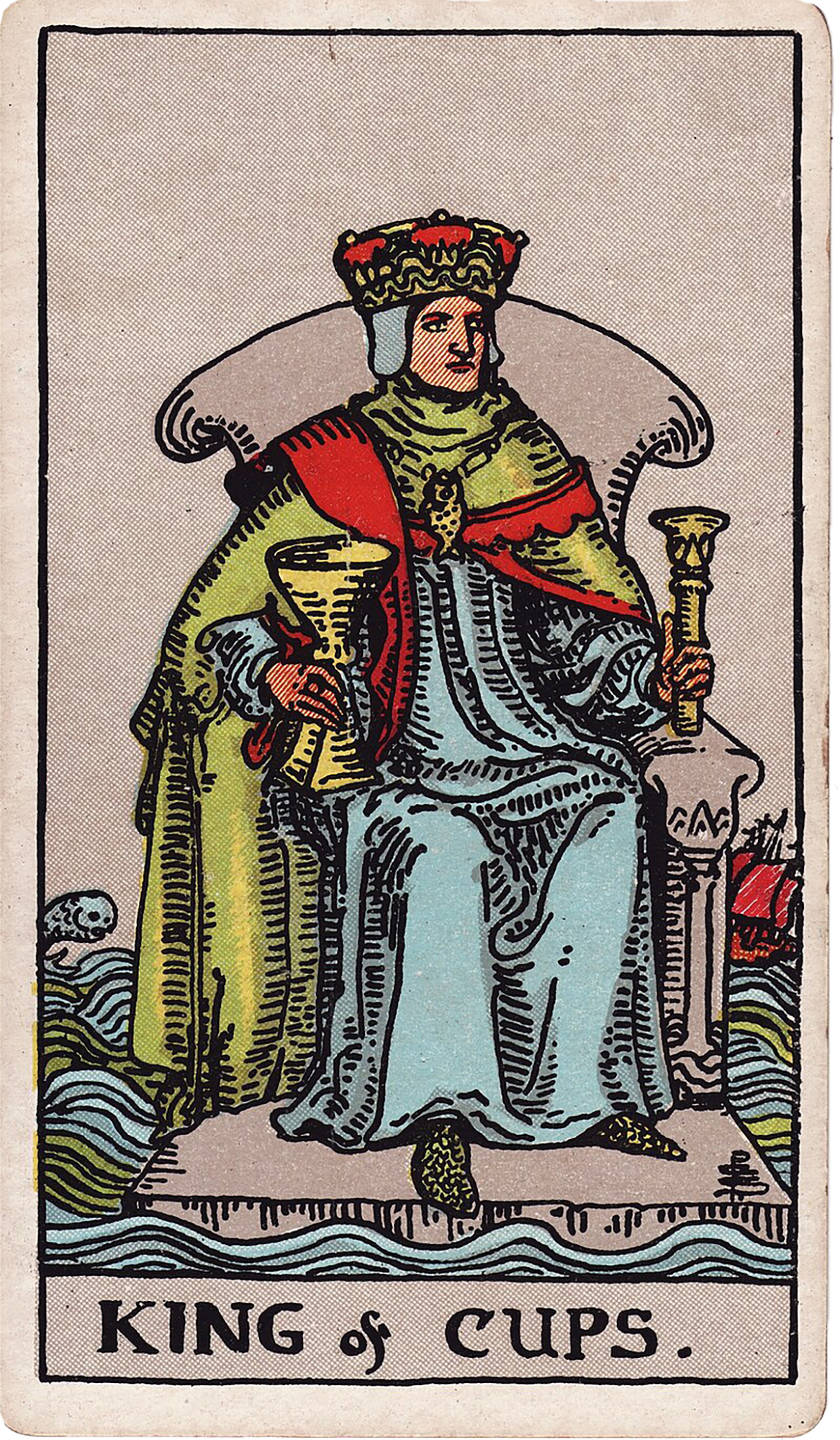
The King of Cups is a powerful card in the suit of Cups, symbolizing emotional mastery, leadership, and compassion. In the Rider-Waite-Smith deck, the King sits calmly on a throne surrounded by water, holding a cup in one hand and a scepter in the other. This imagery conveys control over emotions (the Cup suit’s domain) and the ability to wield emotional power with wisdom and steadiness. Unlike impulsive or overwhelmed emotional states, this card reflects feeling deeply without being ruled by every emotional wave. Its message is practical and grounded, asking the querent to engage with the present emotional situation thoughtfully and responsibly.
Upright Meaning and Symbolism
When the King of Cups appears upright, it highlights steady emotional leadership. The card encourages an approach to feelings and relationships that combines empathy with clear boundaries. The King’s posture and serene expression suggest calm composure amid the shifting waters around him, symbolizing emotional complexity and subconscious currents. This card does not promise effortless harmony but rather the ability to hold space for emotions constructively, even when challenges arise. Upright, it invites the querent to respond with emotional intelligence suited to the current stage of their situation, using intuition, receptivity, and memory to navigate relationships or internal feelings.
Reversed Meaning and Challenges
Reversed, the King of Cups points to emotional manipulation, repression, or mood control that avoids genuine vulnerability. This position often signals that the emotional leadership is either excessive to the point of detachment or insufficient, with feelings being pushed underground. Unlike a simple inversion of meaning, the reversal calls for nuanced examination of where the card’s energy is stuck or misapplied. It asks readers to identify what emotional processes need simplification, acknowledgment, or communication to restore healthy emotional expression. The reversed King of Cups may indicate internal struggles not visible to others, emphasizing the importance of inner emotional work.
Interpreting the King of Cups in Love and Relationships
In love contexts, the upright King of Cups represents a partner or energy characterized by emotional maturity, compassion, and support. This card suggests a relationship shaped by honesty, empathy, and balanced emotional responses rather than drama or volatility. The King’s calm demeanor in the card image encourages steady emotional presence, making space for vulnerability without losing self-control. When reversed, the King warns of emotional manipulation, detachment, or excessive control in the relationship. It may point to someone who appears emotionally steady but withholds genuine feelings, or who uses moods to influence others unfairly. The reader should use surrounding cards to clarify whether the reversed King indicates an ongoing issue or a personal internal challenge with emotions.
The King of Cups in Career and Leadership
In career readings, the King of Cups symbolizes leadership that blends intellect with emotional insight. Upright, this card points to someone who manages teams or projects through empathy, patience, and calm problem-solving rather than force or authoritarianism. The King’s scepter and cup balance authority with emotional intelligence. This suggests success can come from listening deeply to colleagues and clients, managing stress gracefully, and responding practically to challenges. Reversed, the King may warn of emotional manipulation in the workplace, such as using charm to mask instability or controlling others through mood swings or passive aggression. It can also reveal personal burnout from repressing emotions at work.
Financial Context and the King of Cups
When the King of Cups appears in money or financial contexts, it advises emotional steadiness in financial decisions. Upright, it encourages balancing intuition with reason, avoiding impulsive spending driven by emotional highs or lows. The King’s presence suggests a measured approach to resources, reflecting prudence and thoughtful planning rather than risk-taking motivated by fear or desire. In reversal, the card may indicate financial decisions clouded by emotional confusion, repression, or denial. There could be emotional attachments to money that distort judgment or cause hidden stress related to financial stability.
Advice and Challenges Reflected by the King of Cups
As advice, the upright King of Cups urges cultivating emotional maturity and compassionate leadership within oneself and toward others. This means developing the ability to feel deeply while maintaining clear boundaries and composure. The card calls for practical responses that fit present realities, encouraging intuitive yet grounded decision-making. It also highlights the importance of empathy in communication and conflict resolution. When reversed, the King advises examining emotional blocks, manipulative tendencies, or avoidance of vulnerability. The challenge may be to simplify emotional complexity or practice genuine openness before healthier emotional leadership can emerge.
Person and Outcome: The King of Cups as a Figure and Result
When representing a person, the King of Cups often depicts someone emotionally balanced, wise, and compassionate. They are nurturing without being overbearing, capable of guiding others through emotional storms with grace. This might be a mentor, a partner, or an aspect of the querent themselves. In outcome position, the card signals that the resolution involves steady emotional leadership and mature compassion. It suggests the querent or situation will ultimately benefit from calm, empathetic management of feelings rather than reactive or chaotic emotional responses.
Spiritual Reflection and the King of Cups
Spiritually, the King of Cups invites introspection into how emotions influence our inner life and connection with the world. The card’s imagery of a mature figure ruling the emotional realm encourages integrating intuition, empathy, and emotional wisdom into spiritual practice. It highlights emotional receptivity as a path to deeper understanding without losing self-control. The reversed King, meanwhile, points to inner emotional imbalances that may block spiritual growth, such as repression or false emotional facades. Reflecting on the King of Cups encourages seekers to face their emotional truths with courage and compassion.
Technique and Practical Reading Methods
To work effectively with the King of Cups in readings, always anchor interpretation in the card’s core theme: emotional leadership that balances feeling and composure. Start by observing the card’s upright or reversed position. Then, consider the context of the question and the card’s placement in the spread. Use surrounding cards to determine whether the King’s energy is emerging, developing, under pressure, or moving toward resolution. Avoid oversimplifying the reversal as merely negative; instead, explore where emotional processes may be stuck or distorted. Remember that the King of Cups is a practical card: it demands responses suited to the present situation, not abstract ideals. Encourage querents to recognize emotional patterns already visible and think about actions that strengthen constructive emotional leadership.
Common Mistakes and Interpretation Pitfalls
A frequent mistake is interpreting the King of Cups solely as a symbol of kindness or softness, ignoring the card’s strong leadership and practical emotional control. Another pitfall is treating the reversed card as simply 'bad' or 'weak,' rather than as a sign of emotional blockage or imbalance needing attention. Readers sometimes overlook the card’s call for pragmatic emotional responses, focusing only on ideals of compassion or intuition. Misreading the card without considering surrounding cards and context reduces its rich potential to guide nuanced emotional insight. By carefully observing its imagery—the steady throne, the scepter and cup, the watery environment—and integrating these details, readers can deepen their understanding of emotional leadership in real life.
Practice questions
• In what areas of your life are you practicing steady emotional leadership similar to the King of Cups?
• How do you balance feeling deeply with maintaining emotional composure?
• Are there emotional patterns you repress or avoid that might be revealed by the reversed King of Cups?
• How can empathy and compassion guide your decisions in challenging situations?
• What steps can you take to cultivate healthier emotional communication and boundaries?
Comments
Sign in to comment.
Continue learning
Interpreting the Dance of Justice and The Devil: Balancing Morality and Temptation in Tarot Readings
The combination of Justice and The Devil in tarot presents a profound exploration of morality, temptation, and personal accountability. This article unpacks how these cards influen...
Advanced Techniques for Combining The Moon and The Star to Enhance Intuition in Tarot Readings
This article explores advanced techniques to combine the symbolism and energy of The Moon and The Star Tarot cards to enhance intuition during Tarot readings. Drawing from traditio...
Unlocking Life Insights with the Celtic Cross Tarot Spread
This article offers a thorough exploration of the Celtic Cross Tarot Spread, focusing on its application within family and practical life contexts. Using a worked example featuring...
Unlocking Hidden Meanings with The Hermit and The Hanged Man for Spiritual Growth
This article offers an in-depth exploration of The Hermit and The Hanged Man Tarot cards focusing on their roles in spiritual growth. It guides readers through beginner and advance...
Unlocking Personal Insight with the Seven Card Horseshoe Spread
The Seven Card Horseshoe Spread is a practical and insightful Tarot layout ideal for exploring personal and family dynamics. This article breaks down each position—Past, Present, H...
Mastering the Court Cards of Wands for Unlocking Personal Drive and Leadership
The Court Cards of Wands represent a dynamic spectrum of personal energy, ambition, and leadership potential within the Minor Arcana. This article offers a comprehensive exploratio...
Tracing the Origins and Evolution of The Fool Card in Tarot History
The Fool card holds a foundational place in tarot tradition, symbolizing beginnings, openness, and the embrace of uncertainty. This article traces its origins from early European d...
Techniques for Reading Court Cards to Unlock Personality Insights
Court cards in Tarot often represent people, personality traits, or energy patterns within a situation. This article offers a structured approach for beginners and advanced readers...
Unlocking Emotional Transformation with Death and The Moon Tarot Combination
This article explores the rich and complex interaction between the Death and The Moon tarot cards within the Rider-Waite-Smith tradition, focusing on their combined potential to un...
Applying The Star Card to Foster Hope and Renewal in Personal Growth
The Star card in Tarot symbolizes hope, authenticity, and the process of steady renewal. In a single-card reading, The Star encourages embracing what is present, cultivating openne...