
Understanding the Personalities and Roles of Knight Queen and King of Swords in Tarot
This article delves into the unique characteristics and roles of the Knight, Queen, and King of Swords within the Tarot Minor Arcana, focusing on the family suit and court card lessons. By closely analyzing their upright and reversed meanings, traditional Rider-Waite-Smith symbolism, and practical reading techniques, learners will gain a nuanced understanding of how these court cards function in spreads. Emphasis is placed on interpreting these cards in context, recognizing common pitfalls, and applying their distinctive energies to real-life situations. The Knight embodies swift, decisive action and courageous communication; the Queen represents clear-minded independence and honest boundaries; and the King reflects mature intellectual authority and strategic judgment. Together, they illustrate a progression of thought, communication, and decision-making within the Swords suit’s domain.
Cards explored in this article
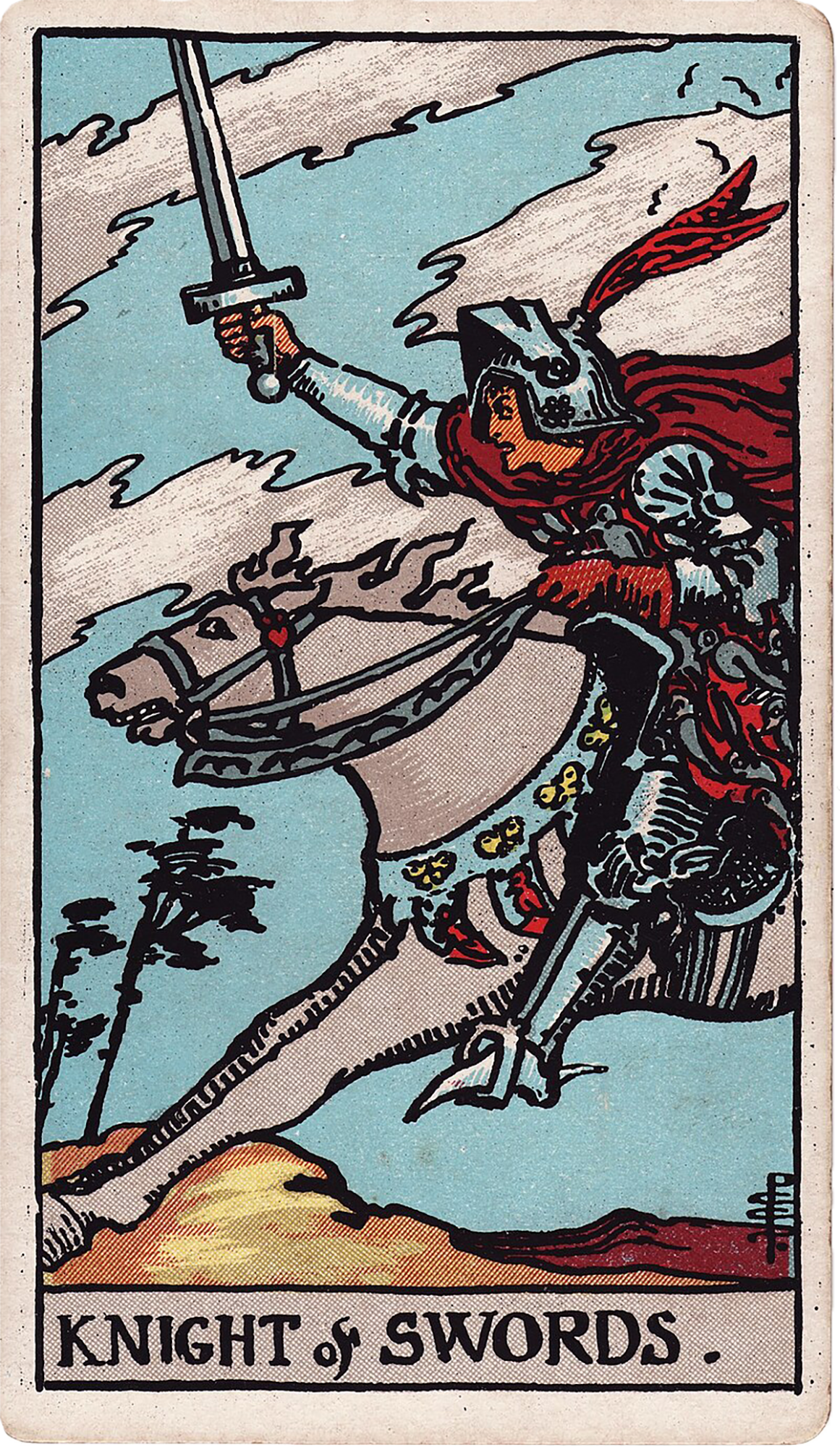 Knight of Swords
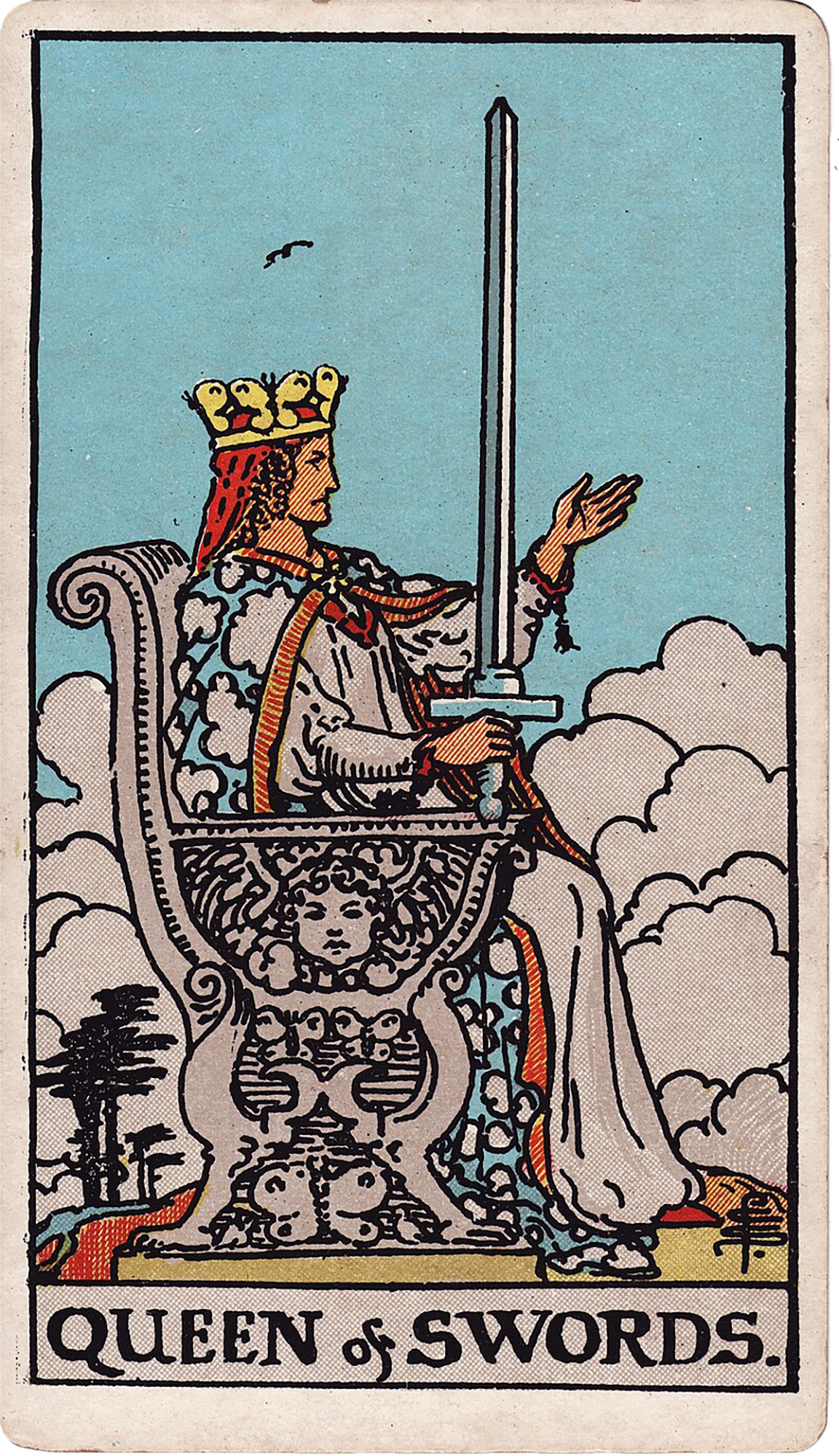 Queen of Swords
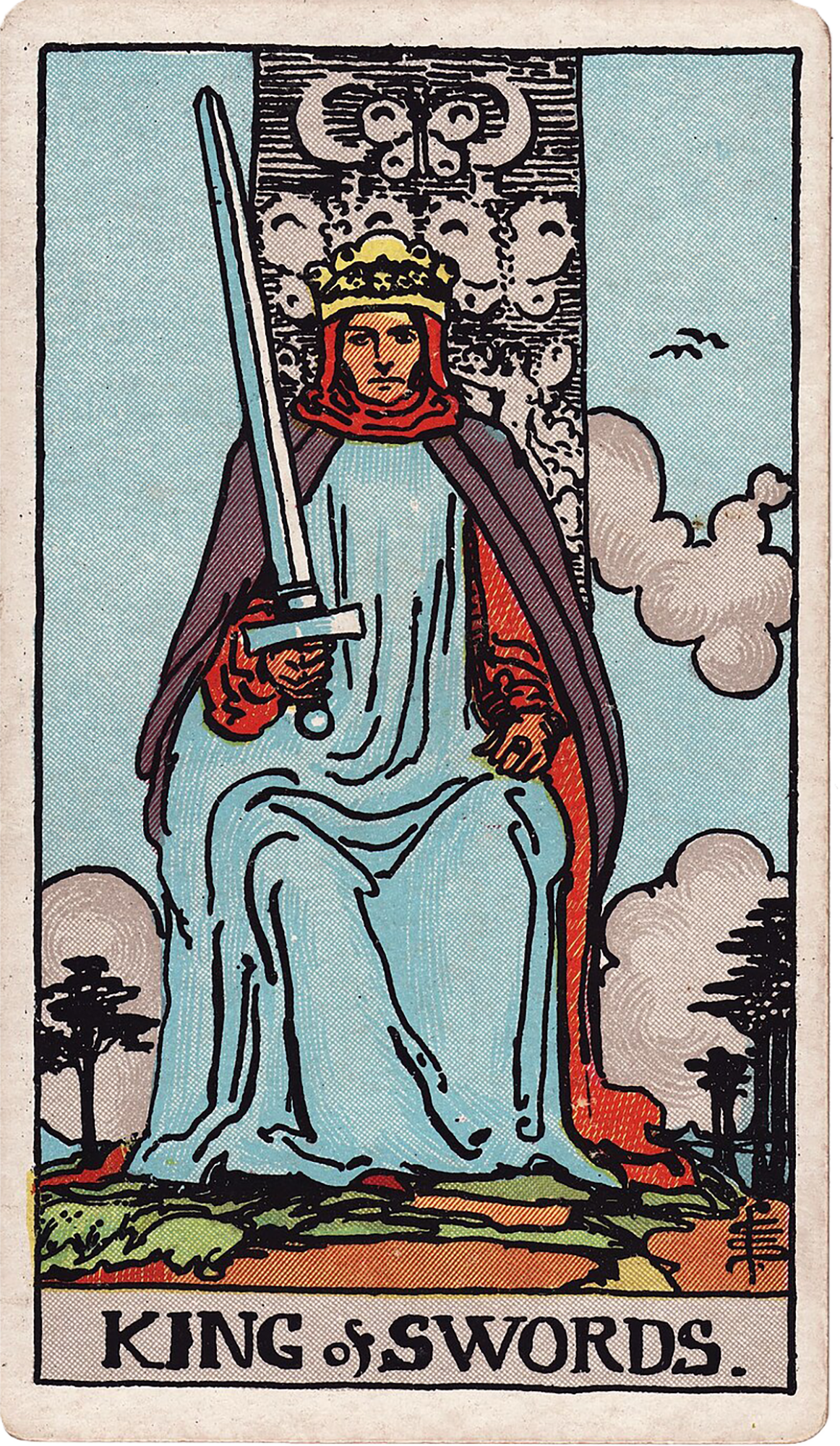 King of Swords
Introduction to the Court Cards of the Swords Suit
In the Tarot’s Minor Arcana, the Swords suit governs thought, communication, decisions, conflict, truth, and mental habits. The court cards—Knight, Queen, and King—embody distinct personalities and roles within this domain, each representing stages of development and expressions of these mental and communicative energies. Understanding the Knight, Queen, and King of Swords as a family unit and as individual archetypes enriches tarot readings by providing clarity on how intellect and communication influence a situation. This article focuses exclusively on these three supplied cards, analyzing their upright and reversed meanings through the lens of traditional Rider-Waite-Smith symbolism and practical tarot reading approaches.
The Knight of Swords Personality and Role
The Knight of Swords is pictured charging forward with his sword raised, a symbol of swift, decisive action and intellectual courage. Upright, this card emphasizes the importance of cutting through delays and addressing challenges head-on, reflecting a practical need to respond to the present moment rather than abstract ideals. Its energy is often visible in situations requiring focused thought, rapid communication, or conflict resolution. When interpreting the Knight of Swords, consider the nature of the mental task and where quick, strategic movement is necessary. Reversed, the Knight warns of recklessness, tunnel vision, or aggressive verbal force, suggesting that the querent may be moving too fast or ignoring nuance and consequences. This reversal is not simply the opposite of upright but rather indicates a stuck process where awareness and moderation are needed. For example, a reader may notice that the querent is intellectually aware of a problem but struggles to live the solution consistently. The Knight challenges us to balance speed with thoughtful reflection.
The Queen of Swords Personality and Role
The Queen of Swords stands as an archetype of clear-minded independence, honest boundaries, and communication that values truth without unnecessary cruelty. In Rider-Waite-Smith imagery, her upright posture and thoughtful gaze symbolize a mature intellect that is both discerning and emotionally detached enough to make fair judgments. In readings, the Queen often represents someone who can communicate difficult truths with integrity and maintain personal boundaries firmly yet fairly. When reversed, the Queen of Swords can signal bitterness, excessive criticism, isolation, or the use of intellect to avoid emotional complexity. This represents a mental pattern where the process has stalled, often due to internalized pain or an unwillingness to engage with feelings. The reversal invites the querent to examine where emotional honesty and compassion can restore balance to their mental and communicative approach. Like the Knight, this card’s reversal is about recognizing and addressing stuck energy rather than merely negating the upright meaning.
The King of Swords Personality and Role
The King of Swords embodies mature intellectual authority, strategic judgment, and decisions grounded in principle and evidence. The Rider-Waite-Smith deck portrays the King seated on a throne adorned with butterflies and crescent moons, symbols of transformation and intuition balanced with logic. He wields a sword upright, representing clarity of thought and the power to enforce truth and justice. In readings, the King suggests a figure or energy that commands respect through wisdom and impartiality. Upright, this card asks the querent to respond with strategic clarity and moral integrity suited to the present circumstances. Reversed, however, it warns against coldness, intellectual arrogance, manipulation, or abuse of authority. Like the other Swords court cards, the reversal often points to internal blocks or patterns where the intellectual power is misapplied or disconnected from ethical use. Readers should investigate where authority is becoming oppressive or where people are being dehumanized in the situation.
Interpreting the Knight Queen and King Together
When the Knight, Queen, and King of Swords appear together or in related positions within a spread, their interplay highlights a spectrum of intellectual and communicative energies. The Knight brings dynamic action and courage to address present challenges swiftly. The Queen offers discerning judgment and honest communication, setting clear boundaries for fair interaction. The King represents the culmination of intellectual maturity and ethical authority, providing strategic oversight and principled decision-making. This progression can reflect stages in a querent’s approach to a problem: from the energetic initiative of the Knight through the reflective, boundary-setting clarity of the Queen to the wise and just resolution embodied by the King. Understanding this flow helps readers guide querents toward the healthiest expression of Swords energy in their lives. Always use surrounding cards to gauge whether this energy is emerging, developing, or resolving tension.
Practical Techniques for Reading the Knight Queen and King of Swords
1. Anchor your reading in the detailed Rider-Waite-Smith imagery: Notice the posture, facial expressions, and symbols such as the sword’s orientation, the clothing and accessories, and the surrounding environment. 2. Contextualize the card’s energy: Relate the Knight’s swiftness, the Queen’s clarity, and the King’s authority to the querent’s situation, particularly focusing on mental processes, communication, or conflict. 3. Explore upright and reversed meanings as stages or variations of the card’s energy rather than strict opposites. Identify where the querent might be stuck or overextending aspects of thought or communication. 4. Use clarifying cards to determine the phase of energy—whether the Knight’s action is just starting, the Queen’s boundaries are solidifying, or the King’s decisions are coming to fruition. 5. Be mindful of common mistakes such as overly literal interpretation, ignoring the card’s position in the spread, or reducing court cards to mere personality stereotypes without considering their situational role. 6. Encourage querents to reflect on how they embody these energies internally—whether they need to harness the Knight’s decisiveness, cultivate the Queen’s clear boundaries, or exercise the King’s mature judgment.
Common Mistakes and How to Avoid Them
Readers often err by treating court cards as fixed personalities rather than dynamic archetypes that adapt to context. For instance, assuming the Knight of Swords always means impulsiveness overlooks its constructive role in swift, courageous action. Similarly, interpreting the Queen of Swords solely as cold or cruel ignores her upright wisdom and fairness. The King can be mistakenly seen only as authority rather than balanced strategic intelligence. Another common mistake is interpreting reversed cards as purely negative or opposite meanings. Instead, view reversals as signals of energy imbalance or developmental blocks requiring reflection and adjustment. Avoid ignoring the cards’ placement and surrounding cards, which provide essential context. Lastly, be cautious of imposing personal biases onto the cards’ meaning, especially with court cards that reflect mental and communicative styles rather than fixed traits.
Reflection Questions for Deepening Understanding
1. How does the Knight of Swords challenge you to act more decisively in your current situation? 2. In what ways might the Queen of Swords encourage you to set clearer boundaries or communicate more honestly? 3. Where could the King of Swords’ mature judgment and ethical authority be applied to resolve conflicts in your life? 4. How do the reversed energies of these cards manifest in your thoughts or communication patterns? 5. What surrounding energies support or hinder the healthy expression of these Swords court cards in your readings?
Practice questions
• How does the Knight of Swords challenge you to act more decisively in your current situation?
• In what ways might the Queen of Swords encourage you to set clearer boundaries or communicate more honestly?
• Where could the King of Swords’ mature judgment and ethical authority be applied to resolve conflicts in your life?
• How do the reversed energies of these cards manifest in your thoughts or communication patterns?
• What surrounding energies support or hinder the healthy expression of these Swords court cards in your readings?
Comments
Sign in to comment.
Continue learning
Interpreting the Dance of Justice and The Devil: Balancing Morality and Temptation in Tarot Readings
The combination of Justice and The Devil in tarot presents a profound exploration of morality, temptation, and personal accountability. This article unpacks how these cards influen...
Advanced Techniques for Combining The Moon and The Star to Enhance Intuition in Tarot Readings
This article explores advanced techniques to combine the symbolism and energy of The Moon and The Star Tarot cards to enhance intuition during Tarot readings. Drawing from traditio...
Unlocking Life Insights with the Celtic Cross Tarot Spread
This article offers a thorough exploration of the Celtic Cross Tarot Spread, focusing on its application within family and practical life contexts. Using a worked example featuring...
Unlocking Hidden Meanings with The Hermit and The Hanged Man for Spiritual Growth
This article offers an in-depth exploration of The Hermit and The Hanged Man Tarot cards focusing on their roles in spiritual growth. It guides readers through beginner and advance...
Unlocking Personal Insight with the Seven Card Horseshoe Spread
The Seven Card Horseshoe Spread is a practical and insightful Tarot layout ideal for exploring personal and family dynamics. This article breaks down each position—Past, Present, H...
Mastering the Court Cards of Wands for Unlocking Personal Drive and Leadership
The Court Cards of Wands represent a dynamic spectrum of personal energy, ambition, and leadership potential within the Minor Arcana. This article offers a comprehensive exploratio...
Tracing the Origins and Evolution of The Fool Card in Tarot History
The Fool card holds a foundational place in tarot tradition, symbolizing beginnings, openness, and the embrace of uncertainty. This article traces its origins from early European d...
Techniques for Reading Court Cards to Unlock Personality Insights
Court cards in Tarot often represent people, personality traits, or energy patterns within a situation. This article offers a structured approach for beginners and advanced readers...
Unlocking Emotional Transformation with Death and The Moon Tarot Combination
This article explores the rich and complex interaction between the Death and The Moon tarot cards within the Rider-Waite-Smith tradition, focusing on their combined potential to un...
Applying The Star Card to Foster Hope and Renewal in Personal Growth
The Star card in Tarot symbolizes hope, authenticity, and the process of steady renewal. In a single-card reading, The Star encourages embracing what is present, cultivating openne...