
Understanding The Wheel of Fortune in Cycles of Change and Personal Growth
The Wheel of Fortune card embodies the cyclical nature of change, fate, and personal growth. This article examines how its upright and reversed positions offer nuanced guidance in love, career, finances, advice, challenges, personal traits, outcomes, and spiritual reflection. Drawing on the card's rich Rider-Waite-Smith imagery, we explore how to recognize turning points, work with timing, and avoid common interpretative pitfalls. This single-card study encourages readers to deepen their Tarot practice by applying the Wheel’s lessons to real-life contexts and cycles.
Cards explored in this article
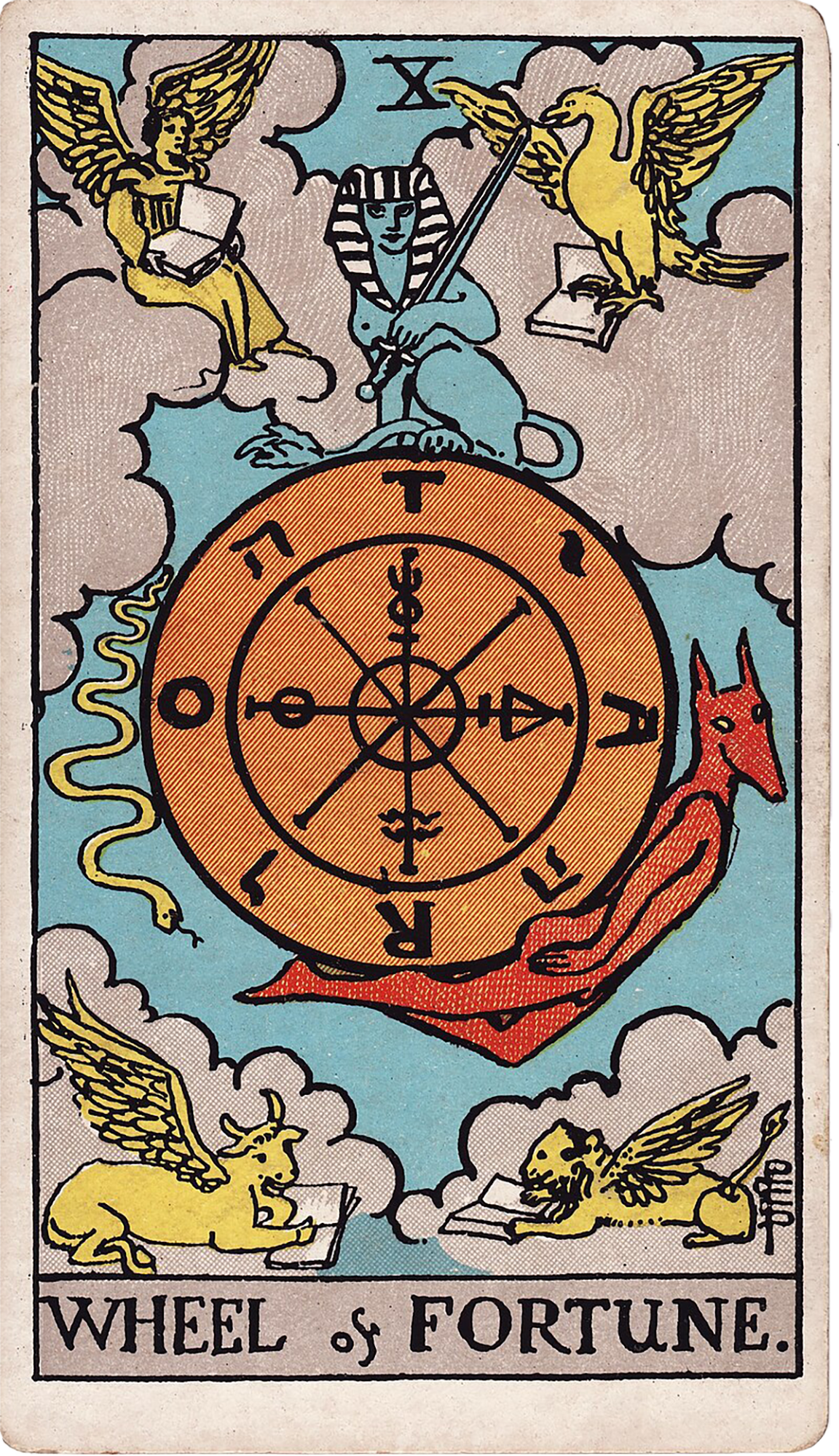 Wheel of Fortune
Introduction to the Wheel of Fortune and Its Core Symbolism
The Wheel of Fortune is one of the most visually and symbolically rich cards in the Rider-Waite-Smith Tarot deck, representing cycles, fate, and the inevitable changes that shape our lives. The card typically depicts a large wheel surrounded by four winged creatures—an angel, an eagle, a lion, and a bull—each symbolizing the four fixed signs of the zodiac (Aquarius, Scorpio, Leo, Taurus). These creatures hold books, alluding to wisdom and divine knowledge. The wheel itself is inscribed with alchemical symbols and the word T-A-R-O arranged cyclically, reinforcing the theme of eternal return and transformation. Upright, this card signals a turning point where circumstances shift and timing becomes critical; reversed, it warns of resistance to change or patterns that need addressing. Understanding the Wheel’s imagery helps readers embrace its message of embracing what is accessible now, rather than striving for complete control.
Technique for Reading the Wheel of Fortune as a Single Card
When the Wheel of Fortune appears alone in a reading, it is essential first to observe its position—upright or reversed—and then relate the core themes of cycles, timing, and change to the querent's context. Because the card emphasizes process over a fixed outcome, the reader should ask questions about how the querent perceives change and what patterns may be emerging or repeating. Technique involves exploring where conscious choices can be made within the flow of events, recognizing that the Wheel does not guarantee ease or certainty but offers an opportunity for growth through awareness. Noticing which symbols resonate—like the sphinx atop the wheel representing wisdom and balance, or the serpent on the left symbolizing descent and transformation—can deepen interpretation. Avoid assuming that this card predicts external fate without personal agency; instead, use it to invite reflection about timing, adaptation, and cycles.
Interpreting the Wheel of Fortune in Love and Relationships
In the context of love, the upright Wheel of Fortune points to a pivotal moment in a relationship or the romantic life of the querent where change is imminent or underway. It suggests that forces beyond one’s immediate control may be influencing the emotional landscape, and the key is to adapt rather than resist. This might mean the start of a new relationship phase, the end of a chapter, or a chance encounter that alters the course. The card encourages conscious engagement with these shifts—asking where clearer communication, commitment, or boundary setting can help move the connection forward. Reversed, the card can highlight cycles of repeated relationship patterns, emotional stagnation, or resistance to letting go of unhealthy dynamics. In readings, watch for adjacent cards to clarify whether this resistance is psychological, external, or a necessary pause for growth.
Understanding the Wheel of Fortune in Career and Vocational Contexts
Career readings with the Wheel of Fortune often emphasize timing and the ebb and flow of professional fortunes. Upright, the card suggests a turning point such as a promotion, change in direction, or opportunity arising from external shifts. The lesson is to work with what is presently available, identifying the next logical step rather than pushing against resistance. This card advises the querent to observe the 'timing' of their efforts and avoid forcing outcomes prematurely. The reversed position can indicate frustration with stalled progress, resistance to adapting to industry changes, or repeating mistakes in judgment. In this case, it’s helpful to explore where the querent’s actions might be out of sync with the external environment or internal readiness, and whether re-evaluating goals or strategies is needed.
Applying the Wheel of Fortune to Money and Financial Matters
Financially, the upright Wheel signals shifts in fortune that may be sudden or gradual, such as unexpected gains, changes in income, or new financial responsibilities. It encourages flexibility and using the resources and knowledge currently available rather than waiting for ideal conditions. The card suggests looking for where deliberate choices and clearer boundaries around spending or investment can create stability amid change. When reversed, the Wheel highlights problematic cycles like impulsive spending, financial setbacks due to poor timing, or blaming external factors without owning financial decisions. This position invites the querent to reflect on repeating patterns and consider ways to regain control by aligning spending habits with realistic expectations and timing.
The Wheel of Fortune as Advice and Guidance
As an advice card, the Wheel of Fortune encourages embracing change as an inevitable and necessary part of growth. The upright card suggests that rather than resisting uncertainty, the querent can benefit from recognizing where new opportunities or turning points have emerged and taking proportionate, conscious action. It emphasizes timing and adaptability rather than force. Advice also includes asking where clearer honesty, boundaries, or choice is required to move forward constructively. The reversed Wheel advises the querent to explore internal blocks or distortions in how they are responding to change—such as excessive control, denial, or passivity—and invites patience and self-awareness to break cycles. The card encourages looking inward to understand the psychological aspects influencing external circumstances.
Addressing Challenges and Obstacles Through the Wheel of Fortune Lens
When the Wheel of Fortune represents challenges, it often points to difficulties accepting the flow of change or timing mismatches. Upright, the challenge may be to let go of old attachments or assumptions and step into the unknown with trust and discernment. The card signals that resistance to change or impatience may hinder progress. It encourages identifying where more deliberate choices or direct responses could shift the situation. Reversed, challenges might manifest as repeated patterns, blaming fate for setbacks, or feeling stuck in cycles beyond personal control. Here, the challenge is psychological: becoming aware of these patterns and taking responsibility for breaking them. This may involve recognizing distorted energies like fear of loss, excessive control, or denial.
Reading the Wheel of Fortune as a Person or Personality Trait
When the Wheel of Fortune characterizes a person, it often describes someone who embodies adaptability, openness to change, and a keen sense of timing. This individual may be seen as a catalyst for transformation or someone who facilitates transitions in others’ lives. They might be philosophical, accepting of life’s ups and downs, and able to work effectively within cycles rather than resisting them. Conversely, if reversed, this person might struggle with unpredictability, resist necessary change, or exhibit rigid thinking that blocks growth. They may repeatedly find themselves in similar life situations due to unexamined patterns. Understanding this interpretation helps the reader identify where personal flexibility or awareness of timing is in play.
The Wheel of Fortune as an Outcome or Future Influence
As an outcome card, the upright Wheel of Fortune suggests a significant turning point approaching in the querent’s life. This may not guarantee ease or success but indicates that cycles are shifting and new phases are beginning. The card invites the querent to engage consciously with these changes by making clear, deliberate steps in response to emerging circumstances. It stresses the importance of timing and working with the flow rather than against it. If the card appears reversed as an outcome, it may signal delays, ongoing cycles that need resolution, or private psychological shifts that precede external change. Understanding this encourages patience and introspection, emphasizing that growth is a process often requiring internal adjustments before manifesting outwardly.
Spiritual Reflection and Growth Through the Wheel of Fortune
Spiritually, the Wheel of Fortune invites contemplation of life’s impermanence and the deep cycles that govern existence. Upright, the card symbolizes acceptance of fate’s role alongside personal responsibility, encouraging a balanced approach to growth that honors timing and transformation. It can highlight moments when spiritual lessons become visible and conscious engagement with destiny is possible. Reversed, it points to inner resistance to spiritual evolution or difficulty integrating lessons related to detachment, surrender, and renewal. The card’s symbolism—such as the four fixed signs guarding the corners—reminds seekers that stability arises within cycles rather than outside them. Reflecting on this card can support developing equanimity, resilience, and insight into how personal growth unfolds in phases rather than linear progressions.
Common Mistakes and Practical Tips for Interpreting the Wheel of Fortune
A frequent error when interpreting the Wheel of Fortune is treating it as a simple prediction of luck or fate, overlooking its nuanced message about cycles and personal agency. Readers might assume the card promises easy change or automatic success, which can mislead querents. Instead, the focus should be on how to work consciously with available circumstances and timing. Another common mistake is ignoring the card’s reversed meanings, which provide valuable insights about internal blocks and repeated patterns that need addressing. Practically, readers should anchor their interpretation in the card’s symbols and ask questions about the querent’s readiness to adapt or recognize turning points. Observing neighboring cards, if present, will also help clarify whether change is external, psychological, or a blend. Finally, encourage querents to view the Wheel’s appearance as an invitation to mindfulness and deliberate choice within life’s cycles.
Practice questions
• Where in my life am I noticing significant cycles or turning points right now?
• How do I typically respond to changes that feel outside my control?
• What patterns or repeated behaviors might the Wheel of Fortune be inviting me to recognize and transform?
• In what areas could clearer boundaries or more honest communication help me work with change constructively?
• How can I balance acceptance of fate with taking deliberate action in my personal growth?
Comments
Sign in to comment.
Continue learning
Interpreting the Dance of Justice and The Devil: Balancing Morality and Temptation in Tarot Readings
The combination of Justice and The Devil in tarot presents a profound exploration of morality, temptation, and personal accountability. This article unpacks how these cards influen...
Advanced Techniques for Combining The Moon and The Star to Enhance Intuition in Tarot Readings
This article explores advanced techniques to combine the symbolism and energy of The Moon and The Star Tarot cards to enhance intuition during Tarot readings. Drawing from traditio...
Unlocking Life Insights with the Celtic Cross Tarot Spread
This article offers a thorough exploration of the Celtic Cross Tarot Spread, focusing on its application within family and practical life contexts. Using a worked example featuring...
Unlocking Hidden Meanings with The Hermit and The Hanged Man for Spiritual Growth
This article offers an in-depth exploration of The Hermit and The Hanged Man Tarot cards focusing on their roles in spiritual growth. It guides readers through beginner and advance...
Unlocking Personal Insight with the Seven Card Horseshoe Spread
The Seven Card Horseshoe Spread is a practical and insightful Tarot layout ideal for exploring personal and family dynamics. This article breaks down each position—Past, Present, H...
Mastering the Court Cards of Wands for Unlocking Personal Drive and Leadership
The Court Cards of Wands represent a dynamic spectrum of personal energy, ambition, and leadership potential within the Minor Arcana. This article offers a comprehensive exploratio...
Tracing the Origins and Evolution of The Fool Card in Tarot History
The Fool card holds a foundational place in tarot tradition, symbolizing beginnings, openness, and the embrace of uncertainty. This article traces its origins from early European d...
Techniques for Reading Court Cards to Unlock Personality Insights
Court cards in Tarot often represent people, personality traits, or energy patterns within a situation. This article offers a structured approach for beginners and advanced readers...
Unlocking Emotional Transformation with Death and The Moon Tarot Combination
This article explores the rich and complex interaction between the Death and The Moon tarot cards within the Rider-Waite-Smith tradition, focusing on their combined potential to un...
Applying The Star Card to Foster Hope and Renewal in Personal Growth
The Star card in Tarot symbolizes hope, authenticity, and the process of steady renewal. In a single-card reading, The Star encourages embracing what is present, cultivating openne...