
Unlocking Personal Growth Through the Court Cards of the Suit of Swords
This article delves into the transformative potential of the Swords court cards — Page, Knight, Queen, and King — as powerful guides for personal growth. By examining their Rider-Waite-Smith symbolism, upright and reversed meanings, and practical applications in Tarot readings, learners can develop skills in critical thinking, communication, boundary-setting, and mature judgment. Rooted in the intellectual and communicative themes of the Suit of Swords, each court card presents a unique stage in mastering mental clarity, strategic decision-making, and emotional honesty. The article offers methodical interpretation techniques, contextual examples, common pitfalls, and reflection prompts that support deeper engagement with these dynamic cards.
Cards explored in this article
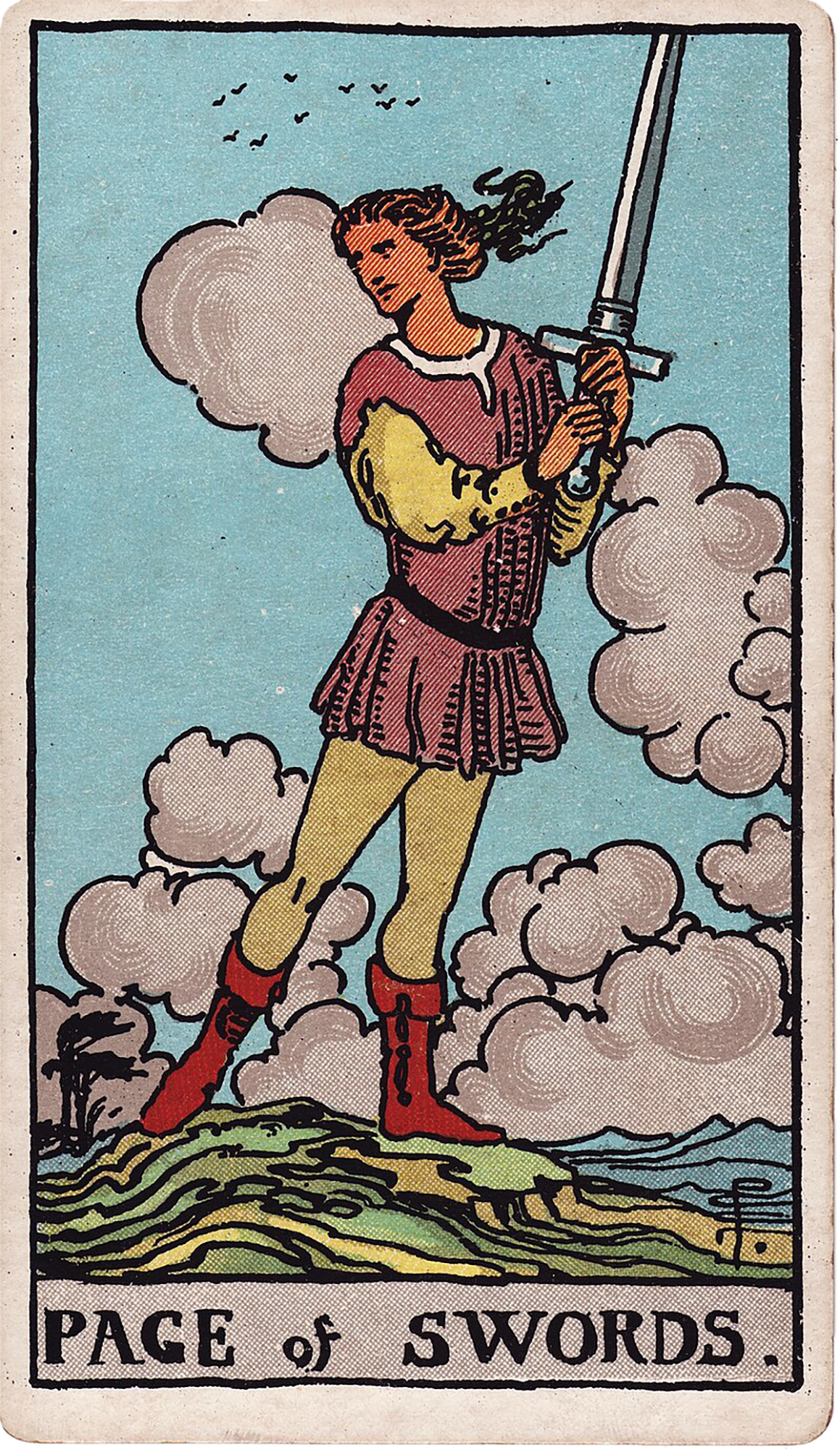 Page of Swords
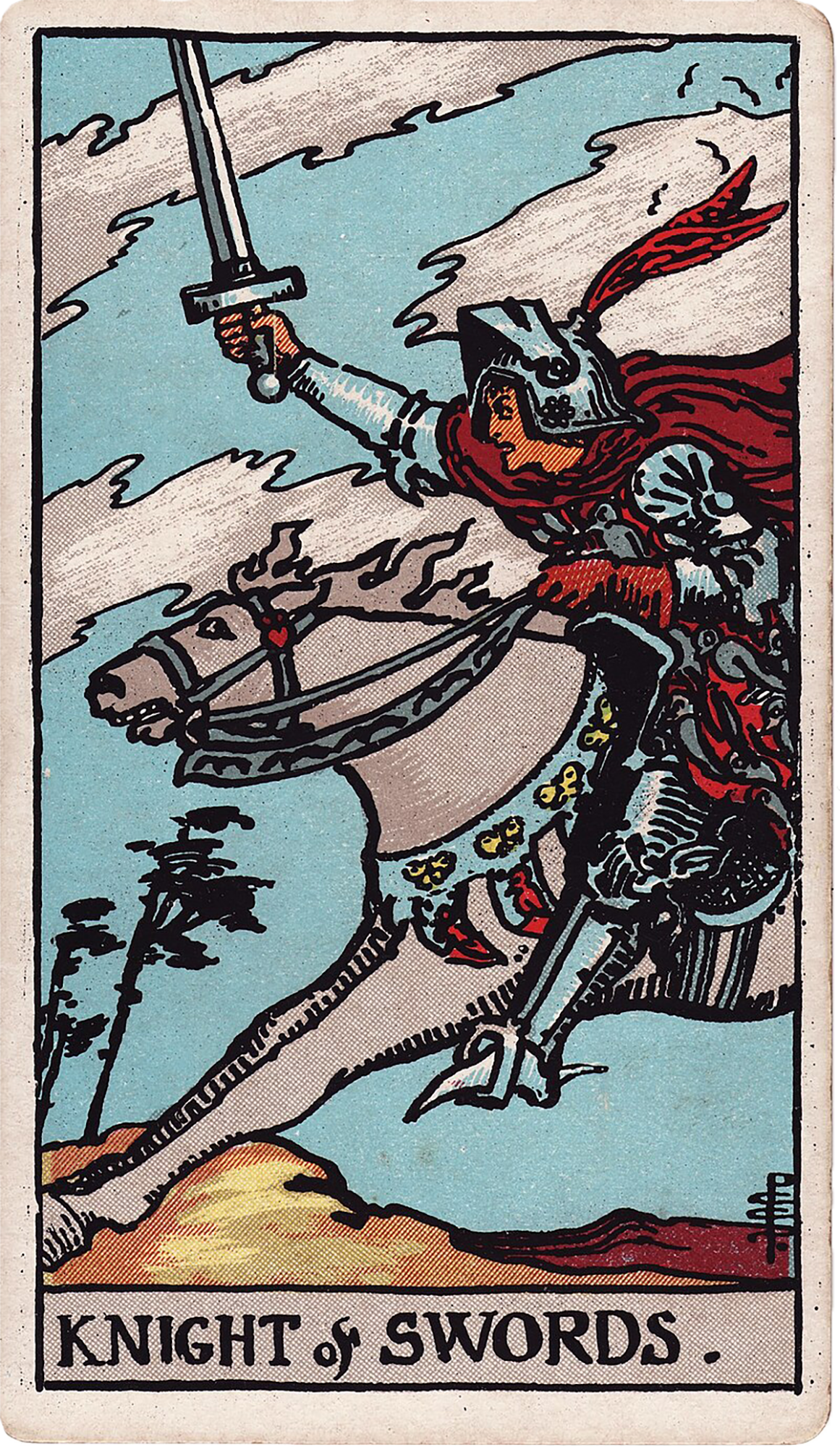 Knight of Swords
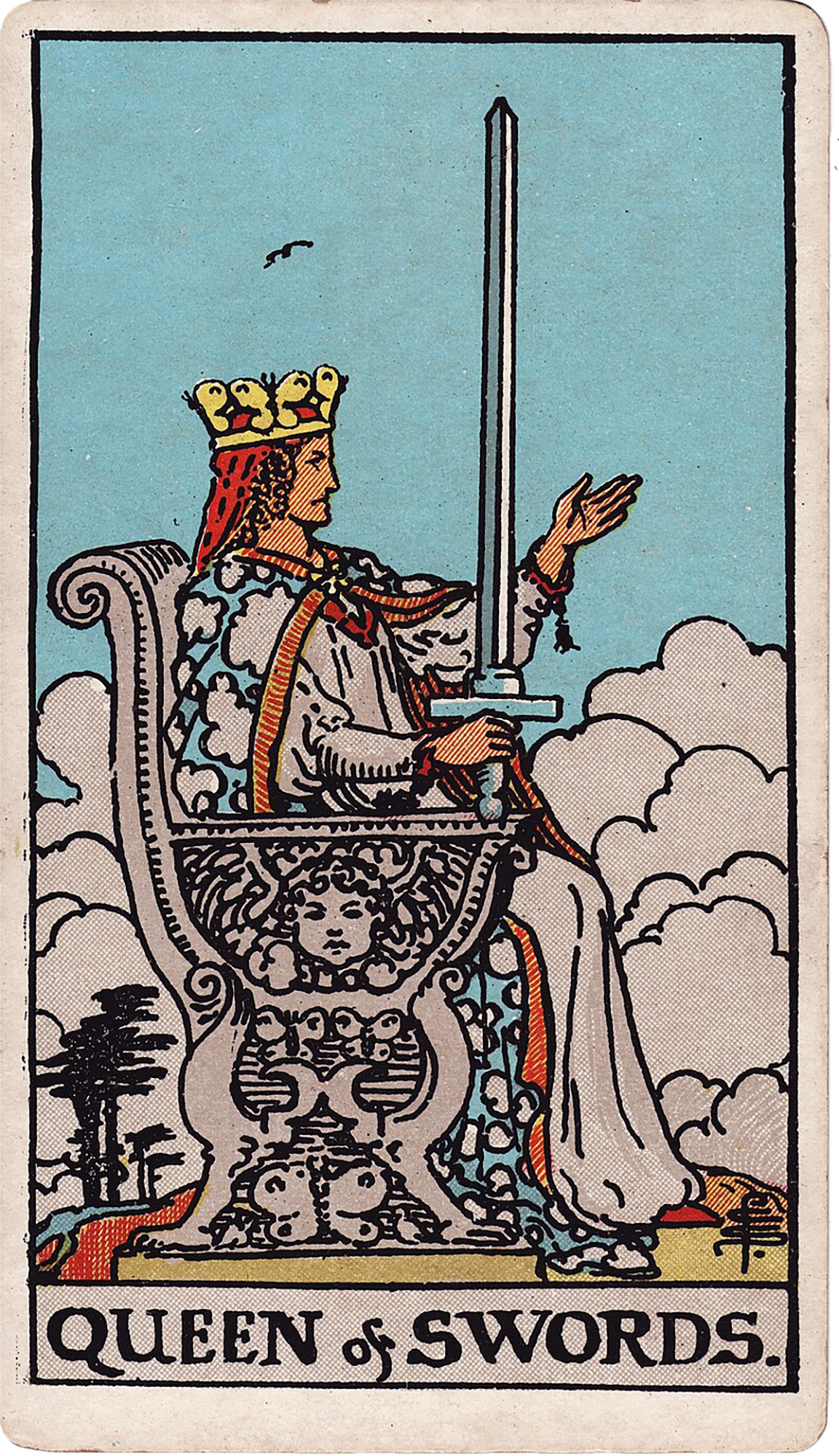 Queen of Swords
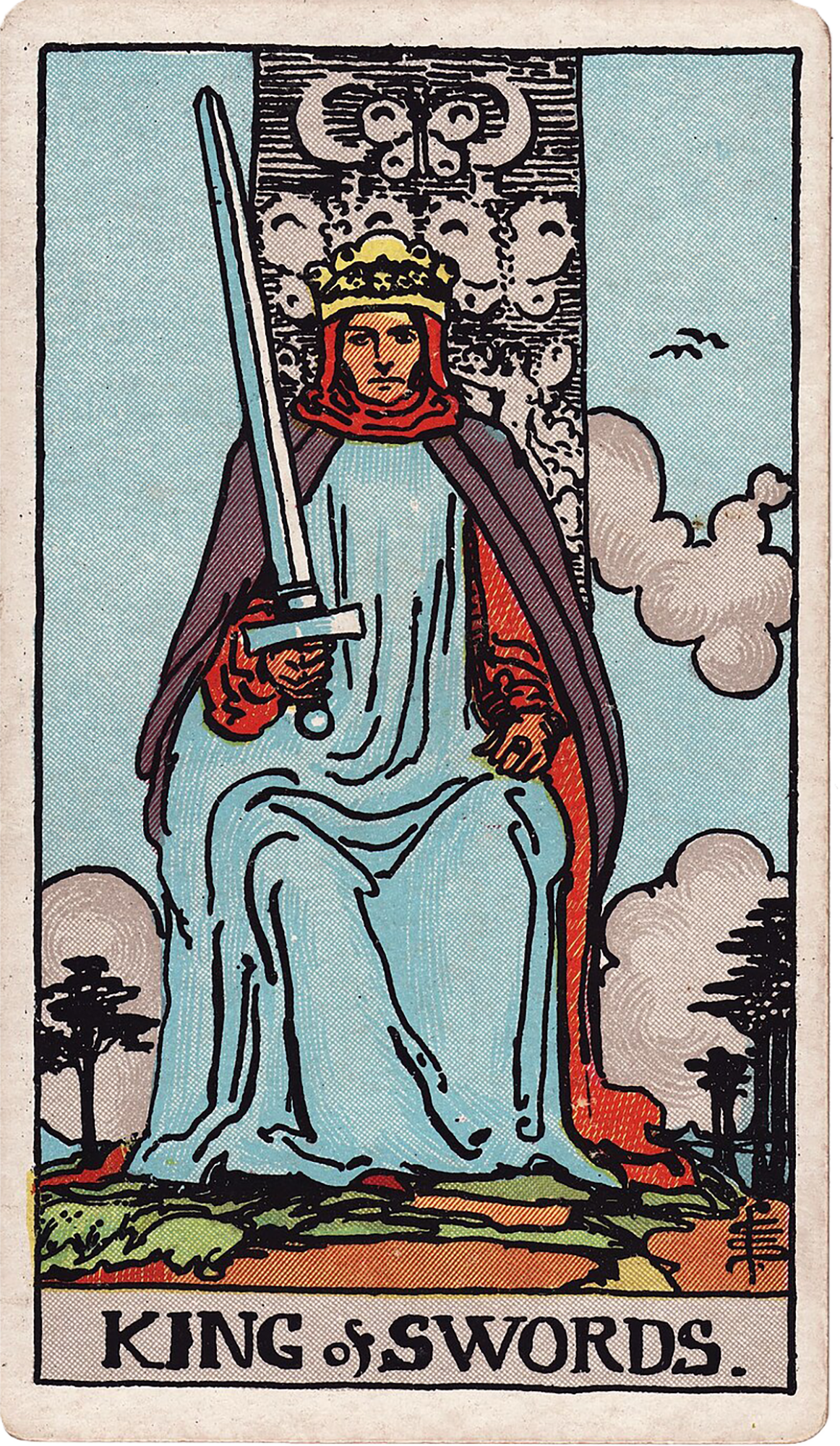 King of Swords
Introduction to the Suit of Swords and Its Court Cards
The Suit of Swords in the Minor Arcana traditionally symbolizes the mental realm, encompassing thought, communication, conflict, truth, and decision-making. Its court cards — Page, Knight, Queen, and King — represent evolving stages and archetypes of intellectual and communicative mastery. Each court card carries distinct lessons that, when explored, illuminate pathways for personal growth. The Rider-Waite-Smith deck visually encodes these lessons through rich symbolism: the Page’s alert stance and raised sword signal curiosity and vigilance; the Knight’s forward charge embodies swift action and courage; the Queen’s poised posture with a raised sword and penetrating gaze denotes clarity and honest boundaries; and the King’s authoritative seat and strong grip on the sword reflect mature intellect and strategic leadership. Understanding these nuanced portrayals enriches a reader’s ability to interpret the cards as reflections of inner mental processes and interpersonal dynamics.
The Page of Swords as a Catalyst for Mental Curiosity and Vigilance
The Page of Swords invites learners to cultivate an active and questioning mind. Upright, the card highlights mental curiosity, vigilance, and the desire to gather information responsibly. Its imagery — a youthful figure poised with a raised sword in a windy landscape — suggests readiness to engage but also the necessity of adaptability. The card’s practical request is to respond skillfully to present challenges by using the mind’s tools rather than relying on abstract ideals. For example, encountering the Page in a reading may signal a phase where asking questions, maintaining alertness, and communicating clearly are crucial steps toward resolving a situation. Reversed, the Page warns of scattered attention, defensive attitudes, premature judgments, or gossip. The reversal is not merely negative but signals blockage in the learning process — perhaps a need to simplify one’s focus, acknowledge internal insecurities, or practice more mindful communication before progress resumes.
Harnessing the Knight of Swords for Decisive Action and Courage
The Knight of Swords embodies swift, decisive mental action and fearless debate. Upright, the Knight advises embracing courage and clarity to cut through delays or confusion. The Rider-Waite-Smith illustration of a charging knight with a raised sword and windswept cape reinforces this energetic charge forward, symbolizing intellectual bravery and strategic momentum. In personal growth contexts, this card encourages moving beyond hesitation to address conflicts or decisions head-on with a clear plan. However, its energy requires balance: the Knight demands practical application aligned with current circumstances rather than idealistic overreach. When reversed, the Knight cautions against recklessness, tunnel vision, or aggressive verbal force. The reversal suggests that moving too fast or ignoring nuance can undermine progress. This prompts reflection on slowing down, embracing complexity, and communicating with greater care to restore healthier mental engagement.
The Queen of Swords and the Practice of Clear-Minded Independence
The Queen of Swords represents advanced intellectual clarity combined with honest, compassionate boundaries. Upright, she models clear-minded independence and communication that values truth without unnecessary cruelty. The deck’s imagery — a seated queen holding a sword upright, set against a cloudy sky — symbolizes mental acuity tempered by emotional insight. Her presence in readings suggests a need to articulate one’s truth firmly while respecting others’ perspectives and navigating emotional complexity with grace. This court card teaches that mature mental strength includes recognizing emotional subtleties rather than avoiding them. Reversed, the Queen draws attention to bitterness, excessive criticism, isolation, or intellectual defenses that evade emotional engagement. The reversal is a prompt to examine where harshness or withdrawal may hinder authentic connection and to practice balancing intellect with empathy for personal and relational growth.
King of Swords as a Symbol of Mature Intellectual Authority and Strategic Judgment
The King of Swords stands for mature intellectual authority, strategic judgment, and decisions grounded in principle and evidence. The card’s imagery of a dignified king seated on a throne, gripping a sword upright, conveys command over thought and communication. This archetype encourages readers to integrate knowledge, experience, and fairness when making complex decisions. In personal growth, the King invites reflection on the ethical use of intellect and leadership—choosing integrity over manipulation, engagement over detachment. Upright, he inspires confidence in measured, principle-based action. Reversed, however, the King warns of coldness, intellectual arrogance, manipulation, or abuse of authority. This indicates a blockage that requires acknowledging how mental power is wielded and fostering humility, openness, and respect for others as participants rather than problems.
Practical Techniques for Reading the Swords Court Cards
When incorporating the Swords court cards into readings, begin by situating them within the broader context of the spread and the question asked. Observe whether the card appears upright or reversed to identify whether the energy is flowing constructively or encountering obstacles. Anchor your interpretation in the card’s Rider-Waite-Smith symbolism — for example, note the Page’s youthful alertness, the Knight’s dynamic charge, the Queen’s poised command, or the King’s authoritative stance. Consider the stage of the situation: is the querent beginning a mental inquiry (Page), pushing forward with decisions (Knight), setting boundaries with clarity (Queen), or exercising mature judgment (King)? Look for supporting cards that clarify whether the energy is emerging, developing, under pressure, or moving toward resolution. Avoid treating reversed cards as mere opposites; instead, explore where the process is stuck and what lessons need to be practiced or released. Practical reading involves blending intuition, narrative coherence, and understanding of the Swords’ mental themes to guide the querent toward insight and growth.
Common Mistakes and How to Avoid Them
A frequent error when interpreting the Swords court cards is over-simplifying reversed meanings as purely negative or opposite to upright interpretations. Instead, reversals often signal nuanced blockages or developmental stages requiring deeper inquiry. Another mistake is ignoring the context of the spread and the querent’s situation, which can lead to generic or disconnected readings. Additionally, some readers may focus excessively on intellectual interpretations without acknowledging the emotional undertones present in the Swords court cards — especially with the Queen and King, where mental clarity intertwines with emotional maturity. To avoid these pitfalls, always integrate the card’s imagery, position, surrounding cards, and the querent’s input. Encourage reflection on how mental habits and communication patterns manifest personally rather than jumping to judgment. Lastly, balance the analytical aspects with empathy to support holistic personal growth.
Examples Demonstrating the Court Cards in Personal Growth Readings
Imagine a querent struggling with indecision and communication challenges. Drawing the Page of Swords upright might indicate the need to cultivate curiosity and vigilance — urging them to ask more questions and gather clear information before acting. If the same card appears reversed, it could highlight scattered thoughts or defensiveness that need simplifying and acknowledging. In another scenario, a Knight of Swords upright could advise swift action and courageous debate in a conflict, while reversed it cautions against rushing recklessly or ignoring nuance. A Queen of Swords upright appearing in a reading about boundaries might encourage honest but compassionate communication, whereas her reversal signals a need to soften harsh criticism and reconnect emotionally. Finally, the King of Swords upright during a leadership or decision-making query encourages principled judgment based on evidence; reversed, it warns against cold manipulation or arrogance. These examples underscore how each court card’s lesson aligns with stages of intellectual and interpersonal development.
Reflection Questions to Deepen Understanding and Application
To integrate the lessons of the Swords court cards into personal growth, consider these questions: Where in your life are you embodying the curiosity and vigilance of the Page of Swords? Are there areas where scattered thoughts or defensiveness block your communication? How do you balance courage and speed with nuance and consequence, as exemplified by the Knight of Swords? In what ways do you practice clear-minded independence and honest boundaries like the Queen of Swords, and where might bitterness or isolation interfere? How do you wield intellectual authority and strategic judgment responsibly, akin to the King of Swords, and where might arrogance or detachment arise? Reflecting on these questions encourages practical self-awareness aligned with the court cards’ symbolic guidance.
Practice questions
• How does the Page of Swords’ curiosity manifest in my approach to learning and communication?
• Where might I be rushing into decisions like the Knight of Swords without considering consequences?
• In what ways can I strengthen clear and compassionate boundaries inspired by the Queen of Swords?
• How do I ensure that my intellectual authority, like the King of Swords, is balanced with empathy and fairness?
• What mental habits or communication patterns do I need to simplify, acknowledge, or release to grow?
Comments
Sign in to comment.
Continue learning
Interpreting the Dance of Justice and The Devil: Balancing Morality and Temptation in Tarot Readings
The combination of Justice and The Devil in tarot presents a profound exploration of morality, temptation, and personal accountability. This article unpacks how these cards influen...
Advanced Techniques for Combining The Moon and The Star to Enhance Intuition in Tarot Readings
This article explores advanced techniques to combine the symbolism and energy of The Moon and The Star Tarot cards to enhance intuition during Tarot readings. Drawing from traditio...
Unlocking Life Insights with the Celtic Cross Tarot Spread
This article offers a thorough exploration of the Celtic Cross Tarot Spread, focusing on its application within family and practical life contexts. Using a worked example featuring...
Unlocking Hidden Meanings with The Hermit and The Hanged Man for Spiritual Growth
This article offers an in-depth exploration of The Hermit and The Hanged Man Tarot cards focusing on their roles in spiritual growth. It guides readers through beginner and advance...
Unlocking Personal Insight with the Seven Card Horseshoe Spread
The Seven Card Horseshoe Spread is a practical and insightful Tarot layout ideal for exploring personal and family dynamics. This article breaks down each position—Past, Present, H...
Mastering the Court Cards of Wands for Unlocking Personal Drive and Leadership
The Court Cards of Wands represent a dynamic spectrum of personal energy, ambition, and leadership potential within the Minor Arcana. This article offers a comprehensive exploratio...
Tracing the Origins and Evolution of The Fool Card in Tarot History
The Fool card holds a foundational place in tarot tradition, symbolizing beginnings, openness, and the embrace of uncertainty. This article traces its origins from early European d...
Techniques for Reading Court Cards to Unlock Personality Insights
Court cards in Tarot often represent people, personality traits, or energy patterns within a situation. This article offers a structured approach for beginners and advanced readers...
Unlocking Emotional Transformation with Death and The Moon Tarot Combination
This article explores the rich and complex interaction between the Death and The Moon tarot cards within the Rider-Waite-Smith tradition, focusing on their combined potential to un...
Applying The Star Card to Foster Hope and Renewal in Personal Growth
The Star card in Tarot symbolizes hope, authenticity, and the process of steady renewal. In a single-card reading, The Star encourages embracing what is present, cultivating openne...