
Unlocking the Transformative Power of Death for Personal Growth and Renewal
The Death card in Tarot is a profound symbol of endings, transformation, and renewal. This article explores how the upright and reversed meanings of Death shift depending on the context of a reading. By examining its symbolism and practical applications in love, career, money, advice, challenge, person, outcome, and spiritual reflection, readers learn how to work constructively with this card’s energy. Techniques for interpretation, common mistakes, and ways to approach the card for personal growth are provided. Anchored in traditional Rider-Waite-Smith imagery, this guide helps learners understand Death as a catalyst for conscious change rather than a portent of doom.
Cards explored in this article
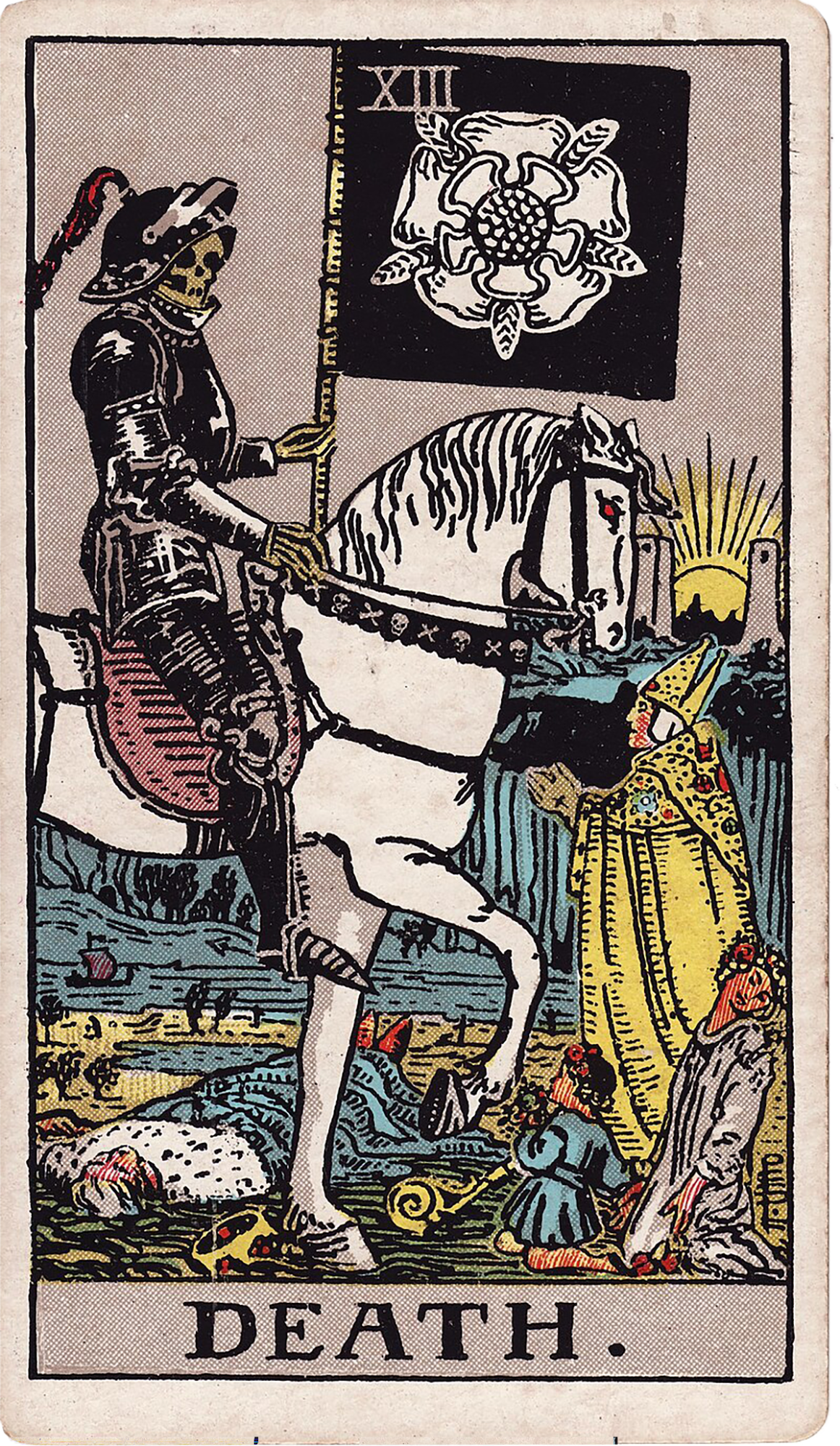 Death
Understanding the Death Card Upright and Reversed
The Death card in the Rider-Waite-Smith deck is often misunderstood as a literal symbol of physical death, but its true meaning lies in cycles of endings and new beginnings. Upright, Death emphasizes the necessity of allowing endings to be real, releasing what is complete, and making space for transformation. This process can be challenging and requires conscious engagement with the present situation. The imagery of the card—often depicting a skeletal figure on horseback, a rising sun, and figures surrendering to change—illustrates the inevitability and universality of transformation. Reversed, the card shifts focus inward, highlighting resistance to change, clinging to the past, or delayed transitions. The reversal is not inherently negative but indicates where growth is blocked or internalized. It invites deeper reflection to identify where energy is becoming distorted or difficult to access. The card’s lesson remains about transformation but signals a need for patience or reorientation before full renewal can occur.
Interpreting Death in the Context of Love
In love readings, the Death card calls attention to the ending of old patterns, relationships, or emotional states that no longer serve the querent. Upright, it may suggest a breakup, a significant shift in relationship dynamics, or a transformative phase that leads to renewed intimacy or self-understanding. The card asks the reader to consider where honesty, clearer boundaries, or conscious choices can foster growth instead of clinging to outdated connections. Reversed, Death highlights difficulty letting go, fear of being alone, or trying to revive relationships whose form has ended. It suggests internal emotional work is required to release attachments and embrace transformation. The card’s imagery—such as the skeletal rider moving forward despite mourners—reminds us that emotional renewal is possible but requires courage and acceptance.
Death in Career and Professional Life
For career readings, Death upright signals the conclusion of one phase or job, prompting reflection on what must be released to invite new opportunities. It encourages practical steps toward conscious change, such as setting boundaries at work, embracing clearer goals, or adapting to evolving circumstances. The card’s symbolism emphasizes that endings are a natural part of growth and that transformation often requires deliberate choices rather than passive waiting. When reversed, Death can indicate resistance to leaving a role or project that has outlived its usefulness. The querent may be stuck in old habits or fear the unknown. This reversal points toward internalized fears or a need to shift mindset before external change can occur. Recognizing these blocks is the first step toward breaking free and moving forward.
Financial Implications of Death
In financial contexts, the upright Death card suggests the end of outdated financial habits, investments, or beliefs about money. It invites the querent to consciously release limiting patterns and make room for new financial strategies or sources of income. The card implies that financial transformation requires active engagement with the present reality rather than waiting for certainty. Reversed, Death reveals clinging to old money habits, denial of financial realities, or fear of change in financial status. It may highlight internal blockage to adopting new approaches or an imbalance in how financial transitions are handled. The card encourages reflection on where financial energy is being stalled or misdirected and to consider measured steps toward renewal.
Using Death as Advice and Guidance
When Death appears as advice, it urges embracing endings fully and consciously to allow transformation. The card encourages asking practical questions: Where in your life does a clearer boundary need to be set? Where can you respond more directly or honestly? What deliberate choice can you make now to move forward? Rather than waiting for all conditions to be perfect, Death advises working with what is available and noticing which parts of the card’s lesson you have already integrated. The skeletal figure’s relentless forward movement in the image serves as a metaphor for active engagement with change rather than resistance.
Death as a Challenge in Readings
As a challenge, Death confronts the querent with the discomfort of letting go and the uncertainty of new beginnings. Upright, this challenge is about stepping into transformation despite fear or confusion. It asks, which old structures or beliefs no longer serve you and what practical step can you take to release them? Reversed, the challenge may be deeper resistance or clinging, signaling that the transformational energy is blocked or delayed. The card prompts introspection about where psychological or emotional inertia exists. Understanding this can prevent stagnation and facilitate eventual growth.
Interpreting Death as a Person
When the Death card represents a person, it often signifies someone who embodies transformation, change, or endings in the querent’s life. This person might be a catalyst for growth, a figure who helps bring necessary closure, or someone who models resilience through change. Upright, this individual is a guide for embracing transitions with honesty and deliberate intent. Reversed, the person might be reluctant to change or stuck in old patterns, possibly holding the querent back from growth. They may also represent internalized aspects of the querent’s own personality—parts that resist or delay transformation.
Outcome and Spiritual Reflection with Death
As an outcome card, Death promises that transformation is inevitable. Upright, it indicates that the querent will experience a meaningful ending leading to renewal, whether in relationships, projects, or personal growth. The card’s imagery—a setting sun and figures moving on—reminds us that endings prepare the way for new beginnings. Reversed, the outcome may involve delayed change, lingering attachments, or an internal struggle to accept transformation. Spiritually, Death invites reflection on impermanence, cycles of life and death, and the importance of conscious surrender. It encourages embracing death as a metaphor for spiritual rebirth and renewal rather than fear.
Techniques for Working with the Death Card
Effective interpretation of Death requires careful attention to the context and surrounding cards, even in single-card draws. Beginners often fear the card or interpret it too literally. Instead, focus on the card’s symbolic elements: the skeletal figure signifies the essence stripped to the core; the rising sun behind the figure signals hope and new beginnings; the figures in the card demonstrate different responses to change. A practical technique is to ask where endings are necessary in the querent’s life and what actions can be taken now with available resources. In reversed readings, explore resistance and internal blocks compassionately without judgment. Tracking the progression from resistance to acceptance over time can reveal personal transformation journeys.
Common Mistakes and How to Avoid Them
A frequent mistake is interpreting the Death card as a literal physical death or an immediate disaster. This misreading breeds unnecessary fear and overlooks the card’s transformational potential. Another error is ignoring the card’s context, which can shift its meaning significantly. To avoid these pitfalls, always consider the card’s upright or reversed position and relate it to the specific question and life area. Use the card’s imagery as a guide rather than a fixed prediction. Encourage querents to see Death as a call to conscious change, not passive fate.
Practice questions
• Where in my life am I currently resisting necessary endings or change?
• How can I make clearer boundaries or more deliberate choices to facilitate transformation?
• What parts of the Death card’s imagery resonate with my current situation?
• In what ways can embracing endings lead to new growth for me?
• Where might I be clinging to past patterns that are no longer serving me?
Comments
Sign in to comment.
Continue learning
Interpreting the Dance of Justice and The Devil: Balancing Morality and Temptation in Tarot Readings
The combination of Justice and The Devil in tarot presents a profound exploration of morality, temptation, and personal accountability. This article unpacks how these cards influen...
Advanced Techniques for Combining The Moon and The Star to Enhance Intuition in Tarot Readings
This article explores advanced techniques to combine the symbolism and energy of The Moon and The Star Tarot cards to enhance intuition during Tarot readings. Drawing from traditio...
Unlocking Life Insights with the Celtic Cross Tarot Spread
This article offers a thorough exploration of the Celtic Cross Tarot Spread, focusing on its application within family and practical life contexts. Using a worked example featuring...
Unlocking Hidden Meanings with The Hermit and The Hanged Man for Spiritual Growth
This article offers an in-depth exploration of The Hermit and The Hanged Man Tarot cards focusing on their roles in spiritual growth. It guides readers through beginner and advance...
Unlocking Personal Insight with the Seven Card Horseshoe Spread
The Seven Card Horseshoe Spread is a practical and insightful Tarot layout ideal for exploring personal and family dynamics. This article breaks down each position—Past, Present, H...
Mastering the Court Cards of Wands for Unlocking Personal Drive and Leadership
The Court Cards of Wands represent a dynamic spectrum of personal energy, ambition, and leadership potential within the Minor Arcana. This article offers a comprehensive exploratio...
Tracing the Origins and Evolution of The Fool Card in Tarot History
The Fool card holds a foundational place in tarot tradition, symbolizing beginnings, openness, and the embrace of uncertainty. This article traces its origins from early European d...
Techniques for Reading Court Cards to Unlock Personality Insights
Court cards in Tarot often represent people, personality traits, or energy patterns within a situation. This article offers a structured approach for beginners and advanced readers...
Unlocking Emotional Transformation with Death and The Moon Tarot Combination
This article explores the rich and complex interaction between the Death and The Moon tarot cards within the Rider-Waite-Smith tradition, focusing on their combined potential to un...
Applying The Star Card to Foster Hope and Renewal in Personal Growth
The Star card in Tarot symbolizes hope, authenticity, and the process of steady renewal. In a single-card reading, The Star encourages embracing what is present, cultivating openne...