
Unraveling the Historical Origins and Symbolism of The Hierophant Card
The Hierophant card represents learning from established wisdom and understanding traditions within Tarot. This article delves into its historical origins, symbolic imagery, and practical applications in readings. By analyzing the upright and reversed positions of The Hierophant, learners gain insight into how this card reflects family history, cultural traditions, and institutional dynamics. Emphasizing the importance of conscious engagement with established systems, the article offers techniques and interpretation methods rooted in the card's traditional symbolism.
Cards explored in this article
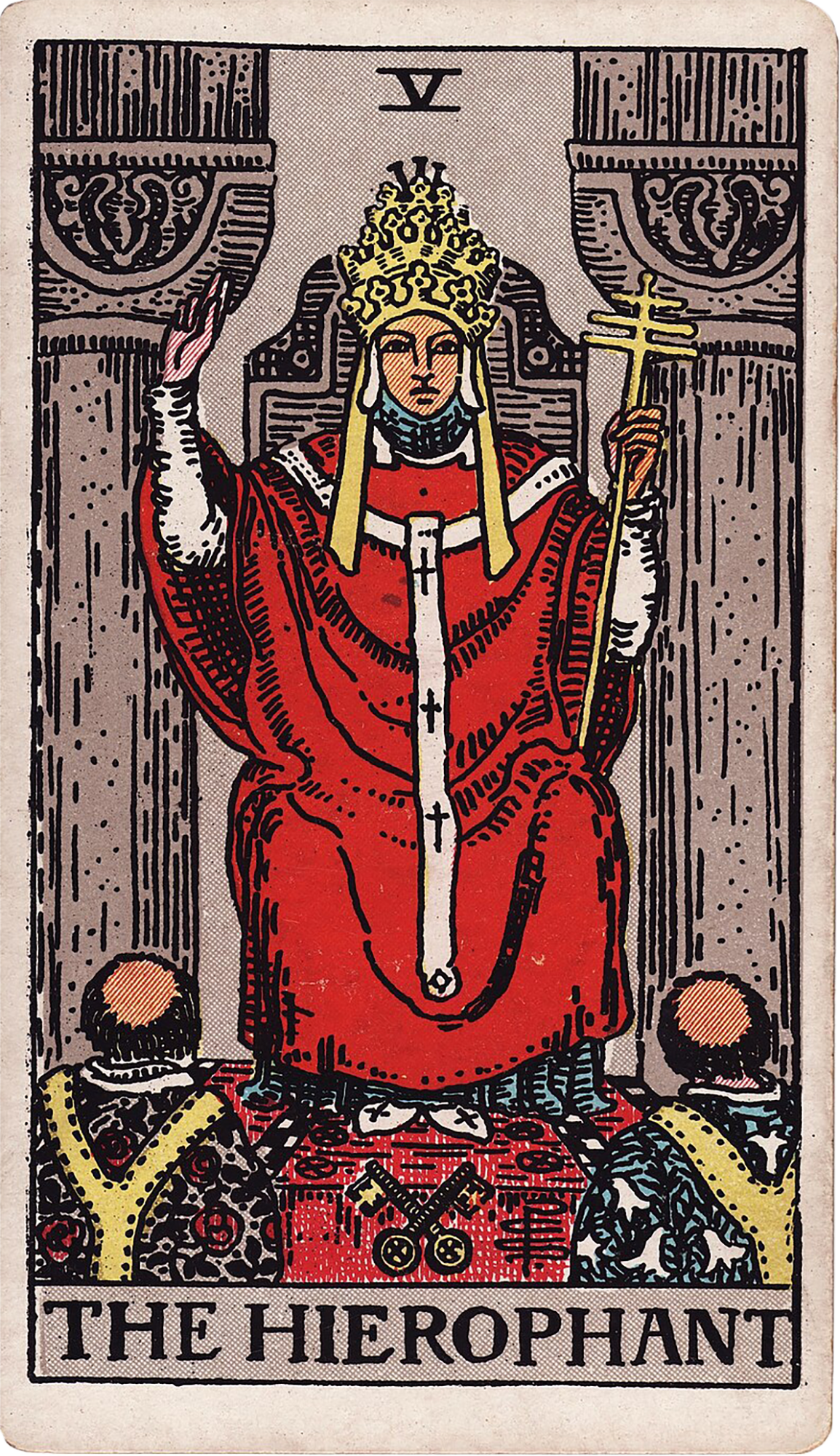 The Hierophant
Introduction to The Hierophant Card
The Hierophant card is a pivotal figure in the Tarot deck, often symbolizing structured knowledge, tradition, and institutional wisdom. Positioned as the fifth Major Arcana card, The Hierophant traditionally represents a bridge between the spiritual and communal realms, embodying the transmission of sacred knowledge and societal rules. In the Rider-Waite-Smith Tarot tradition, The Hierophant’s imagery evokes a religious or scholarly guide who imparts teachings and moral frameworks. This article seeks to deepen understanding of The Hierophant’s historical roots, symbolic components, and how these aspects inform its interpretation in readings, especially concerning family traditions and societal structures.
Historical Origins of The Hierophant
The term 'Hierophant' originates from ancient Greek religion, where a hierophant was a priest who revealed sacred mysteries during the Eleusinian Mysteries, secret religious rites dedicated to the goddess Demeter. This role involved guiding initiates through complex spiritual knowledge, underscoring the theme of structured teaching and revelation. When Tarot decks were developed in the 15th century and evolved into esoteric tools by the 18th and 19th centuries, card creators incorporated this archetype into the Major Arcana to represent authority in spiritual and moral matters. The Rider-Waite-Smith deck, designed by A.E. Waite and illustrated by Pamela Colman Smith in 1909, solidified the card's image as a religious figure seated between two pillars, wearing ceremonial robes and a triple crown, holding a staff with a triple cross. These elements symbolize institutional authority, tradition, and the transmission of spiritual wisdom across generations. This context links The Hierophant to family history and cultural traditions, as institutions often perpetuate inherited beliefs and social norms.
Symbolism in The Hierophant Card Imagery
The symbolism in The Hierophant card is rich and multilayered. The upright card shows a robed figure seated on a throne between two pillars, reminiscent of temple architecture, suggesting stability and sacred order. The triple crown represents dominion over the material, intellectual, and spiritual realms, emphasizing holistic authority. The hand gesture, with two fingers pointing upwards and two downwards, symbolizes a conduit between heaven and earth, indicating the card’s role as a mediator of wisdom. Beneath The Hierophant, two acolytes kneel, indicating the transmission of knowledge and the importance of mentorship within established systems. The crossed keys at his feet symbolize access to hidden knowledge, similar to keys of St. Peter in Christian iconography, reinforcing themes of institutional authority and gatekeeping. When interpreting the upright Hierophant, these symbols collectively direct the reader to consider traditional learning, adherence to established codes, and seeking guidance from qualified sources. The card encourages conscious engagement with societal or familial structures rather than blind conformity. In contrast, the reversed Hierophant highlights distorted or restricted access to this wisdom. It may point to dogma, rebellion without understanding, or empty rituals, suggesting a breakdown or reevaluation of tradition. This shift prompts readers to question where inherited beliefs may no longer serve their growth or where rigid systems become obstacles.
The Hierophant and Family History Tradition
Within the context of family history and tradition, The Hierophant embodies the transmission of values, customs, and knowledge passed down through generations. This card invites reflection on how family legacies shape personal identity and decision-making processes. Upright, it encourages embracing beneficial traditions that provide structure and guidance. It asks readers to consider the lessons inherent in their family’s cultural or spiritual practices. For example, when a question arises about coping with familial expectations or seeking clarity on inherited beliefs, The Hierophant can signal the importance of exploring these traditions consciously. It also points to the value of mentorship from elders or community leaders who uphold these legacies. Reversed, The Hierophant warns against unexamined acceptance of family dogma or traditions that no longer serve individual growth. It may indicate a need to challenge limiting beliefs or break free from rigid roles imposed by family or society. This dynamic is crucial for readers navigating intergenerational conflicts or seeking authentic personal paths that honor but do not enslave them to ancestral patterns.
Common Questions and Practical Reading Techniques
When The Hierophant appears in a Tarot reading, it often addresses questions about education, spiritual guidance, social conformity, or moral frameworks. To read this card effectively, consider the following techniques: 1. Contextualize the Question: Relate the card’s symbolism to the querent’s circumstances, especially focusing on whether they are dealing with institutions (schools, religious organizations, legal systems) or family traditions. 2. Observe Upright vs. Reversed Positions Carefully: Upright suggests constructive engagement with tradition; reversed invites examination of resistance or distortion. 3. Pose Reflective Questions: For example, 'What established wisdom can I draw on?' or 'Where might I be rebelling without clear understanding?' 4. Use Imagery Anchors: Focus on the seated figure’s authority, the two pillars of structure, and the acolytes receiving knowledge to explore mentorship and learning dynamics. 5. Notice Neighboring Cards: Adjacent cards can clarify if The Hierophant’s energy is blocked, balanced, or evolving. For instance, cards indicating conflict might suggest struggle with conformity, while cards of growth indicate fruitful learning. 6. Balance Tradition and Individual Choice: The Hierophant does not compel blind obedience but encourages informed decision-making about which rules to follow. Readers often make the mistake of interpreting The Hierophant solely as a sign of rigid conformity or religiousness. Instead, it is vital to recognize its role in conscious learning and the nuanced interplay between social order and personal autonomy.
Interpretation Logic and Integrative Examples
The Hierophant’s interpretation hinges on understanding its dual role as a bearer of tradition and a prompt for conscious navigation of rules. For example, in a career-related reading, the upright Hierophant might suggest seeking mentorship, following company protocols, or acquiring formal qualifications. Reversed, it could indicate frustration with bureaucracy or a call to innovate beyond outdated practices. In family-related inquiries, the card’s upright position underscores respect for inherited wisdom and the importance of family rituals in providing stability. The reversed position challenges the querent to identify any dogmatic pressures or cycles that may hinder personal development. Practical example: If a querent asks about their spiritual path and The Hierophant appears upright, it suggests studying established traditions or engaging with a teacher. If reversed, it may mean re-evaluating inherited beliefs or exploring alternative spiritual practices. Integrating this card into a broader reading requires attention to how its themes of authority, guidance, and tradition interact with the querent’s context and other cards’ messages. This integrative approach helps avoid simplistic or deterministic readings.
Common Mistakes and How to Avoid Them
One frequent error is interpreting The Hierophant strictly as a symbol of rigid religion or conservative authority, overlooking its more nuanced aspect of teaching, mentorship, and conscious choice. Avoid defaulting to negative connotations when the card appears reversed; instead, explore what aspects of tradition or authority are being questioned or internalized. Another mistake is ignoring the card’s setting and figures. The two pillars, acolytes, and hand gesture all offer clues about the card’s purpose as a mediator of knowledge and social structures. Failing to connect these visual elements to the reading context can lead to superficial interpretations. Additionally, readers sometimes assume that The Hierophant demands unquestioning conformity. In reality, the card encourages learning the rules to know how and when to apply or challenge them. Recognizing this balance prevents misreading the card as simply a call to obedience. To avoid these pitfalls, always anchor interpretations in the card’s imagery, the question posed, the card’s position, and the surrounding cards. Engage with the card as a dynamic symbol of tradition in flux rather than a static authority figure.
Practical Tips for Deepening Understanding
To deepen your understanding of The Hierophant, consider the following steps: 1. Study the Card’s Imagery: Spend time observing the symbolic elements in the supplied Hierophant card image. Note the attire, hand gestures, figures, and symbols, linking each to its traditional meaning. 2. Reflect on Personal Traditions: Journal about your own family or cultural traditions and how they influence your beliefs and decisions. Use the card as a mirror to these reflections. 3. Explore Historical Context: Read about the Eleusinian Mysteries and the role of hierophants in ancient religions to appreciate the card’s archetypal roots. 4. Practice Reading Techniques: Conduct sample readings focusing on questions about learning, guidance, or institutional influence. Experiment with upright and reversed interpretations. 5. Engage with Related Cards: Compare The Hierophant’s energy with cards representing authority, such as The Emperor, to discern differences and overlaps. 6. Ask Reflective Questions: Use the reflection questions below to prompt deeper insights when The Hierophant appears. By approaching The Hierophant with curiosity and openness, readers can access its wisdom about navigating family traditions, societal expectations, and personal integrity.
Practice questions
• What established traditions or wisdom have shaped my current beliefs or choices?
• How do I relate to authority figures or institutions in my life?
• Where might I be conforming without fully understanding the reasons?
• In what areas am I ready to question or redefine inherited patterns?
• What mentorship or guidance could support my growth right now?
• How can I balance respect for tradition with my need for personal authenticity?
• What rituals or practices in my family or culture provide stability or insight?
• Where might resistance to authority be blocking valuable learning?
Comments
Sign in to comment.
Continue learning
Interpreting the Dance of Justice and The Devil: Balancing Morality and Temptation in Tarot Readings
The combination of Justice and The Devil in tarot presents a profound exploration of morality, temptation, and personal accountability. This article unpacks how these cards influen...
Advanced Techniques for Combining The Moon and The Star to Enhance Intuition in Tarot Readings
This article explores advanced techniques to combine the symbolism and energy of The Moon and The Star Tarot cards to enhance intuition during Tarot readings. Drawing from traditio...
Unlocking Life Insights with the Celtic Cross Tarot Spread
This article offers a thorough exploration of the Celtic Cross Tarot Spread, focusing on its application within family and practical life contexts. Using a worked example featuring...
Unlocking Hidden Meanings with The Hermit and The Hanged Man for Spiritual Growth
This article offers an in-depth exploration of The Hermit and The Hanged Man Tarot cards focusing on their roles in spiritual growth. It guides readers through beginner and advance...
Unlocking Personal Insight with the Seven Card Horseshoe Spread
The Seven Card Horseshoe Spread is a practical and insightful Tarot layout ideal for exploring personal and family dynamics. This article breaks down each position—Past, Present, H...
Mastering the Court Cards of Wands for Unlocking Personal Drive and Leadership
The Court Cards of Wands represent a dynamic spectrum of personal energy, ambition, and leadership potential within the Minor Arcana. This article offers a comprehensive exploratio...
Tracing the Origins and Evolution of The Fool Card in Tarot History
The Fool card holds a foundational place in tarot tradition, symbolizing beginnings, openness, and the embrace of uncertainty. This article traces its origins from early European d...
Techniques for Reading Court Cards to Unlock Personality Insights
Court cards in Tarot often represent people, personality traits, or energy patterns within a situation. This article offers a structured approach for beginners and advanced readers...
Unlocking Emotional Transformation with Death and The Moon Tarot Combination
This article explores the rich and complex interaction between the Death and The Moon tarot cards within the Rider-Waite-Smith tradition, focusing on their combined potential to un...
Applying The Star Card to Foster Hope and Renewal in Personal Growth
The Star card in Tarot symbolizes hope, authenticity, and the process of steady renewal. In a single-card reading, The Star encourages embracing what is present, cultivating openne...