
Using Court Cards to Teach Emotional Regulation Skills
This article teaches how to use three court cards — Queen of Cups, King of Swords, and Page of Pentacles — as archetypal tools to teach emotional regulation. It links Rider-Waite-Smith symbolism to proven regulation strategies, offers a step-by-step three-card spread, practice exercises, common mistakes, and two worked examples. The approach treats the cards as learners' companions, not as literal predictions, and emphasizes anchoring interpretation in imagery and suit meaning.
Cards explored in this article
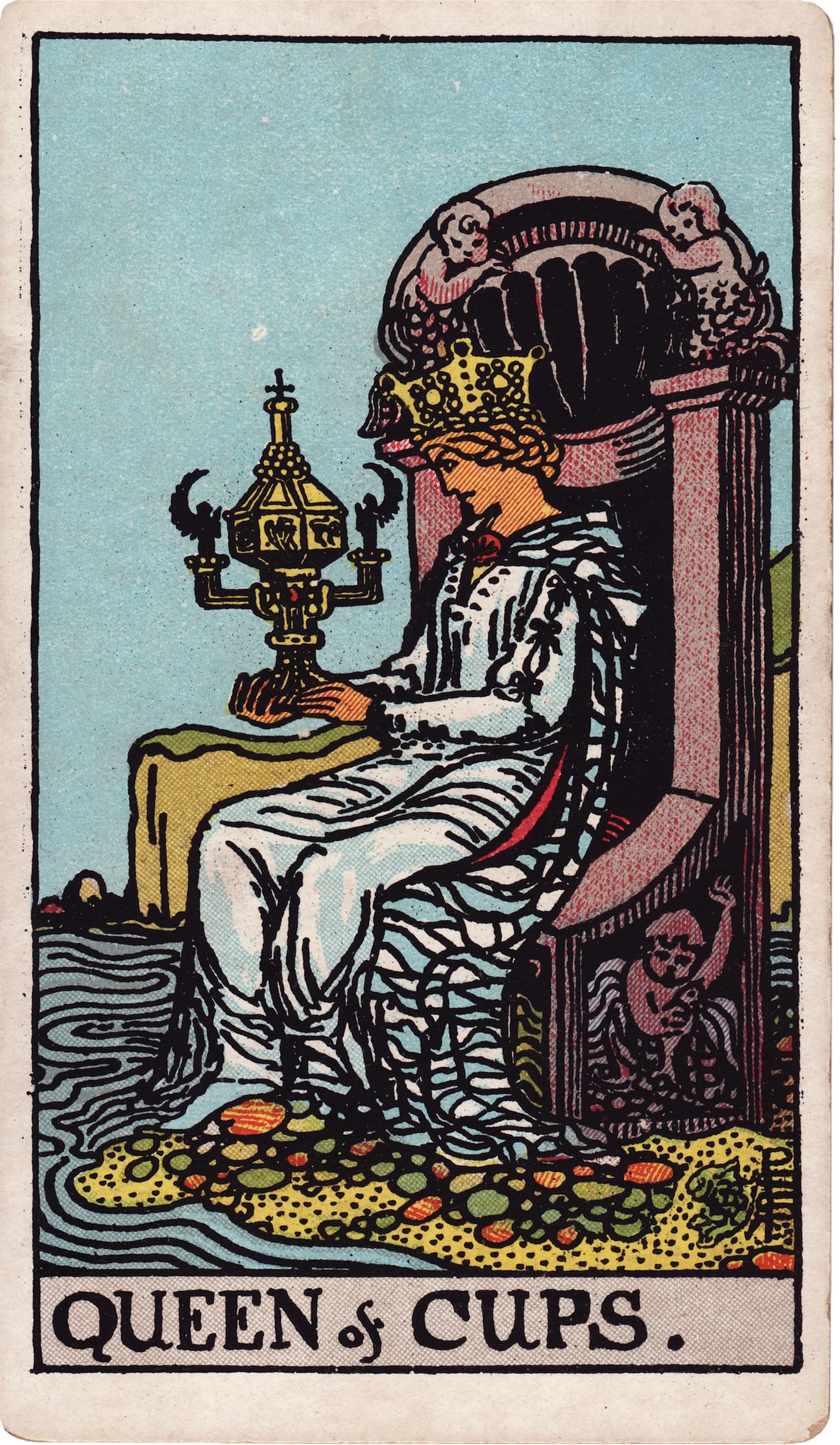 Queen of Cups
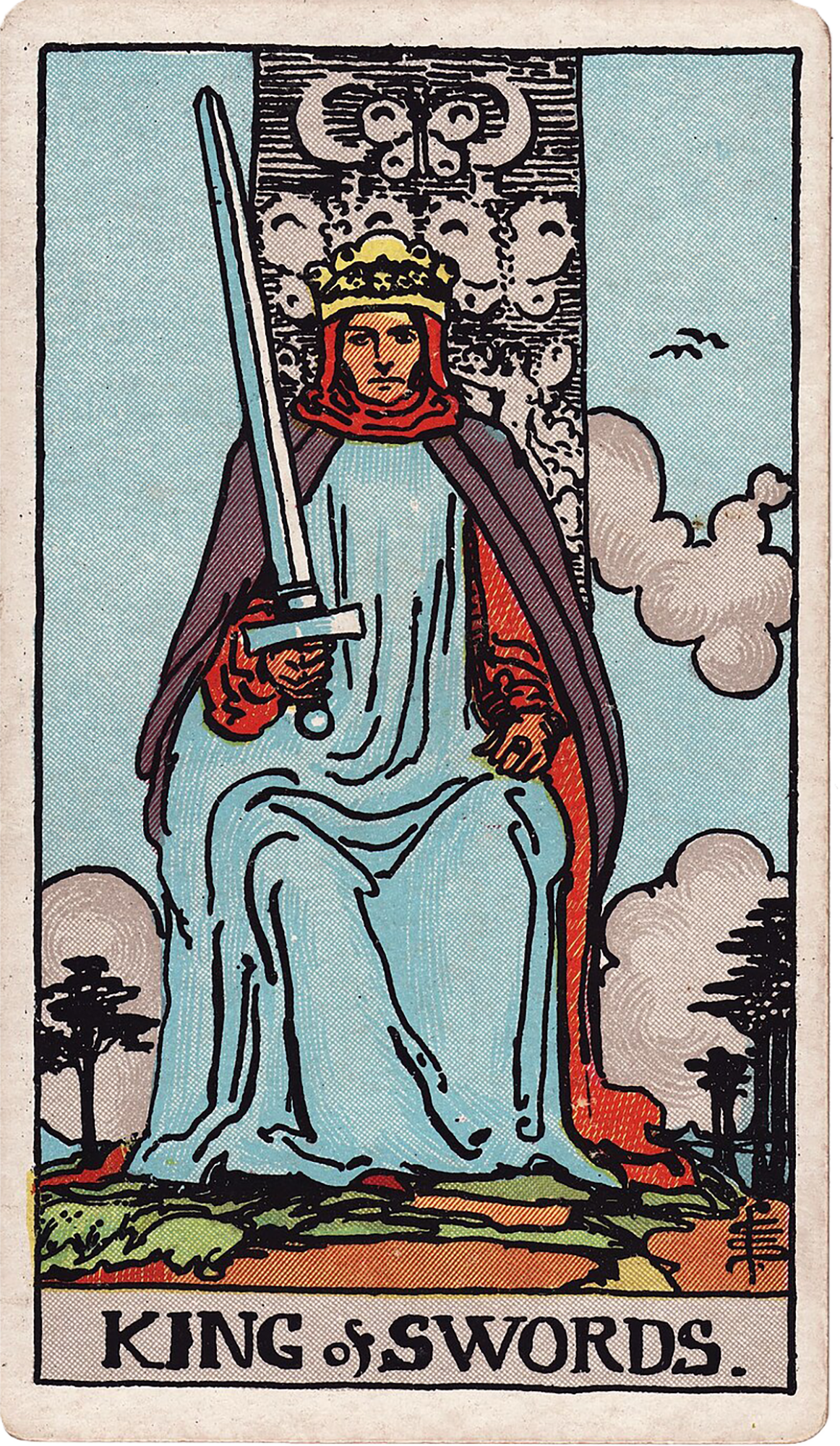 King of Swords
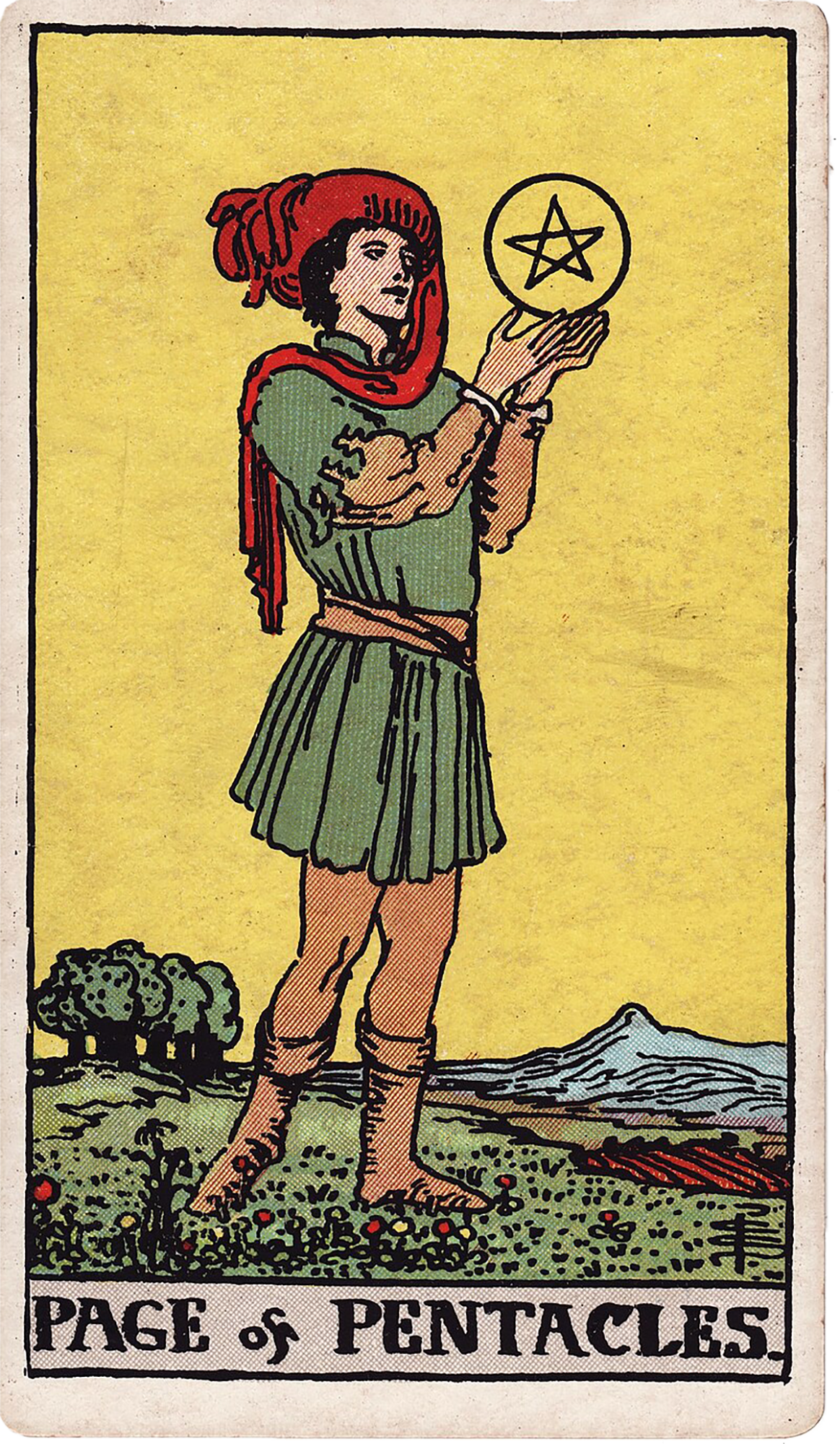 Page of Pentacles
Introduction: Why court cards are useful for teaching regulation
Court cards act like members of an inner family. They model ways of feeling, thinking, and acting that learners can try on, practice, and integrate. When teaching emotional regulation, court cards give concrete personified stances: a receptive holder of feeling, a clear-headed strategist, a curious beginner who focuses on habit. This article focuses on three supplied court cards — Queen of Cups, King of Swords, and Page of Pentacles — using Rider-Waite-Smith imagery and the provided upright and reversed meanings as anchors. The goal is educational: use these cards to design exercises, readings, and routines that teach naming, containing, restructuring, and practicing emotional skills. This is not fortune telling; it is a practical, imagery-based pedagogy.
Court cards as a family: roles and the suits they carry
Court cards carry two layers of meaning: the suit (the domain of experience) and the court rank (the developmental stance). With the three supplied cards you can cover core self-regulation domains. Cups stands for emotion, relationships, intuition, and how feelings are processed. Swords stands for thought, communication, decisions, and mental habits. Pentacles stands for body, routine, resource management, and skill-building. The Page rank embodies beginner energy, curiosity, and learning-oriented experimentation. The Queen rank often models matured, embodied expression within the suit's domain — receptive strength and attunement in Cups. The King rank represents mature, directive authority or executive function within the suit's domain — principled decision-making and structure in Swords. Together, Queen of Cups, King of Swords, and Page of Pentacles create an internal teaching team: feel, think, and practice.
Rider-Waite-Smith imagery to anchor meaning
Effective teaching anchors to concrete images. Use the Rider-Waite-Smith details on these cards to root lessons in sensory detail learners can visualize and recall. Queen of Cups: the queen is seated by the sea and holds a covered, ornate chalice in an attentive, calm posture. The shoreline and water imagery emphasize receptivity and the dynamic edge between conscious attention and deeper feeling. The chalice is not open to the world but held as an inner container, signaling containment and empathic listening. King of Swords: the king sits on a stone throne and holds his upright sword; his posture is decisive, eyes clear, and the throne decoration suggests mental authority and impartial judgment. The sword points upward like an ethical compass or a structured rule set. Page of Pentacles: the Page studies a pentacle held in both hands, focused and grounded, eyes on a concrete object. The background garden and distant mountains suggest learning in a safe environment and long-term cultivation. Use these visual cues in exercises: ask learners to describe the sea, the cup, the king's posture, the sword's direction, the Page's gaze and the soil around them. Concrete images prime memory and make abstract regulation techniques tangible.
Mapping each card to emotional regulation skills
Use the supplied upright and reversed meanings as functional teaching maps rather than fixed verdicts. Below are practical mappings for teaching regulation skills. Queen of Cups as emotional container and empathy coach - Upright skills to teach: affect labeling, empathic listening, body-based noticing of feeling, holding space without immediately fixing, reflective validation. Anchor to imagery: the queen holds a covered cup, suggesting a container that can be checked without spilling. Exercises: 'check the cup' practice where learners describe what the cup holds using sensory words; guided breath with the image of the shoreline to notice waves of feeling and name them. When the Queen appears reversed, use the supplied meaning about overwhelm, codependency, fantasy, or difficulty separating intuition from anxiety to teach boundaries: how to notice absorption of others' moods and practice gentle release strategies like shielding visualization, limits on caregiving, and setting time-bound empathetic responses. King of Swords as cognitive regulation and boundary architect - Upright skills to teach: mental clarity, reframing, structured decision-making, assertive communication, building rules for fair interaction. Anchor to imagery: the upright sword and the king's steady gaze make rules and distinctions visible. Exercises: thought labeling and evidence-checking anchored to the king's sword; create 'principle statements' mirroring the king's upright stance: short, actionable rules to use in crisis (for example, 'I will pause three breaths before answering'). Reversed King signals abuse of authority, intellectualizing feelings, or coldness. Teach awareness of detachment and the danger of treating people as problems; pair cognitive restructuring with compassion checks from the Queen of Cups to rebalance. Page of Pentacles as practice, grounding, and skill scaffolding - Upright skills to teach: creating micro-habits, realistic goal-setting, sensory grounding, slow skill acquisition, study routines. Anchor to imagery: the Page studies the pentacle with concentration and curiosity, suggesting deliberate practice in a safe garden. Exercises: create a 2-week 'pentacle experiment' focusing on a tiny daily practice that supports regulation, such as 1-minute breath checks, grounding 5-4-3-2-1 senses practice, or tracking mood and a single behavior. Reversed Page highlights procrastination, unrealistic plans, or lack of follow-through; use it as a prompt to simplify goals, reduce friction, and add accountability.
Technique: a three-card spread to teach and plan regulation
A reproducible, teachable spread using only the supplied cards helps learners translate symbolism into practice. Name the spread Family Roles for Regulation. Layout: draw three cards in order left to right. Position 1 is Page of Pentacles: practice and grounding. Position 2 is Queen of Cups: emotional stance and containment. Position 3 is King of Swords: structure, boundaries, and decision. If you are working with the physical images provided, invite learners to look closely at each card before interpretation. Step-by-step method 1. Clarify the question. Frame a learning-oriented prompt, for example 'What small practice will help me regulate when overwhelmed?' or 'How can I respond to X with clarity and care?' 2. Draw the three cards or use the supplied images. Note upright or reversed orientation; use the supplied upright/reversed notes when forming interpretations. If a card is reversed, treat it as a sign of where the skill is underdeveloped or stuck. 3. Interpret positionally with concrete takeaways: - Page of Pentacles (practice): What tiny, repeatable practice does the Page suggest? Use its garden and focused gaze to design a habit under five minutes. If reversed, choose simpler actions and accountability. Anchor the exercise to this card's imagery: 'practice while holding an object like the Page's pentacle to ground attention.' - Queen of Cups (containment): What emotional container is present or needed? Ask where empathy helps and where over-absorption is a risk. Use the shoreline image to explore boundaries: stand at the edge of the waters and notice when waves require different responses. If reversed, practice explicit detachment techniques. - King of Swords (structure): What rule, script, or decision will support the Page and Queen? Create a short scripted phrase, a three-step pause, or a policy for engagement. If reversed, ensure the script includes warmth and checks against authoritarian or manipulative language. 4. Translate the three-card reading into a one-week experiment with measurable behaviors and reflection prompts. Encourage journaling after practice and at least one short review at the week's end to adjust.
Exercises and lesson ideas tied to imagery
Below are classroom or personal-learning exercises that directly use the cards' imagery and supplied meanings. Exercise 1: Cup-check breathing (Queen of Cups) - Setup: Show learners the Queen of Cups image. Ask them to visualize the covered chalice and the sea behind it. - Practice: Inhale for four counts imagining water moving into the cup, pause, exhale for six counts imagining the cup stabilizing. After three cycles, ask learners to name one emotion and where it sits in the body. - Teaching point: the queen models containment and attentive receptivity. Reversed queen signals practice of letting go of rumination exercises and clearer boundary setting. Exercise 2: Sword-scripted pause (King of Swords) - Setup: Show the King of Swords. Discuss his upright sword and decisive posture. - Practice: Build a scripted pause: notice sensation, name thought, ask 'is this helpful?' and choose action. Practice delivering the script out loud until it feels steady. - Teaching point: the king provides cognitive scaffolding for interrupting reactive patterns. When that scaffolding hardens into coldness (reversed), pair the script with a Queen-of-Cups check to reintroduce empathy. Exercise 3: Pentacle micro-habit experiment (Page of Pentacles) - Setup: Use the Page of Pentacles imagery of studying a tangible coin. - Practice: Choose one 2-minute grounding practice to do daily for a week. Record one sentence about its effect each day. If motivation fades (Page reversed), reduce the practice to 30 seconds or add a visible cue like placing a small stone on a desk. - Teaching point: the Page teaches disciplined curiosity and the slow accumulation of competence.
Common mistakes and how to avoid them
When using court cards pedagogically, beginners commonly make these mistakes. Recognize and correct them. 1. Treating cards as prescriptive demands rather than options - Mistake: 'The card says I must do X' rather than 'The card suggests a stance to try.' - Fix: Emphasize hypothesis testing. Use the three-card spread to design experiments and iterate. 2. Over-identifying with a single court role - Mistake: Believing one card defines the whole person (for example, 'I am the Queen of Cups' as a limiting identity). - Fix: Model family dynamics — the person can use the Page to practice, the Queen to feel, and the King to decide. Encourage role-switching drills. 3. Ignoring reversals as clues to stuck processes - Mistake: Treating reversed cards simply as 'bad' or as opposites of upright meanings. - Fix: Use supplied reversal guidance. Ask what part of the process is stuck and how to simplify, communicate, practice, or release to return to healthier expression. 4. Dismissing physical imagery - Mistake: Making only abstract interpretations and skipping sensory imagery. - Fix: Always start with a five-sentence description of what you see in the card. Visual, tactile, and spatial details make exercises portable and easier to remember. 5. Using cognitive cards without empathy checks - Mistake: Leaning on King of Swords strategies without integrating emotion work, which can feel cold or invalidating. - Fix: Pair cognitive interventions with Queen of Cups practices to balance clarity with attunement.
Worked examples: practical interpretations and plans
Two short examples show how to translate the three-card teaching spread into concrete plans. In both examples, the supplied cards are the interpretive anchors. Example A: A learner feels quick irritation when receiving critique - Drawn cards: Page of Pentacles upright, Queen of Cups upright, King of Swords upright. - Interpretation and plan: - Page of Pentacles: Start a micro-practice of pausing and grounding for one minute after receiving critique. Hold an object to mimic the Page's attention to a physical pentacle. - Queen of Cups: Practice naming the emotional wave without acting on it: 'I notice heat in my chest, a desire to defend.' Use the cup imagery to hold the feeling for one minute. - King of Swords: Create a three-step response script: 'Thank you. I will reflect and respond tomorrow.' The king's upright sword helps create a principled boundary to prevent reactive replies. - Rationale: The Page builds the habit, the Queen builds containment, the King gives a script that honors both truth and composure. Example B: A caregiver is overwhelmed and absorbed by a partner's mood - Drawn cards: Page of Pentacles reversed, Queen of Cups reversed, King of Swords reversed. - Interpretation and plan: - Page reversed: Procrastination and unrealistic plans are bleeding energy. Simplify: schedule one brief self-care act daily, like a 60-second foot grounding, and make it nonnegotiable. - Queen reversed: Signs of absorption and blurred boundaries. Practice a visual boundary exercise: imagine the cup has a lid and pauses contact after 10 minutes of intense listening. Practice releasing others' moods with a 3-breath reset. - King reversed: Watch for cold detachment or manipulative 'helping.' Introduce a check: before giving advice, ask 'Is my aim to help or to control?' Swap pure directive responses for compassionate clarity: brief, firm limits paired with recognition of the other's feeling. - Rationale: The reversals show a system stuck; the task is simplification, explicit boundary practice, and moral clarity that contains empathy without absorbing it. In both examples, use the supplied upright and reversed meanings as prompts to design experiments, not as fixed outcomes.
Putting it together and teaching tips
When teaching with these cards, hold learners in a loop of observation, experiment, and reflection. Practical tips for facilitators and learners: - Start each session with imagery: 60 seconds of silent looking at the card you will work with. Ask learners to report the first three sensory details they notice. - Use short experiments: 3-7 day practices rooted in the Page of Pentacles' apprenticeship model work well for habit formation. - Pair cognitive and affective interventions: after a King of Swords framing exercise, always follow with a Queen of Cups grounding to ensure integration. - Use reversals diagnostically: reversed cards often indicate where a skill is partially present but maladaptive. Treat reversals as troubleshooting signals. - Keep language concrete: scripts, micro-habits, sensory anchors, and decision rules are teachable and repeatable. - Encourage role-play: have learners speak or write in the voice of each court card to internalize different responses. For example, 'As the Queen of Cups, I notice my empathy; I will listen for five minutes without offering solutions.' Final note: Court cards are living metaphors. When learners repeatedly practice the stances suggested by Queen of Cups, King of Swords, and Page of Pentacles, they build embodied habits of regulation: they can contain feeling, restructure thought, and practice new behaviors. Keep readings practical, iterative, and anchored to the cards' imagery.
Practice questions
• Which of the three supplied cards do you naturally feel closest to and why? Describe sensory details from the card that reinforce that connection.
• When you imagine the Queen of Cups holding her cup, what emotions can you name and where do they sit in your body? Try describing them with five sensory words.
• What is one micro-practice inspired by the Page of Pentacles that you can commit to for three days? How will you remind yourself to do it?
• Create a two-line script based on the King of Swords to use in a stressful exchange. How can you add one empathetic phrase from the Queen of Cups to balance it?
• If any of the three cards appeared reversed in a reading for you, what might that reversal be signaling about a stuck process or an area needing simplification?
• After trying a one-week experiment designed from the three-card spread, what evidence will show the practice is helping? What will indicate it needs adjustment?
Comments
Sign in to comment.
Continue learning
Interpreting the Dance of Justice and The Devil: Balancing Morality and Temptation in Tarot Readings
The combination of Justice and The Devil in tarot presents a profound exploration of morality, temptation, and personal accountability. This article unpacks how these cards influen...
Advanced Techniques for Combining The Moon and The Star to Enhance Intuition in Tarot Readings
This article explores advanced techniques to combine the symbolism and energy of The Moon and The Star Tarot cards to enhance intuition during Tarot readings. Drawing from traditio...
Unlocking Life Insights with the Celtic Cross Tarot Spread
This article offers a thorough exploration of the Celtic Cross Tarot Spread, focusing on its application within family and practical life contexts. Using a worked example featuring...
Unlocking Hidden Meanings with The Hermit and The Hanged Man for Spiritual Growth
This article offers an in-depth exploration of The Hermit and The Hanged Man Tarot cards focusing on their roles in spiritual growth. It guides readers through beginner and advance...
Unlocking Personal Insight with the Seven Card Horseshoe Spread
The Seven Card Horseshoe Spread is a practical and insightful Tarot layout ideal for exploring personal and family dynamics. This article breaks down each position—Past, Present, H...
Mastering the Court Cards of Wands for Unlocking Personal Drive and Leadership
The Court Cards of Wands represent a dynamic spectrum of personal energy, ambition, and leadership potential within the Minor Arcana. This article offers a comprehensive exploratio...
Tracing the Origins and Evolution of The Fool Card in Tarot History
The Fool card holds a foundational place in tarot tradition, symbolizing beginnings, openness, and the embrace of uncertainty. This article traces its origins from early European d...
Techniques for Reading Court Cards to Unlock Personality Insights
Court cards in Tarot often represent people, personality traits, or energy patterns within a situation. This article offers a structured approach for beginners and advanced readers...
Unlocking Emotional Transformation with Death and The Moon Tarot Combination
This article explores the rich and complex interaction between the Death and The Moon tarot cards within the Rider-Waite-Smith tradition, focusing on their combined potential to un...
Applying The Star Card to Foster Hope and Renewal in Personal Growth
The Star card in Tarot symbolizes hope, authenticity, and the process of steady renewal. In a single-card reading, The Star encourages embracing what is present, cultivating openne...