
Where Tarot Court Cards Came From and How Their Roles Have Evolved
This article traces the historical roots of tarot court cards from medieval and Renaissance decks through the Rider‑Waite‑Smith tradition, explains how their roles and meanings have evolved, and gives practical techniques for reading them in contemporary practice. Using the supplied images of Knight of Cups, Page of Swords, and Queen of Pentacles, it demonstrates how rank, suit, posture, and reversal interact and offers examples, common mistakes, and exercises for learners.
Cards explored in this article
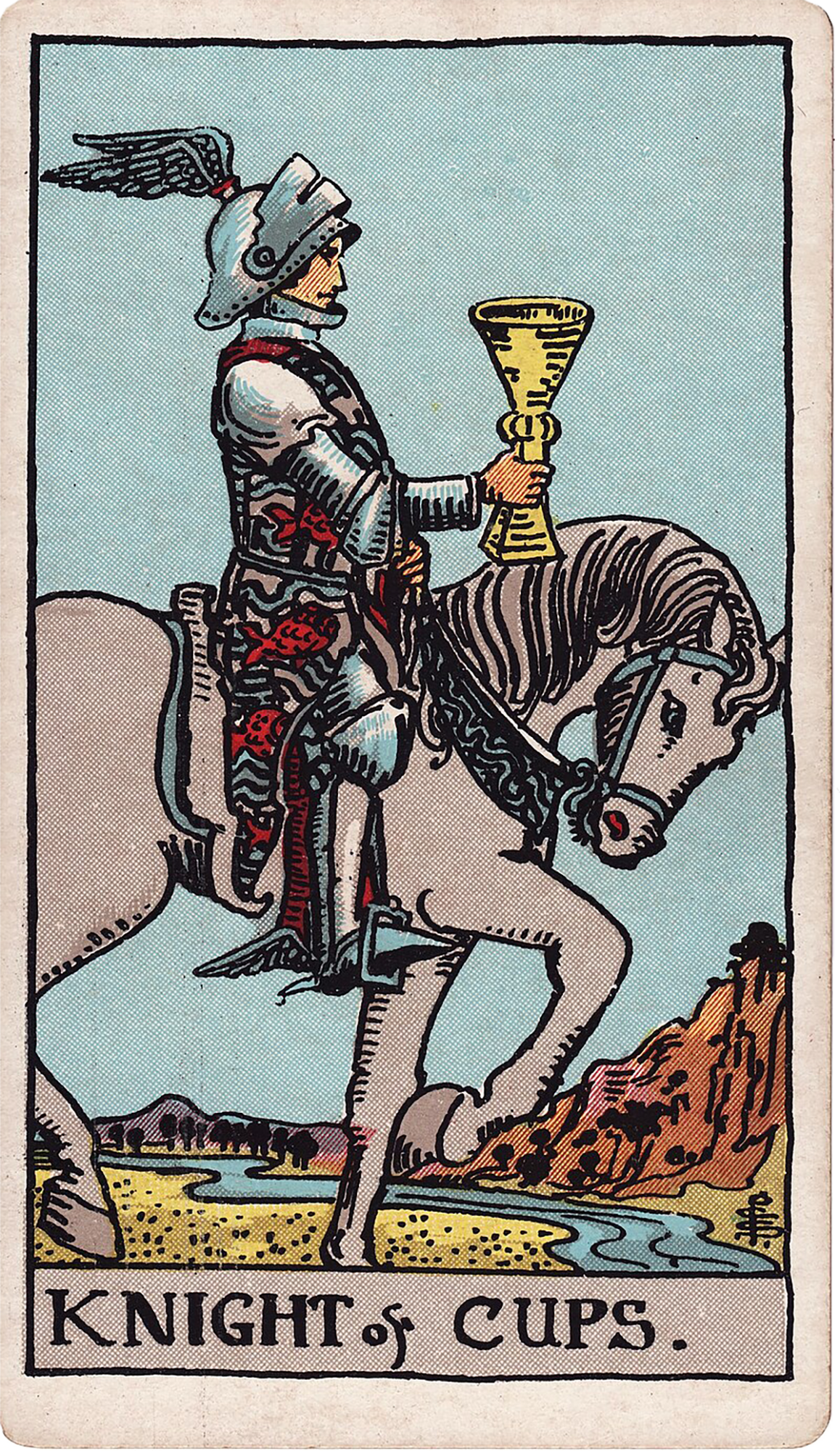 Knight of Cups
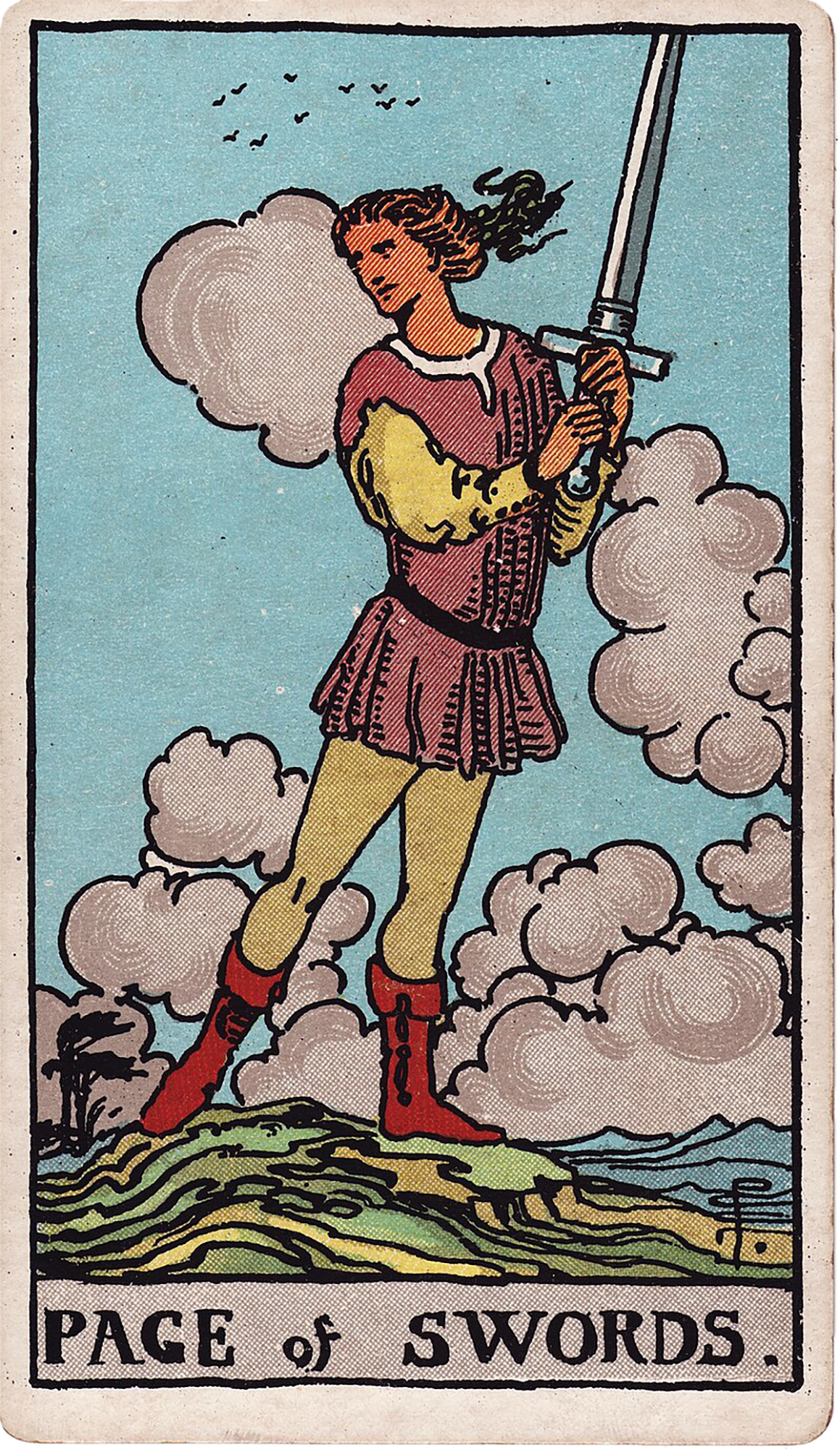 Page of Swords
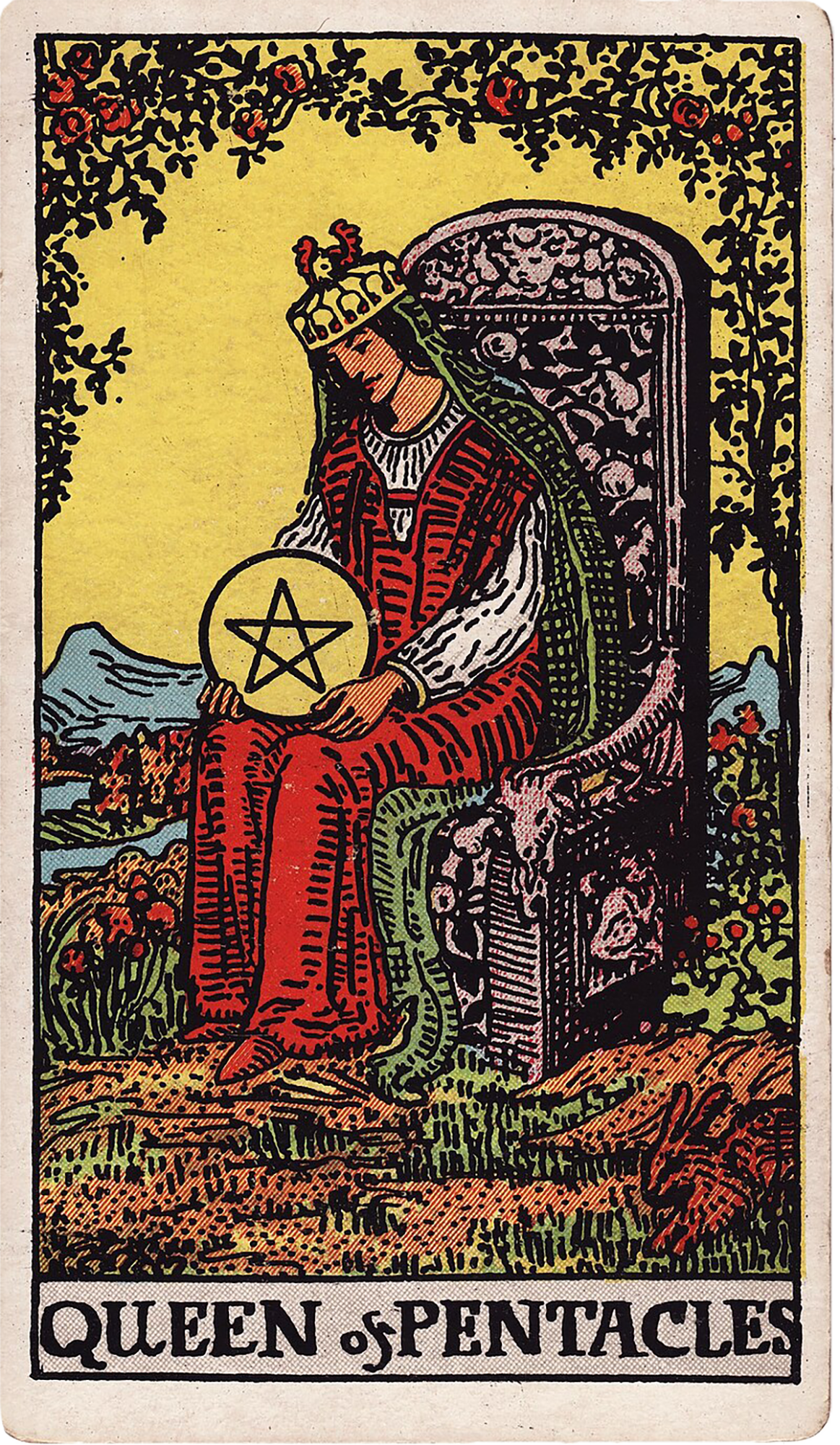 Queen of Pentacles
Introduction
Court cards are one of tarot's most misunderstood and rich resources. They appear in nearly every deck in four ranks (often Page, Knight, Queen, King) and across four suits, functioning as people, roles, processes, or inner states. This article combines history and practical technique, and keeps the teaching anchored to three supplied cards—Knight of Cups, Page of Swords, and Queen of Pentacles—so you can practice visually and interpretively with concrete images rather than abstract labels.
Where Court Cards Began
Court cards developed from late medieval playing cards. Early European decks adapted Mamluk court figures and later created a four‑rank hierarchy (knave/page, knight, queen, king) to reflect social structure. By the Renaissance the cards were used for games, status, and sometimes allegory. When trump sequences and expanded imagery emerged in Italian and French tarot decks, court cards retained their social ranks but started carrying symbolic details—clothing, posture and objectry—that readers later used for interpretation. The Rider‑Waite‑Smith (RWS) tradition, which informs the supplied images, amplified narrative detail: the figures are staged in scenes that suggest action, relationship to their element, and inner attitude. Recognizing that lineage helps: court cards were practical markers of personhood and rank before the modern occult overlay, and their imagery was always intended to suggest behavior and social role.
How Roles Evolved from Social Rank to Psychological Archetype
Originally court cards reflected social classes—youths, mounted warriors, mature rulers—so their meanings were literal and situational. In modern esoteric practice, courts evolved into flexible archetypes or temperaments. This shift involved several moves: from literal person to role (someone playing a part), from external identity to internal process (an approach, not a person), and from fixed gender to nonbinary function in many contemporary decks. In practice, the Knight of Cups can still signal a young or active romantic seeker, but it can equally indicate a mode of inquirying with feeling; the Page of Swords acts as a messenger of ideas or curiosity rather than strictly a boy with a sword; the Queen of Pentacles exemplifies a practical nurturing intelligence rather than a single social status. The supplied cards are excellent examples of this evolution: RWS imagery gives clear physical cues (mounted knight, windblown page, seated queen) while their modern textual definitions invite psychological readings.
Ranks and What They Mean in Reading Practice
Understanding rank is the first interpretive step. Rank indicates how a suit's energy is being expressed. - Page: introductory, curious, learning, messenger. The Page of Swords in the supplied image captures mental curiosity, vigilance, and the impulse to question. Read as a new idea, a student, or a nascent mental stance. Reversed, the supplied card highlights gossip, defensiveness, or scattered attention—a signal that the mental process is stuck or misapplied. - Knight: active pursuit, motion, engagement, sometimes romantic or questing. The Knight of Cups shows a mounted figure carrying a cup with a deliberate, ceremonial bearing. He brings cups energy into motion: pursuing what the heart values. Upright this is graceful pursuit; reversed the supplied text warns of idealization or seduction without substance. - Queen: mature, embodied expression of a suit’s qualities. The Queen of Pentacles in the supplied image holds her pentacle calmly in a cultivated garden with a rabbit at her feet—practical nurture, stewardship, resourcefulness. Upright she is competence applied to everyday life; reversed she signals overwork, anxiety, or controlling care. - King (general theory): authoritative, directional, consummate expression of the suit. Note: the article avoids naming a specific King card image not supplied, but readers should know Kings usually represent leadership or mastery within the suit's domain. When you see a court card, sketch its rank first: is it an invitation to learn, to act, to steward, or to lead?
Suits, Elemental Logic, and RWS Symbolism Anchored to the Supplied Cards
Suit + rank = interpretive shorthand. Use suit element to define the domain and RWS visual cues to define the mode. - Cups = Water = feeling, relationships, intimacy. Knight of Cups: a mounted knight holding a chalice signals emotional pursuit, romance, invitation, or a messenger of feeling. RWS details—ornate horse, flowing banner or floral motifs—point toward aesthetic or ideal qualities, not ruthless action. Upright reading: a present, emotionally intentional pursuit; reversed: moodiness or chasing fantasy. - Swords = Air = thought, communication, conflict. Page of Swords: a young figure with an upright sword, alert posture and windswept clouds. The wind symbolizes thought in motion and the alert stance signals vigilance and questioning. Upright: curiosity, investigation, asking questions; reversed: premature speech, gossip, or scatter. - Pentacles = Earth = material life, work, health, resources. Queen of Pentacles: seated on a throne in a garden, holding a pentacle, with a rabbit nearby (fertility, abundance, timidity). RWS symbolism reinforces grounded stewardship, material competence, and hospitality. Upright: practical nurture and resource management; reversed: neglect of self or excessive control. When you read, note these visible symbols: posture, animals, background, direction of gaze, and objects. The supplied cards illustrate how RWS detail makes court roles narratively specific.
Practical Reading Technique Step by Step
1) Identify rank and suit first. If you see the Page of Swords, think Page + Swords before you think 'a person.' 2) Describe the action in the image. For Knight of Cups, describe the knight’s forward motion and what the cup suggests; for Queen of Pentacles, describe the throne, garden, and rabbit. 3) Place the card in context of the question and surrounding cards. Does a Knight of Cups in a love spread interact with several Cups cards? That amplifies emotional pursuit. 4) Consider role vs person. Ask: is this a person the querent knows, or a role the querent is playing? For example, the Page of Swords might be a coworker asking questions or the querent adopting a curious, probing stance. 5) Use rank as timing or stage. Pages can indicate early stages or messages; Knights indicate action underway. 6) Check reversals as process issues rather than simple opposites. The supplied reversed descriptions are instructive: Knight of Cups reversed points to idealization and stuck fantasy; Page of Swords reversed points to gossip and scattered attention; Queen of Pentacles reversed points to overwork and control. Ask what needs to be simplified or practiced before the healthier expression returns. 7) Look for modifiers: direction of gaze, animals (rabbit in Queen of Pentacles), weather (winds in Page of Swords), and motion (horse in Knight of Cups). These modifiers change nuance—timidity, unrest, purposeful motion, etc. 8) Synthesize: make a sentence that ties rank + suit + image + context. Example: 'Knight of Cups in position of approach to relationship suggests an emotionally intentional offer arriving soon, especially with surrounding Cups.'
Illustrative Examples Using the Supplied Cards
Example A — Relationship question: Knight of Cups upright appears as the other person’s approach card. Read as a romantic, emotionally-focused offer. Note the knight’s posture and cup as evidence of intention rather than emptiness. If reversed, ask: is the person chasing an ideal rather than committing? Example B — Work/ideas: Page of Swords upright in a career reading may indicate a junior colleague bringing questions or a new stream of information. The windswept background shows active thought; reversed, expect gossip or miscommunication. Example C — Home/health: Queen of Pentacles upright as an outcome card suggests stabilization—practical care and routines that sustain the body and household. The rabbit suggests fertility and sensitivity to small life rhythms. Reversed, the same card can warn that caregiving has become self‑erasure or anxiety about resources. Combined read: suppose the spread shows Page of Swords in the past, Knight of Cups in the present, Queen of Pentacles as outcome. Synthesis: a curious investigation (Page of Swords) led to an emotionally sincere offer (Knight of Cups) that, if acted on, will require practical stewardship (Queen of Pentacles). The logic flows from mental curiosity to emotional pursuit to pragmatic care.
Common Mistakes and How to Avoid Them
1) Treating court cards only as literal people. Avoid assigning age and gender without support; prefer role or approach as primary. 2) Ignoring rank. Readers sometimes focus only on suit; rank changes meaning (a Page is different from a Knight). 3) Reading reversals as simple opposites. Use reversal to diagnose stuck process rather than a flip in meaning—see the supplied reversed texts for nuance. 4) Overreading a single image detail. Use multiple cues (rank + suit + posture + context) rather than one striking symbol. 5) Forgetting elemental logic. The Knight of Cups, Page of Swords, and Queen of Pentacles are best interpreted by combining rank and element: pursuit of feeling, curiosity of thought, and stewardship of matter. 6) Mapping court cards too quickly onto querent’s demographics. Instead ask whether the querent or someone else is expressing the card’s energy.
Practice Exercises and Closing Notes
Exercise 1: Pull one court card and write three sentences: (1) rank + suit description, (2) what action the figure is taking, (3) how that would read in a question about work, love, and health. Use Knight of Cups, Page of Swords, and Queen of Pentacles as models. Exercise 2: Lay a three‑card mini‑spread for a decision: past, present, outcome. Notice how rank suggests stage and suit suggests domain. Practice reading reversals as process problems: what needs simplification or rehearsal? Final note: court cards are among tarot’s most adaptable signs. Their history shows a move from social marker to psychological tool. The supplied RWS images—Knight of Cups, Page of Swords, Queen of Pentacles—illustrate how detailed imagery invites narrative, while the modern textual meanings invite practice. Use both: describe first, interpret second.
Practice questions
• When you look at the Knight of Cups image, what single action or intention stands out to you and why?
• How would you distinguish between a court card representing a person versus a role in a particular spread?
• What changes in your reading when the Page of Swords appears reversed compared with upright?
• In a reading where Knight of Cups, Page of Swords, and Queen of Pentacles all appear, how would you weave rank and suit into a single narrative?
• Which visual detail on the Queen of Pentacles (throne, pentacle, rabbit, garden) most shifts your interpretation of a material question?
• Describe one habitual reading mistake you make with court cards and how you will correct it using the steps in this article.
Comments
Sign in to comment.
Continue learning
Interpreting the Dance of Justice and The Devil: Balancing Morality and Temptation in Tarot Readings
The combination of Justice and The Devil in tarot presents a profound exploration of morality, temptation, and personal accountability. This article unpacks how these cards influen...
Advanced Techniques for Combining The Moon and The Star to Enhance Intuition in Tarot Readings
This article explores advanced techniques to combine the symbolism and energy of The Moon and The Star Tarot cards to enhance intuition during Tarot readings. Drawing from traditio...
Unlocking Life Insights with the Celtic Cross Tarot Spread
This article offers a thorough exploration of the Celtic Cross Tarot Spread, focusing on its application within family and practical life contexts. Using a worked example featuring...
Unlocking Hidden Meanings with The Hermit and The Hanged Man for Spiritual Growth
This article offers an in-depth exploration of The Hermit and The Hanged Man Tarot cards focusing on their roles in spiritual growth. It guides readers through beginner and advance...
Unlocking Personal Insight with the Seven Card Horseshoe Spread
The Seven Card Horseshoe Spread is a practical and insightful Tarot layout ideal for exploring personal and family dynamics. This article breaks down each position—Past, Present, H...
Mastering the Court Cards of Wands for Unlocking Personal Drive and Leadership
The Court Cards of Wands represent a dynamic spectrum of personal energy, ambition, and leadership potential within the Minor Arcana. This article offers a comprehensive exploratio...
Tracing the Origins and Evolution of The Fool Card in Tarot History
The Fool card holds a foundational place in tarot tradition, symbolizing beginnings, openness, and the embrace of uncertainty. This article traces its origins from early European d...
Techniques for Reading Court Cards to Unlock Personality Insights
Court cards in Tarot often represent people, personality traits, or energy patterns within a situation. This article offers a structured approach for beginners and advanced readers...
Unlocking Emotional Transformation with Death and The Moon Tarot Combination
This article explores the rich and complex interaction between the Death and The Moon tarot cards within the Rider-Waite-Smith tradition, focusing on their combined potential to un...
Applying The Star Card to Foster Hope and Renewal in Personal Growth
The Star card in Tarot symbolizes hope, authenticity, and the process of steady renewal. In a single-card reading, The Star encourages embracing what is present, cultivating openne...