
Common Questions and Historical Traditions of The Fool Card in Tarot
The Fool card holds a pivotal place in tarot traditions and practice. This article delves into its historical background, symbolic imagery seen in the Rider-Waite-Smith deck, and common questions that arise when interpreting The Fool upright or reversed. Readers will gain insight into how to connect the card’s meaning to family history, personal beginnings, and the balance between naïveté and openness. Practical guidance on reading technique and interpretive logic is provided to deepen understanding.
Cards explored in this article
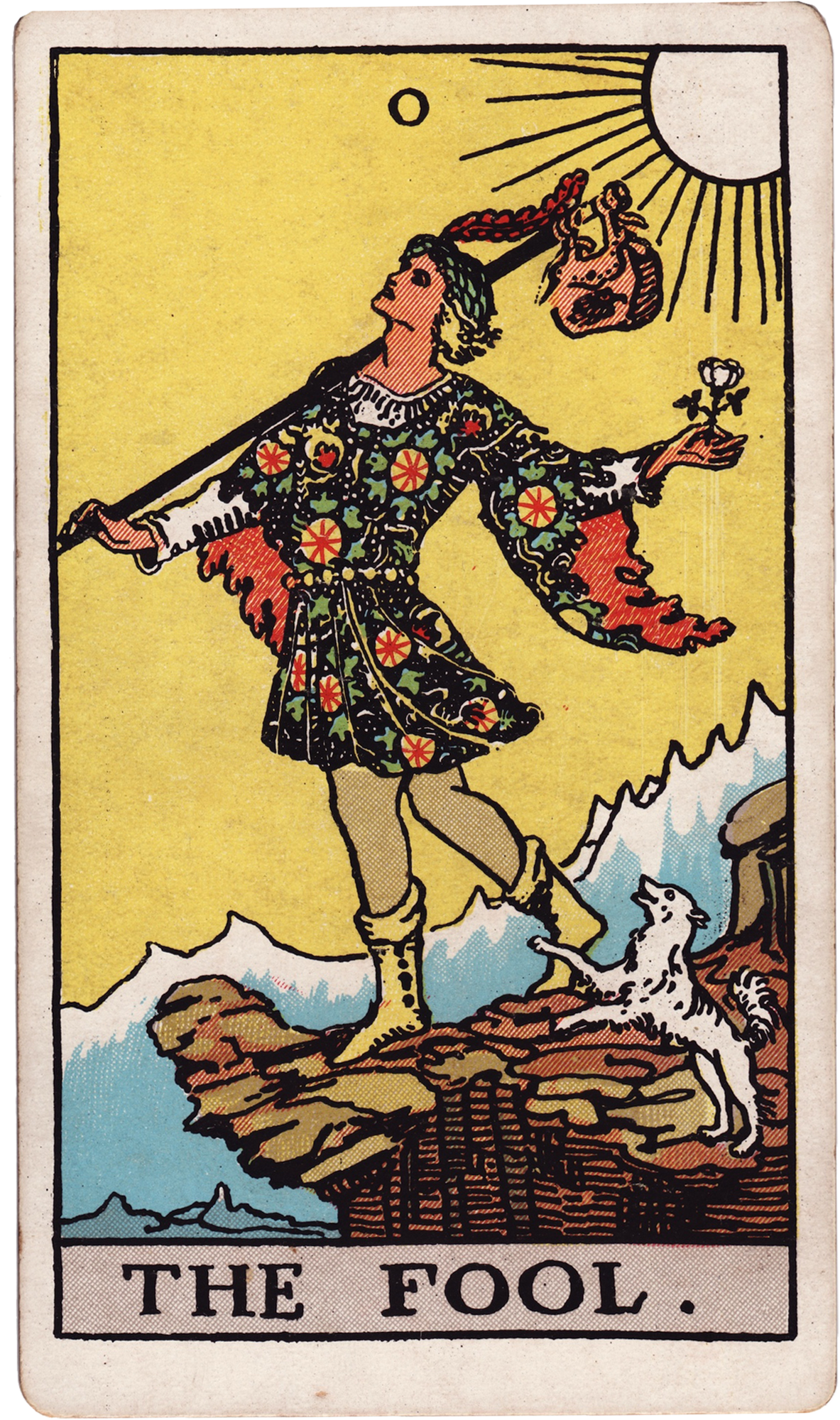 The Fool
Introduction to The Fool Card and Its Historical Roots
The Fool card is traditionally numbered zero (0) in the tarot deck, symbolizing both the beginning and the potential for infinite possibilities. Historically, The Fool represents the archetype of the eternal traveler, a figure who embarks on a journey without predetermined knowledge or destination. In medieval and Renaissance Europe, where tarot decks first emerged, The Fool was often depicted as a vagabond or jester—someone existing on society’s margins yet embodying freedom from convention. This duality of innocence and rebellion is central to understanding The Fool’s role within the Major Arcana. In the Rider-Waite-Smith deck, created in the early 20th century, The Fool’s imagery is rich with symbolism: a young man stepping towards a cliff’s edge, a small dog by his side, a white rose in his hand, and a small knapsack carrying only essentials. Each element speaks to themes of new beginnings, risk, purity, and the subconscious guidance that accompanies fresh starts. This card’s historical tradition includes ideas from mysticism, alchemy, and the tarot’s role as a spiritual map.
Understanding The Fool Upright in the Context of Family and Tradition
Upright, The Fool encourages embracing new chapters with openness and curiosity, emphasizing action taken before every detail is known. Often in family or personal history readings, The Fool signals a moment where inherited patterns or traditions may be challenged or renewed. It invites the querent to engage with their story dynamically, rather than waiting for perfect conditions or full clarity. The white rose held by The Fool reflects purity and innocence, reminding readers to approach family history with honesty rather than judgment. The dog represents loyalty and instinct, suggesting that while the journey can be risky, one is not alone and intuition plays a key role. The cliff’s edge indicates that steps forward require trust — not recklessness but a deliberate willingness to move despite uncertainty. Practically, when The Fool appears upright, a reader can ask: What new chapter is beginning within the family narrative? Where is curiosity overcoming paralysis? How might clearer boundaries or honesty help move this situation forward? These questions help anchor the card’s broad symbolism into the specific context of family tradition and personal growth.
Interpreting The Fool Reversed and Its Psychological Dimensions
When reversed, The Fool’s meaning shifts from constructive openness to cautionary themes like recklessness, avoidance, or internal blocks. This reversal reveals where the upright energy is distorted or difficult to access, rather than signaling an inevitable disaster. In family history contexts, reversed The Fool may highlight resistance to change or a refusal to begin a necessary emotional or relational process. It can point to naivety where wisdom is needed, or to avoidance of consequences tied to inherited patterns. The image’s symbolism—the dog, the cliff, the knapsack—may suggest that instinct is ignored, risks are taken without preparation, or that the journey is stalled by fear. For example, a reversed Fool might indicate a family member caught in a repeating cycle, who sees the need for change but has not yet committed to it. The reversed card asks: Where is the energy becoming blocked or exaggerated? Is this a temporary pause or an ongoing resistance? To discern these nuances, readers should examine neighboring cards and the querent’s context carefully.
Common Questions About The Fool in Tarot Readings
Learners often ask several recurring questions when working with The Fool: 1. Does The Fool always mean a reckless decision? Not necessarily. Upright, it emphasizes beginning with openness rather than irresponsibility. Reversed, it can warn against recklessness but also signal internal hesitation. 2. How do I tell if The Fool relates to the querent’s personal journey or family history? Context is key. If the reading focuses on family patterns or lineage, The Fool may represent a new approach to inherited dynamics. Otherwise, it often highlights personal transformation. 3. What practical steps does The Fool suggest? The card encourages working with what is available now, not waiting for certainty. It invites identifying the next proportionate step toward growth or healing. 4. Can The Fool’s meaning change with its position in a spread? Yes. Placement can clarify if The Fool highlights beginnings, warnings, inner states, or external events. In family history spreads, its position might indicate where openness or naivety is present. 5. How do I avoid common mistakes interpreting The Fool? Avoid assuming it predicts a carefree adventure or disaster. Instead, focus on its nuanced qualities of trust, openness, and the balance between innocence and experience.
Techniques for Reading The Fool Card Effectively
To deepen interpretation of The Fool, readers should employ a few key techniques: - Visual Anchoring: Focus on the individual elements of the card’s imagery as presented in the Rider-Waite-Smith version. Consider the figure’s posture, the dog’s behavior, the cliff, and the knapsack. Ask how each element speaks to the querent’s question. - Contextual Integration: Relate The Fool’s themes to the overall reading context. If the question involves family history, reflect on how new beginnings or naivety might manifest in inherited patterns. - Questioning Approach: Use open questions to explore the card’s energy. For example, “Where is the querent being called to begin despite uncertainty?” or “What patterns might be repeating due to fear of risk?” - Reversal Nuance: When The Fool is reversed, resist reading it as purely negative. Instead, explore the subtle psychological or situational barriers it highlights. - Neighbor Card Relationship: Always interpret The Fool in conversation with surrounding cards to clarify its message and practical guidance.
Applying The Fool to Personal and Family Traditions
The Fool invites readers to consider how family traditions either empower or limit new growth. It asks where inherited beliefs or habits might be challenged with fresh perspective. For instance, in genealogical readings, The Fool can signal a break from old narratives or a newly discovered piece of family history that alters understanding. Practically, the card encourages curiosity about family dynamics rather than judgment. It reminds us that beginnings—whether a new relationship, healing journey, or family story—require courage and trust even in the face of incomplete information. If The Fool appears upright, it may suggest the querent is ready to step forward with openness and experiment with new ways of relating to family history. Reversed, it may warn of hesitation or unconscious repetition of family patterns. In both cases, the card’s lesson emphasizes balance: neither reckless abandonment nor fearful avoidance.
Summary and Best Practices for Working with The Fool
The Fool card embodies the paradox of beginnings: the necessity to act without full certainty balanced by the need for awareness and honesty. Historical traditions show The Fool as a symbol of both risk and spiritual freedom. Its Rider-Waite-Smith imagery offers a vivid guide to these themes through the figure’s youthful stance, the faithful dog, and the symbolic cliff. For learners and readers, the best practice when interpreting The Fool is to anchor the card’s meaning in the querent’s context, particularly when exploring family history and tradition. Ask constructive questions that identify where openness or naivety is present, and where clearer boundaries or honesty might be needed. Avoid reducing The Fool to simplistic extremes of recklessness or naivety. Instead, approach it as a nuanced invitation to engage with life’s transitions thoughtfully. Reflect on the upright card as an encouragement to move forward, and the reversed card as a signal to examine possible distortions or internal blocks to growth. Ultimately, The Fool teaches that every journey begins with a single step, taken in trust and awareness of one’s surroundings and inner guidance.
Practice questions
• What new beginnings in my family or personal history does The Fool card encourage me to explore?
• Where might I be hesitating to start something important due to fear or uncertainty?
• How does the symbolism of the dog, cliff, and white rose influence my understanding of risk and trust?
• In what ways might inherited family patterns be challenged by the openness The Fool represents?
• How can I balance curiosity with caution in my approach to unknown situations?
Comments
Sign in to comment.
Continue learning
Interpreting the Dance of Justice and The Devil: Balancing Morality and Temptation in Tarot Readings
The combination of Justice and The Devil in tarot presents a profound exploration of morality, temptation, and personal accountability. This article unpacks how these cards influen...
Advanced Techniques for Combining The Moon and The Star to Enhance Intuition in Tarot Readings
This article explores advanced techniques to combine the symbolism and energy of The Moon and The Star Tarot cards to enhance intuition during Tarot readings. Drawing from traditio...
Unlocking Life Insights with the Celtic Cross Tarot Spread
This article offers a thorough exploration of the Celtic Cross Tarot Spread, focusing on its application within family and practical life contexts. Using a worked example featuring...
Unlocking Hidden Meanings with The Hermit and The Hanged Man for Spiritual Growth
This article offers an in-depth exploration of The Hermit and The Hanged Man Tarot cards focusing on their roles in spiritual growth. It guides readers through beginner and advance...
Unlocking Personal Insight with the Seven Card Horseshoe Spread
The Seven Card Horseshoe Spread is a practical and insightful Tarot layout ideal for exploring personal and family dynamics. This article breaks down each position—Past, Present, H...
Mastering the Court Cards of Wands for Unlocking Personal Drive and Leadership
The Court Cards of Wands represent a dynamic spectrum of personal energy, ambition, and leadership potential within the Minor Arcana. This article offers a comprehensive exploratio...
Tracing the Origins and Evolution of The Fool Card in Tarot History
The Fool card holds a foundational place in tarot tradition, symbolizing beginnings, openness, and the embrace of uncertainty. This article traces its origins from early European d...
Techniques for Reading Court Cards to Unlock Personality Insights
Court cards in Tarot often represent people, personality traits, or energy patterns within a situation. This article offers a structured approach for beginners and advanced readers...
Unlocking Emotional Transformation with Death and The Moon Tarot Combination
This article explores the rich and complex interaction between the Death and The Moon tarot cards within the Rider-Waite-Smith tradition, focusing on their combined potential to un...
Applying The Star Card to Foster Hope and Renewal in Personal Growth
The Star card in Tarot symbolizes hope, authenticity, and the process of steady renewal. In a single-card reading, The Star encourages embracing what is present, cultivating openne...