
Ladder Method for Growing Tarot Readings and Building Interpretive Confidence
The Ladder Method is a progressive approach that starts with a clear core observation from one card and systematically 'climbs' through interpretive layers—context, obstacle, action, timeline, and synthesis—so readers can grow a concise reading into a reliable, nuanced interpretation. Using The Hermit, Ace of Swords, and 2 of Swords as working examples, this article teaches step-by-step mechanics, shows how to use Rider–Waite–Smith imagery as fine-grained evidence, explains reversal logic, identifies common mistakes, and offers practical exercises for building consistency and confidence.
Cards explored in this article
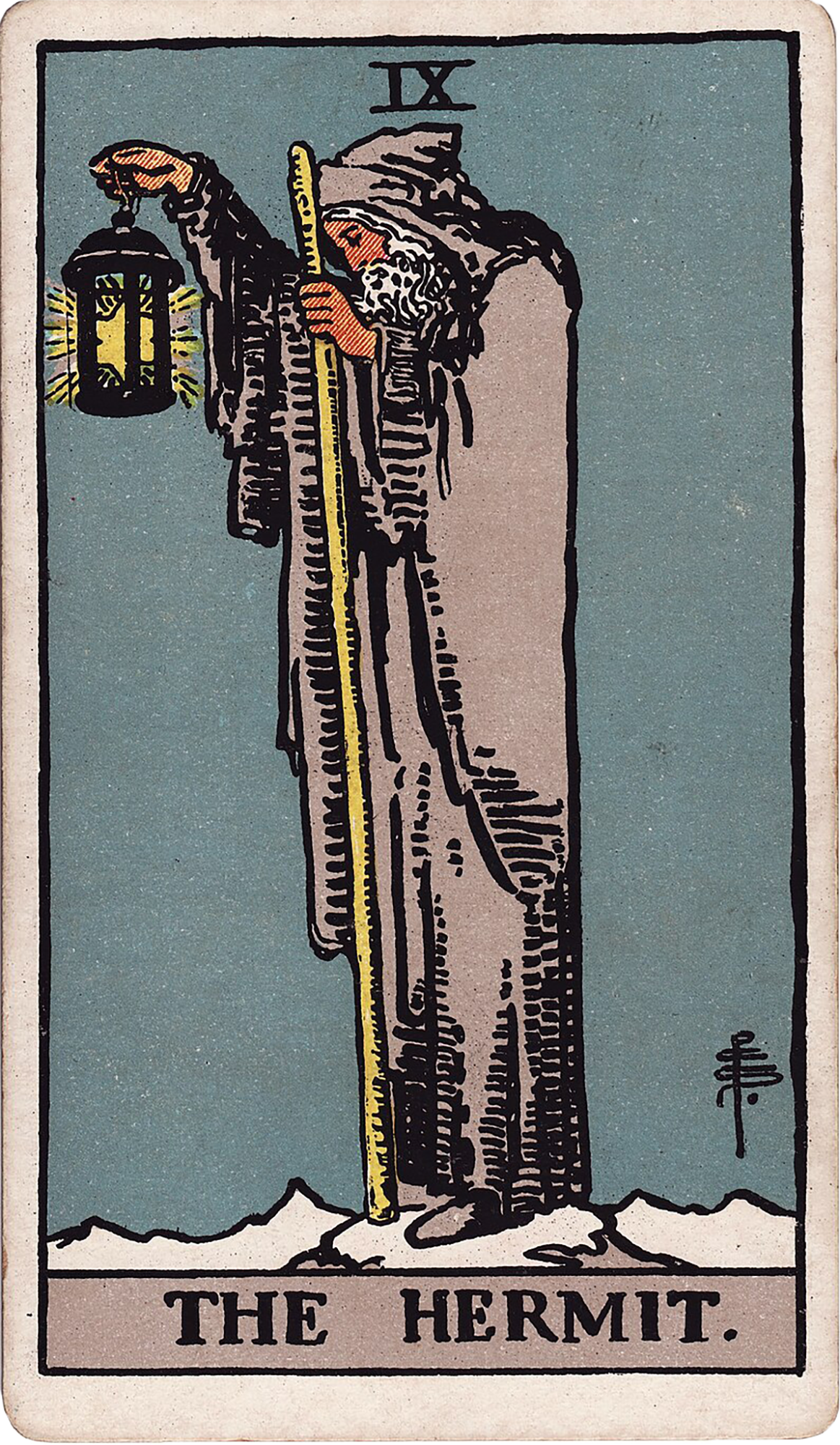 The Hermit
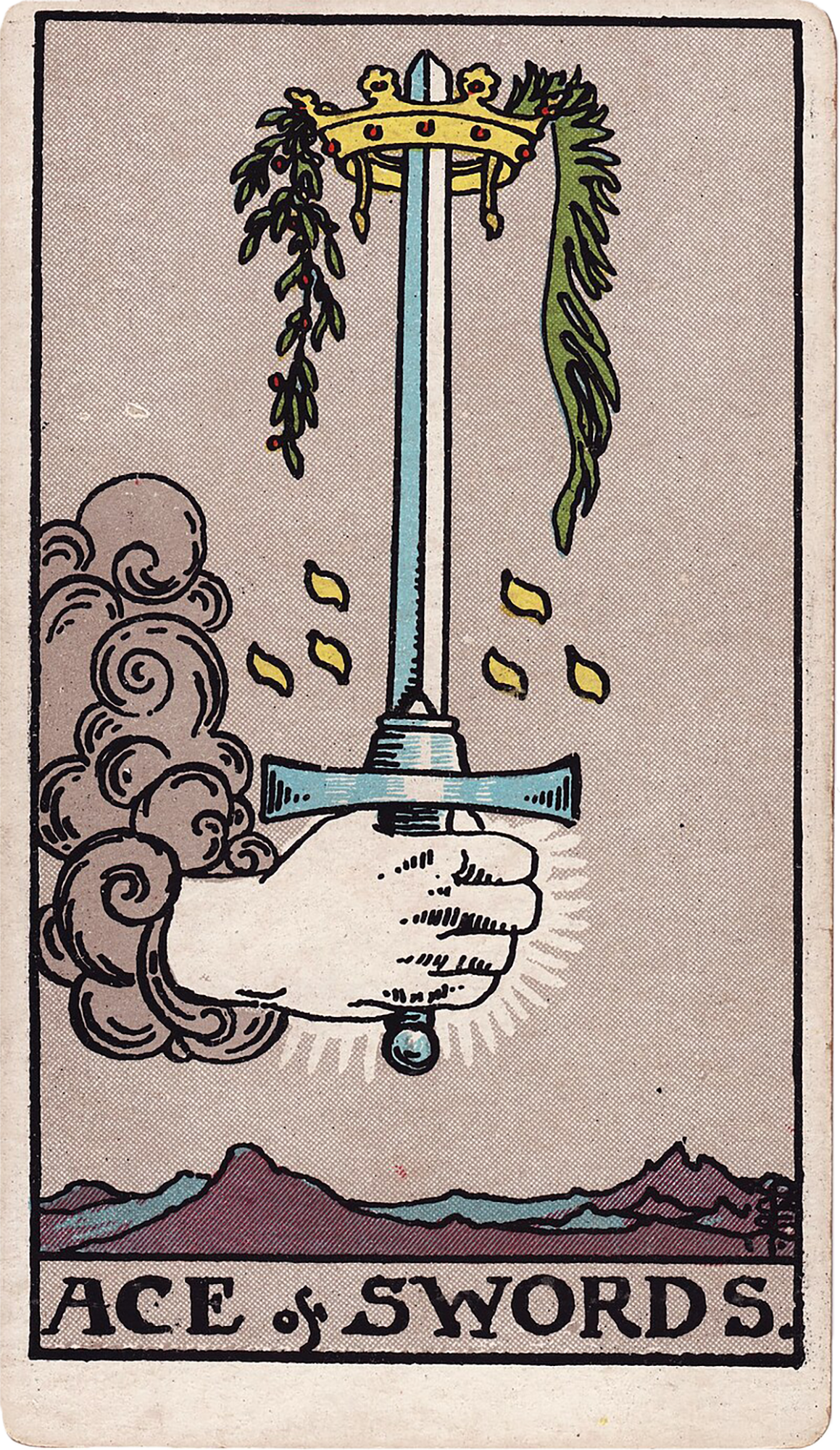 Ace of Swords
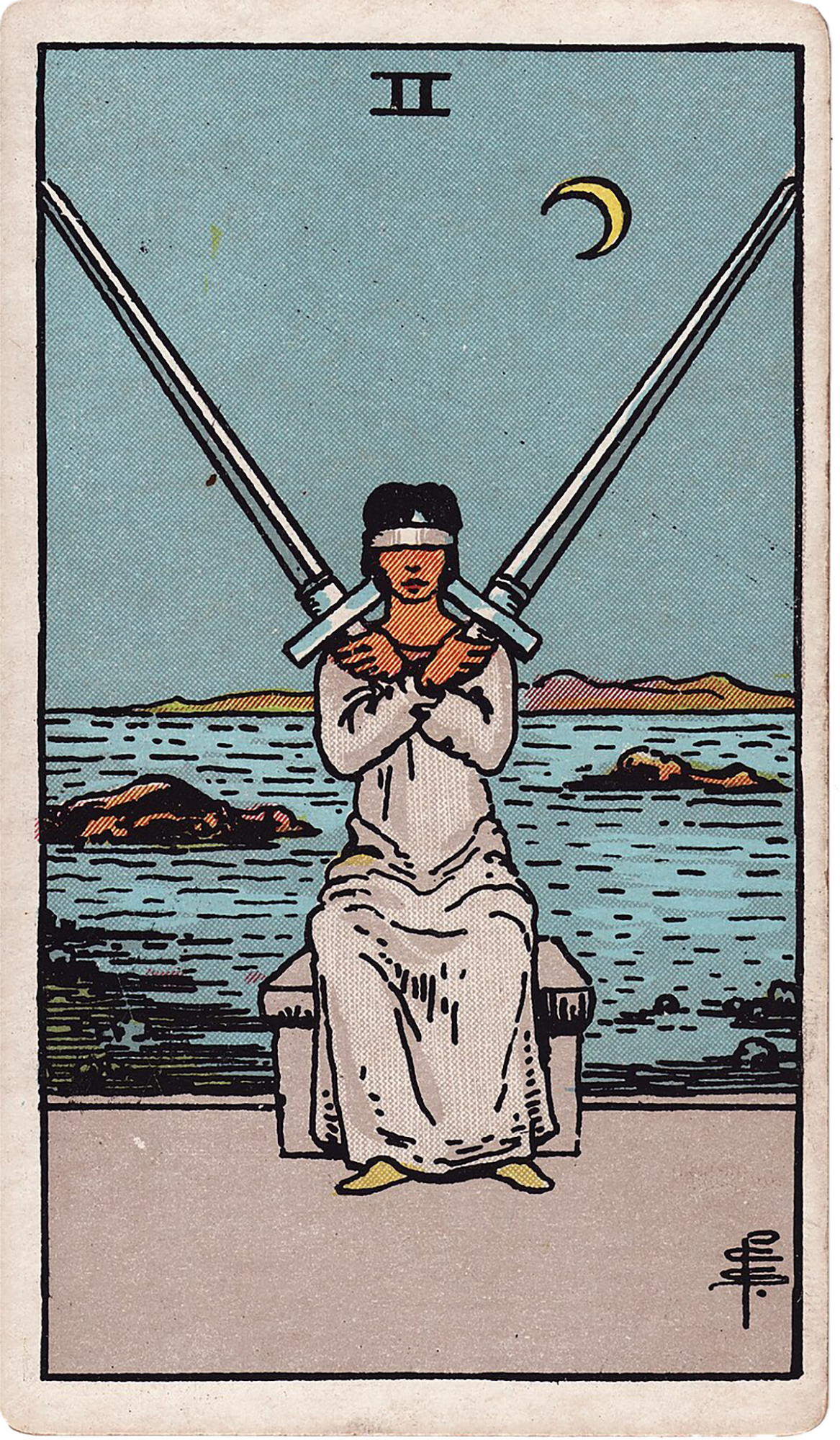 2 of Swords
Introduction
Tarot reading is an interpretive skill that combines pattern recognition, symbolic literacy, and disciplined questioning. The Ladder Method gives you a reproducible process for turning what may begin as a single striking card into a layered, defensible reading. Rather than leaping to a dramatic conclusion, you climb—step by step—adding cards and questions in a controlled order so each addition refines rather than distracts. This builds both clarity for querants and interpretive confidence for readers. Throughout this article we will repeatedly anchor the technique to three supplied cards: The Hermit, Ace of Swords, and 2 of Swords. Using their upright and reversed meanings and their Rider–Waite–Smith imagery (the Hermit with lantern, cloak, and staff; the Ace of Swords as sharp breakthrough and crowned clarity; the 2 of Swords with a blindfolded figure and crossed blades against a coastal backdrop) you will see how the Ladder Method uses visible details to justify interpretive moves and to produce practical advice rather than vague prediction.
What the Ladder Method Is and Why It Works
At its core, the Ladder Method is a sequence: identify a core observation, test it with clarifiers, locate obstacles and resources, propose an action that fits the reading's tone, and synthesize a short, proportional message for the querant. The ladder metaphor reminds you to ascend methodically rather than jump to the top. Why this works for learners: beginners often either (1) give flat one-line meanings without context or (2) over-interpret and invent narratives. The Ladder Method forces you to ground each interpretive jump in card-to-card evidence or in explicit questions. For advanced readers, the Ladder Method is a reliability tool: it documents how you arrived at a conclusion and makes subtle distinctions evident, for example between a Hermit that suggests considered withdrawal versus one that indicates avoidance when reversed. Because the method is iterative, you practice the same disciplined sequence with any card mix. That repetition trains you to notice the exact visual cues on the supplied cards—the Hermit's hood and lantern, the Ace of Swords' clarity and potential harshness, the 2 of Swords' stalemate posture—and to use those cues as literal data rather than metaphoric free association.
Preparing to Use the Ladder Method
Materials and layout: You need a deck (or the supplied card images), a notebook, and a spread area where you place cards in a vertical or staircase layout. Label positions clearly: Core, Clarifier, Obstacle, Resource, Action, Synthesis. Keep your questions ready. Set intention and scope: The Ladder Method is best for focused questions (decision-making, clarity, next steps). It works well for 'What is at the center of this situation?' or 'What is the next appropriate step?' It is not designed for long-term life prophecy—the method aims to produce useful, stage-appropriate guidance. Mindset: Be curious and provisional. Treat each step as a hypothesis test. If a clarifier contradicts your core read, revise the core. This habit prevents confirmation bias and trains you to be responsive to evidence on the table.
The Ladder Step-by-Step: How to Climb
Step 1 — Core observation (Core card): Place the central card at the bottom of your ladder. Describe what you literally see. Avoid immediate story-telling. With The Hermit, identify the lantern (illumination), the staff (support, authority), and the hooded figure (inner focus). Note upright or reversed. Formulate a single concise core statement: e.g., "A stage of needed withdrawal and careful reflection is shaping the issue" (upright Hermit) or "Withdrawal is happening but may be isolating or avoiding engagement" (reversed Hermit). Step 2 — Clarifier (one card): Add a clarifier directly above. Ask: Does this confirm, refine, or contradict the core? If the clarifier is the Ace of Swords upright, you now have evidence that the withdrawal is producing a clear insight or that clarity will be needed as the next step. The Ace of Swords' imagery—an emerging sword, often with a crown or hand—supports ideas of breakthrough or decisive communication. If the Ace appears reversed, your core Hermit insight may be happening but expressed harshly or unclearly; perhaps the solitary work is producing ideas that are sharp but not yet usable. Step 3 — Obstacle: Put a card representing what blocks the core from developing. If the 2 of Swords appears here upright, its blindfold and crossed swords show a stalemate or suspended decision that prevents Hermit-style progress from converting into action. If the 2 of Swords is reversed in this position, it may show avoidance breaking or choices about to be forced—meaning the Hermit's containment may soon be challenged. Step 4 — Resource: Add a card for available support or quality to draw on. This might show internal strengths or external help. Read the imagery: does it show tools, clarity, or companionship? For example, an upright Ace of Swords as resource signals that decisive, honest communication or a new insight is available to help break a stalemate. Step 5 — Action: Ask what proportionate next step fits the situation. Combine the Hermit's call for deliberate choice with whatever your clarifier and obstacle show. If the Hermit upright plus 2 of Swords upright suggests careful reflection blocked by indecision, a suitable action could be "slowly gather missing facts and set a small deadline for choosing"—not a dramatic leap. If the Ace of Swords appears, action can emphasize clear communication: name one thing, test it. Step 6 — Synthesis (one-sentence message): Climb to a short, practical summary: what the querant should know and the first sensible step. Synthesis should be evidence-based and proportional: cite imagery briefly (“the lantern shows… the blindfold shows…”) to anchor your advice in the reading. Repeat loops: If new clarifiers change your core, restart the ladder. The point is iterative refinement, not force-fitting cards into an initial story.
Interpreting Upright and Reversed Cards in the Ladder
Reversals are not automatic negatives; they indicate distortion, blockage, internalization, or excess relative to the upright meaning. Use them diagnostically in the ladder. Apply this to our supplied cards: - The Hermit upright: Use it as a core that legitimizes stepping back, inward focus, or working slowly. It implies available wisdom or the need to create more clarity through solitude and reflection. As a resource, it suggests that slowing down will provide usable insight. - The Hermit reversed: Treat as a flag for isolation that is unhelpful, avoidance disguised as contemplation, or an incomplete integration of insight. If reversed as an obstacle, it may explain why action is stalling: the querant is hiding, avoiding accountability, or stuck in excessive analysis. - Ace of Swords upright: Read as a real, actionable clarity; a decision or conversation that cuts through confusion. In the ladder, the Ace often works as clarifier or resource: it confirms that a decisive intellectual move is the appropriate next step. - Ace of Swords reversed: Read as confusion, harshness, or premature judgment. As a clarifier it may warn that so-called 'clarity' will be used unkindly or incompletely. As an action it suggests refining approach: make the truth gentle, wait for more facts, or practice communicating without weaponizing conclusions. - 2 of Swords upright: Use it to signal stalemate, suspended decision, or the need to remove the blindfold (emotional readiness). In the ladder it commonly appears as obstacle. Its RWS imagery points to a refusal to feel, a balanced stand (swords crossed), and external uncertainty (sea/boats in the background). - 2 of Swords reversed: Read as decision fatigue giving way, denial beginning to break, or a forced choice. In an action position it suggests that the forced movement will require courage and clarity; in a synthesis it signals that the querant should prepare for necessary choice. Always ask: does the reversal describe imbalance (too much of an energy) or simple blockage (too little)? Let neighboring cards answer.
Working Example 1: Hermit Core with Swords Interaction
Situation prompt: A querant asks, "Should I speak up at work about a decision that affects my team?" Step 1 — Core: The Hermit (upright) appears as the core. Read literally: the querant is in a reflective phase, seeking the right perspective and wanting to move deliberately rather than react impulsively. The lantern suggests they can illuminate what matters; the staff suggests steady authority. Step 2 — Clarifier: Ace of Swords (upright). This confirms that a clear, decisive communication would be effective. The imagery indicates a sharp, useful truth is available. Together, Hermit + Ace of Swords suggests the querant’s careful reflection has produced or can produce a clear point worth saying. Step 3 — Obstacle: 2 of Swords (upright). The blindfolded posture shows emotional or informational incompleteness; perhaps the querant is avoiding confrontation because they feel uninformed or fear emotional fallout. This card blocks the step from private insight to public speech. Step 4 — Resource: If the Ace is already the clarifier, consider the Hermit as an internal resource (deliberation). Emphasize proportion: the Ace warns that clarity can cut—speak but choose tone. Step 5 — Action: A proportional action: prepare a concise statement (use the sword energy), rehearse it privately using the Hermit's solitude, then set a time-limited check-in with the team. Do not attempt to resolve everything in a single confrontation; the 2 of Swords warns against rushing. Step 6 — Synthesis: "Your careful reflection has produced a clear point that should be shared—but remove the blindfold: gather one missing fact, shape a focused statement, and schedule a brief conversation instead of a confrontational reveal." Notice how every suggestion ties back to the imagery: lantern (clarify), sword (say it), blindfold (gather missing facts).
Working Example 2: Reversal Dynamics and Ladder Adjustment
Situation prompt: A querant asks, "Why am I stuck in deciding whether to leave a relationship?" Step 1 — Core: The Hermit reversed appears. Immediate literal observation: solitude is taking on the tone of isolation or avoidance. The reversal suggests the person is looking inward but not engaging constructively; they may be using withdrawal to escape the relational work. Step 2 — Clarifier: 2 of Swords reversed. This clarifier suggests that denial or stalemate is breaking; the querant might be on the verge of a forced choice or have decision fatigue. The reversed 2 of Swords pairs with the reversed Hermit: isolation has been a way to avoid the necessary breaking of stalemate. Step 3 — Obstacle: Ace of Swords reversed. The reversal warns that when the querant tries to 'be clear' they either misapply logic, become harsh, or prematurely judge. As an obstacle, the Ace reversed suggests attempts at clarity are currently weaponized or confused. Step 4 — Resource: Look for what can be used constructively—here, the ladder points back to asking whether any small, neutral channel of communication (a mediated conversation or journaling) can temper the Ace of Swords' harshness. Step 5 — Action: A proportionate step: practice naming one concrete observation without blame (short, nonjudgmental sentences) and test it with a trusted friend or counselor before addressing the partner. This uses the Hermit's introspection in a disciplined way and avoids the sharpness of the reversed Ace. Step 6 — Synthesis: "You are moving out of a stalemate, but your attempts at clarity tend to feel too sharp right now. Use small, practiced steps to test truth rather than delivering a final verdict. Work with someone to temper tone and structure your decision-making timeline." This reading shows how two reversals can indicate a process: avoidance is ending, but clarity still needs refinement.
Common Mistakes and How the Ladder Fixes Them
Mistake 1 — Overstating: Readers sometimes present sweeping predictions without proportional evidence. The Ladder's synthesis forces short, stage-appropriate messaging that avoids grand futures. Mistake 2 — Confirmation bias: Picking cards that fit an initial story. The Ladder's clarifier step requires you to accept contradiction. If a clarifier disagrees, you must revise the core rather than shoehorn the card. Mistake 3 — Ignoring image detail: Relying on single-word meanings. The Ladder requires literal visual description—lantern, blindfold, sword—before interpretation, which grounds your reading in what is actually on the card. Mistake 4 — Misusing reversals: Treating every reversed card as 'bad.' The ladder treats reversals as diagnostic: blockage, excess, or internal process. Their placement determines whether they complicate or correct your reading. Mistake 5 — Too many cards without order: Shuffling many cards and improvising connections leads to muddled readings. The Ladder's ordered positions produce testable hypotheses and clearer reasoning. How the Ladder corrects these: it is procedural, evidence-focused, and iterative. Each rung is an explicit test rather than an assumption, and the visual linkage between cards and positions makes your logic transparent both to you and to a querant.
Practice Exercises
Exercise 1 — One-card ladder: Pull a single card and treat it as Core. Without adding clarifiers, write five literal visual observations. Turn each observation into a possible one-sentence message (proportional actions). Compare which messages best match the card's upright/reversed text. Exercise 2 — Two-card ladder: Pull a core and one clarifier. Practice describing how the clarifier confirms, nuances, or contradicts the core. Use Hermit + Ace of Swords combos: list three different ways the Ace could function (resource, consequence, or warning) and supply evidence from imagery for each. Exercise 3 — Full ladder practice: Pull three cards and place them as Core, Clarifier, Obstacle. Build the ladder through Action and Synthesis. Repeat daily for two weeks and log how often your synthesis feels plausible to independent testers (friends or journaling checks). Exercise 4 — Reversal identification: Practice reading reversals by deliberately flipping cards. For each reversed card, write two sentences: one explaining how the upright quality is present but blocked, and one explaining how the reversal could be corrective (awareness emerging). This trains nuance. Exercise 5 — Role-play: With a partner, read a ladder spread and explicitly cite image evidence as you make each interpretive move. The partner should ask, "Where do you see that?" This enforces accountability to the cards.
Integrating the Ladder into Longer Readings and Daily Practice
The Ladder works as a micro-method you can embed inside larger spreads. For example, if a Celtic-type spread gives you a problematic house (e.g., 'internal block'), drop a ladder into that house: treat the card as core and climb. This clarifies the house's role without redoing the entire spread. For daily practice, do a one-rung ladder: pull a Core and a Clarifier to generate a focused daily intention. Use Hermit + Ace of Swords to practice quiet preparation for a conversation, or Hermit + 2 of Swords to watch for emotional stalemates. Keep a reading log. The Ladder's sequential positions make it easy to record: Core → Clarifier → Obstacle → Resource → Action → Synthesis. Over time you'll see patterns in your interpretive decisions and grow confidence because you can point to reproducible steps that led to accurate, useful advice.
Interpretation Logic: From Image to Advice
The Ladder demands that every move be justified by card imagery, suit meaning, or position logic. Use three kinds of evidence: 1) Visual detail: The Hermit's lantern literally means illumination in darkness; cite it when you recommend more information-gathering. The 2 of Swords' blindfold is literal evidence for incomplete perception; cite it when advising to remove biases. The Ace of Swords' sharp blade supports explicit speech or decisive insight. 2) Suit and element: Swords relate to thought, communication, and decisions. When Swords cards appear (Ace and 2 in our set), expect intellectual processes and communication issues to be central. 3) Position function: Clarifier confirms or questions the core; obstacle blocks it; resource supports it. Use these functions to limit interpretations: if the Ace of Swords is an obstacle, read it as a problem with 'clarity' (harshness, confusion) rather than a straightforward solution. By grounding statements in these evidentiary layers you avoid vague or melodramatic readings and produce applicable advice. Always qualify advice as possible outcomes or steps, not certainties—readings are interpretive, not deterministic.
Conclusion and Next Steps
The Ladder Method trains you to move from isolated card impressions to layered, accountable readings. Anchoring examples to The Hermit, Ace of Swords, and 2 of Swords shows how specific imagery and reversal logic drive practical guidance. Use the Ladder daily and in longer spreads, practice evidence-based interpretation, and track your results. Over time, this structure will make your readings more useful for querants and will develop steady interpretive confidence rather than reflexive guesswork.
Practice questions
• When you look at The Hermit image, what three literal details stand out and how could each translate into an action step?
• If the Ace of Swords appears reversed as a clarifier, what specific behavior or communication pattern might that indicate in your querant's life?
• How does the blindfold in the 2 of Swords limit a querant's perspective, and what proportionate experiment could remove it?
• Which rung of the Ladder do you find most difficult to justify with card evidence and why?
• How often do your first impressions change after adding a clarifier? Describe a recent example.
• What practice routine can you commit to for three weeks to develop your Ladder Method fluency?
Comments
Sign in to comment.
Continue learning
Advanced Techniques for Combining The Moon and The Star to Enhance Intuition in Tarot Readings
This article explores advanced techniques to combine the symbolism and energy of The Moon and The Star Tarot cards to enhance intuition during Tarot readings. Drawing from traditio...
Unlocking Hidden Meanings with The Hermit and The Hanged Man for Spiritual Growth
This article offers an in-depth exploration of The Hermit and The Hanged Man Tarot cards focusing on their roles in spiritual growth. It guides readers through beginner and advance...
Techniques for Reading Court Cards to Unlock Personality Insights
Court cards in Tarot often represent people, personality traits, or energy patterns within a situation. This article offers a structured approach for beginners and advanced readers...
Integrating The Fool and The World to Chart the Journey of Tarot Initiation
This article explores the integration of The Fool and The World cards as symbolic bookends in the Tarot journey, emphasizing their complementary lessons for initiates. Drawing on t...
Developing Intuitive Tarot Reading Skills with The High Priestess and The Moon
This article guides tarot learners through developing intuitive reading skills focusing on two powerful cards: The High Priestess and The Moon. Using traditional Rider-Waite-Smith...
Unlocking Advanced Intuition Techniques Using The High Priestess The Moon and The Hermit
This article examines advanced intuition development in tarot reading by focusing on The High Priestess, The Moon, and The Hermit cards. It offers practical techniques for beginner...
Mastering Intuition with The High Priestess The Hermit and The Moon in Tarot Readings
This article delves into mastering intuition through three powerful Tarot cards: The High Priestess, The Hermit, and The Moon. It guides readers from beginner to advanced reading t...
Building Intuition and Analytical Skills with The High Priestess and The Hermit in Tarot Readings
This article explores how The High Priestess and The Hermit, two powerful Major Arcana cards, serve as complementary guides for developing intuition and analytical skills in tarot...
Techniques for Unlocking Personal Ambition Using The Chariot and Seven of Wands
This article provides a comprehensive guide for Tarot readers at all levels to utilize The Chariot and Seven of Wands cards in unlocking personal ambition. Through detailed explana...
Developing Advanced Intuition with The High Priestess The Hermit and The Moon
This article delves into developing advanced intuition for Tarot readers by focusing on three powerful cards: The High Priestess, The Hermit, and The Moon. By exploring their uprig...