
Court Card Timing Readings for Growth Momentum and Next Steps
This article teaches a practical approach to timing and momentum using Minor Arcana court cards. Using the supplied images and meanings for the Knight of Wands, Queen of Cups, King of Swords and Page of Pentacles, you will learn a step-by-step reading method, timing logic, exercises and common mistakes to avoid. Emphasis is on growth stages, how court-card ranks map to development, and how upright vs reversed placements change the timing and next steps.
Cards explored in this article
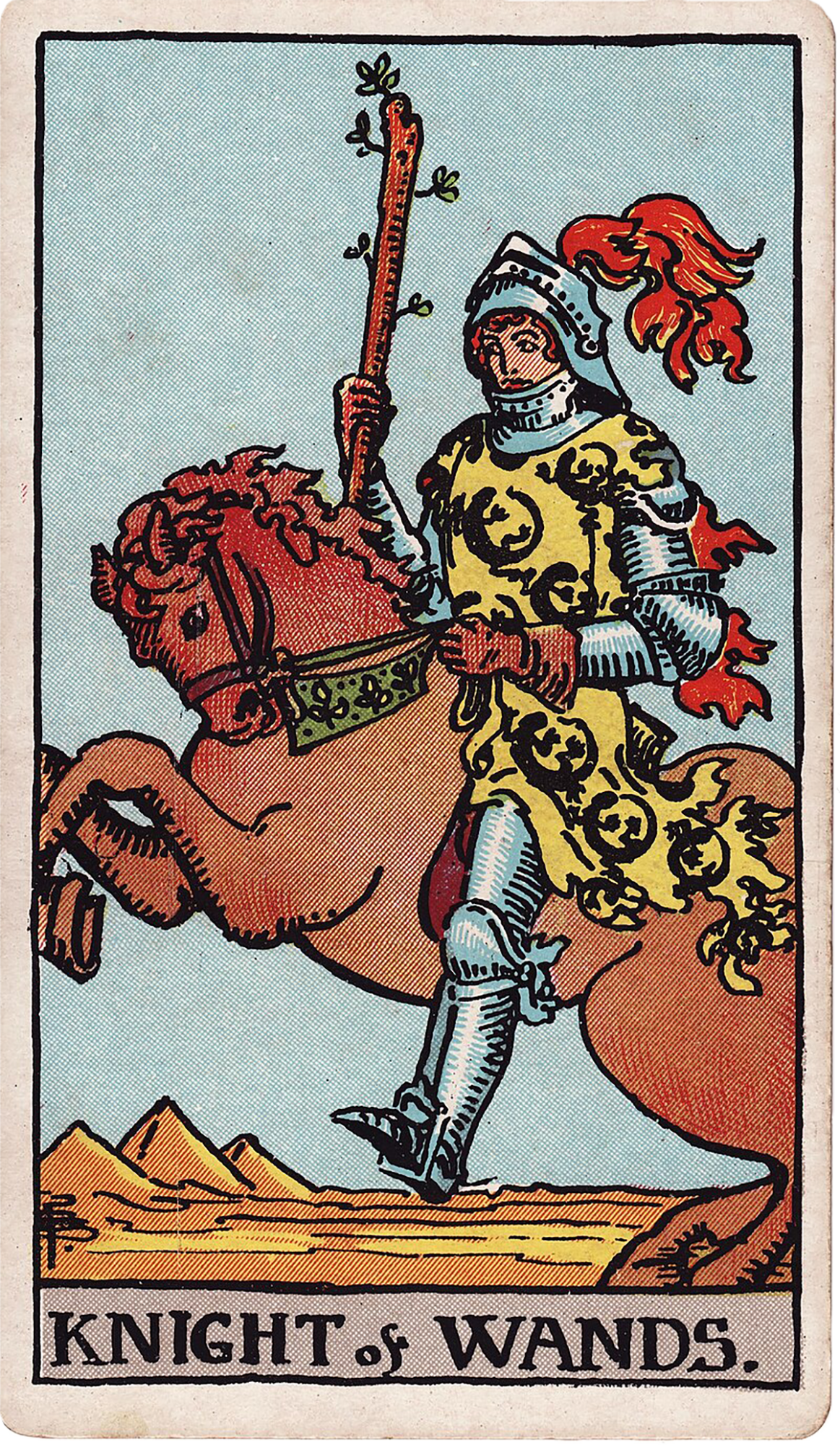 Knight of Wands
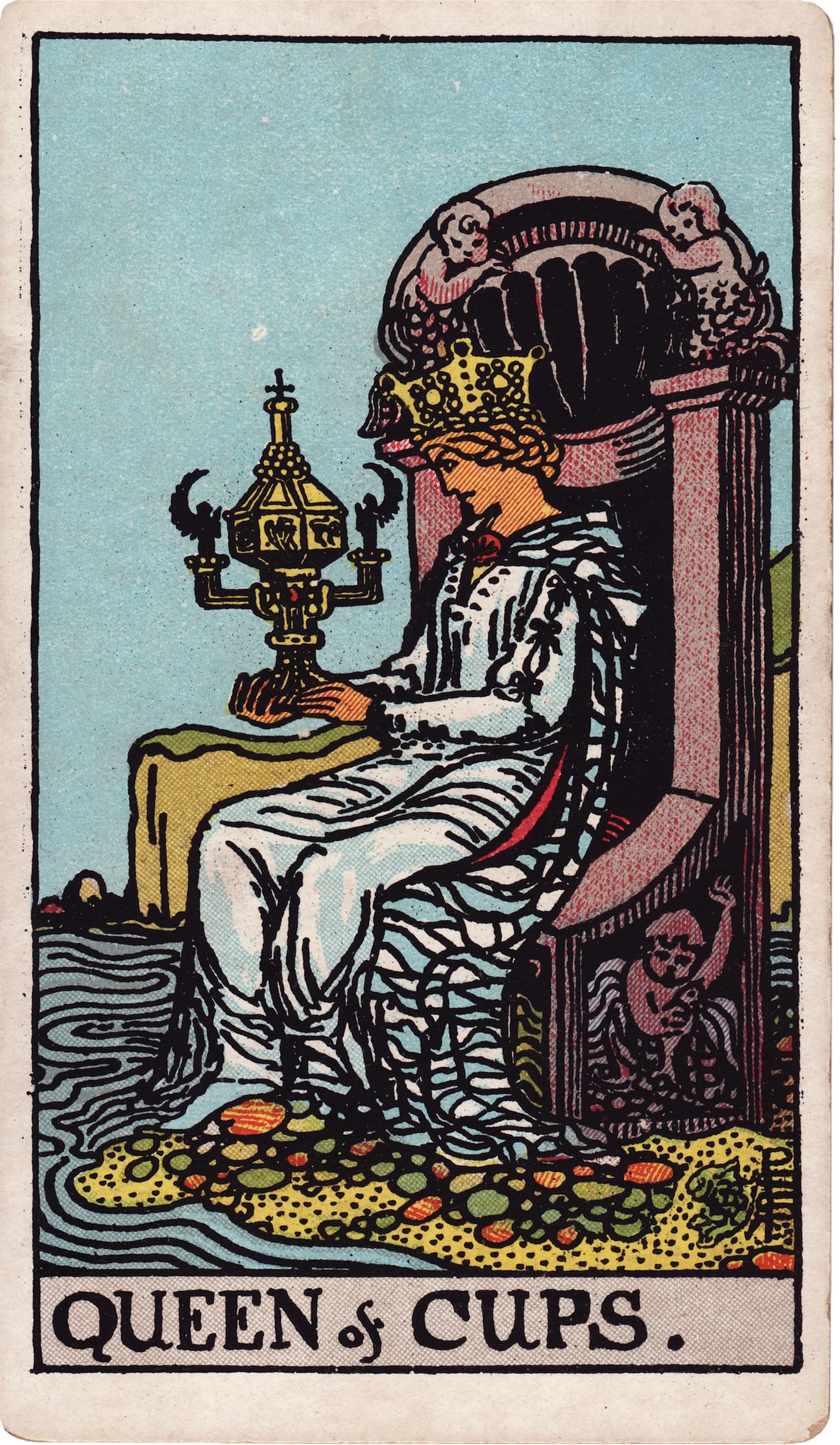 Queen of Cups
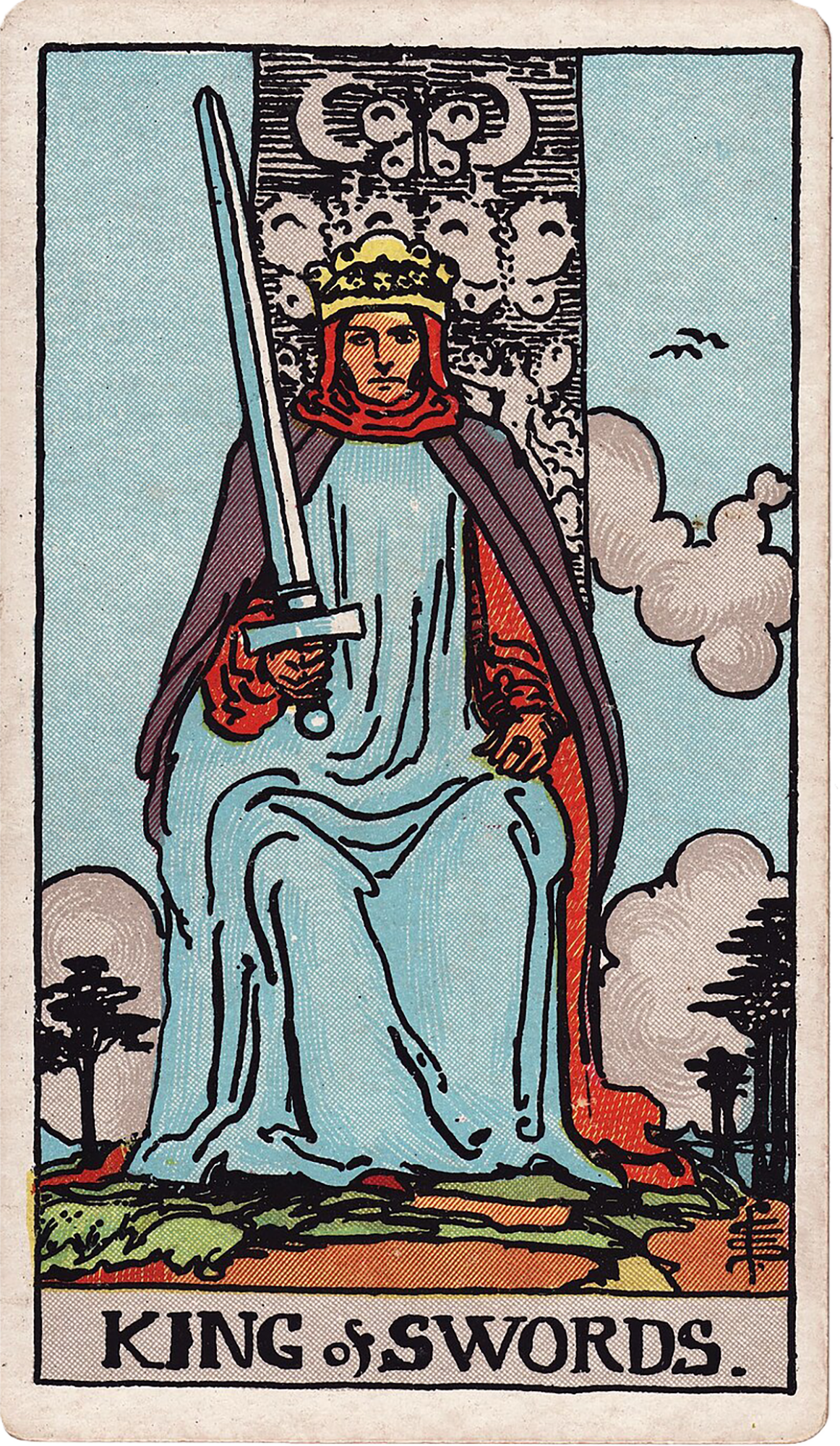 King of Swords
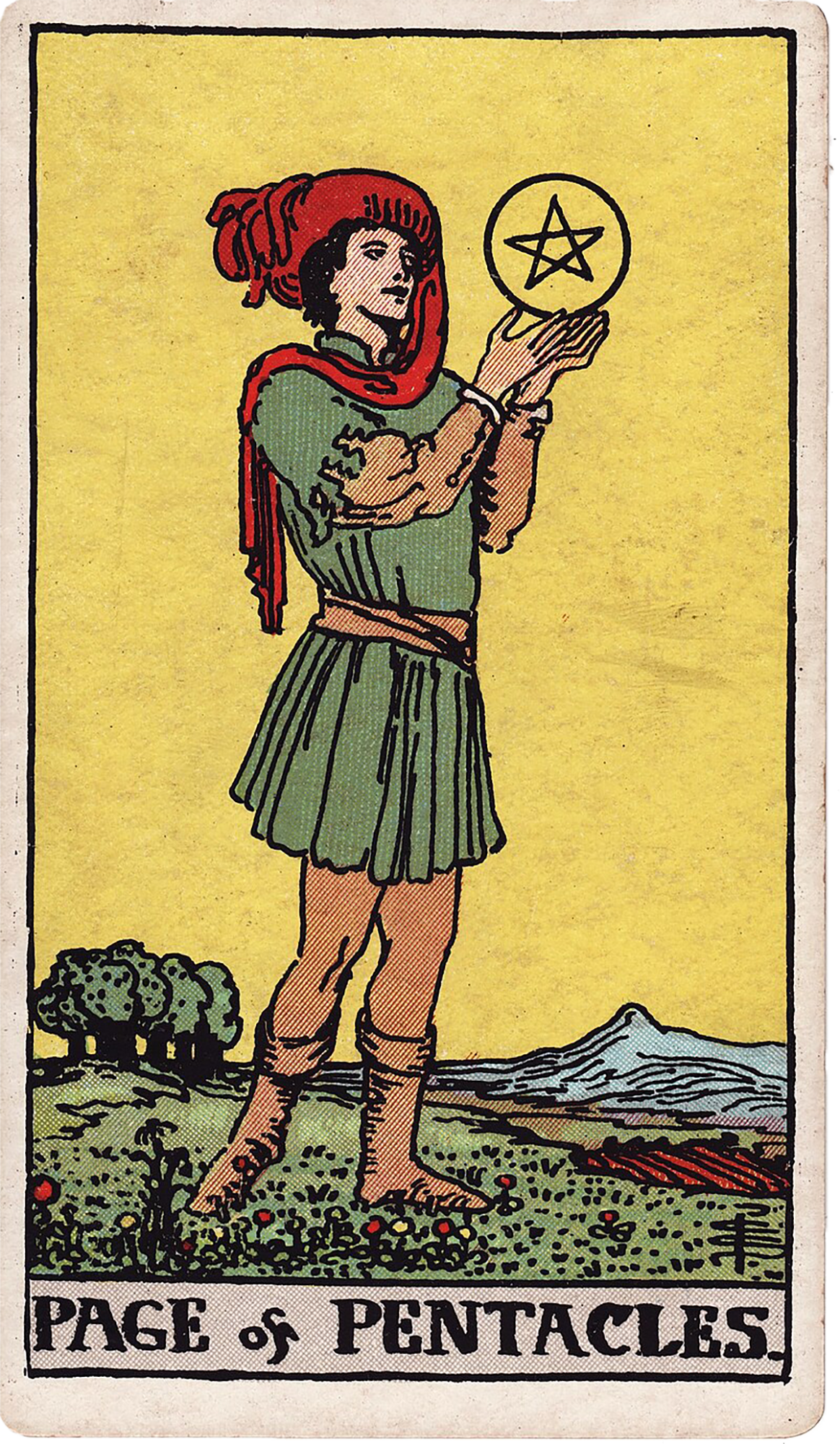 Page of Pentacles
Introduction: Why court cards are uniquely useful for timing and momentum
Court cards are not only people-portraits; they are action-portraits. In family suit work—where each suit represents a domain of life (Wands for energy and identity, Cups for emotion and relationship, Swords for thought and decisions, Pentacles for material craft)—court cards describe how someone engages with that domain and where they are in a developmental cycle. This makes them especially useful for timing readings focused on growth momentum and next steps. Rather than predicting fixed dates, court-card timing shows the shape of a process: beginning, acceleration, pressure, plateau, or maturation. This article uses the exact supplied cards—Knight of Wands, Queen of Cups, King of Swords and Page of Pentacles—and their Rider–Waite–Smith imagery and supplied meanings to build a practical method for reading momentum and timing.
Court Cards and Family-Suit Lessons: how rank and suit combine to describe process
Two axes matter when using court cards for timing: the suit (what kind of energy) and the rank (where in development). The supplied cards illustrate this clearly. - Suit as domain: Page of Pentacles points to work, craft, routine and material beginnings; Knight of Wands points to active ambition, identity and directed energy; Queen of Cups points to emotional maturity, receptivity and intuition; King of Swords points to strategic judgment and principle-driven decision-making. Use the suit to set the scene for what area of life is moving. - Rank as stage: Pages are early-stage learners and seed energy; Knights are mobile, momentum-driven workers; Queens are mature mid-process stewards who hold and process what the suit produces; Kings are peak authority and structural resolution. The supplied Page of Pentacles, Knight of Wands, Queen of Cups and King of Swords cover a helpful developmental arc you can map onto a timeline of projects or personal growth. When you ask timing questions, treat the court-card rank as a marker of stage. For example, a Page appearing in a Pentacles position usually indicates a beginning phase for material projects. A Knight in Wands suggests the middle phase—movement and risk. A Queen in Cups indicates that emotional stability and receptivity can carry things forward, while a King in Swords can mark a stage where decisions and clear structures finalize next steps.
Reading Rider–Waite imagery for timing cues
Rider–Waite symbolism helps you read momentum visually. Anchor your timing sense to the scene. - Knight of Wands: In the Rider–Waite image the knight is mounted, charging forward, wand raised like a standard. The horse appears mid-stride, often shown in motion rather than comfortable pace. Use this visual as a momentum cue: movement is happening and visible; the environment (often yellow or desert) suggests heat, speed, and urgency. For timing, the Knight signals active progression—often the phase in which effort produces noticeable change quickly, provided direction is set. - Queen of Cups: The Queen sits steady on a throne by water, holding a covered cup. Her posture is contemplative and receptive. Water imagery connects to tides, cycles and subtle timing rather than abrupt change. Use this image to mark periods where emotional integration, listening and slow nurturing make progress. Timing here can be measured in rhythms (weeks, cycles, relationship milestones) rather than one-off bursts. - King of Swords: The King’s upright sword and formal posture reflect authority, structure and the moment of decisive judgment. Clouds or sky elements show detachment and clarity. When this figure appears, timing often comes from decisions, plans put into operation, or legal/administrative points in a calendar. Expect events aligned with scheduled deadlines or formal steps. - Page of Pentacles: The young figure studies a single pentacle, standing in fertile fields. The Page’s focus on a material emblem conveys study, planning and the early implementation of routine. Timing associated with the Page is slow, methodical and tied to learning cycles—training periods, the first weeks of a job, the earliest measurable steps in a financial plan. When you read speed and pacing, let the images suggest whether the energy is sudden (Knight), cyclical and tidal (Queen), scheduled and deliberate (King), or gradual and skill-building (Page).
Timing with court cards: principles to guide momentum readings
Use the following principles when turning court-card identities into timing signals. 1) Stage over date: Court cards map to phases more than specific dates. A Page suggests 'initiation and early weeks–months'; a Knight suggests 'active movement over a concentrated window'; a Queen suggests 'stabilizing and integrating across cycles'; a King suggests 'structuring and executing final steps.' 2) Multiply signals: Timing becomes stronger when multiple indicators point in the same direction. If a reading places the Page of Pentacles in a position meaning "when this begins," and surrounding cards show gradual resource-building, the timing leans longer. If the Knight of Wands appears with urgency-signaling minors, expect compressed action. 3) Use suit tempo: Each suit has a tempo. Wands can be fast and impulsive (Knight of Wands amplifies this); Cups are tidal and relational (Queen of Cups slows and deepens); Swords are paced by logic and deadlines (King of Swords moves decisions into scheduled action); Pentacles unfold through seasons and practice (Page of Pentacles implies long-term habit formation). 4) Reversals and internal timing: Reversed court cards often signal internal or stalled timing. The reversed Knight of Wands can show rushed beginnings that fizzle, while reversed Page of Pentacles can mark procrastination delaying the start. Reversed Queen of Cups may indicate emotional overwhelm slowing progress; reversed King of Swords may indicate moral or administrative blocks that postpone decisions. 5) Contextualize with question and spread position: Is the question "When will I have clarity?" or "When will this project begin to earn income?" The spread position (past/present/future, or specific "timing" position) shapes how you map court-card stages onto months or weeks.
A practical reading method: three-step timing for growth momentum
Here is a repeatable method you can use with any layout and specifically with the supplied cards. Step 1 — Identify the domain and stage: Note the suit and rank. If you see Page of Pentacles in a material-money position, mark "initiation for work/skill." Knight of Wands in a career lane marks "active push needed now." Queen of Cups in relationship or healing slots marks "integration phase." King of Swords in contracts or decisions marks "formalization and execution phase." Step 2 — Anchor to visuals and declared meanings: Use the supplied upright/reversed text as a practical checklist. For example, the Knight of Wands upright "high energy; decisive movement; direction matters as much as speed." Ask: is the querent currently showing courage and momentum? If yes, timing will be within the short-term acting window (days to weeks). If the Knight is reversed, ask what needs to be simplified before momentum returns. Step 3 — Calibrate with surrounding evidence: Look for cues that expand or reduce timing windows. Pentacle minors, repeated Pages or Pentacles suits suggest longer timelines. Swords or Kings can indicate scheduled decisions that may align with legal or administrative calendars. Cups or Queens suggest slower integration. Use numerology if you like (court rank order, pip numbers) to refine, but keep the focus on process: growth momentum is either building, peaking, being held, or being closed. For practical readings, put a question such as "When will I see forward movement on X?" and place one court card in a "timing" slot using the three-step method to turn suit and rank into a phase rather than a strict date.
Worked examples using the supplied cards
Example A — Project momentum: Knight of Wands upright in a future slot. Context: Querent asks when a creative initiative will move forward. The Knight of Wands appears upright surrounded by some Pentacles and a single Page of Pentacles. Interpretation: The Knight of Wands upright highlights "decisive movement and high energy"; Rider–Waite motion imagery makes this feel immediate. The surrounding Page of Pentacles signals the project is still in early practical steps. Timing: expect active progression in the short-term window (weeks to a few months), but the Page suggests that the movement will be channelled into building competence—momentum now, structure later. Practical next step: set one bold action this week that also begins a slow routine and track follow-through. Example B — Emotional timing: Queen of Cups reversed in present position. Context: Question about readiness for an intimate conversation. The Queen of Cups reversed appears with no other court cards. Interpretation: The supplied reversal text highlights "emotional overwhelm, absorbing others' moods, withdrawal into fantasy" and suggests the process is currently stuck internally. Rider–Waite imagery (the Queen’s covered cup) flips to show the container leaking or being opaque. Timing: this is a signal to delay decisive relational steps until emotional boundary work is practiced—weeks to months of integration might be needed. Practical next step: small containment practices (journaling, boundary-setting) for the coming weeks and retest. Example C — Decision and formalization: King of Swords upright in outcome. Context: A contract question. King of Swords upright appears near Pentacle minors. Interpretation: The King of Swords upright emphasizes "mature intellectual authority, strategic judgment and decisions based on principle and evidence." Rider–Waite imagery suggests formal action. Timing: the card points to a scheduled, formalizing phase—expect legal/administrative steps to land in a timeframe set by deadlines (often weeks to a quarter). Practical next step: prepare documentation and be ready for a meeting or signature; clarity accelerates timing. Example D — Skill-building start: Page of Pentacles reversed in a ‘start’ position. Context: A student asking when they will make progress learning a trade. Interpretation: The reversal text highlights "procrastination, poor study habits, lack of follow-through." Timing: progress is delayed until habits change—this could be weeks to months depending on accountability. Practical next step: commit to a measurable 30-day routine and use the Page’s symbolism of focused study to anchor timing.
Interpreting reversals and stalled momentum
Reversed court cards rarely mean the opposite; instead they point to where development is misaligned. Use the supplied reversal guidance as troubleshooting cues when timing stalls. - Knight of Wands reversed: Look for recklessness or unfinished ventures. Timing is fractured—bursts of energy that fizzle. Fixes: simplify goals, align direction, and set short accountability windows. Once patterns change, momentum returns and timing compresses. - Queen of Cups reversed: Emotional overwhelm slows growth. Timing becomes tidal and hard to predict until boundaries and receptivity practices return. Work on containment and discernment to normalize pacing. - King of Swords reversed: Bureaucratic or ethical blocks delay decisions. Timing here may stall in formal systems; get clear on evidence and principle, and restructure communication to restore forward movement. - Page of Pentacles reversed: Procrastination stalls initiation. Timing will remain fuzzy until learning practices are regularized. A practical approach to reversal timing: identify the single smallest, testable habit that addresses the reversal (one practice for a week). Re-assess with a short follow-up spread after that period to measure change.
Common mistakes and how to avoid them
1) Treating court cards as fixed people only: Court cards often describe processes. The Queen of Cups can be a role you play in a project as easily as a person. Reframe people-as-process instead of literal-person-only readings. 2) Forcing precise dates: Court cards are phase markers. Avoid saying "three weeks" based solely on a Knight; instead say "short-term active window" and combine with calendar-signifying cards or situational evidence for precision. 3) Ignoring imagery: Rider–Waite details are timing clues. The Knight’s horse in motion, the Queen’s water, the King’s upright sword, the Page’s ploughed field—use these consistently. 4) Over-reliance on rank-order alone: Rank matters but always in conversation with suit and surrounding cards. A Page in Wands is different from a Page in Pentacles; the supplied Page of Pentacles anchors the Pentacles timing language of practice and seasons. 5) Neglecting the client's experience: Momentum readings should align with lived realities. If the querent’s schedule or obligations make a fast Knight outcome impractical, the reading should suggest adapted next steps rather than unrealistic speed.
Putting it into practice: spreads, exercises and journaling prompts
Two simple spreads for timing growth momentum: Spread A — Three-stage process 1) Left card: Starting energy (Page or reversed Page signals readiness to begin) 2) Middle card: Momentum phase (Knight or reversed Knight signals acceleration or reckless movement) 3) Right card: Outcome/Next steps (Queen or King signals integration or formalization) Practice: Place the supplied Page of Pentacles in the left slot, Knight of Wands in the middle, and King of Swords or Queen of Cups in the outcome slot and read the flow. Timebox: use a three-week action window for the Knight phase, a month for Queen integration, a quarter for King formalization—adjust to context. Spread B — One-card timing check Place a single court card in a timing slot and answer: "What stage am I in?" Then ask three yes/no follow-ups: "Is immediate action advised?" "Is emotional/mindset work needed first?" "Is external scheduling involved?" Use the supplied card meanings to answer each. Exercises: For a fortnight pick one practice tied to each card’s strengths: Page of Pentacles — 14 days of focused skill practice; Knight of Wands — a sprint project for one week; Queen of Cups — daily 10-minute boundary journaling; King of Swords — a planning session to draft a decision checklist. Re-check with a mini-spread after the exercise. Journaling prompts: "Where am I showing Page, Knight, Queen or King patterns in this area of life?" "What one small habit would move the reversed energy toward upright expression?"
Conclusion and next steps for learners
Court cards are exceptional timing tools because they combine suit-specific lessons with developmental stages. Using the supplied cards—Knight of Wands, Queen of Cups, King of Swords and Page of Pentacles—you have a grounded vocabulary for short sprints, emotional integration, decisive formalization and slow skill-building. Practice the three-step method: identify domain and stage, anchor to imagery and supplied meanings, then calibrate with surrounding cards and life context. Keep readings developmental, not deterministic: timing is a reflection of process, habit and context. Finally, use the exercises and spreads above to strengthen your practical sense of momentum and to learn how each card’s imagery and Rider–Waite cues feel in live readings.
Practice questions
• Which of the supplied cards (Knight of Wands, Queen of Cups, King of Swords, Page of Pentacles) best describes your current approach to a project, and why?
• When you imagine the Rider–Waite imagery for each supplied card, what timing cues—speed, rhythm, scheduling—stand out to you?
• How would you convert a court-card phase into a testable, timeboxed action (e.g., 7-day sprint for Knight of Wands)?
• What small habit could shift a reversed Page of Pentacles into its upright expression within four weeks?
• How do external calendar constraints (work deadlines, financial cycles) change the timing read from a King of Swords compared with an intuitive Queen of Cups timeline?
• After practicing a short spread, how did the outcome align with lived events? What would you adjust in your timing mapping?
Comments
Sign in to comment.
Continue learning
Navigating Conflict Resolution and Inner Struggles with the Five Card Cross Tarot Spread
This article delves into the Five Card Cross Tarot Spread as a practical tool for navigating conflict resolution and inner struggles, especially within family contexts. Using the s...
Mastering the Court Cards of Wands for Unlocking Personal Drive and Leadership
The Court Cards of Wands represent a dynamic spectrum of personal energy, ambition, and leadership potential within the Minor Arcana. This article offers a comprehensive exploratio...
Unlocking Leadership Styles Through the Court Cards of Wands
The Wands court cards—Page, Knight, Queen, and King—offer a rich spectrum of leadership styles rooted in the fiery energy of motivation, creativity, and initiative. This article de...
Understanding the Personalities and Roles of Knight Queen and King of Swords in Tarot
This article delves into the unique characteristics and roles of the Knight, Queen, and King of Swords within the Tarot Minor Arcana, focusing on the family suit and court card les...
Unlocking the Energies of the King Queen and Knight of Cups for Emotional Intelligence
This article delves into the King, Queen, and Knight of Cups from the Minor Arcana's family Suit and Court Cards, emphasizing how these archetypes embody stages and expressions of...
Unlocking Personality Traits Through the Court Cards of Pentacles
This article delves into the personality traits and life lessons embodied by the court cards of Pentacles: Page, Knight, Queen, and King. Grounded in the practical symbolism of the...
Unlocking the Leadership Styles of the King Queen and Knight of Pentacles
This article delves deep into the leadership styles embodied by the King, Queen, and Knight of Pentacles within the Minor Arcana, focusing on the family Suit of Pentacles and its C...
Unlocking the Personality Traits and Roles of the Knight Queen and King of Pentacles in Tarot
This article offers an in-depth exploration of the Knight, Queen, and King of Pentacles cards in the Minor Arcana, focusing on their personality traits, roles, and lessons within t...
Understanding the Court Cards of Pentacles for Practical Wisdom and Grounded Ambition
The Court Cards of Pentacles—Page, Knight, Queen, and King—offer a rich framework for understanding practical wisdom, grounded ambition, and stewardship of material resources. Anch...
Unlocking Personality and Leadership Qualities with the King Queen and Knight of Pentacles
This article delves into the King, Queen, and Knight of Pentacles court cards within the Minor Arcana, focusing on their symbolism of personality traits and leadership within the f...