
Exploring The Devil Card in Overcoming Inner Blocks and Embracing Personal Freedom
The Devil card in tarot embodies complex themes of attachment, desire, fear, and bondage. This article examines how The Devil’s upright and reversed positions provide deep insights into different life areas such as love, career, and spirituality. By closely analyzing the card’s vivid Rider-Waite-Smith symbolism, readers learn to recognize unhealthy patterns, develop clearer boundaries, and embrace honest desires. The article also addresses common interpretive challenges and offers a practical step-by-step method for integrating The Devil’s lessons into personal growth and decision-making. Reflective questions and context-specific examples help learners use this evocative card as a tool for overcoming inner blocks and moving toward authentic personal freedom.
Cards explored in this article
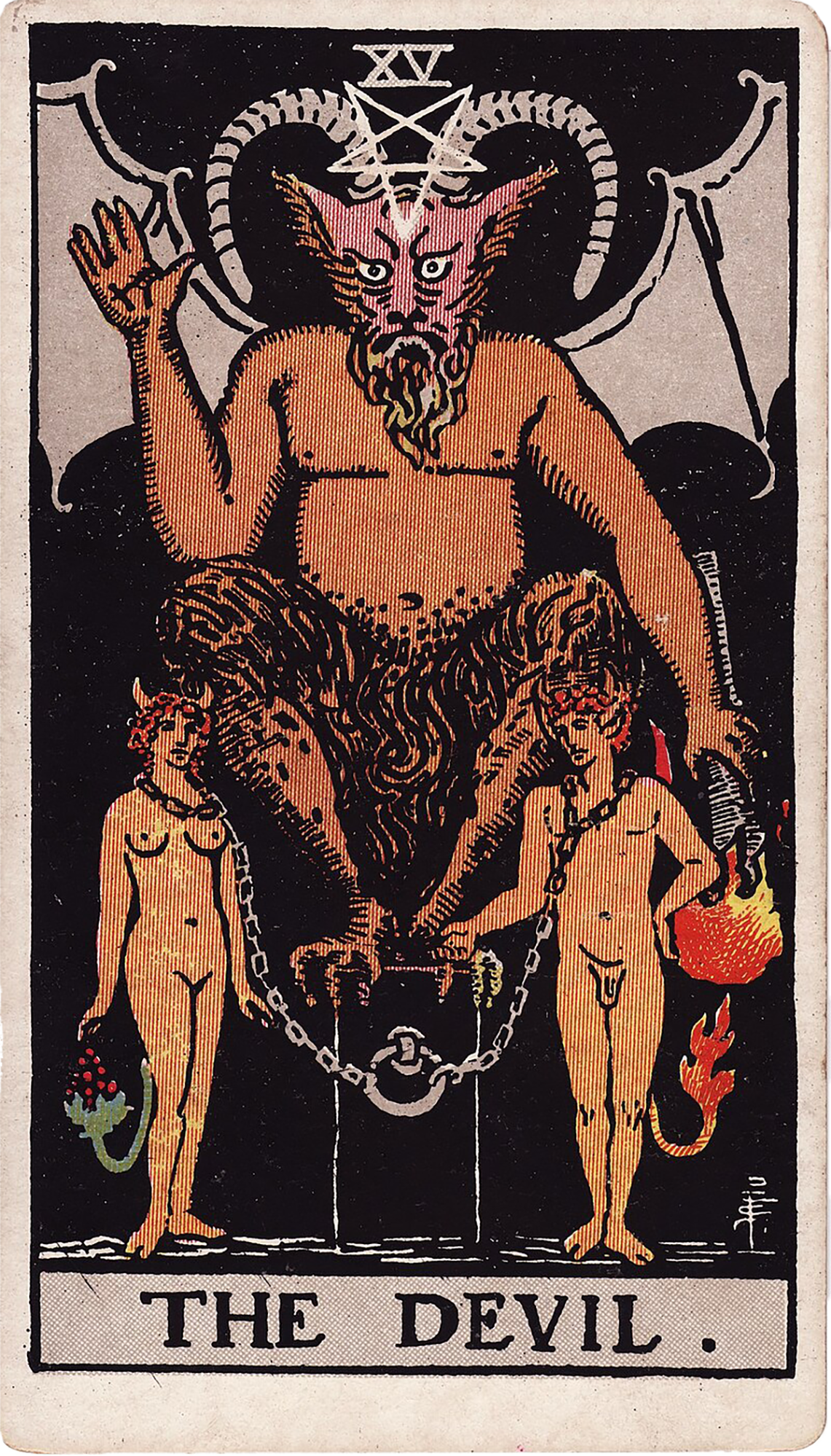 The Devil
Understanding The Devil Card Symbolism and Core Themes
The Devil card, traditionally numbered XV in the Rider-Waite-Smith deck, visually presents a horned, demonic figure perched on a pedestal, holding a reversed torch and flanked by two naked, chained figures. These figures symbolize the bondage of unhealthy attachments, whether emotional, material, or psychological. The chains are loose, indicating that the bondage is self-imposed or maintained by consent rather than external force. The card’s dark backdrop and the Devil’s unsettling grin evoke fear, temptation, and the allure of gratification that disguises entrapment. Upright, The Devil invites recognition of these attachments and desires without judgment, encouraging honesty about what binds us. Reversed, it signals a turning inward, denial, or beginning stages of breaking free, though not always without resistance or imbalance. The torch’s downward flame, the goat-headed Devil, and the upside-down pentagram further emphasize the inversion or distortion of natural order, warning against being ruled by base impulses or fear.
Technique for Reading The Devil Card in Single-Card Drawings
When interpreting The Devil as a single-card draw, the key technique is to engage deeply with its symbolism combined with the querent’s current situation. Begin by noting the card’s orientation—upright or reversed—as it sets the tone for the message. Next, consider the card’s central themes: bondage, attachment, desire, and fear. Ask questions such as: What unhealthy attachments are present? Where is honesty about desires lacking? What boundaries need clarity? What fears are masquerading as security? Avoid deterministic interpretations; instead, treat the card as an invitation to conscious awareness and intentional choice. Look at body language in the imagery—the chained figures’ posture suggests complacency or resignation, signaling where empowerment is possible. The torch in the Devil’s hand can be seen as a symbol for illumination: even in darkness, there is the possibility of insight. This step-by-step reflective technique enhances nuanced understanding rather than surface-level fear.
The Devil in Love Contexts The Devil Upright
When The Devil appears upright in a love reading, it points to relationships or emotional patterns marked by unhealthy attachments, codependency, or fear disguised as passion. The card asks the querent to honestly name what desires or fears maintain the connection—whether that be jealousy, control, or a need for validation. The imagery of the chained couple suggests that while bonds may feel restrictive, freedom is possible through conscious boundary-setting rather than avoidance. It encourages examining where lust or gratification have overshadowed deeper emotional honesty. The Devil upright can also highlight the allure of a relationship that may not be healthy but feels intoxicating. Practically, this card invites questions: Where am I willingly chained? What boundaries do I need to clarify? Where is my desire honest or distorted?
The Devil in Love Contexts The Devil Reversed
Reversed in love, The Devil often reflects a beginning awareness of a toxic pattern and the desire to break free, though this process may be fraught with denial or shame. The querent may be avoiding acknowledging certain desires or feels conflicted about freedom without fully understanding what habits need changing. The reversal signals an internal psychological process: the chains begin to feel loose, but the path to liberation remains uncertain. This stage requires patience and self-reflection. It may also indicate that external factors have shifted, allowing for greater independence or recovery from codependency. Readers should look for surrounding cards to confirm whether this reversal represents progress or resistance.
The Devil in Career Contexts Upright and Reversed
In career readings, The Devil upright often highlights feeling trapped in limiting work environments driven by fear, unhealthy ambition, or gratification that compromises values. The card’s imagery suggests chains of materialism or toxic workplace dynamics. It encourages asking where clearer boundaries or more deliberate choices could liberate professional life from coercion or burnout. The Devil calls to face these attachments directly rather than ignoring dissatisfaction. Reversed, the card signals emerging awareness of these patterns or attempts to break free from anxiety-driven career decisions. However, it can also point to denial about the true source of dissatisfaction or an impatience to escape without addressing root causes. Recognizing this psychological complexity helps avoid rash career moves and instead promotes sustainable transformation.
Financial Implications of The Devil Upright and Reversed
Financially, The Devil upright warns of entanglement in consumerism, debt, or compulsive spending driven by fear or desire for status. The chained figures remind readers that financial bondage is often self-imposed through unconscious habits or societal pressures. The card asks the querent to confront where money is used as a form of false security or gratification and where honest budgeting and boundaries are needed. The Devil reversed may indicate the initial stages of financial recovery or denial about financial patterns. It encourages reflection on whether freedom is declared prematurely without a true plan to change habits. The card’s lesson in this context is to balance desire and responsibility with clear-eyed honesty.
Advice Channelled Through The Devil Card
As advice, The Devil urges direct, honest engagement with what binds or controls you internally and externally. It does not promise easy liberation but insists on naming desires and fears precisely. The torch held downwards symbolizes the potential to illuminate dark corners of the psyche. The card encourages setting clearer boundaries, making deliberate choices, and resisting avoidance. Practically, this may mean facing addictions, toxic relationships, or limiting beliefs head-on rather than waiting for external circumstances to change. The Devil’s lesson is empowerment through self-awareness and conscious action, not through denial or escapism.
The Devil as a Challenge Card
When The Devil appears as a challenge, it suggests confronting inner blocks such as fear, shame, denial, or unhealthy attachments that hinder growth. The challenge is to recognize where gratification or fear masquerades as freedom and to accept responsibility for patterns that keep repeating. The chained figures’ complacency warns against self-deception. Overcoming this challenge requires courage to set boundaries and to accept discomfort in the process of reclaiming agency. The card warns against quick fixes or blaming external forces, instead inviting a deeper psychological inquiry.
Person Representation in The Devil Card
In person readings, The Devil may represent someone who embodies temptation, control, or intense desire but also bondage or self-destructive patterns. This can be a person who exerts magnetic but potentially unhealthy influence, or someone struggling with their own attachments and fears. The horned figure’s dominating presence can symbolize charisma mixed with manipulation or denial. Alternatively, it may indicate a querent’s shadow aspect, the part of themselves they may resist acknowledging. The key is to differentiate between external influence and internal projection by carefully considering context and surrounding cards.
Outcome and Spiritual Reflection with The Devil
As an outcome card, The Devil suggests that unless attachments and fears are consciously addressed, bondage will persist. However, the card also offers hope: the chains are loose, meaning freedom is possible through self-awareness and deliberate choice. It reminds us that liberation is an ongoing process rather than an instantaneous event. Spiritually, The Devil reflects confronting the shadow self—the parts we deny or fear—and integrating those aspects without judgment. This confrontation is essential for true personal freedom. The card encourages seekers to embrace honesty about desire and fear, using these insights to break repetitive cycles and move toward authentic empowerment.
Common Mistakes in Interpreting The Devil Card
A frequent mistake is interpreting The Devil as a purely negative omen predicting external evil or disaster. Instead, the card’s message is about internal states—attachment, denial, and bondage—that can be transformed. Another error is ignoring the difference between upright and reversed positions or assuming reversal means freedom without work. Additionally, readers may overlook the importance of context and accompanying cards, leading to overly simplistic or deterministic readings. Focusing too much on fear rather than empowerment misses the nuanced invitation to self-awareness. Lastly, failing to connect the card’s imagery and symbolism to the querent’s situation reduces interpretive depth.
Practical Method for Applying The Devil’s Lessons in Readings
To apply The Devil’s lessons practically in readings, start by clarifying the card’s orientation and core themes. Invite the querent to identify any current attachments or fears that may feel like bondage. Use the card’s imagery—the chains, the torch, the figures—to anchor this exploration. Ask where clearer boundaries or more honest naming of desires could help. Encourage reflection on patterns that keep repeating and whether there is readiness to confront these consciously. When reversed, explore internal resistance or denial and the gradual nature of change. Emphasize that the card does not dictate fate but offers a mirror to increase agency. Follow-up questions about next actionable steps or boundary-setting can make the reading empowering and forward-looking.
Practice questions
• What unhealthy attachments or fears might I be overlooking in my current situation?
• Where do I feel chained by my own desires or habits, and how can I begin to loosen those bonds?
• In what ways might I be denying or avoiding acknowledging parts of myself that The Devil card reveals?
• How can I set clearer boundaries that promote personal freedom rather than restriction?
• What steps can I take to bring more honesty and deliberate choice into areas where The Devil's energy appears?
Comments
Sign in to comment.
Continue learning
Interpreting the Dance of Justice and The Devil: Balancing Morality and Temptation in Tarot Readings
The combination of Justice and The Devil in tarot presents a profound exploration of morality, temptation, and personal accountability. This article unpacks how these cards influen...
Understanding The Devil Card in Overcoming Addictions and Finding Personal Freedom
The Devil card, often misunderstood as purely negative, offers profound insights into addiction, bondage, and personal empowerment when approached with awareness. This article unpa...
Using the Five Card Cross Spread to Navigate Ethical Dilemmas with Confidence
The Five Card Cross spread is a practical and versatile tool for exploring complex ethical dilemmas and making confident decisions. This article guides learners through each positi...
Mastering Dual Interpretations with The Hanged Man and The Devil in Tarot Readings
This article guides tarot learners through mastering the dual interpretations of The Hanged Man and The Devil cards. Using traditional Rider-Waite-Smith symbolism and supplied card...
Unlocking the Dynamics of The Devil and The Tower for Facing Life's Challenges
This article delves into the rich and complex relationship between The Devil and The Tower tarot cards as a powerful combination for navigating significant life challenges. By grou...
Understanding the Devil Card in Overcoming Personal Shadows and Temptations
The Devil card in the Tarot deck is often misunderstood as a simple symbol of evil or misfortune. However, its true power lies in illuminating unconscious bonds, desires, and fears...
Unlocking Emotional Healing and Hope with The Star and The Devil Tarot Combination
This article delves into the powerful card combination of The Star and The Devil from the Rider-Waite-Smith tarot deck, revealing how their symbolic interplay unlocks pathways to e...
Understanding the Multifaceted Role of The Devil in Overcoming Inner Blocks and Personal Growth
The Devil tarot card holds deep lessons about unhealthy attachments, fear, and desire that can both block and catalyze personal growth. This article explores The Devil’s upright an...
Understanding The Devil Card in Overcoming Inner Blocks and Personal Growth
The Devil card in Tarot is often misunderstood as a purely negative omen, but in truth, it offers profound insights into the nature of inner bondage, unhealthy attachments, and the...
Exploring Symbolism and Hidden Meanings of The Devil Card in Personal Transformation
This article explores The Devil card’s rich symbolism and its nuanced meanings in personal transformation, particularly in the context of family symbolism studies. By examining bot...