
Understanding the Devil Card in Overcoming Personal Shadows and Temptations
The Devil card in the Tarot deck is often misunderstood as a simple symbol of evil or misfortune. However, its true power lies in illuminating unconscious bonds, desires, and fears that hold us captive. This article explores how The Devil card—upright and reversed—can be interpreted in various life contexts including love, career, money, advice, challenges, personal identity, outcomes, and spiritual reflection. By anchoring interpretations in the card’s rich Rider-Waite-Smith imagery and symbolism, learners will discover practical techniques to work with The Devil’s lessons rather than fear them. This deep dive encourages readers to recognize where unhealthy attachments exist and how conscious engagement can lead to liberation and growth. The Devil card becomes a tool for honest self-examination, clearer boundaries, and deliberate choice-making in the face of temptation and shadow patterns.
Cards explored in this article
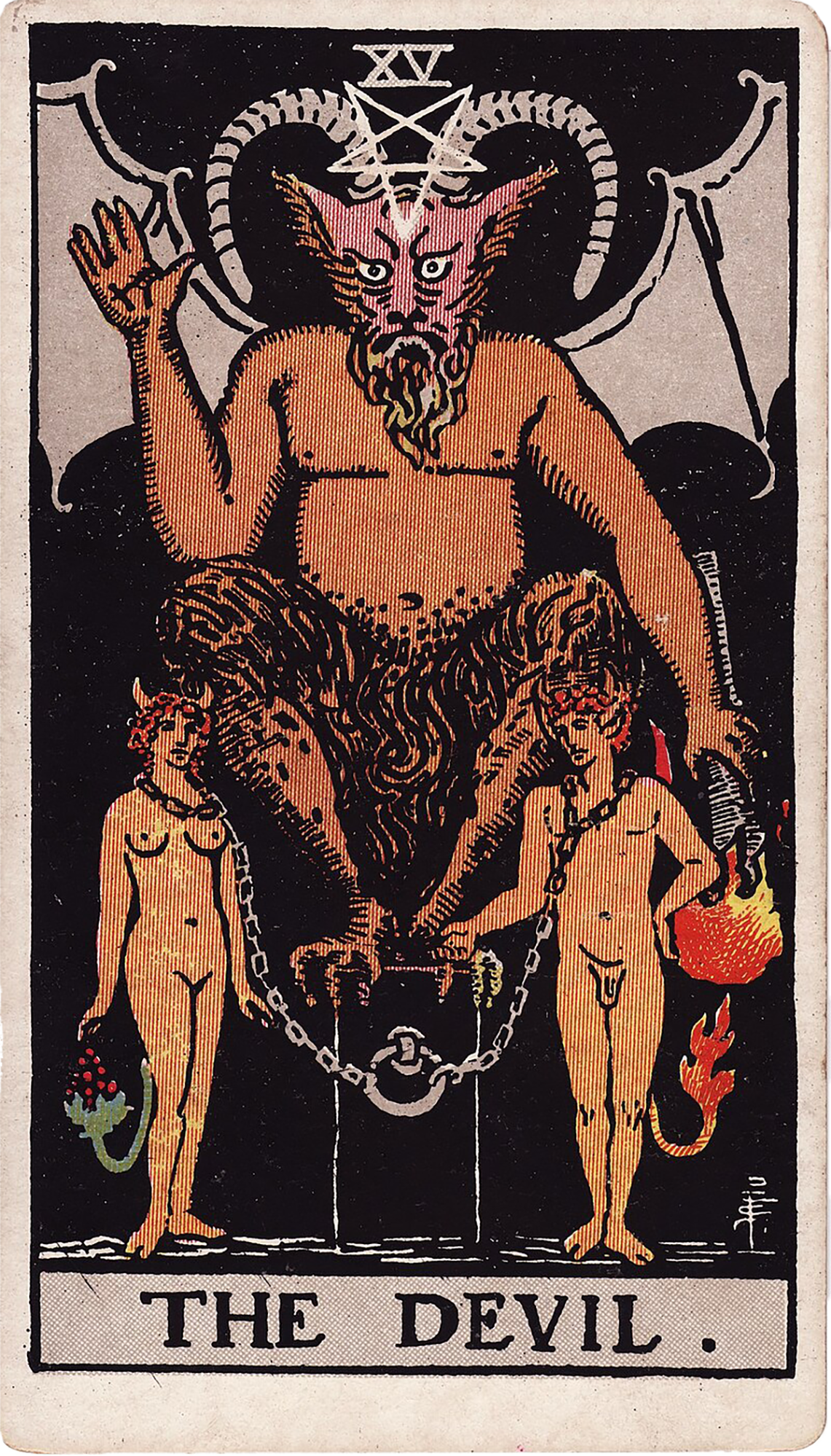 The Devil
Introduction to The Devil Card and Its Symbolism
The Devil card in the Rider-Waite-Smith deck displays a horned, winged figure seated on a simple pedestal, often interpreted as a representation of bondage and temptation. Two naked humans, chained loosely to the pedestal, symbolize the illusions of captivity and the voluntary nature of their attachments. The chains are slack, indicating that escape is possible but requires awareness and effort. The imagery also includes an inverted pentagram, which traditionally points to material or earthly concerns dominating spiritual awareness. The card’s rich symbolism centers on themes of shadow self, unhealthy attachments, materialism, and desires that can become forms of bondage when unexamined. Understanding this card requires recognizing that The Devil does not force captivity but reveals where we have given away our freedom through fear, denial, or indulgence. This foundational knowledge is essential to applying the card’s lessons constructively across different reading contexts.
Upright The Devil Card Meaning in Contexts
When upright, The Devil card highlights the visibility of unhealthy attachments or shadow aspects that have become central issues in a situation. It urges honest naming of desires and fears that may feel like chains but are actually self-imposed. This transparency allows conscious engagement without waiting for certainty or perfect conditions. In love readings, upright The Devil can indicate codependency, obsession, or relationships bound by fear or gratification rather than mutual respect. The card encourages asking where clearer boundaries or honest communication could break cycles of control or secrecy. In career contexts, it may reveal toxic work environments, addictive behaviors related to success, or feeling trapped by material ambitions. Rather than demonizing the situation, the card suggests identifying where deliberate choices can reclaim autonomy. Regarding money, The Devil points to compulsive spending, debt bondage, or valuing material wealth over well-being. It invites pragmatic assessment of how financial habits may limit freedom and where healthier boundaries are possible. As advice, the upright card calls for direct response to visible issues: setting boundaries, seeking honesty, and taking practical incremental steps toward liberation. When The Devil appears as a challenge, it represents the difficulty of confronting desires or fears that maintain bondage. Recognizing this struggle is the first step to change. For personality or person context, The Devil may describe someone who embodies temptation or control, or who is currently entangled in denial or unhealthy attachments. In outcomes, it suggests that while freedom or change is possible, it requires facing uncomfortable truths and choosing conscious action. Spiritually, upright The Devil emphasizes shadow work—acknowledging and integrating denied parts of the self to move beyond fear and illusion.
Reversed The Devil Card Meaning and Nuances
Reversed, The Devil card shifts attention inward or signals a break in the pattern of bondage. However, reversal does not automatically mean liberation; it may indicate denial of desire, shame, or a premature declaration of freedom without addressing underlying causes. In love, reversal can suggest private awareness of codependency or a beginning to see unhealthy dynamics, though full change has not yet occurred. It may also warn against repression of feelings that need expression. Career interpretations may show internal conflict about toxic environments or reluctance to admit addiction to work or material success. The reversed card hints at a psychological process more than external change. Financially, reversed The Devil may warn against ignoring compulsions or shame around money habits and urges reflection to prevent relapse into bondage. As advice, it encourages honest reflection on where denial or resistance blocks progress and cautions against superficial freedom claims. The challenge context highlights imbalance: efforts to change may be exaggerated, delayed, or incomplete. As a person, the reversal might describe someone in recovery, struggling privately with attachments or shame. Outcomes suggest a temporary pause or internal work phase before true liberation. Spiritually, reversed The Devil invites deeper psychological shadow work and cautions against illusions of freedom that do not address root issues.
Practical Reading Techniques Using The Devil Card
When The Devil card appears, whether upright or reversed, a useful technique is to pause and map the imagery directly onto the question context. Observe the loose chains and ask: where in your situation do you feel bound or willingly attached? Identify what desires or fears act like chains. Next, inquire where clearer boundaries, direct responses, or more honesty could loosen these bonds. Using the card as a mirror rather than a warning transforms it into an active tool. Always consider neighboring cards (if present) to clarify whether The Devil’s energy is manifesting as resistance, recovery, excess, or internalized shadow. Maintain a learner’s mindset by avoiding catastrophic assumptions. Note common mistakes such as interpreting The Devil as purely negative or a sign of external evil forces. Instead, focus on The Devil as a symbol of self-imposed limitations and unconscious patterns. In readings, encourage clients or yourself to journal about personal shadows and tempting attachments illuminated by the card. This deepens conscious engagement and supports incremental change.
Examples of The Devil Card in Various Contexts
Consider a love reading where The Devil appears upright. The querent may be in a relationship with patterns of jealousy or addiction. Rather than concluding doom, interpret the card as an opportunity to name those patterns and explore where honesty and boundaries can improve dynamics. In a career context, The Devil reversed might reflect a client starting to recognize workaholism but still feeling shame and denial. The reading would focus on encouraging self-compassion and gradual steps to healthier balance. For money, upright The Devil can indicate compulsive spending habits. The reading might include practical advice to track expenses and set limits, framing financial discipline as a form of reclaiming freedom. As spiritual reflection, The Devil upright invites exploring shadow traits and attachment to material identity. The reading encourages embracing the darker self parts to integrate and transcend them. These examples demonstrate how The Devil card’s dynamic symbolism can be adapted to different life areas with care, nuance, and encouragement of conscious choice.
Common Reader Mistakes and How to Avoid Them
A frequent mistake is treating The Devil card as a sign of doom, evil possession, or guaranteed misfortune. This overlooks its nuanced message about self-imposed bondage and unconscious habits. Another error is ignoring the card’s upright vs reversed differences or assuming reversal is always positive. Both orientations contain valuable lessons and require context-sensitive interpretation. Readers sometimes neglect to connect the card’s symbolism to the question context, losing the opportunity to use it as a practical guide. To avoid these mistakes, actively engage with the card’s imagery—observe details like the chains, the expressions of the figures, and the overall posture of The Devil. Ask reflective questions about what those details may represent in the querent’s life. Remember that Tarot is a tool for insight and empowerment, not fixed prediction or fear-mongering.
Integrating The Devil Card Lessons into Personal Growth
The Devil card’s ultimate value lies in its capacity to illuminate personal shadows and temptations that impede freedom. By recognizing where attachments are self-imposed, individuals can begin to reclaim choice and agency. Practicing deliberate honesty about desires and fears, setting clear boundaries, and choosing incremental steps toward change are practical ways to integrate the card’s lessons. Shadow work—exploring denied or uncomfortable aspects of the self—can be supported by journaling, meditation, or therapy, using The Devil as a symbolic guidepost. The card encourages embracing complexity rather than seeking quick fixes, reminding us that liberation is a process requiring courage, patience, and self-compassion. Ultimately, working constructively with The Devil card nurtures a deeper understanding of human nature and the power to transcend limiting patterns.
Practice questions
• Where in my life do I feel bound or voluntarily attached to unhealthy patterns?
• What desires or fears might be acting like chains around my freedom?
• How can I practice clearer boundaries or more honest communication in this area?
• Am I denying or repressing any part of myself that The Devil card brings to light?
• What incremental step can I take today to engage consciously with my personal shadows?
• How might shame or denial be preventing me from breaking free?
• In what ways can I use the symbolism of The Devil card to empower rather than fear?
• What lessons does The Devil card teach me about the nature of temptation and self-control?
Comments
Sign in to comment.
Continue learning
Interpreting the Dance of Justice and The Devil: Balancing Morality and Temptation in Tarot Readings
The combination of Justice and The Devil in tarot presents a profound exploration of morality, temptation, and personal accountability. This article unpacks how these cards influen...
Understanding The Devil Card in Overcoming Addictions and Finding Personal Freedom
The Devil card, often misunderstood as purely negative, offers profound insights into addiction, bondage, and personal empowerment when approached with awareness. This article unpa...
Using the Five Card Cross Spread to Navigate Ethical Dilemmas with Confidence
The Five Card Cross spread is a practical and versatile tool for exploring complex ethical dilemmas and making confident decisions. This article guides learners through each positi...
Mastering Dual Interpretations with The Hanged Man and The Devil in Tarot Readings
This article guides tarot learners through mastering the dual interpretations of The Hanged Man and The Devil cards. Using traditional Rider-Waite-Smith symbolism and supplied card...
Unlocking the Dynamics of The Devil and The Tower for Facing Life's Challenges
This article delves into the rich and complex relationship between The Devil and The Tower tarot cards as a powerful combination for navigating significant life challenges. By grou...
Unlocking Emotional Healing and Hope with The Star and The Devil Tarot Combination
This article delves into the powerful card combination of The Star and The Devil from the Rider-Waite-Smith tarot deck, revealing how their symbolic interplay unlocks pathways to e...
Understanding the Multifaceted Role of The Devil in Overcoming Inner Blocks and Personal Growth
The Devil tarot card holds deep lessons about unhealthy attachments, fear, and desire that can both block and catalyze personal growth. This article explores The Devil’s upright an...
Exploring The Devil Card in Overcoming Inner Blocks and Embracing Personal Freedom
The Devil card in tarot embodies complex themes of attachment, desire, fear, and bondage. This article examines how The Devil’s upright and reversed positions provide deep insights...
Understanding The Devil Card in Overcoming Inner Blocks and Personal Growth
The Devil card in Tarot is often misunderstood as a purely negative omen, but in truth, it offers profound insights into the nature of inner bondage, unhealthy attachments, and the...
Exploring Symbolism and Hidden Meanings of The Devil Card in Personal Transformation
This article explores The Devil card’s rich symbolism and its nuanced meanings in personal transformation, particularly in the context of family symbolism studies. By examining bot...