
How Paired Court Cards Reveal Power Dynamics in Love Readings
This article teaches how to read paired court cards—using the Queen of Swords and the King of Pentacles—to uncover power dynamics in love readings. It combines Rider–Waite–Smith symbolism, the suit lessons of Swords and Pentacles, step-by-step technique, common mistakes, and detailed scenario examples (both upright and reversed) so learners can construct ethically aware, nuanced relationship narratives from two court cards.
Cards explored in this article
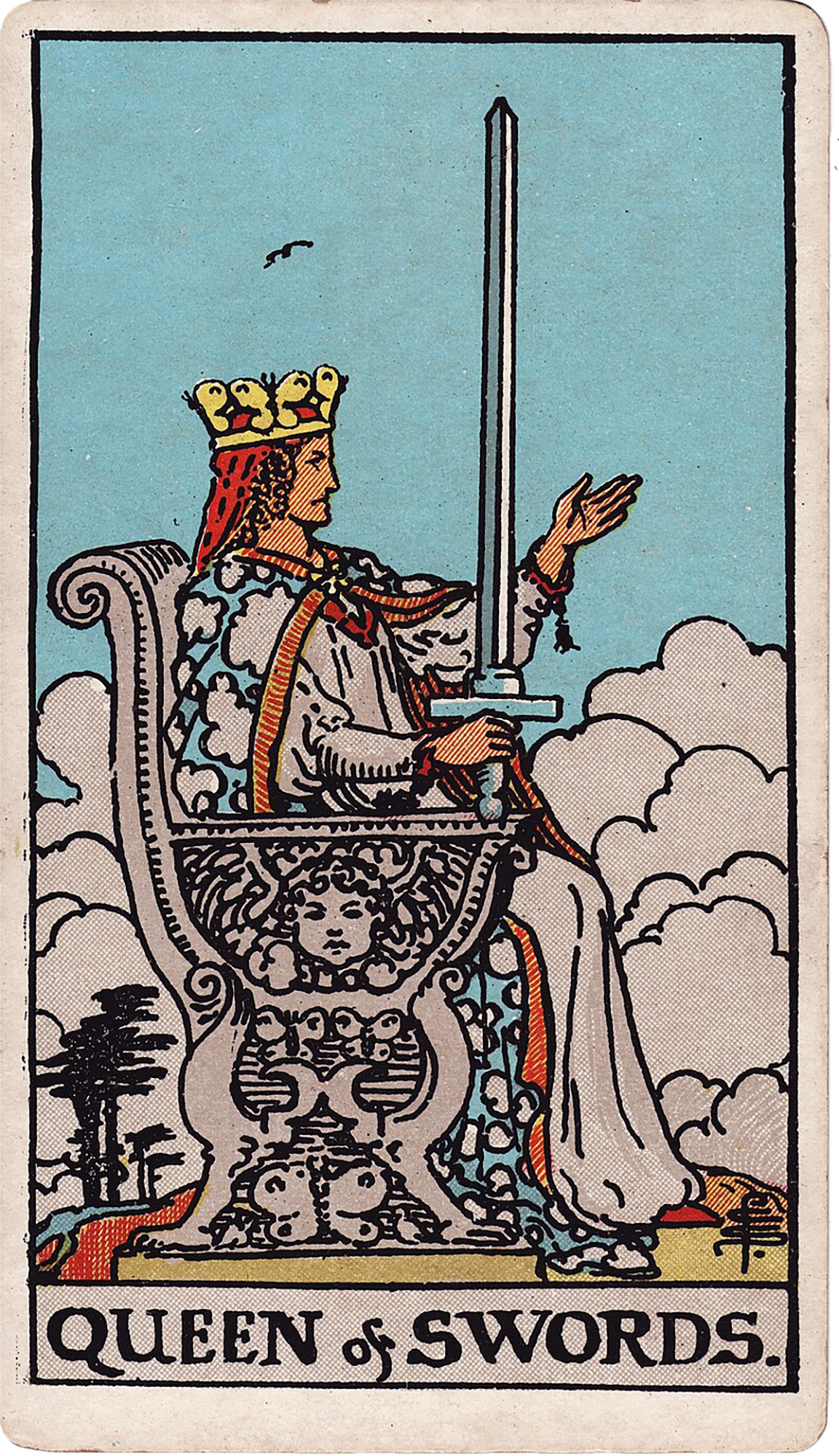 Queen of Swords
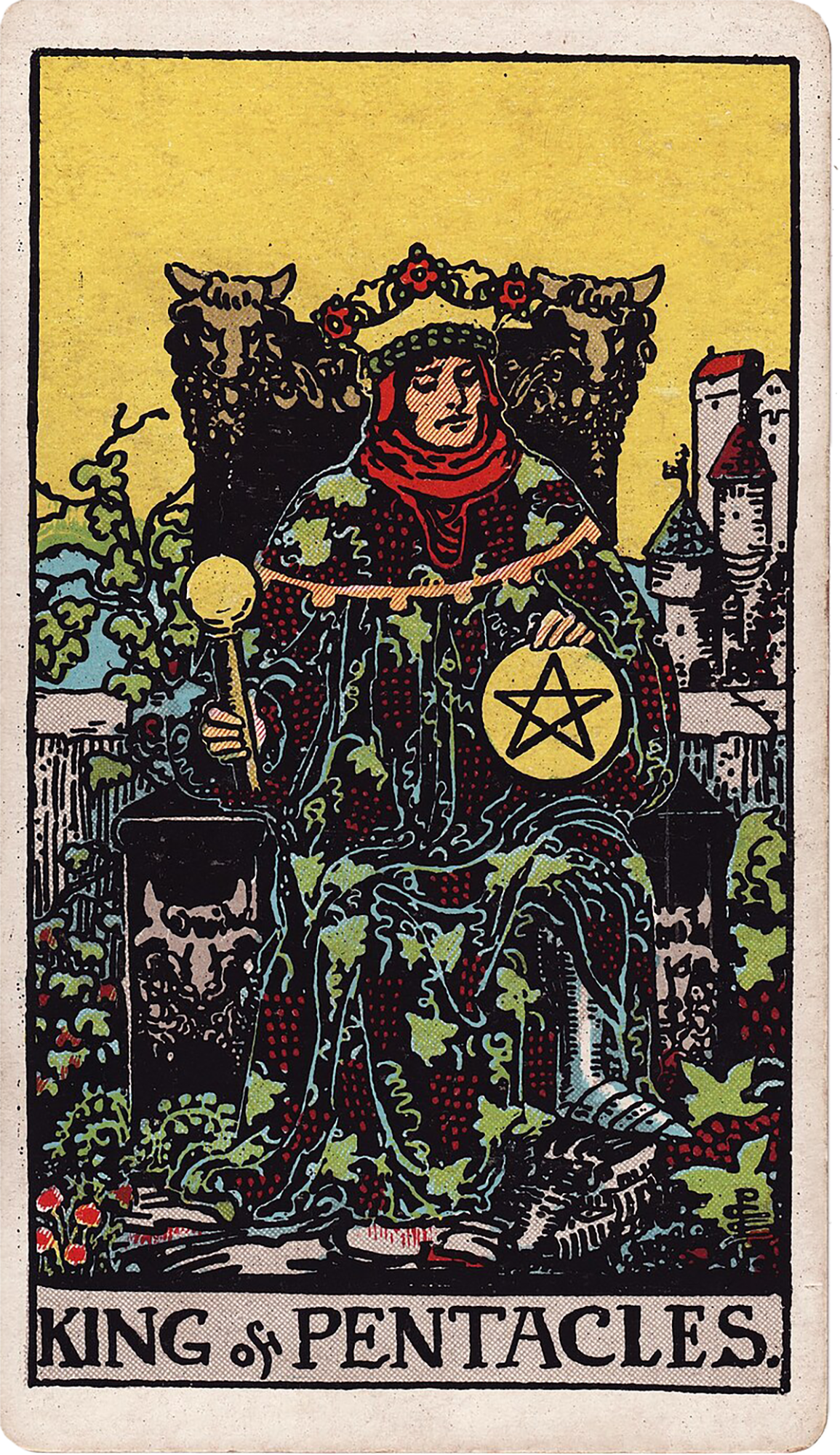 King of Pentacles
Introduction: Why paired court cards matter in relationship work
Court cards are often the clearest signposts of personality, role and pattern in a spread. When two court cards appear together in a love reading they form a miniature theatre of interaction—two stances, two tools, two ways of exerting or sharing influence. This article focuses on one practical pair supplied to you: Queen of Swords and King of Pentacles. By keeping the examples anchored to those two cards and their Rider–Waite–Smith resonances, you will learn how to read power flows, boundary work, resource exchange and the dynamics of control versus care without turning the reading into a deterministic label. The goal is to help you notice how communication, autonomy and material stewardship meet and clash in romantic situations.
Core meanings of the supplied cards and their visual cues
Begin with the supplied upright/reversed contexts. The Queen of Swords upright "highlights clear-minded independence, honest boundaries and communication that values truth without unnecessary cruelty." The Queen's image in the Rider–Waite–Smith lineage—an upright sword, an alert, watchful seated figure, a throne and the visual language of clarity and mental transformation—points to someone whose primary tools are thought, language and limits. Reversed, the supplied text warns of "bitterness, excessive criticism, isolation, cutting words or using intellect to avoid emotional complexity," and suggests a stuck process that needs simplification, acknowledgement, or practice. The King of Pentacles upright "highlights mature stewardship of resources, business competence and building stability that can support others as well as oneself." RWS symbolism tied to Pentacles—symbols of vines, harvest, fortress-like steadiness and ornamental motifs that imply land, livestock and craft—supports an image of a leader who manages material security. Reversed, the King of Pentacles signals "greed, rigidity, status obsession, misuse of financial power or becoming so attached to security that growth stops." The reversal invites you to ask where resource-driven patterns have calcified into control or absence of development. Note how the imagery and elemental domain immediately divide labor: Swords for thought and boundaries; Pentacles for resources and material stewardship. In relationship readings, that division becomes a live map of who handles which currencies—words versus wealth, persuasion versus provision, moral authority versus patronage.
Theoretical frame: reading power as flows not labels
Good relational tarot reads power as movement and exchange, not as static destiny. Court cards are archetypal roles—someone can embody a King or a Queen temporarily, oscillate between them, or enact their energy in specific areas of life. Use the supplied card texts to keep your analysis functional: the Queen of Swords asks ‘‘Where is honest boundary-setting and clear communication needed?’’ The King of Pentacles asks ‘‘Who is organizing and supplying resources, and how is that shaping choices?’’ Power dynamics appear when one party sets terms (Queen of Swords), when one controls material access (King of Pentacles), or when both enact versions of authority that either complement or collide. Look for three basic patterns: balance (both contribute in complementary ways), dominance (one restricts or dictates), and contest (both vie for control of the relationship's rules or resources). The suits clarify domain; the court ranks clarify role and likely style of influence.
Reading technique overview: a step-by-step method
1) Identify who each court card represents in context. A court card can denote the querent, the partner, how each person is presently acting, or the relational voice (e.g., how the relationship speaks to others). 2) Note upright vs reversed meaning from the supplied texts rather than assuming a simplistic good/bad dichotomy. Use the supplied upright descriptions for functional strengths and the reversed texts to find where an energy is stuck or overextended. 3) Read suit interactions. Ask: How does the Swords approach to communication affect practical arrangements? How does Pentacles' focus on resources shape limits and capacity? 4) Map power flows. Decide (hypothetically) who initiates decisions, who sets boundaries, who supplies or withholds material support, and who uses words as influence or defense. 5) Test the narrative with clarifiers and positional questions: If Queen of Swords represents the querent, who holds the King of Pentacles energy? If the Queen is reversed, does that indicate a breakdown in communication that weakens consent and gives the King more leverage? Pull clarifiers from the suits (Swords to clarify communication dynamics; Pentacles to clarify resources). 6) Offer practical, ethically grounded guidance: boundary practices, negotiation scripts, and steps to rebalance resource distribution or communication patterns. Emphasize choices and agency, not fate.
Image-based close reading: what to look for on the Queen of Swords and King of Pentacles
When these two cards appear together, use visual signals from the Rider–Waite–Smith tradition to deepen nuance. Queen of Swords visual cues to watch for: - The upright sword she holds: indicates clarity and the capacity to sever confusion or falsehood. - Her posture and gaze: often watchful and direct; this is someone who monitors boundaries and truth. - Throne motifs (butterflies or carved faces in many RWS-inspired decks): suggest transformation of thought and the consequences of lived experience. King of Pentacles visual cues to watch for: - Symbols of abundance (vines, grapes, fortress): material security, land-holding, long-term planning. - The King's dress and surroundings: indicate social status, craftsmanship and a practical orientation toward care through provision. - Objects of power (scepter, pentacle) suggest command over resources. Compare posture and directionality. Does the Queen look away or toward the King in your tableau? Who is foregrounded? Spatial relations between the two cards in your spread are meaningful—cards that face each other suggest direct interaction; cards turned away suggest miscommunication or misalignment of goals.
Constructing narratives: four core pair scenarios with examples
Below are four high-utility scenarios using the supplied upright/reversed contexts. Each shows how power dynamics often read in love questions. Scenario A — Queen of Swords upright + King of Pentacles upright Narrative: Mutual competence. The Queen of Swords brings clear boundaries and honest communication; the King of Pentacles brings reliable material support and stewardship. Together they form a partnership where terms are stated and upheld, and resources are organized to meet shared goals. Power balance: complementary authority—intellectual/ethical leadership paired with practical provisioning. Reading tip: Ask whether the relationship has explicit agreements (financial, household, career) matching the Queen's appetite for clarity. Scenario B — Queen of Swords reversed + King of Pentacles upright Narrative: Communication strain with material leverage. The King provides stability, but the Queen's reversed state shows the communication style is bitter or withdrawn. If the Queen-of-Swords energy belongs to the querent, they may feel emotionally cold or isolated, and the King’s material control can feel oppressive because it's paired with a lack of empathic negotiation. Power balance: material pressure with communicative breakdown. Reading tip: Look for signs that money or resources are being used to silence or avoid necessary emotional work; suggest specific practices to reintroduce honest, less cutting communication. Scenario C — Queen of Swords upright + King of Pentacles reversed Narrative: Clear boundaries confronting rigidity or control. The Queen uses clarity to call out the King’s misuse of power or status obsession. This can be a healthy challenge when the King’s reversal is a soft wake-up call: the Queen forces accountability. But it can also inflame defensiveness if approached as attack. Power balance: boundary-setting checks material authority. Reading tip: Counsel the querent to keep communication grounded in practical solutions (concrete requests about money, chores, access) rather than abstract moralizing. Scenario D — Queen of Swords reversed + King of Pentacles reversed Narrative: Stuck and possibly toxic dynamics. Here both cards show the shadow sides: cutting withdrawal from the Queen and greed or rigidity from the King. This pairing often signals a relationship where words are weaponized and resources are hoarded or misused. Power balance: contest and stagnation—neither is operating in a healthy stewardship or clear communication mode. Reading tip: Emphasize repair work, boundary setting with external supports (counseling, financial oversight) and small habit changes to break the stuck pattern.
Practical reading method: a reproducible session workflow
Use this workflow when the Queen of Swords and King of Pentacles appear together in a love spread. 1) Clarify roles: Ask the querent who each card could be—self, partner, relationship voice, household role. Write this down. 2) Read upright/reversed with supplied descriptions: Quote the upright phrase (e.g., "clear-minded independence") and the reversal phrase (e.g., "bitterness") to keep the reading grounded in functional language. 3) Ask domain questions: For Queen of Swords—What boundaries need saying? For King of Pentacles—What resources are at play and how are they being stewarded? 4) Map flow: Who initiates decisions? Who sets the terms for sex, money, time? Use arrows or notes on the spread. 5) Elicit examples from the querent: Request a recent incident that feels like the cards' energy and test your narrative against it. This grounds archetypal language in lived reality. 6) Offer options: Provide 2–3 concrete actions depending on the situation—communication scripts, financial conversation starters, or temporal steps. 7) Close with ethics: Emphasize consent, agency and boundaries. If one card appears reversed in a way that suggests coercion or control, recommend safety planning and supportive resources rather than insisting on immediate negotiation. This method keeps your reading practical, testable and centered on choice rather than fate.
Interpreting reversals: stuck processes, shadow uses of power, and repair
The supplied card descriptions already frame reversals as stuck processes rather than simply 'bad meanings.' Use that orientation. Queen of Swords reversed signals that mental clarity is present but misapplied—criticism, cutting words, or intellectualizing emotion. In a relational dynamic with a King of Pentacles, consider whether the Queen’s reversal uses logic to avoid vulnerability, making honest negotiation impossible. King of Pentacles reversed signals overattachment to security, status or control of resources. Paired with a Queen of Swords (upright), the King’s rigidity may be named and held to account. Paired with a Queen reversed, the relationship may become a blame loop where words wound and money binds. Repair strategies for reversals: - For Queen reversals: practice softening questions, use 'I' statements, set small exposures to convey feeling (not just critique), and rehearse requests in neutral settings. - For King reversals: introduce transparency with budgets, request evidence of mutual investment, and set time-limited trials for behaviors tied to control (e.g., agree to revisit a major decision after three months). Always check for safety. If a reversal points to coercion, advise professional help or legal resources as needed.
Common mistakes readers make with court-card pairs and how to avoid them
1) Mistake: Treating court cards as literal people. Fix: Ask context questions—Does this card describe a role, a current behavior, or the querent’s internal state? 2) Mistake: Assuming gender. Fix: Use role language (the steward, the boundary-holder) instead of gendered pronouns unless the querent identifies that way. 3) Mistake: Over-relying on a single pair without surrounding context. Fix: Always check nearby cards for clarifiers—Swords for communication specifics, Pentacles for financial or bodily detail. 4) Mistake: Reading reversals as purely negative. Fix: Use the supplied reversal notes—reversals often show an overextension, absence, or internalized process that can be transformed. 5) Mistake: Moralizing. Fix: Focus on function: what is working, what is stopping growth, what needs rebalancing. Avoid labeling people as 'good' or 'bad.' 6) Mistake: Missing imagery interactions. Fix: Compare directionality, color, and motifs in RWS visuals—who looks toward whom? Are there symbols of harvest or cutting that echo each other's themes? Avoiding these mistakes makes readings more useful and less likely to trap querents into static identities or shame.
Practice exercises to build skill with these pairings
1) Draw a three-card mini-spread: position A = Querent, position B = Partner, position C = Advice. If A and B are Queen of Swords and King of Pentacles in any orientation, practice building a short 5-minute narrative and two concrete steps for the querent. 2) Role-reversal drill: Imagine the Queen of Swords energy belongs to a younger person and the King of Pentacles to an elder, then reverse ages. Practice reading how life-stage differences shift the power dynamic. 3) Imagery contrast: Place the two supplied cards side-by-side and write a one-paragraph description of the visual relationship—who is foregrounded, what motifs repeat, what is absent—and how that changes your reading. 4) Reversal mitigation plan: For each reversal scenario (Queen reversed, King reversed), create a three-step intervention a couple could use to move toward healthier expression. These exercises build rapid pattern-recognition while keeping you accountable to the supplied texts and images.
Closing guidance and ethical reading notes
When paired court cards like the Queen of Swords and King of Pentacles show up in love readings, they invite practical, action-oriented counsel. Always translate archetypal language into things the querent can do: say a boundary, propose a budget, test a plan. Keep safety paramount when reversals point to coercion or hoarding of power. Remember that the court cards are roles, not immutable truths; people can change, learn and reassign their power. Use the supplied upright and reversed card texts as working checklists—ask what strengthens the constructive side and what needs to be simplified, acknowledged, practiced, released or communicated so that healthier expressions can return.
Practice questions
• Which of the two supplied images—Queen of Swords or King of Pentacles—feels more like your immediate response to a relationship problem you’re thinking about, and why?
• If the Queen of Swords represents a boundary you need to set, what would that boundary sound like in a single sentence?
• If the King of Pentacles represents a resource in your life (money, time, a social role), how is that resource currently shaping conversations and decisions?
• When you imagine the Queen upright and the King reversed (or vice versa), what small first step could begin to rebalance the dynamic?
• What are the signs, in behavior or language, that a court-card energy has moved from healthy expression into the reversal described in the supplied text?
• In your own readings, how will you avoid treating court cards as fixed identities rather than roles or processes?
Comments
Sign in to comment.
Continue learning
Navigating Conflict Resolution and Inner Struggles with the Five Card Cross Tarot Spread
This article delves into the Five Card Cross Tarot Spread as a practical tool for navigating conflict resolution and inner struggles, especially within family contexts. Using the s...
Mastering the Court Cards of Wands for Unlocking Personal Drive and Leadership
The Court Cards of Wands represent a dynamic spectrum of personal energy, ambition, and leadership potential within the Minor Arcana. This article offers a comprehensive exploratio...
Unlocking Leadership Styles Through the Court Cards of Wands
The Wands court cards—Page, Knight, Queen, and King—offer a rich spectrum of leadership styles rooted in the fiery energy of motivation, creativity, and initiative. This article de...
Understanding the Personalities and Roles of Knight Queen and King of Swords in Tarot
This article delves into the unique characteristics and roles of the Knight, Queen, and King of Swords within the Tarot Minor Arcana, focusing on the family suit and court card les...
Unlocking the Energies of the King Queen and Knight of Cups for Emotional Intelligence
This article delves into the King, Queen, and Knight of Cups from the Minor Arcana's family Suit and Court Cards, emphasizing how these archetypes embody stages and expressions of...
Unlocking Personality Traits Through the Court Cards of Pentacles
This article delves into the personality traits and life lessons embodied by the court cards of Pentacles: Page, Knight, Queen, and King. Grounded in the practical symbolism of the...
Unlocking the Leadership Styles of the King Queen and Knight of Pentacles
This article delves deep into the leadership styles embodied by the King, Queen, and Knight of Pentacles within the Minor Arcana, focusing on the family Suit of Pentacles and its C...
Unlocking the Personality Traits and Roles of the Knight Queen and King of Pentacles in Tarot
This article offers an in-depth exploration of the Knight, Queen, and King of Pentacles cards in the Minor Arcana, focusing on their personality traits, roles, and lessons within t...
Understanding the Court Cards of Pentacles for Practical Wisdom and Grounded Ambition
The Court Cards of Pentacles—Page, Knight, Queen, and King—offer a rich framework for understanding practical wisdom, grounded ambition, and stewardship of material resources. Anch...
Unlocking Personality and Leadership Qualities with the King Queen and Knight of Pentacles
This article delves into the King, Queen, and Knight of Pentacles court cards within the Minor Arcana, focusing on their symbolism of personality traits and leadership within the f...