
Interpreting Court Card Development Stages to Guide Client Growth
This article teaches how to read the Cups court cards — Page of Cups, Knight of Cups, Queen of Cups and King of Cups — as a developmental sequence that can guide client growth. Anchored to Rider‑Waite‑Smith imagery and the supplied card contexts, it explains interpretation logic, practical spread techniques, client exercises, concrete examples, and frequent reader errors. Use this as a working method for distinguishing stage, role, and process so your readings support practical change rather than deterministic prediction.
Cards explored in this article
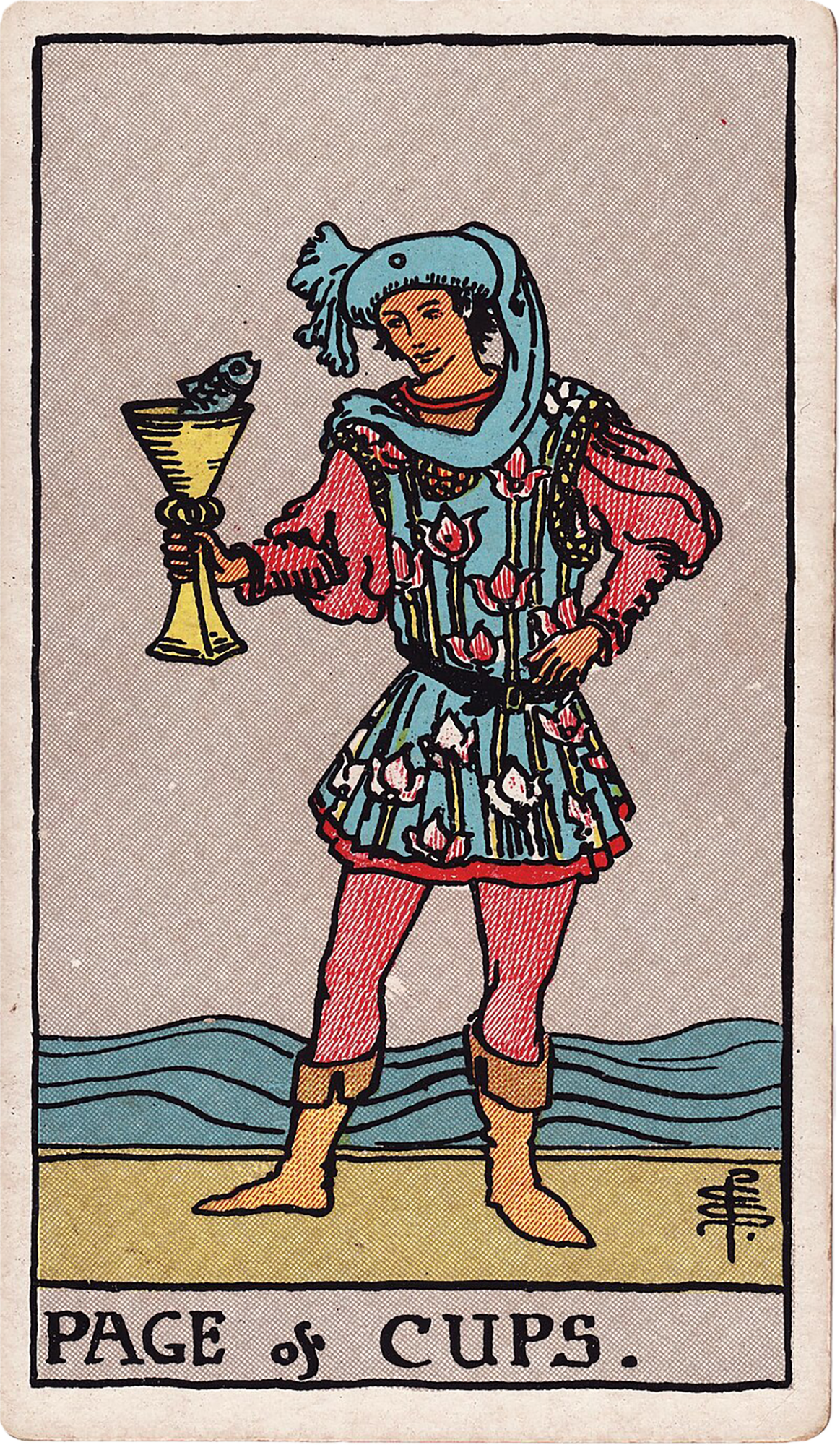 Page of Cups
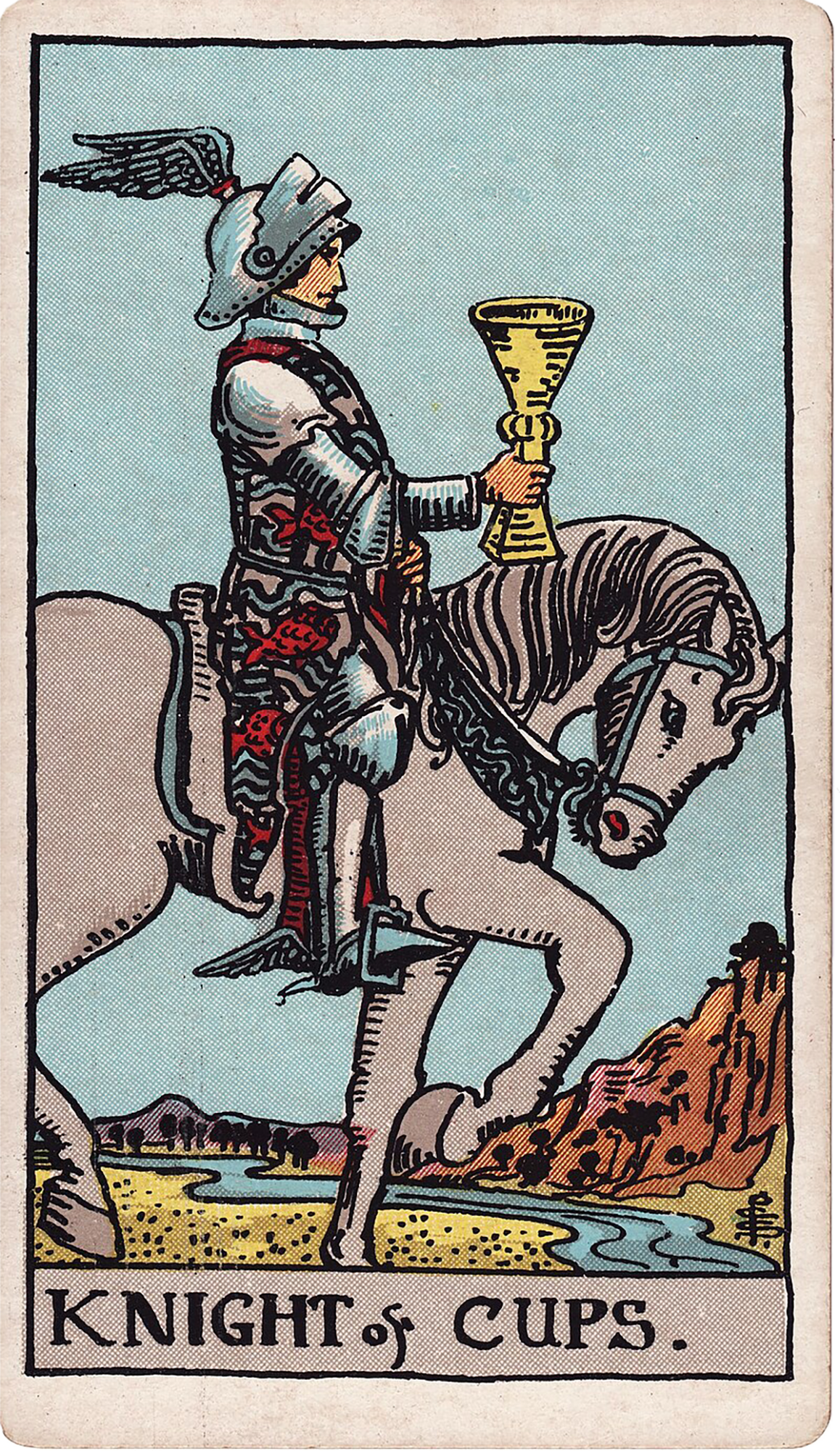 Knight of Cups
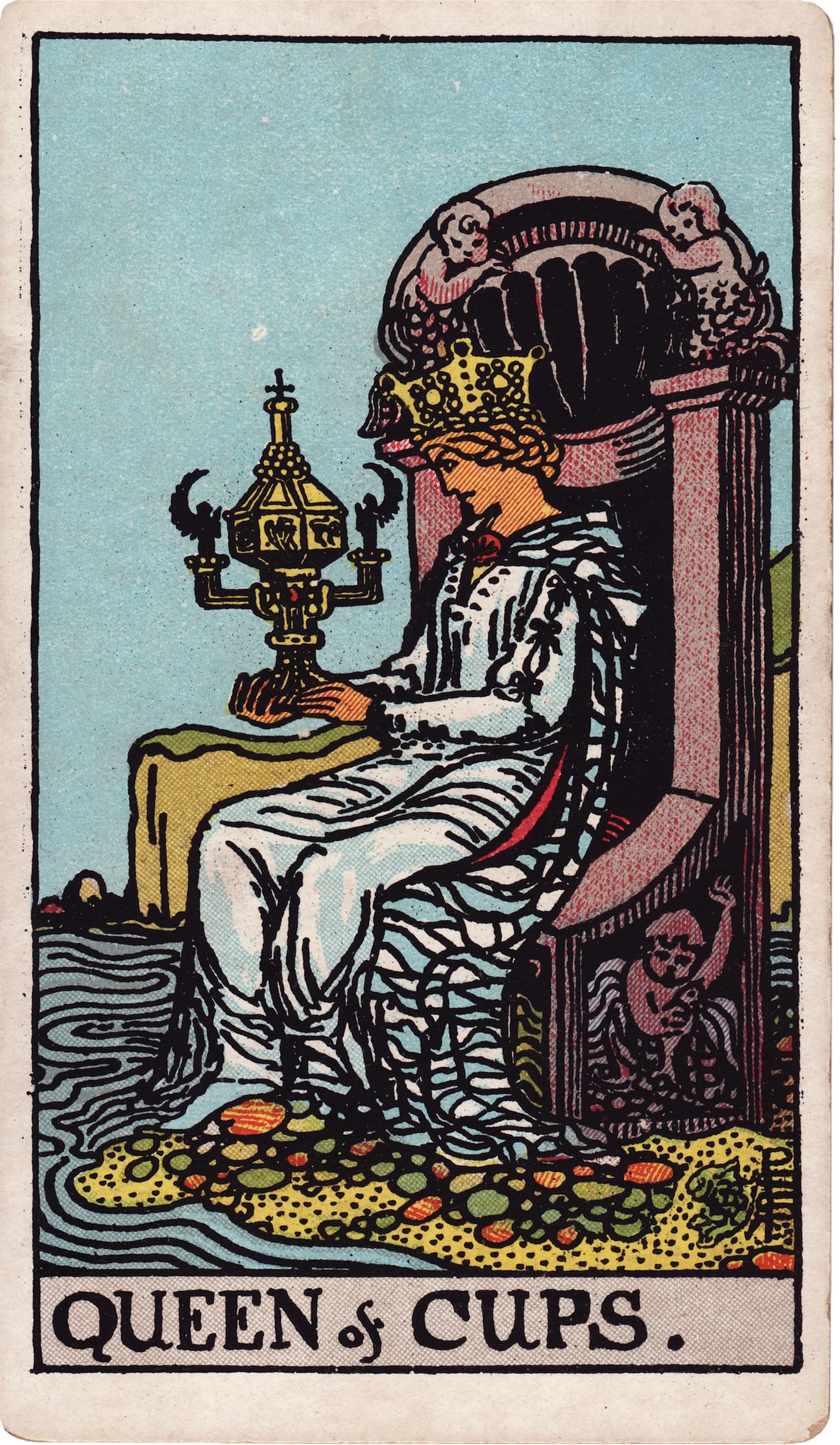 Queen of Cups
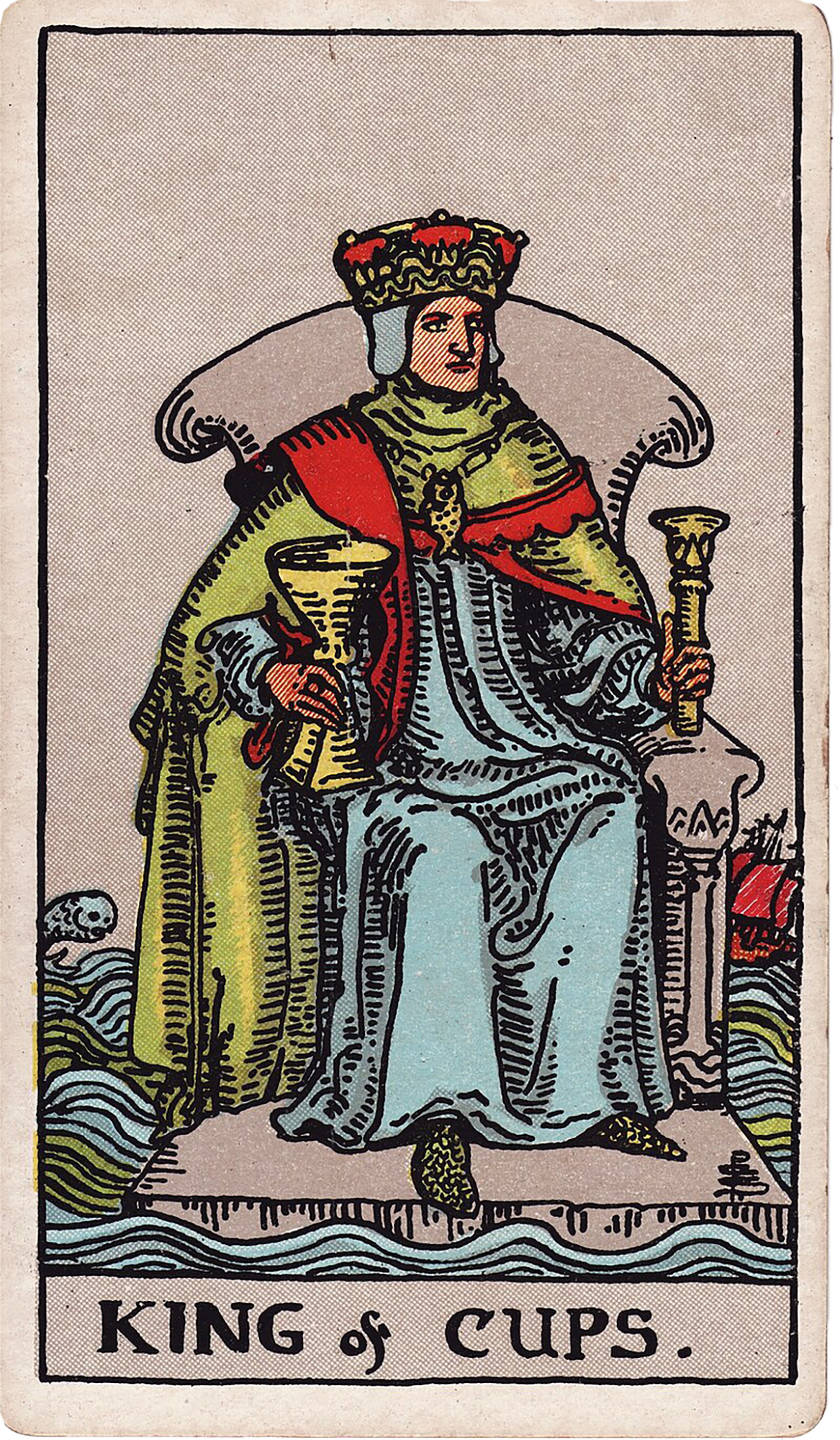 King of Cups
Introduction: Court Cards as Developmental Stages
Court cards are commonly read as people, but they also map naturally onto processes, capacities and developmental stages. When we treat the Cups court family — Page of Cups, Knight of Cups, Queen of Cups and King of Cups — as a progression of emotional skill and relational capacity, we gain a practical framework for guiding client growth. This article uses the supplied images and conventional Rider‑Waite‑Smith symbolism of the four Cups court cards to build an interpretive method that helps clients see what to practice next. The aim is educational and therapeutic — to translate symbolic cues into clear, testable steps rather than fixed predictions.
Why Read Court Cards as Stages
There are three reasons to read court cards as stages: 1) archetypal clarity — the ranks represent initiation (Page), active pursuit (Knight), mature receptivity (Queen) and regulated leadership (King); 2) counseling utility — mapping a client's emotional development to a stage suggests targeted interventions and measurable goals; 3) narrative coherence — clients often experience problems as processes (first curiosity, then pursuit, then strain, then leadership), and court cards give language to that arc. In the Cups family this arc maps to learning how to feel, how to express those feelings, how to hold feelings for self and others, and how to steward emotional life with steadiness.
Rider‑Waite‑Smith Imagery to Watch For
Use RWS imagery to anchor interpretation. The Page of Cups shows a youthful figure receiving a fish peeking from the cup — a direct image of an unexpected emotional message or intuitive nudge. The fish symbolizes surprising intuition; the youth and plain clothing suggest openness and inexperience. The Knight of Cups rides a horse, offering a cup forward: movement, courtship, imagination, and emotional pursuit. Notice the armor and the horse's posture — momentum with a romantic or visionary bent. The Queen of Cups sits on a throne by water, holding a cup covered or guarded: deep receptivity, containment, and empathy; look to her composed face and the calm sea for mature feeling. The King of Cups sits on a stable throne with a calm sea and ships in the background: leadership, steadiness, and regulation of emotional currents. His scepter and cup show authority balanced with compassion. Repeatedly using these visual cues (fish, cup, horse, throne, sea, facial expression) keeps readings grounded in the card images clients see.
Mapping the Cups Court Sequence to Developmental Tasks
Here is a compact map you can use in readings: Page of Cups = receptivity and the birth of feeling; task: notice and name emergent emotions or creative impulses. Knight of Cups = pursuit and expression; task: act on feelings with communication, courting, or aesthetic work while learning reliability. Queen of Cups = containment and empathy; task: build inner boundaries so you can hold others' feelings without losing yourself. King of Cups = stewardship and emotional regulation; task: model steady presence and align feeling with wise action. For every card, upright and reversed forms shift the developmental picture: an upright Page invites curiosity and receptive practice; a reversed Page signals stuckness in simple reception (denial of intuition or emotional immaturity). Use the provided upright/reversed notes for each card to shape interventions.
Technique: A Practical Method for Stage‑Based Court Card Readings
Follow a stepwise method when a Cups court card appears and you plan to guide client growth. 1) Identify whether the card is representing a person, a role, or an internal part. Ask: 'Who is playing this part in the client's life?' 2) Anchor to imagery: describe the fish in the Page, the knight's horse and cup posture, the Queen's guarded cup and throne, the King's steady sea. Have the client look at the image and say what stands out. 3) Place the card in a developmental frame using the map above: is the client initiating (Page), pursuing (Knight), holding (Queen), or leading (King) emotionally? 4) Check orientation: upright cards typically show a workable pathway; reversals point to blockage, excess, or hidden internal process. Do not equate reversed with 'bad' — ask what is stuck. 5) Read surrounding cards for context: are there Wands that push action, Swords that complicate communication, or Pentacles that ground? For example, a Page of Cups with strong Swords suggests the client is receiving emotion but rationally blocking it. 6) Translate into practice: recommend one or two small experiments matched to the stage (see exercises below). 7) Set measurable follow‑ups: what will count as progress in two weeks?
Anchoring Interpretation to Each Supplied Card
Work with the supplied card contexts and images: Page of Cups: emphasize surprise, the need for curiosity, and momentary receptivity. Ask clients to notice the 'fish' messages in their day: unexpected feelings, dreams, or small creative urges. Knight of Cups: emphasize directed movement — the card signals taking emotional initiative. Use it as a prompt to craft intentional communication (a letter, a date, an apology) that is specific and accountable. Queen of Cups: emphasize the art of holding — not fixing others' feelings but creating an inner container. Use the Queen to teach reflective listening and boundary formation around caregiving. King of Cups: emphasize steady leadership — helping clients move from reactivity to response. Use the King to coach on managing authority, cultivating vulnerability that does not collapse into self‑sacrifice, and practicing composure under stress. Repeat the upright/reversed descriptions supplied for each card during client discussion and use them to diagnose whether a problem is about too much of a quality, too little, or a failure to enact knowledge consistently.
Concrete Client Examples and Interventions
Example 1 — Page of Cups upright in 'current feelings' position: Client reports a new attraction unexpectedly. Interpretation: the image of the fish suggests a gentle, curious approach. Intervention: practice a 'two‑line outreach' — a short message that names curiosity without heavy commitment. Skill to build: naming emotional experience without immediate judgment. Example 2 — Knight of Cups reversed in 'partner' position: Client's partner makes grand romantic promises but misses follow‑through. Interpretation: the reversal points to idealization and moodiness. Intervention: set a concrete behavior check — ask for one specific, repeatable gesture (e.g., a weekly shared plan). Skill to build: linking emotion to logistics. Example 3 — Queen of Cups reversed in 'caregiving' frame: Client feels burned out from absorbing family emotion. Interpretation: the Queen's reversal shows porous boundaries. Intervention: implement a 'listening timekeeper' — set time limits on listening and schedule daily self‑containment practices (15 minutes of journaling or breathwork). Skill to build: protective containment. Example 4 — King of Cups upright in 'career leadership' position: Client is asked to lead a team through a contentious change. Interpretation: the King signals capacity for steady emotional authority. Intervention: coach the client to articulate values, hold emotion without reacting, and model calm responses in two planned meetings. Skill to build: regulated leadership behaviors. Each example ties imagery and supplied definitions to a measurable client experiment.
Practical Spread Ideas for Tracking Development
Use compact spreads that make stage and practice explicit. 1) Three‑position developmental spread: left = current stage (court card), center = skill to practice (action), right = measure of progress (behavioral marker). If the Page of Cups appears left, center might be 'notice and name three unexpected feelings this week,' right might be 'two instances recorded in journal.' 2) Inner team spread: Page = inner beginner, Knight = active self, Queen = caregiver, King = steward. Ask the client which court voice dominated their week and why. 3) Role vs stage spread: top = who is acting out this role externally, bottom = which internal part matches this card, middle = next step for growth. Always pair card imagery questions with specific behavioral tasks so the symbol becomes a lever for practice rather than an abstract insight.
Reading Reversals and Stuck Processes
The supplied reversals emphasize process blockage more than moral judgment. Never default to 'bad' for reversed court cards. Instead, ask: Where has the developmental sequence become stuck? For the Page of Cups reversed, the client may intellectually 'know' feelings exist but be unable to inhabit them; you might recommend simplification (start with naming one feeling), rehearsal (practice saying 'I feel...'), and creative invitations that bypass self‑censoring (draw or record a voice note). For the Knight of Cups reversed, the blockage often shows as chasing fantasy: assign grounding tasks (scheduling, accountability buddies) and ask the client to inventory promises they made and which were kept. Queen of Cups reversed suggests absorption or overwhelm; introduce containment habits and boundary scripts. King of Cups reversed signals suppression or manipulative calm; challenge the client to practice authentic small vulnerabilities in safe contexts and to notice where 'calm' functions as avoidance. In all reversals, use the surrounding cards to identify whether the issue is internal (hidden) or public.
Common Mistakes and How to Avoid Them
Mistake 1 — Reading court cards only as literal people. Avoid by asking whether the card describes a role, internal part, or stage. Mistake 2 — Equating rank with age or gender. Cup court roles are capacities: a teenager can show King of Cups behavior; an older adult can be Page‑like. Mistake 3 — Treating reversals as simply the opposite of upright meaning. Instead, investigate stuckness, excess, or lack. Mistake 4 — Ignoring imagery. RWS symbols (fish, horse, throne, sea, covered cup) carry the emotional texture that makes interventions resonant. Mistake 5 — Offering vague advice. Translate symbolic guidance into specific experiments and measurable markers. Avoid these by always pairing image interpretation with a one‑week behavioral experiment and a clear metric for follow‑up.
Measurement, Follow Up and Signs of Progress
Define progress in behavioral terms tied to the stage. For Page work: count spontaneous acknowledgments of feeling, number of creative attempts, or dreams noted. For Knight work: track consistent follow‑through items (messages sent, dates held, pieces completed). For Queen work: measure time spent in self‑containment practices and instances where the client used a boundary script. For King work: measure number of times the client paused before reacting, debriefed challenging interactions with a colleague, or demonstrated compassionate discipline. Progress markers should be small, frequent, and client‑agreed. In subsequent readings, look for movement through the sequence: a client initially showing Page energy can progress to Knight behaviors; stuck reversals may flip upright with consistent practice, visible as different surrounding cards and improved reports.
Exercises to Give Clients, Mapped to Each Card
Page of Cups exercise: 'The Fish Message' — keep a small notebook and for a week immediately write any unexpected feeling or creative image. At week's end, pick one and invite the client to act on it in one small way. Knight of Cups exercise: 'Concrete Courtship' — write a two‑step plan to express care or pursue a project and commit to one concrete deliverable within seven days. Queen of Cups exercise: 'Containment Practice' — schedule two 15‑minute 'containment windows' per day for reflective journaling or breathwork, and practice saying a prepared boundary phrase in a real interaction. King of Cups exercise: 'Regulation Drill' — when stressed, practice a three‑breath pause, name the emotion silently, and choose one calm action; track frequency of pause and downstream consequences. Each exercise ties to imagery: Page's curiosity, Knight's initiative, Queen's vessel and holding, King's composed sea.
Putting It All Together: A Reading Workflow
When a client presents and a Cups court card appears, run this mini‑workflow: 1) Name the card and ask the client to describe what they notice in the image. 2) Locate the card's role: person, part, or stage. 3) Map to developmental task using the table above. 4) Check orientation and surrounding cards to diagnose stuckness or support. 5) Translate to a one‑week experiment with clear measurement. 6) Schedule a short follow‑up to review outcomes and recalibrate. This workflow keeps the reading client‑centered, image‑based and action‑oriented.
Closing Advice for Learners
Practice by reading court cards in simple daily draws and translating each into a one‑sentence developmental description plus one micro‑task. Always anchor your language to the image the client sees — mention the fish, the horse, the covered cup, the calm sea — so the card becomes a shared reference. Resist turning stages into judgments; instead, use them to design targeted, measurable practices. Over time you will notice court cards not only identifying problems but offering a pathway through them. The Cups court sequence is particularly useful because it describes how feeling itself can be learned, expressed, held and stewarded — a map that helps clients build emotional capacity step by step.
Practice questions
• When you look at the Page of Cups image, what small, surprising feeling or image arises first for you?
• If a client presents the Knight of Cups reversed, what specific behaviors would you ask them to inventory this week?
• How might you distinguish whether the Queen of Cups is describing a role someone else plays versus an inner caregiving part?
• What would count as a measurable sign that a person has moved from Page energy to Knight energy?
• In what contexts might the King of Cups represent an unhealthy steady calm, and how would you coach toward healthier expression?
• Which part of the reading workflow feels most useful to integrate into your next client session?
Comments
Sign in to comment.
Continue learning
Navigating Conflict Resolution and Inner Struggles with the Five Card Cross Tarot Spread
This article delves into the Five Card Cross Tarot Spread as a practical tool for navigating conflict resolution and inner struggles, especially within family contexts. Using the s...
Mastering the Court Cards of Wands for Unlocking Personal Drive and Leadership
The Court Cards of Wands represent a dynamic spectrum of personal energy, ambition, and leadership potential within the Minor Arcana. This article offers a comprehensive exploratio...
Unlocking Leadership Styles Through the Court Cards of Wands
The Wands court cards—Page, Knight, Queen, and King—offer a rich spectrum of leadership styles rooted in the fiery energy of motivation, creativity, and initiative. This article de...
Understanding the Personalities and Roles of Knight Queen and King of Swords in Tarot
This article delves into the unique characteristics and roles of the Knight, Queen, and King of Swords within the Tarot Minor Arcana, focusing on the family suit and court card les...
Unlocking the Energies of the King Queen and Knight of Cups for Emotional Intelligence
This article delves into the King, Queen, and Knight of Cups from the Minor Arcana's family Suit and Court Cards, emphasizing how these archetypes embody stages and expressions of...
Unlocking Personality Traits Through the Court Cards of Pentacles
This article delves into the personality traits and life lessons embodied by the court cards of Pentacles: Page, Knight, Queen, and King. Grounded in the practical symbolism of the...
Unlocking the Leadership Styles of the King Queen and Knight of Pentacles
This article delves deep into the leadership styles embodied by the King, Queen, and Knight of Pentacles within the Minor Arcana, focusing on the family Suit of Pentacles and its C...
Unlocking the Personality Traits and Roles of the Knight Queen and King of Pentacles in Tarot
This article offers an in-depth exploration of the Knight, Queen, and King of Pentacles cards in the Minor Arcana, focusing on their personality traits, roles, and lessons within t...
Understanding the Court Cards of Pentacles for Practical Wisdom and Grounded Ambition
The Court Cards of Pentacles—Page, Knight, Queen, and King—offer a rich framework for understanding practical wisdom, grounded ambition, and stewardship of material resources. Anch...
Unlocking Personality and Leadership Qualities with the King Queen and Knight of Pentacles
This article delves into the King, Queen, and Knight of Pentacles court cards within the Minor Arcana, focusing on their symbolism of personality traits and leadership within the f...