
Interpreting Tarot Knights for Timing Momentum and Action Across Suits
This article teaches how to read the four Knights—Knight of Wands, Knight of Cups, Knight of Swords and Knight of Pentacles—as signals of timing, momentum and styles of action across the four suits. Focused on learners, it anchors every principle to the supplied card images and their upright and reversed contexts, uses Rider‑Waite symbolism as a visual tool, and offers a repeatable method you can apply in spreads to move from description to usable interpretation. Expect concrete examples, common mistakes, and step‑by‑step techniques for integrating Knights into timing and action questions.
Cards explored in this article
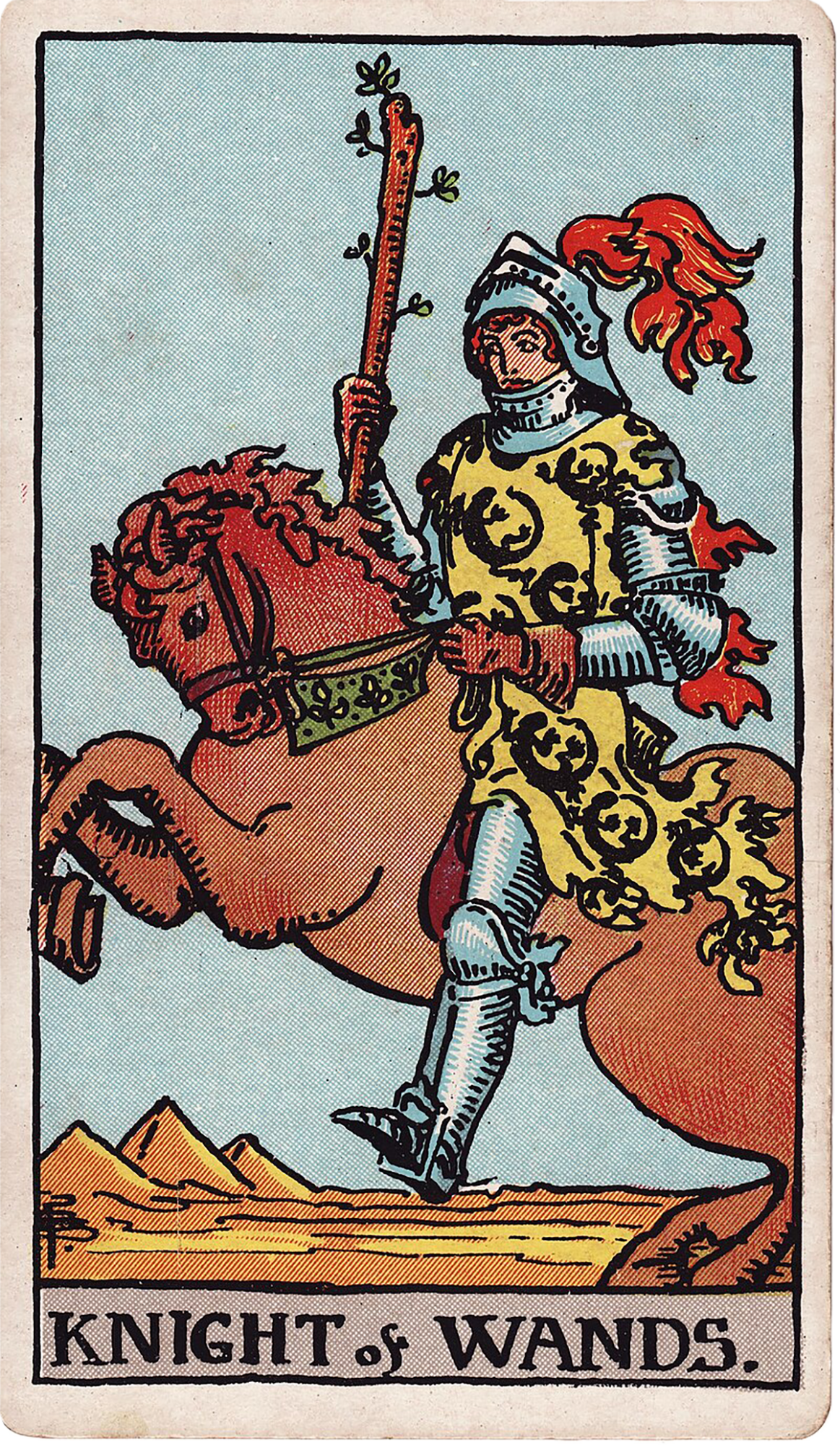 Knight of Wands
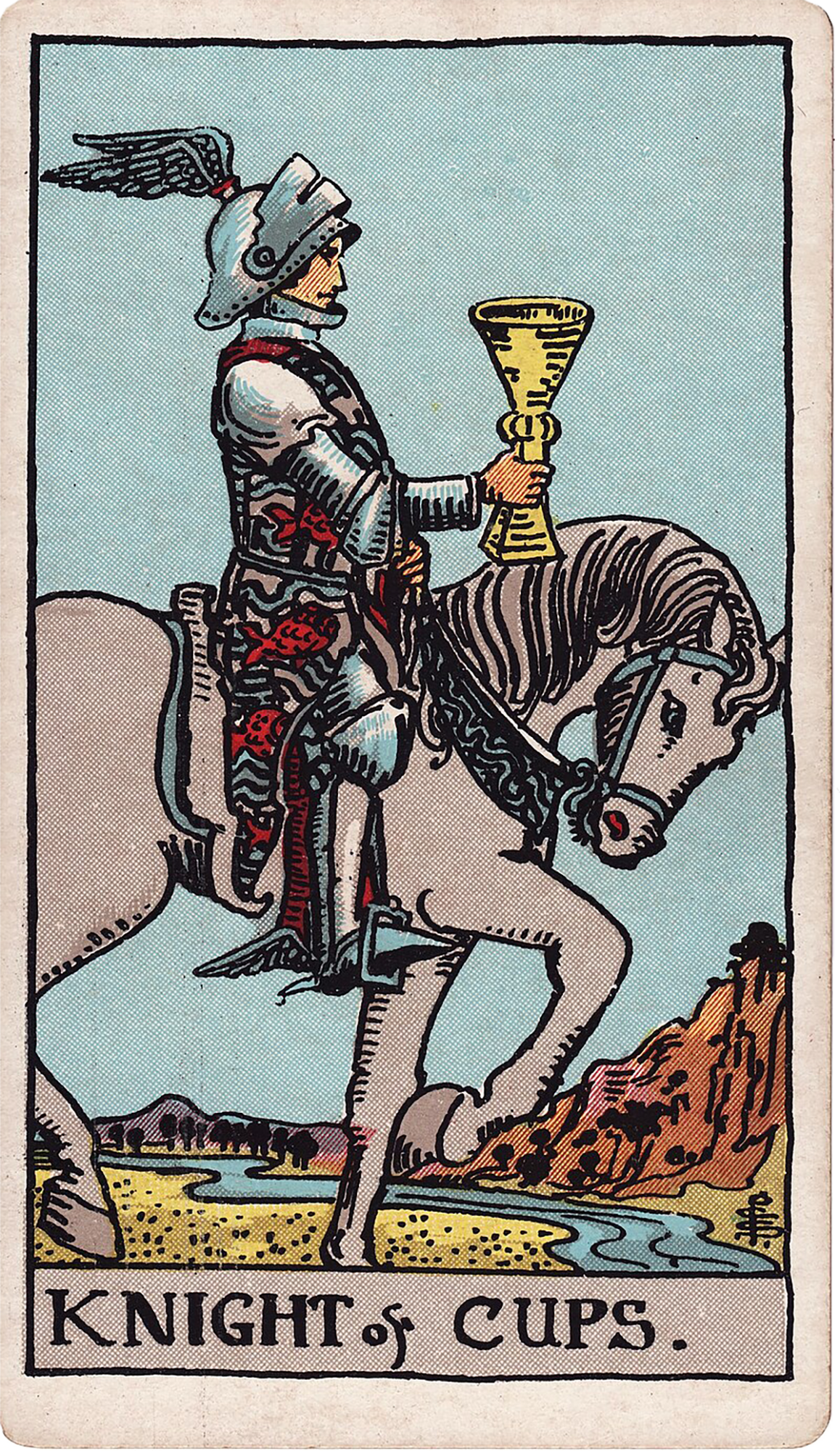 Knight of Cups
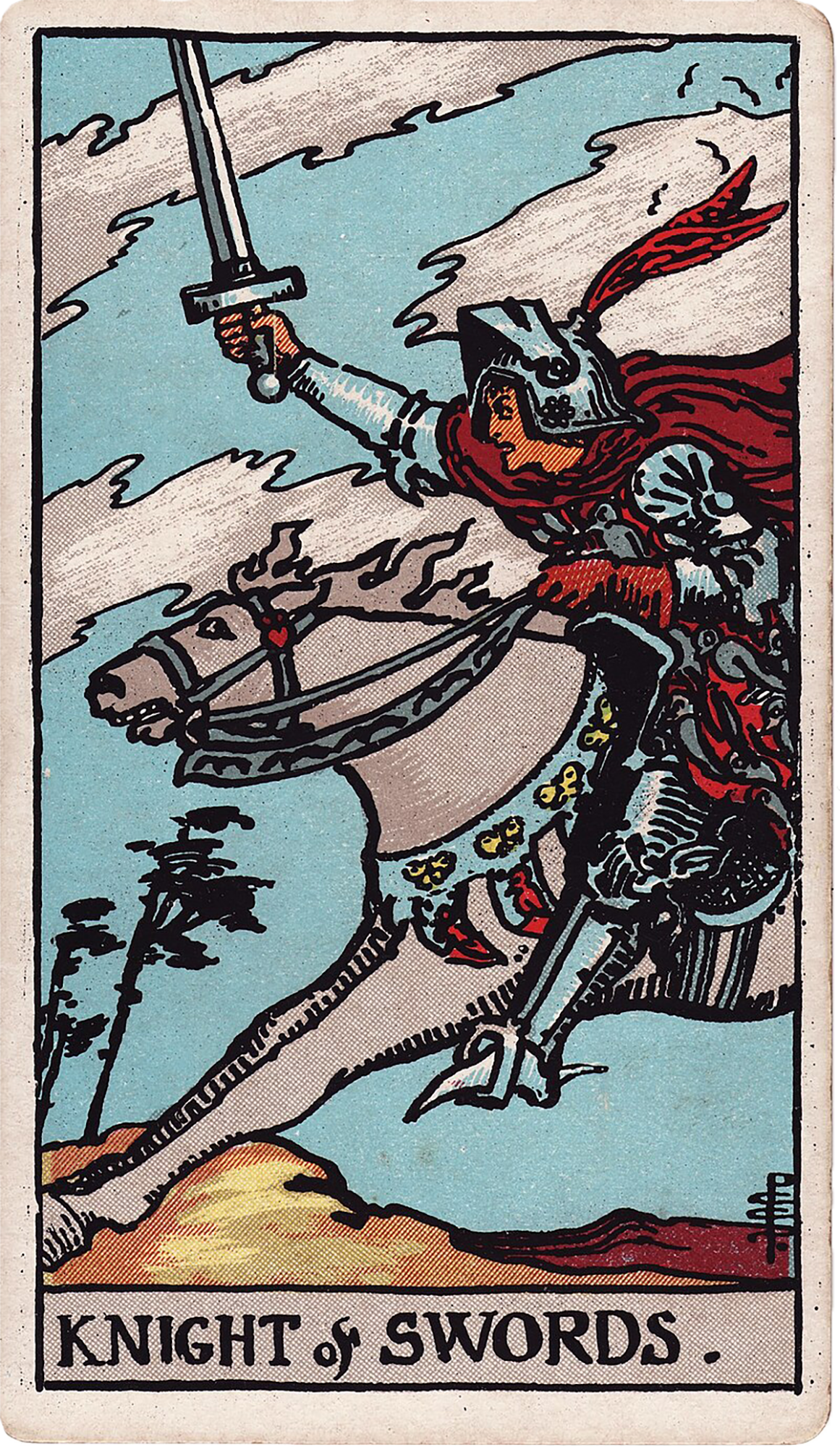 Knight of Swords
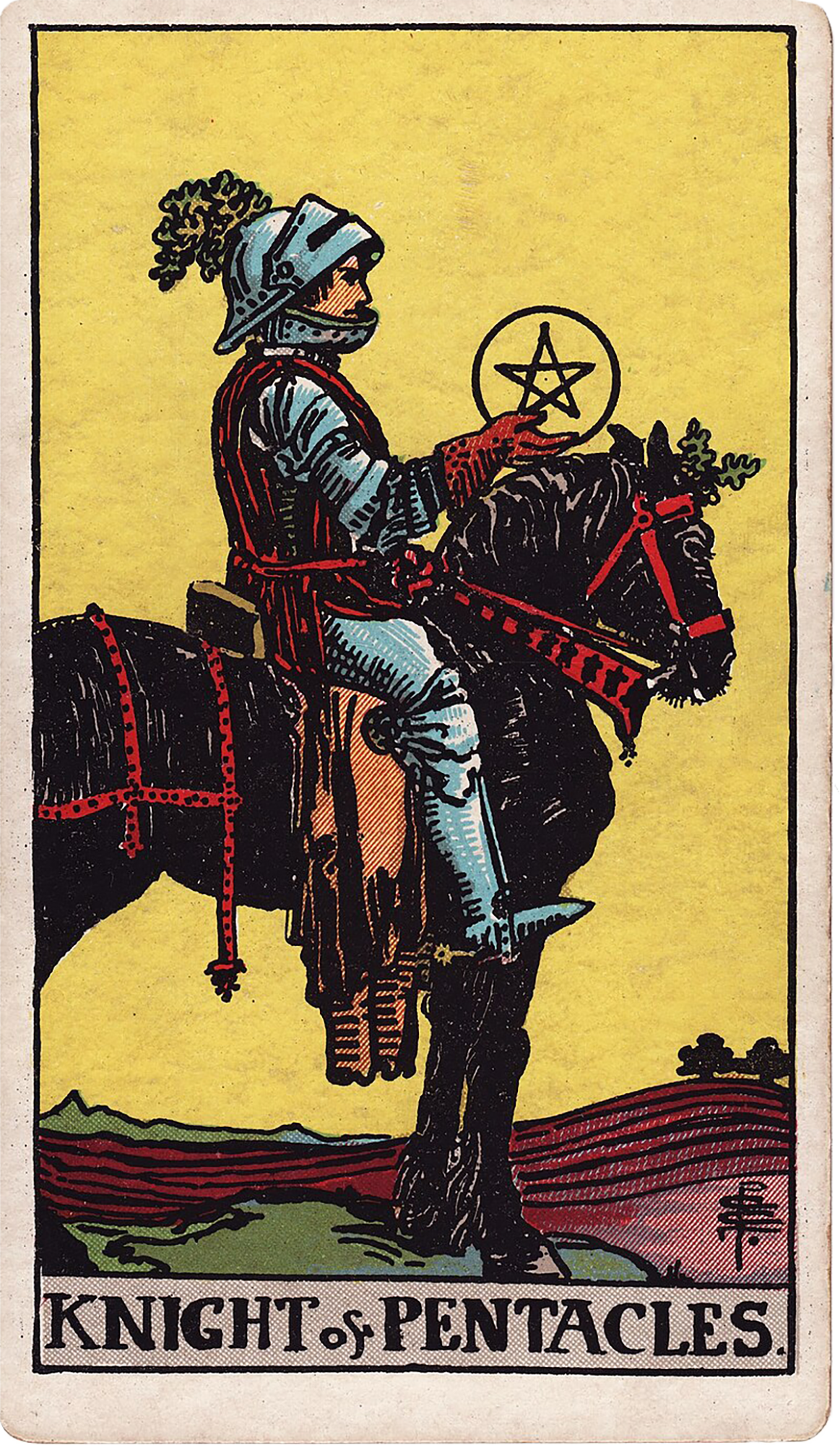 Knight of Pentacles
Introduction: Why Knights matter for timing and action
Knights are the working vehicles of the court family: they carry suit energy outward. Where Pages introduce, Queens and Kings govern, Knights move and do. In readings they commonly indicate momentum, an agent of change, a project in mid‑phase or a person with particular activity traits. Because the supplied cards—Knight of Wands, Knight of Cups, Knight of Swords and Knight of Pentacles—share the same court function, they make an excellent laboratory for learning how posture, object and background translate into timing, speed and the kind of action required. This article never treats these cards as guarantees. Instead, it aims to give you tools to read them flexibly and responsibly: how quickly will something move, what kind of effort is required, whether action is recommended, and where blockages lie.
Core interpretation logic: three questions for every Knight
Approach each Knight by answering three core questions in order. 1) Is this card describing a person, a phase, or the style of action required? Knights can be literal people, but more often they describe an energy or stage. 2) What is the suit asking for—fire (Wands), water (Cups), air (Swords), or earth (Pentacles)? Use the supplied upright descriptions to anchor: Wands ask for motivation and initiative, Cups for emotional pursuit, Swords for decisive thought and cutting through delay, Pentacles for steady, reliable execution. 3) How is momentum shown in the image? Look at the horse, the rider’s posture, the background, and the condition of the suit object. These visual clues tell you pace (fast, steady, stalled), direction (approach, withdraw, negotiate), and whether the energy is external or turned inward (upright vs reversed). Only after these three questions should you place the card into the spread story and assess timing.
Visual anatomy for timing: read the horse and landscape
Rider‑Waite imagery gives you a simple, repeatable vocabulary. The supplied cards display distinctive horse and landscape cues you can rely on. - Horse movement: A rearing or galloping horse (as in the Knight of Wands and Knight of Swords) signals forward, rapid momentum. A horse that is calm or standing still (as in the Knight of Pentacles) indicates measured, slow progress. A gentle, measured horse (Knight of Cups) suggests emotionally guided movement—not explosive, but purposeful and responsive. - Rider posture and object: The Knight of Swords thrusts forward with sword raised—decisive, cutting action. The Knight of Wands holds his wand ready and leans forward—impulse and initiative. The Knight of Cups offers a cup with a soft posture—proposal, invitation or pursuit of values. The Knight of Pentacles is stable, looking down at his pentacle—careful stewardship and routine. - Background elements: Look for wind, clouds or bent trees (Swords) to emphasize haste and external pressure; barren or open desert (Wands) to suggest risk and exploration; a river, pools or gentle landscape (Cups) to indicate emotional currents and responsive timing; tilled fields, crops or furrows (Pentacles) to indicate grounded seasons and agricultural timeframes. Using these visual markers, you can distinguish whether a Knight points to a sudden surge, a steady march, a soft approach, or stalled work.
Upright vs Reversed: momentum, blockage and internalization
Use the supplied upright/reversed contexts as your interpretive map. Upright Knights typically show an energy functioning in a way close to the suit’s strengths: Knight of Wands upright highlights decisive movement and high energy; Knight of Cups upright highlights pursuing what the heart values; Knight of Swords upright highlights swift decisive action; Knight of Pentacles upright highlights steady execution. Reversed Knights are not automatic opposites. Treat reversal as a sign that the process is stuck, exaggerated, or inward: Knight of Wands reversed can mean recklessness, unfinished ventures or chasing excitement; Knight of Cups reversed points to idealization or moodiness; Knight of Swords reversed signals recklessness, tunnel vision or moving too fast without nuance; Knight of Pentacles reversed draws attention to stagnation, stubbornness or confusing slow with no movement. In practice, a reversed Knight asks: what needs to be simplified, acknowledged, practiced, released or communicated before a healthier expression returns? That question also guides timing: reversals often delay progress until the blockage is addressed.
Suit‑by‑suit cues for timing and type of action
Now anchor the general logic to each supplied Knight and its Rider‑Waite elements. Use these cues when you are asked about timing, momentum or what action is needed. Knight of Wands (fire — fast, adventurous). Upright, this card highlights decisive movement and high energy. Visually: the rearing horse and the rider’s forward posture say: move now but be purposeful. Timing: often indicates rapid development—think days to weeks for a visible shift, or the start of a new active phase that accelerates. Action: bold, visible steps, rapid initiation, creative risk. Reversed, watch for scattered energy, repeated starts, or impulsive exits; momentum is misdirected and needs refocusing before sustainable progress. Knight of Cups (water — deliberate, invitation). Upright, this card highlights pursuing what the heart values with emotional intention. Visual cues—gentle horse, cup offered, nearby river—point to timing governed by relational ripeness. Momentum: medium pace—changes often unfold over weeks to a few months as feelings and invitations develop. Action: an approach, proposal, or emotionally intelligent follow‑through is needed. Reversed, the rhythm is more internal—idealization or moodiness stalls real movement until clarity and communication are restored. Knight of Swords (air — swift, decisive). Upright, this card highlights swift decisive action and cutting through delay. The charging horse, thrust sword, and wind‑blown landscape signal speed and external pressure. Timing: quickest of the four—often immediate action or developments over days to a few weeks, sometimes faster if urgency is indicated. Action: clear decisions, calls, or confrontations. Reversed, haste becomes recklessness; momentum may cause blind spots or collateral consequences, so slow down and gather facts. Knight of Pentacles (earth — slow, reliable). Upright, this card highlights steady execution and progress through routine. Visual cues—still horse, grounded field, focus on pentacle—speak to slow, sustained effort, often measured in months. Timing: longest arc—consistent work over months, sometimes seasons, yields results. Action: steady checklists, accountability, and practical maintenance. Reversed highlights stagnation or mistaking busyness for progress; remedy by simplifying and recommitting to essentials. Always cross‑check these suit cues with neighboring cards. A Knight of Pentacles next to several Wands may accelerate; a Knight of Swords surrounded by Cups may need to temper haste with sensitivity.
Step‑by‑step practical reading method for timing and momentum
Apply a consistent process so readings are reliable and teachable. Use this six‑step routine every time a Knight appears. 1) Define the question and timeframe the querent expects. Clarify whether they want weeks, months, phases or a general sense of pace. Be explicit that timing in tarot is probabilistic, not deterministic. 2) Identify what the Knight is most likely representing: a person, a phase, or a style of action. Ask whether the querent recognizes a person who fits the Knight’s suit and posture. 3) Read the visual anatomy: horse movement, rider posture, condition of the suit object, and background elements. Translate visuals into speed and direction words (e.g., "charging," "steady," "offering"). Anchor to the supplied cards’ imagery. 4) Place the Knight into the spread story. Is it in past, present, future? Is it blocking another card’s progress? Use positional meaning to refine timing—Knights in present often signal action now; in future they signal an arriving phase; in past they show recent momentum that shaped the current moment. 5) Read upright or reversed using the supplied contexts. If reversed, look for internalization or blockage in the querent’s life. Ask what must change materially or psychologically for the Knight’s healthy expression to return. 6) Synthesize: give a clear, conditional statement—"Given the Knight of Swords’ charging posture, expect a quick window for decision in the coming days; slow down to gather facts or consequences will follow"—and offer practical next steps that match the suit energy (e.g., Wands: take a bold prototype step; Cups: reach out with a clear offer; Swords: make a concise decision with evidence; Pentacles: establish a routine and timeline).
Worked examples anchored to the supplied Knights
These short examples show how to turn image and suit cues into practical reading language. Example 1 — Creative startup question: Knight of Wands upright appears in future position. Visual cues: rearing horse, dynamic cloak. Interpretation: the card’s supplied text highlights decisive movement and high energy. Reading: "A burst of initiative is likely—expect a fast start to a creative sprint. This phase will move quickly, probably within weeks. Focus on choosing a clear direction now; speed helps but direction matters as much as pace." Practical advice: prototype quickly and set a one‑week test to validate momentum. Example 2 — Relationship question: Knight of Cups reversed arrives in present. Visual cues: cup offered but moodiness indicated in reversed posture. Interpretation: supplied text points to idealization and empty promises. Reading: "The emotional offer feels more imagined than grounded; there’s charm but also inconsistency. Momentum is inward—feelings may not be translating into stable actions. Don’t treat this as a mature commitment yet." Practical advice: ask for specifics and shared plans; invite a second meeting to test follow‑through. Example 3 — Workplace conflict: Knight of Swords upright in a challenge position. Visual cues: charger with sword raised, bent trees signalling pressure. Interpretation: supplied text highlights cutting through delay. Reading: "Expect a fast push to resolve this; someone is likely to force a decision. Momentum is immediate—days rather than weeks. The challenge will be keeping nuance; prepare a concise case and anticipate pushback." Practical advice: collect key facts and a two‑minute summary for decision time. Example 4 — Long‑term project: Knight of Pentacles reversed appears near project cards. Visual cues: usually steady but reversed suggests stagnation. Interpretation: supplied text warns of confusing slow movement with no movement. Reading: "Work is bogged down; routines exist but they aren’t producing outcomes. Expect delays measured in months until a process is fixed. The fix is practical: simplify tasks and set measurable milestones." Practical advice: cut one low‑value task and create weekly progress logs.
Common mistakes and how to avoid them
Learners repeatedly fall into predictable traps with Knights. Here are the most common and how to correct them. Mistake 1 — Treating every Knight as a literal person. Correction: Ask whether the card better fits an energy, a project phase or a person. Use the querent’s life details and the card’s posture to decide. Mistake 2 — Over‑precision on timing. Correction: Knights give a sense of pace and direction; they rarely map to exact calendar dates without corroboration. Use them to describe tempo (fast, medium, slow) and window (immediate, weeks, months). Mistake 3 — Reversed = bad. Correction: Reversals often show internalization or needed repairs. Ask "what needs to be fixed?" rather than labeling negative. Mistake 4 — Ignoring suit specifics. Correction: Always read a Knight through its suit: Wands are about impulse and initiative, Cups about emotional offers, Swords about decisions and statements, Pentacles about routine and resources. Combine suit meaning with visual cues. Mistake 5 — Reading speed without direction. Correction: Momentum without direction is shallow. If a Knight shows speed, always include guidance about where that speed should go—direction matters as much as pace, especially with the Knight of Wands’ supplied warning that direction matters as much as speed.
Integrating Knights into common spreads and timing techniques
Here are practical ways to use Knights in spread work. - Single‑card draw for action: When working with a single daily card and a Knight appears, translate it as "style of the day": Knight of Swords = decisive communication day; Knight of Cups = make one heartfelt outreach; Knight of Pentacles = focus on routine tasks; Knight of Wands = act on a creative impulse. - Three‑card timeline (past / present / near future): Knights in different positions show phase progression. Knight of Pentacles in past, Knight of Wands in present, Knight of Cups in future suggests a stable foundation, a burst of action now, and an emotional outcome to follow. - Staircase or line spread for pacing: Lay cards left to right as stages. Knights indicate where to speed up, slow down, or fix. A reversed Knight in the second stage signals a bottleneck that must be corrected before later stages can progress. - Decision window technique: If timing is the question, pair the Knight with a card that anchors calendar (for example, a Pentacle or Wands card with harvest imagery). The Knight gives tempo; the other card gives seasonality or resource context. Remember: the supplied Knights don’t need external validation to give tempo, but timing confidence rises when neighboring cards support the seat of action.
Practice routines and exercises
Turn reading skill into muscle memory with targeted practice. Exercise 1 — Imagery drill: Pull each supplied Knight and list three visual movement cues you see, then write a one‑sentence timing interpretation based on those cues. Exercise 2 — Suit pairing: Pull a Knight plus one minor arcana card (not necessarily supplied) and practice writing a two‑sentence reading that combines tempo and practical next step—e.g., Knight of Swords + Three of Pentacles might mean "quick decision needed to protect a collaborative project; call a short meeting today to align deliverables." Exercise 3 — Reversal troubleshooting: For each reversed Knight, write three questions to ask a querent that would reveal the internal blockage (e.g., "What promise haven’t you asked to be clarified?" for Knight of Cups reversed). These exercises speed the transition from descriptive to prescriptive reading while keeping you anchored to the supplied Knights’ imagery and texts.
Closing: Ethical framing and next steps for study
Knights are powerful because they translate potential into action vocabulary. Use them to name tempo, suggest practical moves, and point to blockages without promising certainty. When you advise based on a Knight, pair the observation with an actionable step and an invitation to revisit. For practice: read five spreads focused on timing using the supplied Knights only; record how many times each Knight correctly mapped to pace and whether your follow‑up questions revealed a person, a phase, or a style of action. Over time you will sharpen your cadence for interpreting momentum, and the images of the Knight of Wands, Knight of Cups, Knight of Swords and Knight of Pentacles will become shorthand for how and how fast change will occur.
Practice questions
• When a Knight appears in your own life situation, do you instinctively read it as a person or a phase—why?
• Which visual element of the supplied Knight cards (horse movement, rider posture, landscape or suit object) do you find easiest to translate into timing and why?
• How would you describe the difference in useful action between the Knight of Swords and the Knight of Pentacles in one sentence each?
• When you see a Knight reversed, what are three practical questions you can ask a querent to diagnose the blockage?
• Pick one of the supplied Knights and create a three‑card timeline spread. How does that Knight’s tempo alter the interpretation of the other two cards?
• What safeguards do you use to prevent over‑precision when a Knight appears in a timing question?
• How does Rider‑Waite imagery help you decide whether a Knight suggests weeks or months?
• Which of the four supplied Knights challenges you most when interpreting momentum, and what practice will you use to improve?
Comments
Sign in to comment.
Continue learning
Navigating Conflict Resolution and Inner Struggles with the Five Card Cross Tarot Spread
This article delves into the Five Card Cross Tarot Spread as a practical tool for navigating conflict resolution and inner struggles, especially within family contexts. Using the s...
Mastering the Court Cards of Wands for Unlocking Personal Drive and Leadership
The Court Cards of Wands represent a dynamic spectrum of personal energy, ambition, and leadership potential within the Minor Arcana. This article offers a comprehensive exploratio...
Unlocking Leadership Styles Through the Court Cards of Wands
The Wands court cards—Page, Knight, Queen, and King—offer a rich spectrum of leadership styles rooted in the fiery energy of motivation, creativity, and initiative. This article de...
Understanding the Personalities and Roles of Knight Queen and King of Swords in Tarot
This article delves into the unique characteristics and roles of the Knight, Queen, and King of Swords within the Tarot Minor Arcana, focusing on the family suit and court card les...
Unlocking the Energies of the King Queen and Knight of Cups for Emotional Intelligence
This article delves into the King, Queen, and Knight of Cups from the Minor Arcana's family Suit and Court Cards, emphasizing how these archetypes embody stages and expressions of...
Unlocking Personality Traits Through the Court Cards of Pentacles
This article delves into the personality traits and life lessons embodied by the court cards of Pentacles: Page, Knight, Queen, and King. Grounded in the practical symbolism of the...
Unlocking the Leadership Styles of the King Queen and Knight of Pentacles
This article delves deep into the leadership styles embodied by the King, Queen, and Knight of Pentacles within the Minor Arcana, focusing on the family Suit of Pentacles and its C...
Unlocking the Personality Traits and Roles of the Knight Queen and King of Pentacles in Tarot
This article offers an in-depth exploration of the Knight, Queen, and King of Pentacles cards in the Minor Arcana, focusing on their personality traits, roles, and lessons within t...
Understanding the Court Cards of Pentacles for Practical Wisdom and Grounded Ambition
The Court Cards of Pentacles—Page, Knight, Queen, and King—offer a rich framework for understanding practical wisdom, grounded ambition, and stewardship of material resources. Anch...
Unlocking Personality and Leadership Qualities with the King Queen and Knight of Pentacles
This article delves into the King, Queen, and Knight of Pentacles court cards within the Minor Arcana, focusing on their symbolism of personality traits and leadership within the f...