
Match Pages with Major Arcana Guides to Build Practical Skills
This article teaches a focused technique: pair a Page (Page of Wands or Page of Pentacles) with The Magician to read and coach the early stages of learning, experimentation, and material skill-building. Using Rider-Waite-Smith imagery from the supplied cards, you will learn how to interpret upright and reversed dynamics, design simple spreads, extract actionable advice for real-world practice, and avoid common interpretive pitfalls. The material is geared for learners who want to make court-card readings useful for coaching, project planning, and deliberate practice rather than for deterministic predictions.
Cards explored in this article
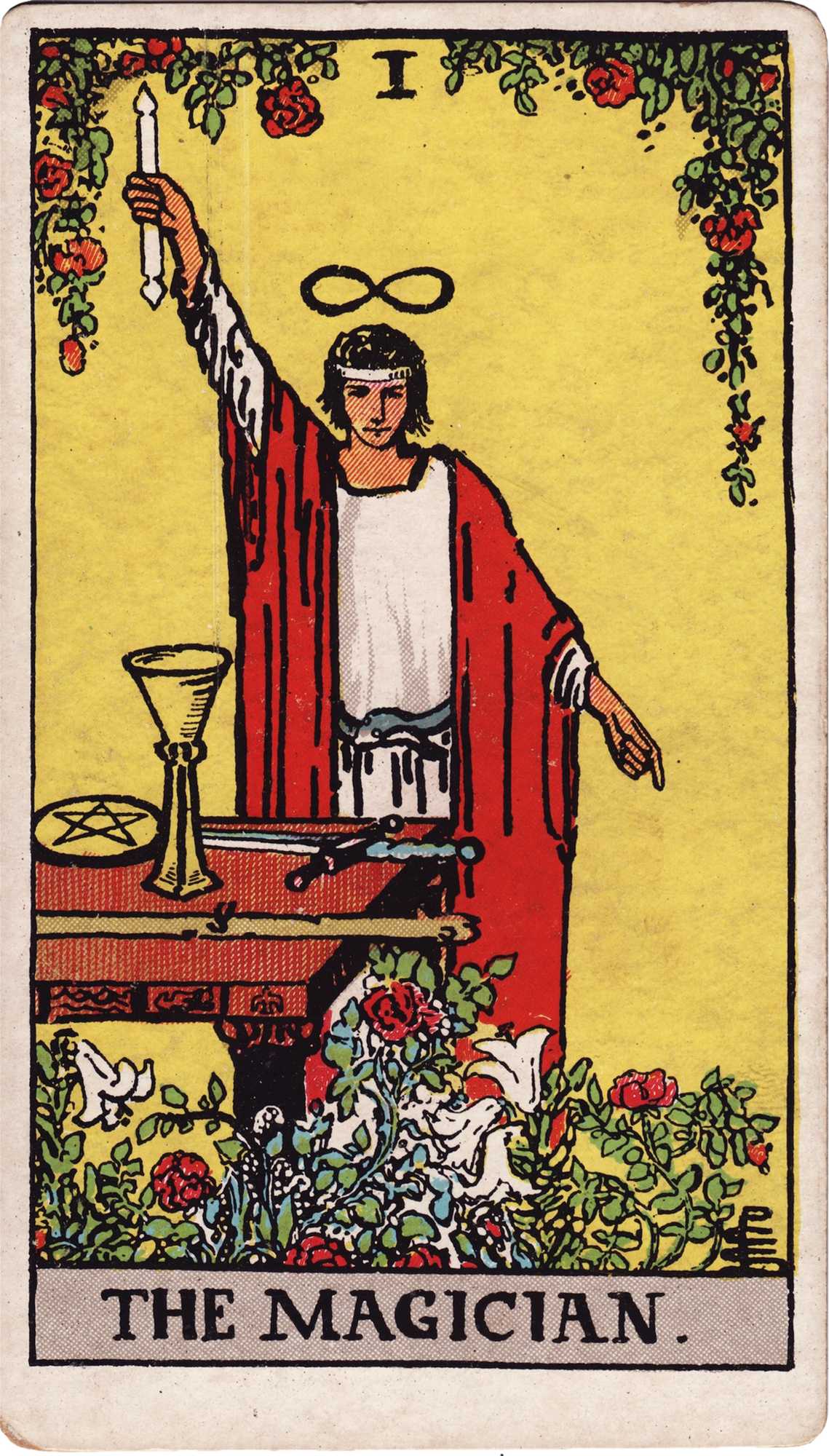 The Magician
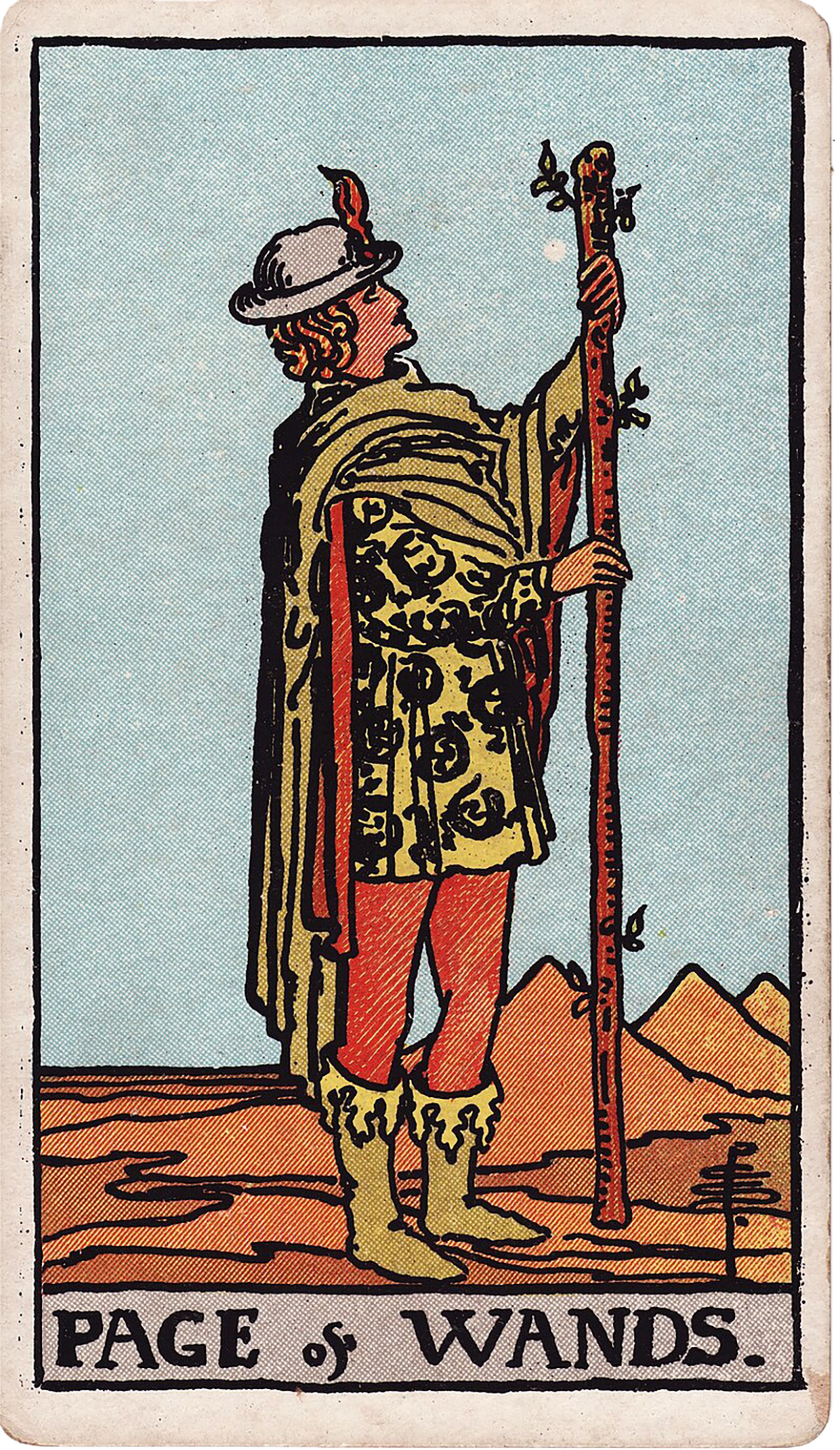 Page of Wands
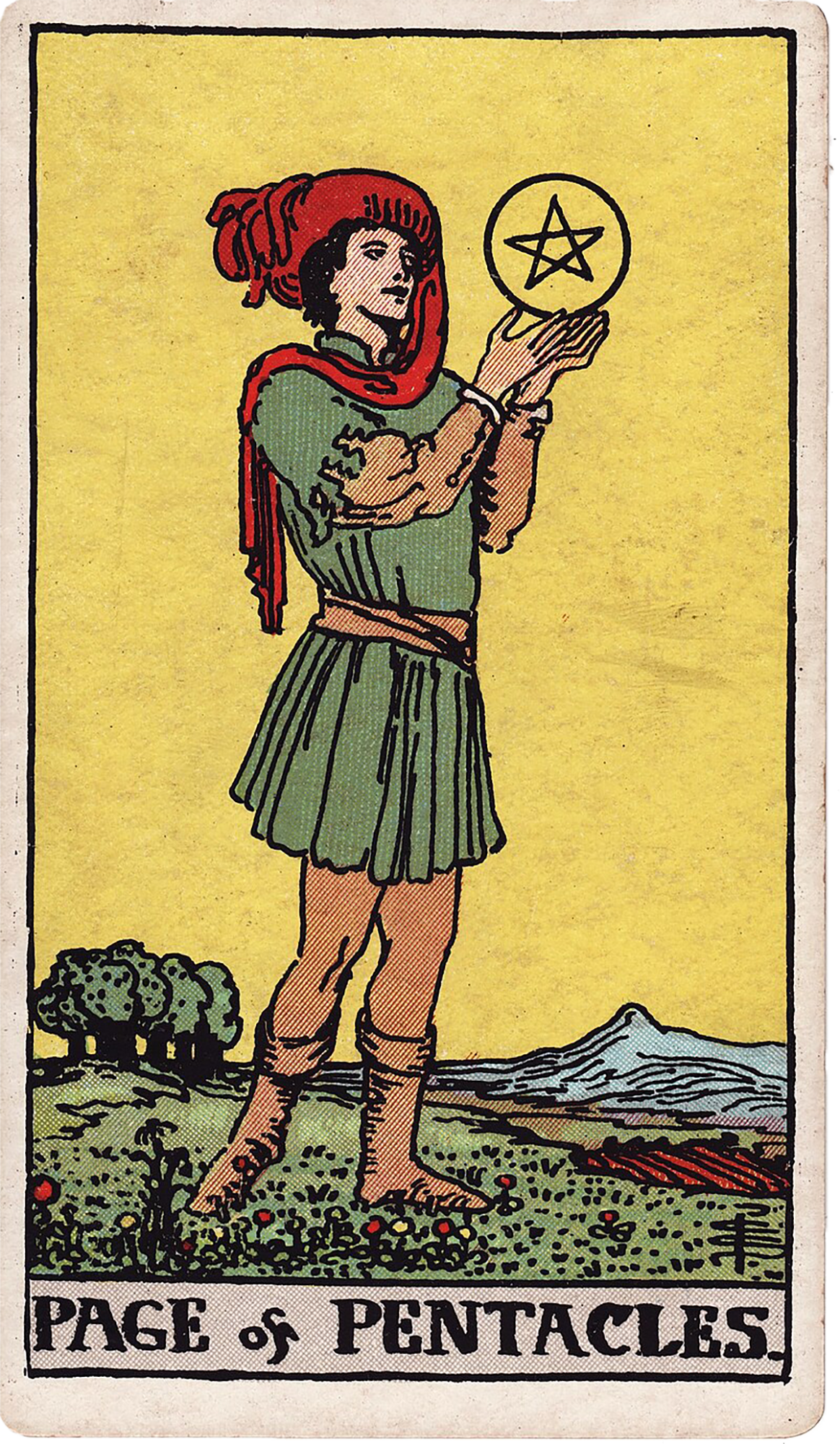 Page of Pentacles
Why match Pages with Major Arcana guides
Pages are traditionally the messengers and apprentices of the suit system: young, curious, introductory energies that point to new information, learning edges, and beginning projects. Pages do not typically describe fully developed competence; they describe the stage where a skill or interest is visible and can be engaged. The Magician, as a Major Arcana archetype, models how available resources can be brought into coherent, deliberate action. When you pair a Page with The Magician, you create a reading that asks not just what the beginner energy is, but how it can be shaped into practice. The Magician’s imagery—one hand directed to the sky and one toward the earth, the infinity symbol above the head, and the four suit tools on the worktable—speaks to concentration, method, and the realistic use of what is present. That combination turns curiosity or a tentative opportunity into an explicit guide for action: how to organize study, where to begin practicing, and what to protect while learning.
Anchoring interpretation in the supplied imagery
Working visually is essential for useful court-card readings. Use the exact imagery of the supplied cards as your primary data point: The Magician and the two Pages (Page of Wands and Page of Pentacles). Notice the details that RWS symbolism consistently emphasizes. On The Magician: the infinity symbol above the head (long-term potential shaped by conscious will); the one-up/one-down gesture (as above, so below—bringing ideas into form); the table with the suit tools (all resources are present); and the red/white garments and flowers (passion and clarity). On Page of Wands: a youth holding a budding staff, an open landscape in the background—this signals nascent creative initiative, excitement, and an appetite to explore despite limited experience. On Page of Pentacles: a young figure studying a single pentacle intently in a grounded field—this signals focus on material learning, careful planning, and discipline of study. Anchor every interpretive step to those visual cues. For example, if the Page of Pentacles looks at the pentacle with concentrated interest and The Magician’s table shows the four tools, read that as an invitation to integrate broad resources (communication, emotional support, mental strategies, practical tools) into a focused learning plan.
Interpretation logic: how the archetypes interact
Use a simple logic when you read the pair: the Page describes the stage, the Major Arcana describes the approach or mentorship energy. Read them as verbs rather than fixed nouns. Ask: What specifically needs to be learned (Page)? How does the Magician suggest turning that into an effective first method? The Magician does not promise effortless success; it prescribes a manner of working: deliberate selection of resources, clear communication, and making a proportionate first move. Example schemas: - Page of Wands + Magician upright = Begin with an experiment that has a clear, controlled parameter. The Magician’s presence invites the Page’s enthusiasm to be channeled into a defined pilot rather than scattered novelty-chasing. Use the staff’s budding life (Wands) with the Magician’s tools to craft a testable action. - Page of Pentacles + Magician upright = A study plan with practical milestones; the Page’s concentration on the pentacle becomes a disciplined apprenticeship. The Magician shows you can use available tools and people (books, mentors, routines) to convert initial curiosity into skillful practice. - Upright Page + Magician reversed = The interest is real but the method or integrity is compromised. The reversed Magician warns about charm without structure, overpromising, or misapplied technique. Treat this as a call to rebuild honest practices (clear goals, accountability) rather than to push harder. - Reversed Page + Magician upright = There is a block or poor beginning (procrastination, unrealistic expectations), but the Magician provides a template for remediation: create a small, concrete project that forces practice and feedback. Read the two cards as a unit and then test the reading against context (question asked, position in the spread, and other cards if present).
Practical two-card spread for skill development
A compact spread for learners: place the Page in position 1 and The Magician in position 2. Position labels: 1) Current stage (Page): What is the learning edge? What energy is present? What needs to be started or noticed? Use the Page’s posture and focal point in the image. For Page of Wands: where is curiosity wanting expression? For Page of Pentacles: what tangible skill or study area is being noticed? 2) Method advice (The Magician): How to act on the Page. Which resource should be prioritized? Which small first move is proportionate? Read The Magician’s tools literally—choose one suit/tool corresponding to a practical activity: communication (cup/sword), tangible practice (pentacle), creative iteration (wand). Match the Magician’s intent to the Page’s suit. Interpretation steps: - Describe what the Page is showing (visual detail + short phrase). - Describe what The Magician is instructing (which resource or habit to apply). - Create a one-week micro-plan: a single observable task that connects Card 1 to Card 2. Example: Page of Pentacles + Magician = "Spend three 30-minute focused sessions practicing one specific technique and log results." Example: Page of Wands + Magician = "Draft and deliver a 5-minute presentation of the idea to one trusted person to test energy and clarity."
Examples anchored in the images
Concrete examples help learners see the translation from card to action. Example 1: Page of Pentacles upright + The Magician upright Reading: The image of the Page studying the pentacle shows a beginner committed to learning a craft or system. The Magician’s table shows all tools are present; his focused posture suggests making an initial method. Actionable plan: identify one tangible skill (coding syntax, a piano scale, a recipe technique), set three measurable practice sessions, and choose one tool (a simple checklist, a teacher, or a recording device) to track progress. Rationale: the Page’s grounded attention matched with the Magician’s resourcefulness produces disciplined apprenticeship. Example 2: Page of Wands upright + The Magician reversed Reading: The Page’s excited staff asks for exploration, but The Magician reversed warns against scattered action or over-promising. Image-based cues: the Page’s open landscape suggests many possible directions; the Magician reversed folds that energy into a question of method. Actionable plan: narrow to one low-cost experiment; write a single hypothesis and one concrete metric of success (e.g., "If I try this approach for two weeks, will I sustain it three times per week?"). Rationale: convert enthusiasm into small, testable trials rather than wide-ranging novelty. Example 3: Page of Pentacles reversed + The Magician upright Reading: The Page reversed suggests procrastination, poor study habits, or unrealistic planning. The Magician upright signals that a workable method exists. Actionable plan: create a micro-habit (5 minutes of focused work daily) and use an external tool from the Magician’s table (timer, checklist, mentor feedback) to anchor practice and accountability. Rationale: the Magician’s instruction is to use available tools to repair the Page’s weakness.
Designing practice tasks from card language
Turn card meanings into measurable tasks by translating visual language to behavior. Use three micro-conversion rules: 1) Focus conversion: If the Page is gazing at an object (Page of Pentacles), make the object into a single skill target (e.g., "master this chord progression"). If the Page is holding a staff (Page of Wands), make the staff into an initial creative output (e.g., "sketch an outline or demo"). 2) Resource conversion: The Magician’s table shows available supports. Pick one literal support and apply it: book, mentor, tool, or environment change. The Magician’s gesture asks you to bring what’s above down into practice—translate an idea into the first physical step. 3) Timebox conversion: Pages are beginning energies and need realistic constraints. Choose a short, timed window (15–30 minutes) and one immediate deliverable: a recording, a paragraph, a small prototype. Keep evaluation simple: yes/no or a single numeric rating. Example conversion: Page of Wands + Magician = "Timebox 25 minutes to create the first draft of a short demo and send it to one person for feedback."
Common mistakes and how to avoid them
When using Page+Magician pairings, readers and querents fall into certain traps. Mistake 1: Treating the Magician as a miracle card. The Magician symbolizes method and resourcefulness, not guaranteed success or instant transformation. Remedy: insist on concrete, proportionate first moves rather than grand schemes. Mistake 2: Dismissing Pages as trivial. Pages communicate early-stage information that is crucial. Remedy: map the Page’s exact domain of learning and respect its scope; even small skills compound. Mistake 3: Ignoring reversals or subtle image cues. A reversed Page often indicates the lesson is known intellectually but not practiced; a reversed Magician flags misuse. Remedy: ask diagnostic questions: what is missing? Is the problem planning, integrity, or follow-through? Mistake 4: Overcomplicating the action plan. The Pages’ energy favors simple, repeatable exercises. Remedy: always reduce to a single, testable next step. Mistake 5: Reading the cards as destiny rather than instruction. Pages and The Magician are about process. Remedy: frame interpretations as options to be tried and adjusted with feedback.
Advanced reading techniques and variations
Once you are comfortable with the basic two-card approach, expand the method. Three-card developmental spread: Page (current learning edge) — Magician (method) — Outcome (short experiment result). Use a simple card or a neutral marker for Outcome: write a single metric before the experiment. This helps create a feedback loop. Sequential timing: Use the Page as "now" and The Magician as "next." This clarifies that the reading advises a transition from curiosity to method. The Magician in a later temporal position reads as the ideal future approach, and you can reverse this if the Magician appears first (Magician then Page), which suggests a missing application of prior skills to a new area. Imagery focus drill: Practice reading by describing three concrete image details for each card and making one micro-plan anchored to those details. For example: The Magician’s infinity sign—plan a recurring short practice; The Magician’s table—select one tool; The Magician’s gesture—choose an actionable ritual to bring idea into form. Pairing for problem diagnosis: If you draw a Page reversed with The Magician reversed, treat the reading as a safety check for ethics and competence: ask whether promises are realistic and whether methods are internally honest. This becomes important in coaching contexts where a querent may be tempted to fast-track competence.
Practicing this method in real life
Make the reading actionable with repeated cycles: 1) Weekly micro-trials: pull a Page + The Magician once per week; translate into one 30-minute task and one evaluation question. 2) Keep a learning log: note the imagery, the micro-plan, the result, and one insight. Over time you will be able to track which Magician-recommended resources reliably help different kinds of Pages. 3) Teach small groups: use the cards to coach a partner. The act of verbalizing image-based advice strengthens interpretive clarity and creates real accountability for practice. 4) Review reversals: when you see reversals, choose a single corrective habit and commit to it for two weeks (e.g., a practice timer, an accountability check-in). Reversals are often temporary and remediable through consistent method.
Closing guidance for learners
The combination of a Page and The Magician is a practical classroom: the Page points to the learning edge and The Magician offers the method. Use the supplied images as literal guides—read the Page’s focal object and the Magician’s table and gestures as instructions for which resource to use and what kind of first move to make. Always convert card language into measurable tasks: limited time, specific deliverable, a single tool or feedback source. Treat interpretations as experiments, not pronouncements. Over time the small practices you design from these readings will compound into genuine skill development rather than remaining occasional inspiration.
Practice questions
• When you look at the Page of Pentacles image, what single tangible skill or detail draws your attention and can be practiced for 15–30 minutes today?
• Which one resource from The Magician’s table would make the biggest difference for your current learning edge, and how can you use it concretely this week?
• If the Page of Wands shows enthusiasm but your last attempts fizzled, what small test (one hypothesis and one metric) could you run to focus that excitement?
• How would you convert a reversed Page into a specific corrective habit over the next two weeks?
• What accountability structure—mentor, timer, checklist, recorded performance—matches the Magician’s instruction for your present project?
Comments
Sign in to comment.
Continue learning
Navigating Conflict Resolution and Inner Struggles with the Five Card Cross Tarot Spread
This article delves into the Five Card Cross Tarot Spread as a practical tool for navigating conflict resolution and inner struggles, especially within family contexts. Using the s...
Mastering the Court Cards of Wands for Unlocking Personal Drive and Leadership
The Court Cards of Wands represent a dynamic spectrum of personal energy, ambition, and leadership potential within the Minor Arcana. This article offers a comprehensive exploratio...
Unlocking Leadership Styles Through the Court Cards of Wands
The Wands court cards—Page, Knight, Queen, and King—offer a rich spectrum of leadership styles rooted in the fiery energy of motivation, creativity, and initiative. This article de...
Understanding the Personalities and Roles of Knight Queen and King of Swords in Tarot
This article delves into the unique characteristics and roles of the Knight, Queen, and King of Swords within the Tarot Minor Arcana, focusing on the family suit and court card les...
Unlocking the Energies of the King Queen and Knight of Cups for Emotional Intelligence
This article delves into the King, Queen, and Knight of Cups from the Minor Arcana's family Suit and Court Cards, emphasizing how these archetypes embody stages and expressions of...
Unlocking Personality Traits Through the Court Cards of Pentacles
This article delves into the personality traits and life lessons embodied by the court cards of Pentacles: Page, Knight, Queen, and King. Grounded in the practical symbolism of the...
Unlocking the Leadership Styles of the King Queen and Knight of Pentacles
This article delves deep into the leadership styles embodied by the King, Queen, and Knight of Pentacles within the Minor Arcana, focusing on the family Suit of Pentacles and its C...
Unlocking the Personality Traits and Roles of the Knight Queen and King of Pentacles in Tarot
This article offers an in-depth exploration of the Knight, Queen, and King of Pentacles cards in the Minor Arcana, focusing on their personality traits, roles, and lessons within t...
Understanding the Court Cards of Pentacles for Practical Wisdom and Grounded Ambition
The Court Cards of Pentacles—Page, Knight, Queen, and King—offer a rich framework for understanding practical wisdom, grounded ambition, and stewardship of material resources. Anch...
Unlocking Personality and Leadership Qualities with the King Queen and Knight of Pentacles
This article delves into the King, Queen, and Knight of Pentacles court cards within the Minor Arcana, focusing on their symbolism of personality traits and leadership within the f...