
Reading Pages Across Suits in Career and Learning Readings
This article teaches how to read the three Pages—the Page of Wands, Page of Swords and Page of Pentacles—when they appear in career and learning readings. It explains the Pages' role in the court family, their elemental differences, Rider‑Waite‑Smith imagery cues, upright and reversed dynamics, methods for combining Pages across suits, step‑by‑step spread techniques, common mistakes and practice exercises that strengthen interpretation skill without promising fixed outcomes.
Cards explored in this article
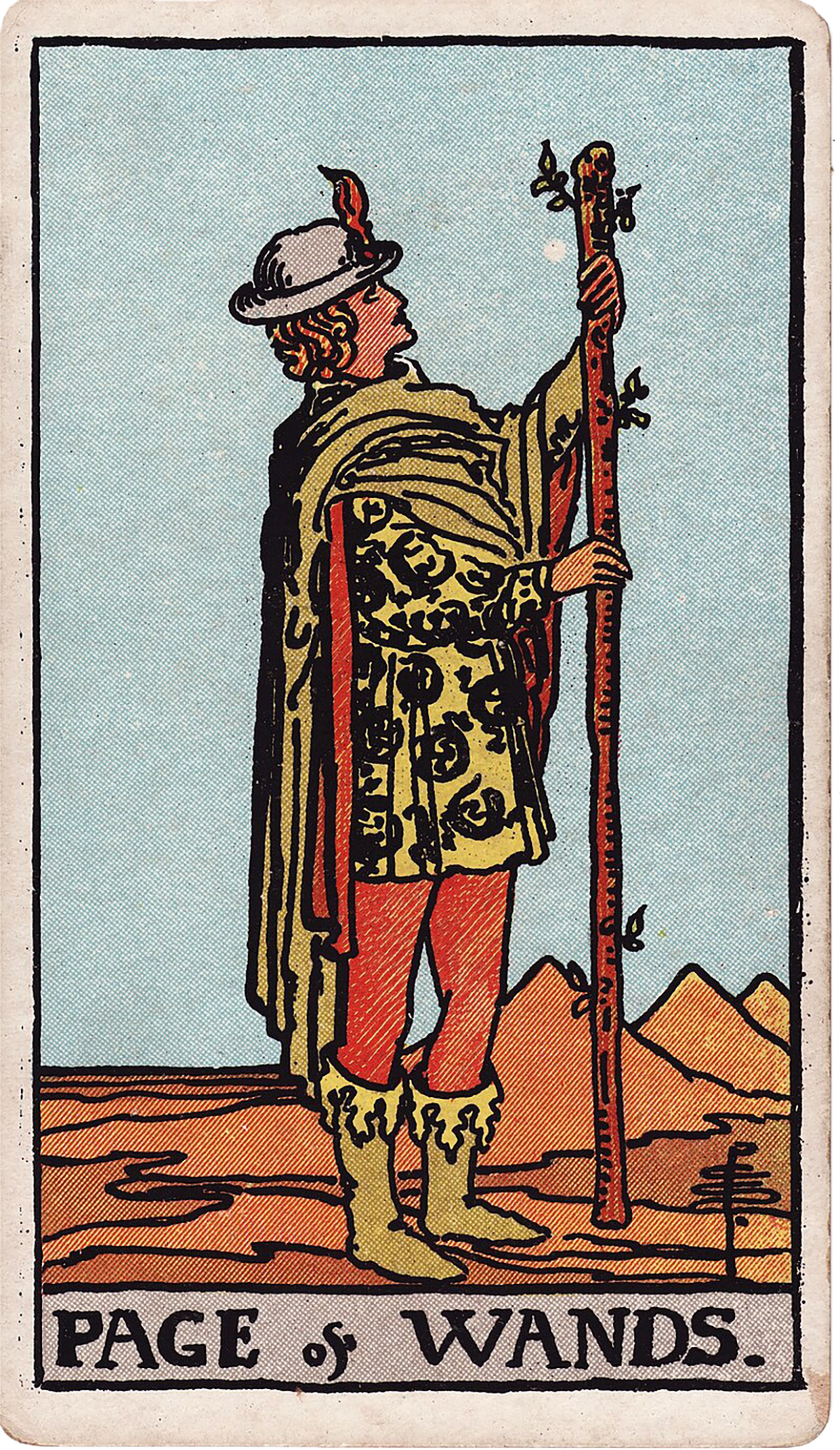 Page of Wands
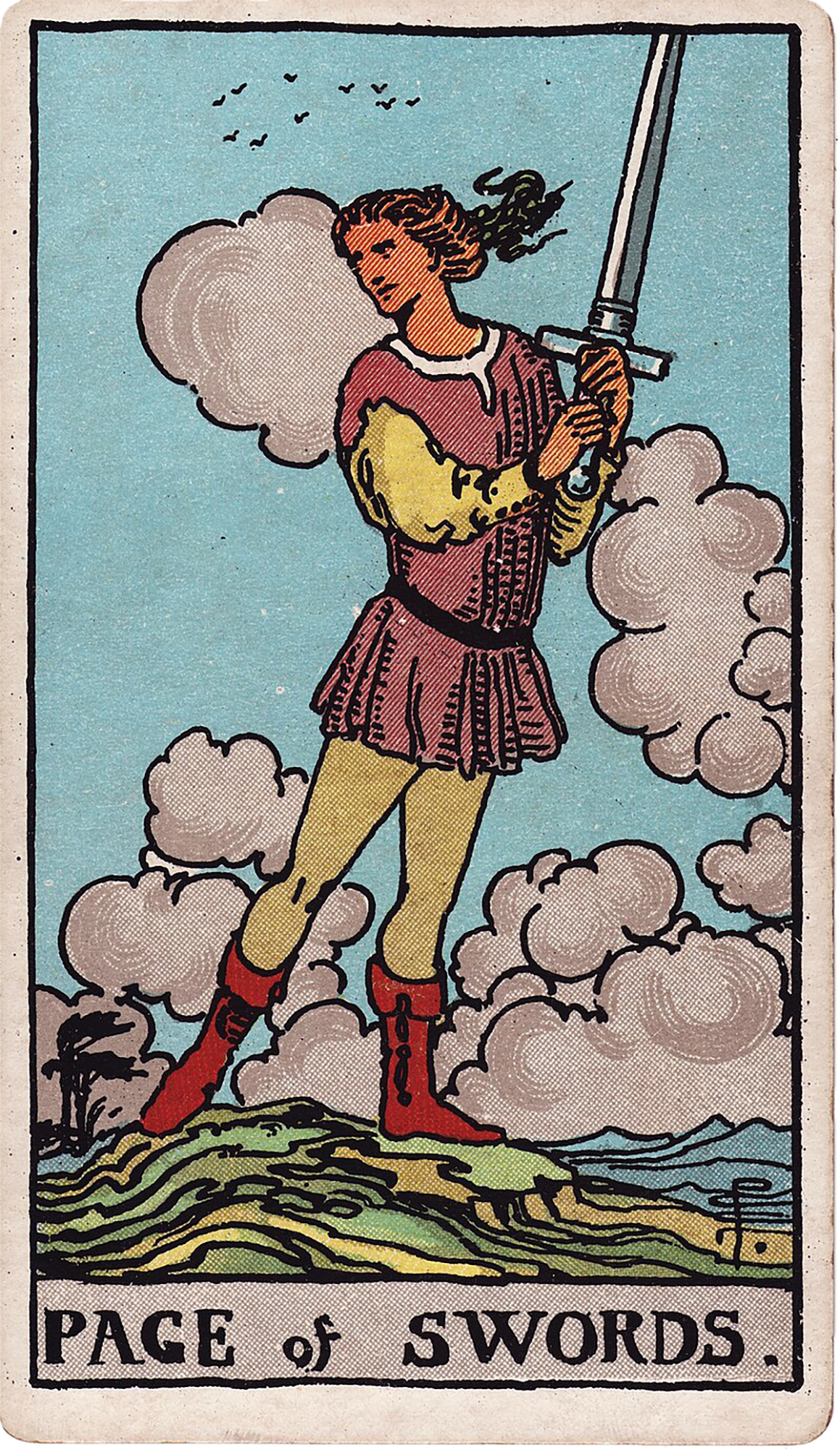 Page of Swords
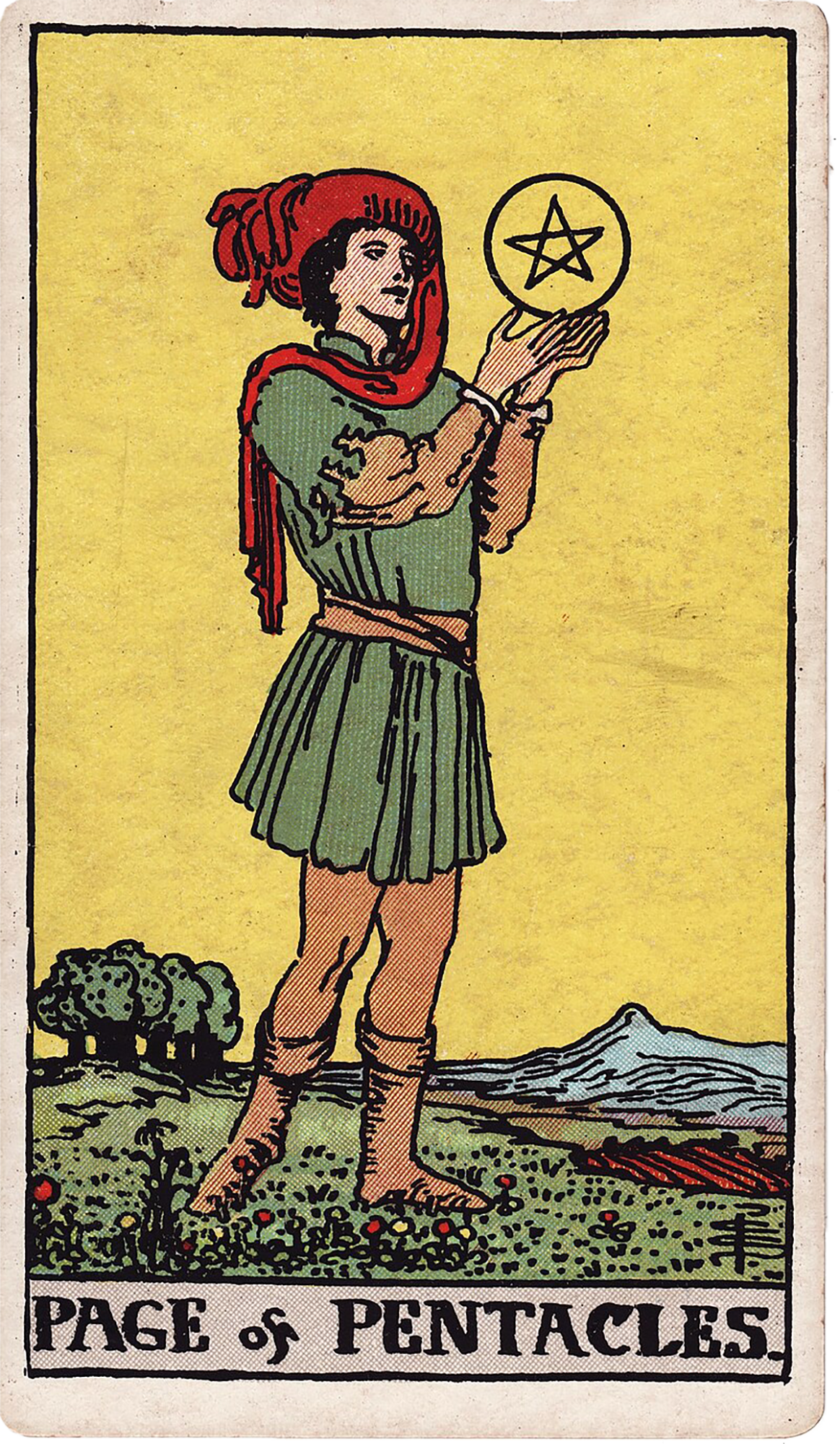 Page of Pentacles
Introduction — Why Pages Matter in Career and Learning Readings
Pages are the court figures most closely tied to beginnings, learning curves and messages. In the context of career and education they do not generally point to final achievements; instead they highlight the earliest conscious steps, the apprentice stage of development or the arrival of new information that will change how the querent approaches work or study. When one of the Pages appears—here, specifically the Page of Wands, the Page of Swords and the Page of Pentacles—the reading is asking you to notice what is still formative: curiosity, the shape of a new plan, the state of practice and the quality of follow‑through. This article is focused on practical interpretation. It aims to teach you how to read those three Pages both alone and together, with attention to the Rider‑Waite‑Smith imagery that often clarifies their message.
The Pages as a Family: Lessons of the Suit and the Court
Court cards function in two complementary ways: they can represent people and personality traits, and they can represent roles, stages and processes. The Pages specifically tend to represent initiation, apprenticeships, messages, invitations and skill seeds. Read as people, they may describe a young person or anyone in an early stage of development; read as roles, they mark a time of learning and experiments. Understanding the Page family across suits gives you a framework for comparison. Each Page embodies the suit's elemental concerns: the Page of Wands brings beginner energy in fire—motivation, identity, creative experiments. The Page of Swords brings beginner energy in air—curiosity, questioning, information gathering. The Page of Pentacles brings beginner energy in earth—practical study, skills, material opportunity. Treat the Pages as complementary lenses: one for enthusiasm and initiative (Wands), one for thinking and communication (Swords), and one for study and craft (Pentacles). In career and learning spreads, this template helps you parse what stage the querent is in and which skill set needs attention.
Rider‑Waite‑Smith Imagery to Watch For
Rider‑Waite‑Smith symbolism provides visual clues that often narrow meaning in a spread. When you study the supplied images, look for the following in each Page: - Page of Wands: The young figure holds a sprouting wand and stands in a partly barren landscape with distant mountains. The wand indicates a seed of project or identity; the desert and mountains suggest potential that will meet resistance and require boldness. Feathers and ornamentation on clothing can suggest inspiration and a youthful, experimental tone. In career terms this imagery often signals a new idea, a tentative job experiment or a first step toward an entrepreneurial impulse. - Page of Swords: The youth stands holding a sword upright, often with wind‑blown hair and active clouds overhead. This posture communicates alertness, readiness to ask questions, and a mental stance oriented toward investigation. Birds and clouds in the background emphasize communication, movement of information and the need to be vigilant about assumptions. For learners, the image points to research, critical questioning and information gathering as primary tasks. - Page of Pentacles: The Page studies a pentacle in hand against a backdrop of fields and rising mountains. This image centers on careful attention to a tangible skill, a piece of study or an offered opportunity. The posture of studying the coin suggests discipline, planning and the early stages of apprenticeship. In career contexts it often indicates an internship, training program, scholarship or entry‑level responsibility that, if nurtured, can become long‑term stability. Use these visual cues as a first filter before you move into verbal interpretation. Ask: where is the figure looking, what is emphasized in the environment, and how does posture suggest readiness or distraction?
Upright and Reversed Dynamics for Each Page
When interpreting the Pages in career and learning readings, always check orientation. The supplied card notes capture practical upright and reversed meanings; integrate them with the imagery. - Page of Wands (upright): Highlights beginner energy in fire—curiosity, experimentation and an idea that invites exploration. The card asks for a response appropriate to a starting stage: try a low‑risk experiment, say yes to a short trial, or respond to an invitation to create. In career readings this can be a new project, a probing application or the first public expression of capability. (Reversed: immaturity, inconsistency, excitement without follow‑through or fear of appearing inexperienced. If reversed, look for where enthusiasm exists but scouting, planning or patience is missing.) - Page of Swords (upright): Highlights mental curiosity, vigilance and the desire to ask questions or gather information. Practically this may mean doing research, requesting feedback, or refining interview questions. In learning readings, it signals the need to sharpen study techniques and keep an investigative attitude. (Reversed: gossip, defensiveness, scattered attention or speaking before understanding. Reversal often signals that thought energy is present but misapplied or anxious.) - Page of Pentacles (upright): Highlights practical learning and the start of a realistic plan. It invites concrete study, the adoption of reliable routines, or taking a material opportunity seriously. In career readings it often points to entry‑level offers, internships or courses that build competence. (Reversed: procrastination, poor study habits, unrealistic planning, or focusing on money without building competence. Reversal asks you to identify where discipline has broken down.) A useful rule is not to treat reversed as simply the opposite of upright, but as a clue to where a learning process is stuck or overexpressed. Reversal often indicates that the lesson is known intellectually but not yet integrated into practice.
How to Read a Single Page in a Career or Learning Spread
Step 1: Identify whether the Page is representing a person, a role or a process. Ask whether the querent recognizes someone who matches the Page's energy (a mentor, a hiring manager, a peer) or whether the card is about the querent's own stage. Step 2: Anchor interpretation in the Page's suit. Use the elemental lens: is the issue about creative initiative (Wands), information and communication (Swords) or study and resources (Pentacles)? For example, the Page of Wands in the present position suggests the querent is at an idea stage and should treat the situation as a small experiment. The Page of Swords in the present position suggests active research is the task. The Page of Pentacles in the present position suggests concentrated study or basic training is required. Step 3: Read imagery details as actionable signals. Where is the Page looking? A Page looking outward may encourage external steps such as networking or auditions. A Page looking at an object (like the Page of Pentacles studying the coin) suggests inward practice: study, certification, or building craft. Step 4: Translate to practical steps: write a short list of one‑week actions that fit the Page's energy. For the Page of Wands, that might be 'pitch a prototype to one colleague'; for the Page of Swords, 'draft three clarifying questions for an informational interview'; for the Page of Pentacles, 'enroll in a short course and schedule three 45‑minute practice sessions per week.'
Reading Pages Together Across Suits: Comparison, Sequence and Tension
When two or all three Pages appear together they form a narrative about early stages across complementary skill areas. Ask these questions in order: - Comparison: Which Page is most active? Which suit shows the strongest energy? The most dominant Page indicates the area where the querent feels most alive or where the opportunity is clearest. - Sequence: Do the Pages suggest a developmental order? Often you want the Page of Swords to precede the Page of Pentacles: research (Swords) then plan and study (Pentacles). The Page of Wands may serve as the initiating spark that prompts the investigation. However, reading should follow what the spread shows, not a fixed script. If the Page of Pentacles appears first, it can mean a practical opportunity arrives before the querent feels creatively inspired. - Tension and balance: Look for mismatch between suits. A Page of Wands paired with a reversed Page of Pentacles may indicate enthusiasm without practical follow‑through; a Page of Swords reversed alongside an upright Page of Pentacles may show scattered thinking undermining a good training opportunity. Example pattern readings: - All upright Pages: The querent is in a rich apprenticeship phase: an idea has arrived (Page of Wands), investigation is underway (Page of Swords), and a concrete learning path or training is emerging (Page of Pentacles). This is a promising early stage if the querent will stay realistic and patient. - Wands upright, Swords reversed, Pentacles upright: Creativity is present and a practical training path exists, but communication or information gathering is muddled. The practical fix is to slow down research, verify sources and clarify terminology before committing. - Pentacles reversed with any other upright Page: A real opportunity may be tempting but lacks structure; encourage habit formation, scheduling and small measurable milestones to prevent procrastination. Always translate these patterns to concrete next steps so the reading helps the querent move forward rather than stay stuck in assessment.
Practical Spreads and a Step‑by‑Step Method
Use compact spreads that emphasize development and actions rather than prediction. Here are two reliable, reproducible layouts. Three‑card Career/Learning Starter Positions: 1) Current stage, 2) Primary obstacle, 3) Practical next step. - Read position 1 as the Page's role: starter spark (Wands), research mode (Swords) or training focus (Pentacles). - Position 2 asks you to apply the Page's reversed meanings if relevant: where is the process immature or stuck? - Position 3 should be a single, measurable action that corrects weaknesses or advances strengths. Five‑card Roadmap for an Entry‑Level Transition Positions: 1) Seed idea or message, 2) Information needed, 3) Necessary skill or training, 4) Short‑term plan, 5) One‑month checkpoint. - Place Pages into positions as they appear. If multiple Pages appear, let their suits guide which position they occupy logically (e.g., Page of Swords in position 2). If a Page appears where it feels out of suit, treat it as a signal that the suit's energy is unexpectedly relevant to that position. Step‑by‑Step Reading Method (for any spread) 1. Ground: Note orientation and dominant suit. Look at the Pages' gaze and posture. 2. Ask: Is the card about person, role or process? Check querent context. 3. Apply imagery: Translate a visual detail into an action verb (study, ask, try, schedule). 4. Check reversals: Identify what is blocked or overdone. 5. Prioritize: Offer one highest‑impact action and one safeguard (e.g., experiment + accountability partner). 6. Close: Ask querent to test the advice for one week and report what changed. These methods keep readings practical and learner‑centered.
Sample Reading Walkthroughs Using Only the Three Pages
Walkthrough A — New Project Unclear (Three‑card Starter) Cards drawn: 1) Page of Wands upright (Current stage), 2) Page of Swords reversed (Obstacle), 3) Page of Pentacles upright (Next step). Interpretation: The Page of Wands upright indicates a fresh idea or spark—an enthusiasm to start something creative. The Page of Swords reversed in the obstacle position suggests research is being done in a fragmented way or that the querent is jumping to conclusions and talking about the project before doing necessary investigations. The Page of Pentacles upright as the next step points to enrolling in concrete study, creating a learning schedule or building a prototype slowly. Actionable guidance: Build a simple, measurable learning plan (Page of Pentacles): three focused study sessions per week. Pause external pitching until one has gathered clear, verified information (address the Swords reversal). Frame the original idea as a short prototype rather than a full‑scale launch (honor the Wands spark while protecting it with study). Walkthrough B — Job Switch Anxiety (Five‑card Roadmap) Cards drawn: 1) Page of Pentacles upright (Seed idea), 2) Page of Swords upright (Info needed), 3) Page of Pentacles reversed (Necessary skill/training), 4) Page of Wands upright (Short‑term plan), 5) Page of Swords upright (One‑month checkpoint). Interpretation: A practical opportunity or job lead is present and looks promising (Page of Pentacles upright). The Pages of Swords upright in positions 2 and 5 insist on ongoing information gathering and clarity—ask for job descriptions, clarify expectations, and prepare questions for interviews. The reversed Page of Pentacles in position 3 warns of gaps in practical skill or inconsistent study habits that must be remedied before transitioning. The Page of Wands in position 4 suggests taking a small courageous step—apply, take an assessment, or do a short freelance trial. Actionable guidance: Use two weeks to identify three concrete skill gaps and enroll in a defined micro‑course; prepare five targeted questions for an informational interview; commit to one demonstrable trial task that showcases initiative (Page of Wands). Reassess at the one‑month checkpoint and repeat Swords‑style inquiry if needed. These walkthroughs show how to translate Pages into real tasks rather than vague advice.
Common Mistakes and How to Avoid Them
Mistake 1: Treating Pages as only people. Court cards can represent roles, stages and processes. Always ask whether the card describes an internal state of the querent, a type of task, or an external person. Mistake 2: Overemphasizing novelty. Pages indicate beginnings, but not all beginnings are equal. Distinguish between disciplined apprenticeship (Page of Pentacles) and scattered novelty (Page of Wands reversed). Force concrete habits for the former; temper impulsivity for the latter. Mistake 3: Ignoring imagery. The visuals provide precise verbs: looking at an object means study; holding energy outward means experiment. Describe these cues to querents to anchor advice in observable detail. Mistake 4: Reading reversal as doom. A reversed Page usually points to where learning is stalled. Treat reversal as a diagnostic question rather than a verdict: what is not being practiced? what is overstated? Mistake 5: Giving only advice and no micro‑commitments. Pages are about starter steps. Always close a reading with one concrete action the querent can complete within a week and one measurable checkpoint.
Interpretation Logic: How to Move from Symbol to Strategy
Good interpretations proceed from three layers: image → suit energy → practical step. Layer 1 — Image: Name what you see. 'The Page of Pentacles is studying the pentacle with a focused gaze; he is grounded in a green field.' This gives you the core verb: study, focus, nurture. Layer 2 — Suit energy: Add the elemental skill: earth = craft and routine; air = analysis and questions; fire = initiative and identity. Combine image and element: a Page of Pentacles studying means disciplined learning about a concrete craft. Layer 3 — Step: Convert to an action with time and measure: 'Schedule three 45‑minute focused practice sessions this week and record one learning outcome per session.' Weigh the cards: when multiple Pages appear, ask which suit supplies the primary obstacle vs the primary resource. Use reversal to indicate process friction and design interventions that specifically address that friction. For example, if the Page of Wands is upright but the Page of Pentacles is reversed, the interpretation logic says the querent has motivation but lacks structure; the strategy is to pair the creative spark with small, repeatable technical steps.
Exercises to Build Skill Reading Pages
1. Daily single‑card drill: Pull one of the three Pages each day and journal three concrete one‑day actions tied to the card's image. Track whether you complete the actions. 2. Imagery mapping: For each Page image, write a short list of verbs the image suggests. For the Page of Swords, list words like 'query, verify, observe, test.' For the Page of Pentacles, list 'practice, log, enroll, measure.' 3. Reversal diagnostics: Practice turning each reversed description into a clarifying question. Example for Page of Wands reversed: 'Where is enthusiasm becoming show without bodywork? What can be simplified so it’s repeatable?' 4. Paired reading practice: Shuffle and draw two Pages. Write two short readings: one where the first card is the present stage and the second is the advice; another where their roles are reversed. Note how meaning shifts depending on assignment. These exercises train you to move quickly from image to practical guidance.
Conclusion — Reading for Development, Not Fate
Pages in career and learning readings invite a learner's stance. They point to beginnings, study, curiosity and the habits that will make ideas last. Whether the Page of Wands, Page of Swords or Page of Pentacles appears upright or reversed, your job as a reader is to translate the visual and elemental language into a concrete, testable step the querent can take this week. Anchor every interpretation in the card's image, identify whether it refers to a person/role/process, and always finish with a one‑week experiment and a measurable checkpoint. That approach turns the Pages from mere symbols into practical coaching tools that help people grow their careers and their skills.
Practice questions
• When you look at the image of the Page of Wands, what immediate action verb comes to mind? Can you turn it into a one‑day task?
• Does the Page of Swords in your spread describe a person who will help you, or a process of inquiry you need to adopt? How would that change your next step?
• If the Page of Pentacles is reversed, what small habit could you introduce this week to rebuild consistent practice?
• When multiple Pages appear, which suit feels dominant and why? How does that suit’s element map to your current learning or career priority?
• How would you translate the literal gaze and posture of each Page into an accountability structure or micro‑commitment?
• What evidence can you gather in one month to test whether the Page's advice is working?
Comments
Sign in to comment.
Continue learning
Navigating Conflict Resolution and Inner Struggles with the Five Card Cross Tarot Spread
This article delves into the Five Card Cross Tarot Spread as a practical tool for navigating conflict resolution and inner struggles, especially within family contexts. Using the s...
Mastering the Court Cards of Wands for Unlocking Personal Drive and Leadership
The Court Cards of Wands represent a dynamic spectrum of personal energy, ambition, and leadership potential within the Minor Arcana. This article offers a comprehensive exploratio...
Unlocking Leadership Styles Through the Court Cards of Wands
The Wands court cards—Page, Knight, Queen, and King—offer a rich spectrum of leadership styles rooted in the fiery energy of motivation, creativity, and initiative. This article de...
Understanding the Personalities and Roles of Knight Queen and King of Swords in Tarot
This article delves into the unique characteristics and roles of the Knight, Queen, and King of Swords within the Tarot Minor Arcana, focusing on the family suit and court card les...
Unlocking the Energies of the King Queen and Knight of Cups for Emotional Intelligence
This article delves into the King, Queen, and Knight of Cups from the Minor Arcana's family Suit and Court Cards, emphasizing how these archetypes embody stages and expressions of...
Unlocking Personality Traits Through the Court Cards of Pentacles
This article delves into the personality traits and life lessons embodied by the court cards of Pentacles: Page, Knight, Queen, and King. Grounded in the practical symbolism of the...
Unlocking the Leadership Styles of the King Queen and Knight of Pentacles
This article delves deep into the leadership styles embodied by the King, Queen, and Knight of Pentacles within the Minor Arcana, focusing on the family Suit of Pentacles and its C...
Unlocking the Personality Traits and Roles of the Knight Queen and King of Pentacles in Tarot
This article offers an in-depth exploration of the Knight, Queen, and King of Pentacles cards in the Minor Arcana, focusing on their personality traits, roles, and lessons within t...
Understanding the Court Cards of Pentacles for Practical Wisdom and Grounded Ambition
The Court Cards of Pentacles—Page, Knight, Queen, and King—offer a rich framework for understanding practical wisdom, grounded ambition, and stewardship of material resources. Anch...
Unlocking Personality and Leadership Qualities with the King Queen and Knight of Pentacles
This article delves into the King, Queen, and Knight of Pentacles court cards within the Minor Arcana, focusing on their symbolism of personality traits and leadership within the f...