
Reading The Devil in Love Work and Recovery
This article is a comprehensive single-card lesson on The Devil using the supplied card image and the supplied upright and reversed descriptions. It teaches how to read The Devil across contexts—love, career, money, advice, challenge, person, outcome, and spiritual reflection—rooted in Rider-Waite-Smith symbolism and practical technique. Learners will practice symbol-led observation, contextual questioning, and proportionate action planning. The piece emphasizes ethical, non-sensational interpretation: the card highlights attachments, desires, and where fear or gratification becomes a form of bondage (upright), or the more private, corrective, or distorted movement away from that energy (reversed).
Cards explored in this article
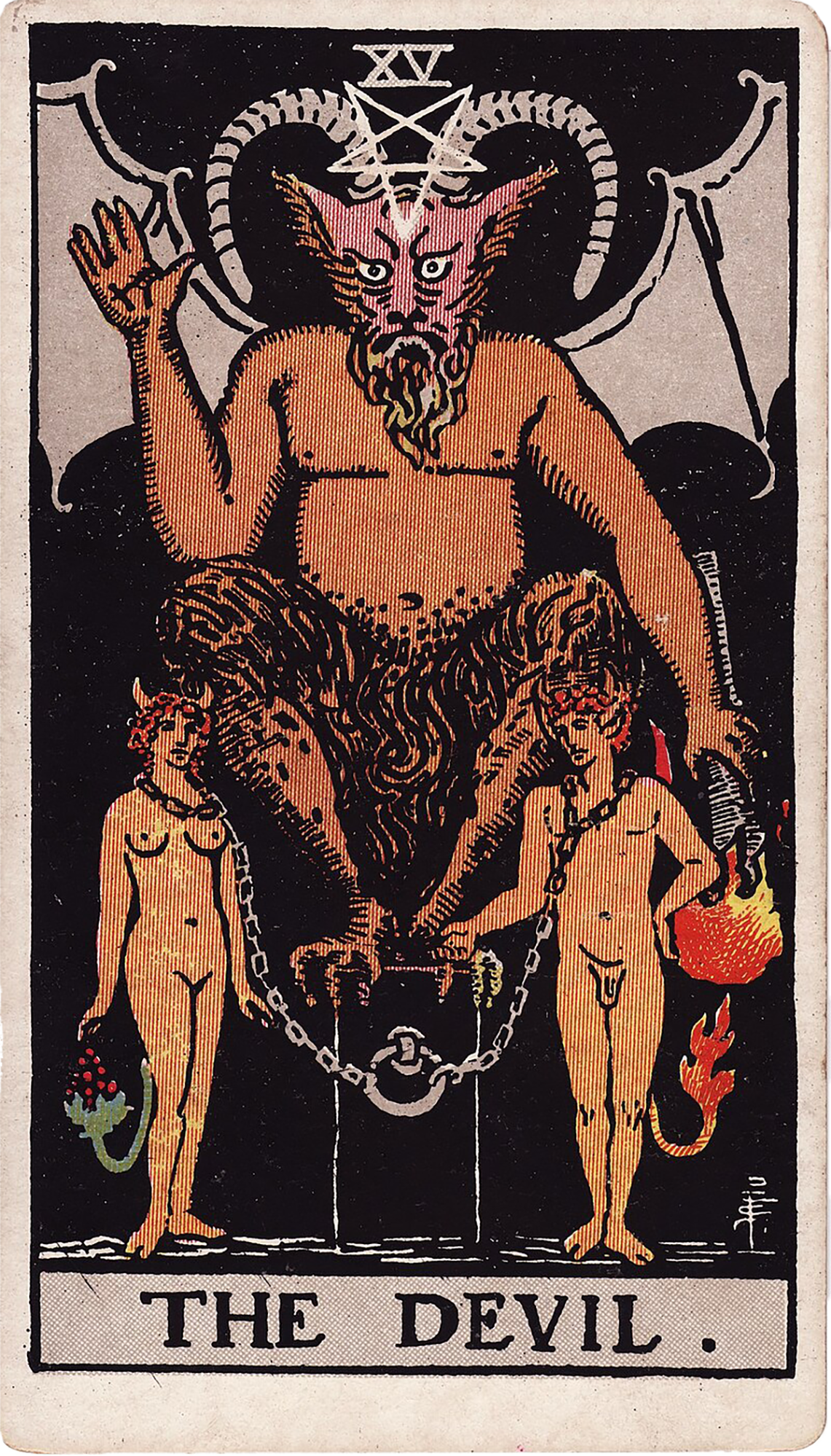 The Devil
Introduction: Work with the supplied card and its given meanings
You are looking at the supplied The Devil card image and the supplied card descriptions. The reading will anchor to both the visual symbols in the displayed card and to the two provided orientation statements: the upright description which emphasizes recognizing unhealthy attachments, naming desires honestly, and seeing where fear or gratification has become a form of bondage; and the reversed description which shifts attention toward breaking a pattern, denial of desire, shame, or the risk of declaring freedom without addressing the root causes. Because this is a single-card lesson, every interpretation must begin from the card as a quality or energy present in the querent's life and then narrow according to the question asked. This article teaches you how to move from image to insight, and from quality to practical action.
Core symbolism to read on the displayed Rider-Waite-Smith Devil
Before you interpret, inventory the image. The classic Rider-Waite-Smith Devil shows a horned, goatlike figure with bat wings and an inverted pentagram on its forehead, seated on a block or altar. At the base are two naked human figures — typically male and female — joined to the pedestal with chains around their necks. The chains are loose enough to be slipped, suggesting that bondage is often voluntary or maintained by belief rather than absolute force. The Devil's expression and the dark environment point to temptation, secrecy, or hidden drives. Notice: the inversion of the pentagram suggests distortion or misuse of power; the goatlike features reference the animal, instinctual dimension of desire; the wings and dark backdrop evoke shadow material; the chained humans speak directly to attachment, dependency, and the appearance of powerlessness. When the supplied upright card text says use what is available now and ask where clearer boundary or deliberate choice would move the situation forward, map those instructions onto these image details. When the supplied reversed card text says attention turns toward breaking a pattern or shame, look at the loose chains and ask whether they are being loosened, ignored, or blamed.
Technique: How to read The Devil as a single-card draw
Step 1 — Clarify your question. Single-card readings require precision: are you asking about a decision, a relationship, money, or a general check-in? Step 2 — Look at orientation. Note whether the supplied card appears upright or reversed. Use the supplied upright text as your first frame: the card emphasizes recognizing unhealthy attachments, naming desires honestly, and seeing where fear or gratification has become a form of bondage. Use the supplied reversed text as your alternate frame: the card often turns attention toward breaking a pattern, denial of desire, shame, or the risk of declaring freedom without addressing what keeps recreating the attachment. Step 3 — Describe what you see. Verbally list the images: the horned figure, inverted pentagram, chains, naked figures, wings, darkness. Resist immediate storymaking; focus on sensory and symbolic details. Step 4 — Translate symbols into lived dynamics. Which part of the querent's life corresponds to animal desire (goat), ritualized belief (altar), voluntary constraint (loose chains), or an inverted moral or power structure (inverted pentagram)? Step 5 — Contextualize to the question. Move from general meaning to specific practical implications using one of the lenses below (relational, structural, behavioral). Step 6 — Suggest proportionate next steps. The upright card invites direct responses, clearer boundaries, deeper honesty, and deliberate choice. The reversed card asks where energy is blocked, internalized, or being superficially declared as resolved. End with an action suggestion grounded in the image: test the looseness of the chain, name the desire aloud, negotiate a boundary, or consult a professional for addiction or abuse dynamics.
Reading logic: energy, agency, and scale
Use three guiding rules when interpreting The Devil: 1) Energy vs. event: Treat the card primarily as an energy or quality (bondage, compulsion, temptation), not a deterministic event. 2) Agency matters: The RWS image includes loose chains, which visually emphasizes that apparent powerlessness often includes an element of choice or unexamined habit. Interpretations that erase agency create disempowerment. 3) Scale and proportion: The Devil can point to a small repeated behavior (daily overspending, a secret sugar binge) or to systemic abuse or structural exploitation. Your task is to assess scale with context clues from the question, the querent's life, or follow-up draws. Avoid turning the card into a moral verdict; it names dynamics to work with.
Upright The Devil across contexts
Upright frame reminder: The supplied upright text emphasizes recognizing unhealthy attachments, naming desires honestly, and seeing where fear or gratification has become a form of bondage. Use this as your interpretive lens. Love and relationships: The Devil upright often flags codependency, intense sexual magnetism that overrides boundaries, or a relationship that trades safety for gratification. On the displayed card the naked, chained figures visually express exposure and entanglement. Ask: who benefits from the dynamic? Which boundaries are absent? Practical reading phrasing: 'You are seeing where the pull of desire or fear keeps you attached; a direct boundary or honest naming of needs would change the pattern.' Career and work: The card can show a workplace that exploits ambition, a boss who uses fear to motivate, or a career path driven purely by status and material gratifications. The inverted pentagram on the Devil's forehead can signal distorted values—power or money used as ends in themselves. Money and resources: In a financial question the Devil can point to debt driven by compulsive consumption, addictive spending, or making financial choices to maintain an image. The imagery of chains corresponds to obligations or contracts that feel binding. Advice (upright): The upright card encourages specific actions: identify the immediate attachment, name the desire honestly, lay one clear boundary, and commit to a proportionate next step. Challenge (upright): The main challenge is denial—failing to name the attachment because it feels shameful. Use the image to focus: if the chain is loose, practice the physical metaphor by testing your options in small steps. Person (upright): As a people card, The Devil may represent an archetype: a magnetic, controlling person or someone who brings temptation. It can also indicate the querent's shadow side—what they are unwilling to admit. Outcome (upright): If the question is outcome-oriented, upright indicates the situation becomes vividly present and actionable but not necessarily resolved. You can see what needs to change; now choose the next deliberate action. Spiritual reflection (upright): The card asks for shadow work—look honestly at desire, ask where fear masquerades as necessity, and practice small rituals that reclaim agency (symbolically slipping the chain).
Reversed The Devil across contexts
Reversed frame reminder: The supplied reversed text highlights breaking a pattern, denial of desire, shame, or the risk of declaring freedom without addressing the root causes. Read the reversed image as energy turned inward, interrupted, or distorted. Love and relationships: Reversed, The Devil can show the start of disentanglement—one person sees the pattern and is beginning to act, or it can show reactionary moralizing where desire is denied rather than integrated. The loose chains become ambiguous: are they being picked at, or used to prove virtue? Career and work: In a work reading reversal can mean someone is leaving a toxic workplace but hasn't yet addressed why they chose it before. Alternatively, it may show secretism being transformed into private, internal struggles. Money and resources: Reversal can indicate attempts to cut off spending without addressing the urge, leading to relapse; or it can indicate a private restructuring of value systems. Advice (reversed): Do not assume reversed equals ‘good.’ Ask whether the querent is running from desire, weaponizing shame, or taking real steps to dismantle the pattern. Suggest combined strategies: practical scaffolding (budgeting, therapy, accountability) plus compassionate inquiry into motivations. Challenge (reversed): The trick is premature freedom. Someone may declare they are free and yet keep repeating the same behaviors in new forms. Person (reversed): May depict someone hiding their desires, or someone trying to prove holiness through self-denial without healing. Outcome (reversed): Likely partial correction—a beginning, not a conclusion. Watch for relapse or for inner transformation that needs external support. Spiritual reflection (reversed): Focus on integration rather than moral victory. Re-member desire into conscious life; practice nonjudgmental shadow dialogues rather than theatrical renunciation.
Practical reading method with examples
Use this reproducible method when The Devil appears in a single-card draw. 1) Context-check: Repeat the querent's question out loud to anchor scope. 2) Image inventory: Describe three strongest visual elements from the supplied card—for example: inverted pentagram, chained naked figures, horned figure. 3) Map to dynamics: In three words name the dynamics these images name (e.g., appetite, bond, inversion of ethics). 4) Ask targeted follow-ups: For love: What keeps you returning to this person? For money: What are you buying to cover an ache? For work: Where do you accept fear-based conditions for status? 5) Offer two actions: a behavioral test and a boundary experiment. Behavioral test example: If money is the issue, track one week's spending with no judgment to see patterns. Boundary experiment example: In a relationship, say this sentence: 'I notice I feel pressured when you do X. I need Y to feel safe.' 6) Scale and timebox: Frame the action in a week or month; small tests reveal whether chains are loose or welded. Example reading 1—Love (upright): Querent asks if they should leave a relationship. Image inventory: chained figures, intense gaze, inverted sign. Interpretation: Bondage by desire and fear. Action: Have an honest conversation naming needs; set a two-week boundary test. Example reading 2—Money (reversed): Querent asks about credit card debt. Image inventory: loosened chains, inward gaze. Interpretation: Attempt to 'stop spending' without addressing the emotional pattern. Action: Pair spending freeze with 1:1 therapy or a support group; create a spending plan that addresses triggers.
Common mistakes and how to avoid them
Mistake 1: Moralizing the card. Avoid declaring The Devil as 'evil' and the querent as 'bad.' The RWS image emphasizes pattern and choice; the goal is awareness and agency. Mistake 2: Reading reversal as automatically positive. The supplied reversed text explicitly warns reversal may show denial or premature declarations of freedom; check neighboring context and ask follow-ups. Mistake 3: Overreading violence. The chains are loose; do not assume physical abuse without other signs. Contrast the image with other evidence. Mistake 4: Missing scale. The Devil can point to a daily habit or a systemic exploitation; ask questions that identify scale. Mistake 5: Offering spiritual-salvation-only solutions. For addiction or abuse, always recommend professional help and practical safeguards in addition to shadow-work suggestions. Practice tip: when you feel shock or moral panic, breathe and return to the image list and the upright/reversed frames; the card wants clarity, not drama.
Integrating The Devil into recovery and therapy contexts
The Devil is frequently relevant to recovery work because it names compulsion, attachment, and the ways shame keeps patterns hidden. When reading for someone in recovery or therapy, do three things: 1) Respect boundaries and clinical limits. Never offer therapeutic 'fixes' in place of licensed care. 2) Use the image to facilitate narrative work: ask the querent to describe the chain—when did they first feel it? Who taught them the story that the chain is necessary? 3) Offer small, measurable actions that coordinate with treatment: create a safety plan, enlist sponsor or therapist, record triggers, and practice naming desire without acting. The supplied upright text's instruction to 'work with what is available now' dovetails with harm-reduction practices. The reversed text's warning about declaring freedom prematurely can be a gentle check against overconfidence in early recovery.
Working with The Devil in ethical readings and client care
When you read The Devil for others, center consent and empowerment. Share interpretations as possibilities, not certainties. If the image points to abuse, ask safe, non-leading questions: 'Are you safe now?' 'Would you like resources?' Keep a list of local support services and hotlines. If the card suggests addiction or self-harm, recommend professional support and, when appropriate, immediate intervention. Use concrete language when advising boundary experiments: name the action, the time frame, the expected observation, and the contingency plan. Encourage follow-up: a single-card reading naming a pattern is an invitation to continued work, not a one-off verdict.
Practice checklist and journaling prompts
Practice checklist: 1) Draw The Devil as a single card with a specific question. 2) Inventory three visual elements and write one-sentence symbolic meanings. 3) Note orientation and attach the supplied upright or reversed frame. 4) Create one behavioral test and one boundary experiment. 5) Timebox both experiments. 6) Record outcomes and repeat a week later. Journaling prompts: • Describe the chain on the card as if it were a sentence—what does it say? • Where in my life do I feel the pull of the goatlike instinct? • What name can I give to the desire I usually hide? • If the chain were to slip this week, what small action would reveal that change? These practices train you to read the image as both map and prompt, and to keep the querent's agency central.
Conclusion: From image to sustained work
The Devil in a single-card reading is both a warning light and a utility tool. Anchored to the supplied upright and reversed descriptions, the card names where attachment, desire, and fear have become structural in someone's life and invites proportionate response. The Rider-Waite-Smith imagery—horned figure, inverted pentagram, chained naked figures—gives concrete metaphors for how bondage is experienced and how it can begin to be released. Use the practical method here: clarify the question, inventory the image, map symbols to dynamics, ask targeted follow-ups, and propose small, testable steps. Remember the two recurring cautions from the supplied texts: upright asks for honest naming and deliberate choices; reversed warns against premature declarations of freedom and highlights interior distortions. Read with compassion, preserve agency, and link symbolic insight to practical, ethical action.
Practice questions
• When you look at the supplied Devil image, which detail feels most uncomfortable and why?
• Where in your life might a loose chain be an accurate metaphor—something you could unhook if you chose?
• If the card appears upright for your situation, what is one honest sentence you can say about your desire or attachment?
• If the card appears reversed, where might you be denying desire or declaring freedom without changing habits?
• What small boundary or behavioral test can you implement this week to check whether the pattern holds or slips?
• Who would you contact or what professional support might be appropriate if the Devil image points to exploitation or addiction?
• How can you practice naming a desire without acting on it—what steps would help you observe the impulse without judgment?
• What would integration of this shadow look like in three months' time?
Comments
Sign in to comment.
Continue learning
Interpreting the Dance of Justice and The Devil: Balancing Morality and Temptation in Tarot Readings
The combination of Justice and The Devil in tarot presents a profound exploration of morality, temptation, and personal accountability. This article unpacks how these cards influen...
Understanding The Devil Card in Overcoming Addictions and Finding Personal Freedom
The Devil card, often misunderstood as purely negative, offers profound insights into addiction, bondage, and personal empowerment when approached with awareness. This article unpa...
Using the Five Card Cross Spread to Navigate Ethical Dilemmas with Confidence
The Five Card Cross spread is a practical and versatile tool for exploring complex ethical dilemmas and making confident decisions. This article guides learners through each positi...
Mastering Dual Interpretations with The Hanged Man and The Devil in Tarot Readings
This article guides tarot learners through mastering the dual interpretations of The Hanged Man and The Devil cards. Using traditional Rider-Waite-Smith symbolism and supplied card...
Unlocking the Dynamics of The Devil and The Tower for Facing Life's Challenges
This article delves into the rich and complex relationship between The Devil and The Tower tarot cards as a powerful combination for navigating significant life challenges. By grou...
Understanding the Devil Card in Overcoming Personal Shadows and Temptations
The Devil card in the Tarot deck is often misunderstood as a simple symbol of evil or misfortune. However, its true power lies in illuminating unconscious bonds, desires, and fears...
Unlocking Emotional Healing and Hope with The Star and The Devil Tarot Combination
This article delves into the powerful card combination of The Star and The Devil from the Rider-Waite-Smith tarot deck, revealing how their symbolic interplay unlocks pathways to e...
Understanding the Multifaceted Role of The Devil in Overcoming Inner Blocks and Personal Growth
The Devil tarot card holds deep lessons about unhealthy attachments, fear, and desire that can both block and catalyze personal growth. This article explores The Devil’s upright an...
Exploring The Devil Card in Overcoming Inner Blocks and Embracing Personal Freedom
The Devil card in tarot embodies complex themes of attachment, desire, fear, and bondage. This article examines how The Devil’s upright and reversed positions provide deep insights...
Understanding The Devil Card in Overcoming Inner Blocks and Personal Growth
The Devil card in Tarot is often misunderstood as a purely negative omen, but in truth, it offers profound insights into the nature of inner bondage, unhealthy attachments, and the...