
Teaching Negotiation Skills with the Court Cards of Swords
This article shows how the Page, Knight, Queen and King of Swords can be used as a structured curriculum for negotiation skills. Anchored to Rider–Waite–Smith imagery and the supplied upright and reversed meanings, it maps each court card to a stage or role in negotiation—information-gathering, assertive approach, boundary management and principled authority—and gives practical drills, a four-card negotiation spread, sample readings, and common pitfalls to watch for when teaching or learning.
Cards explored in this article
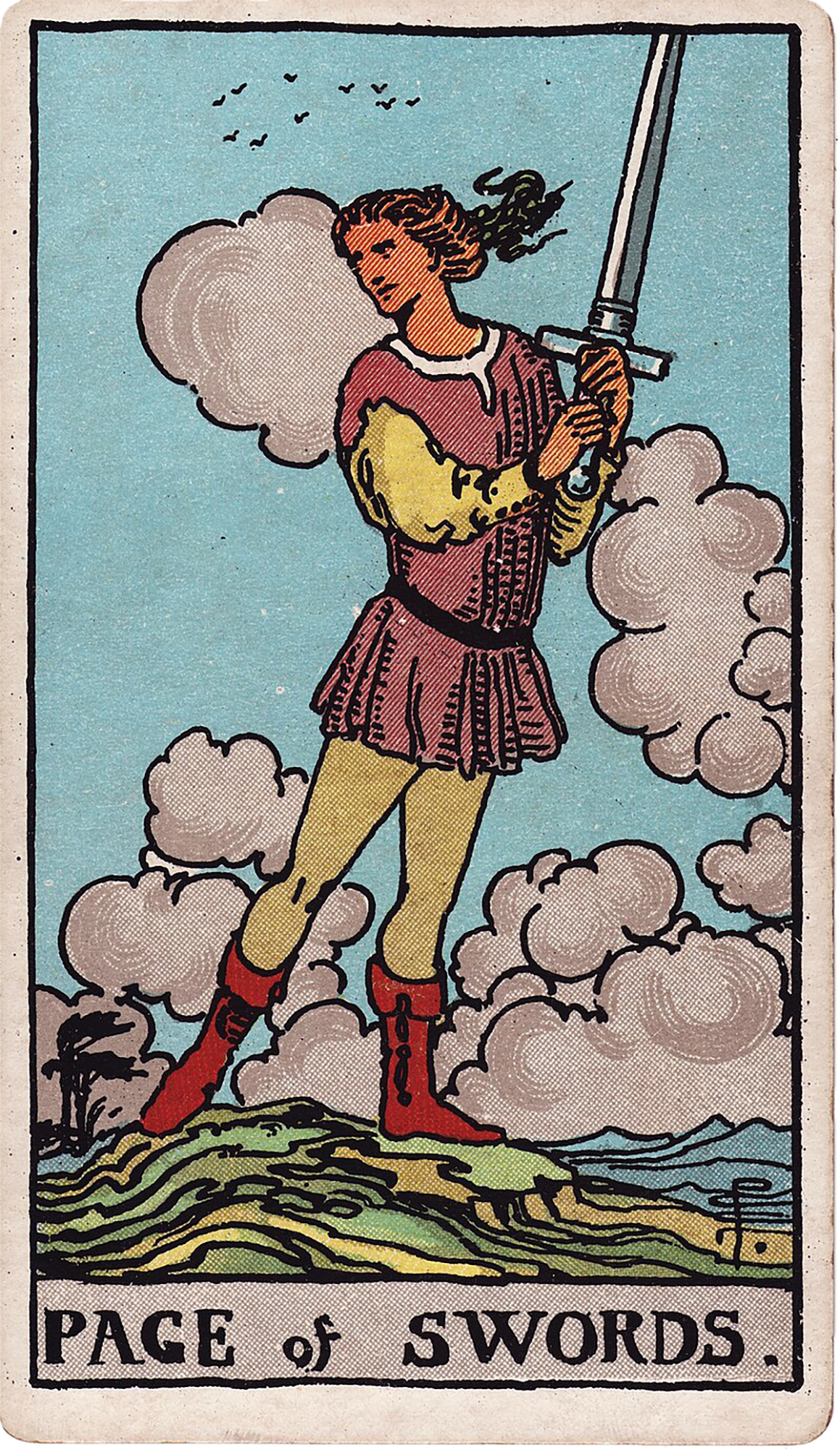 Page of Swords
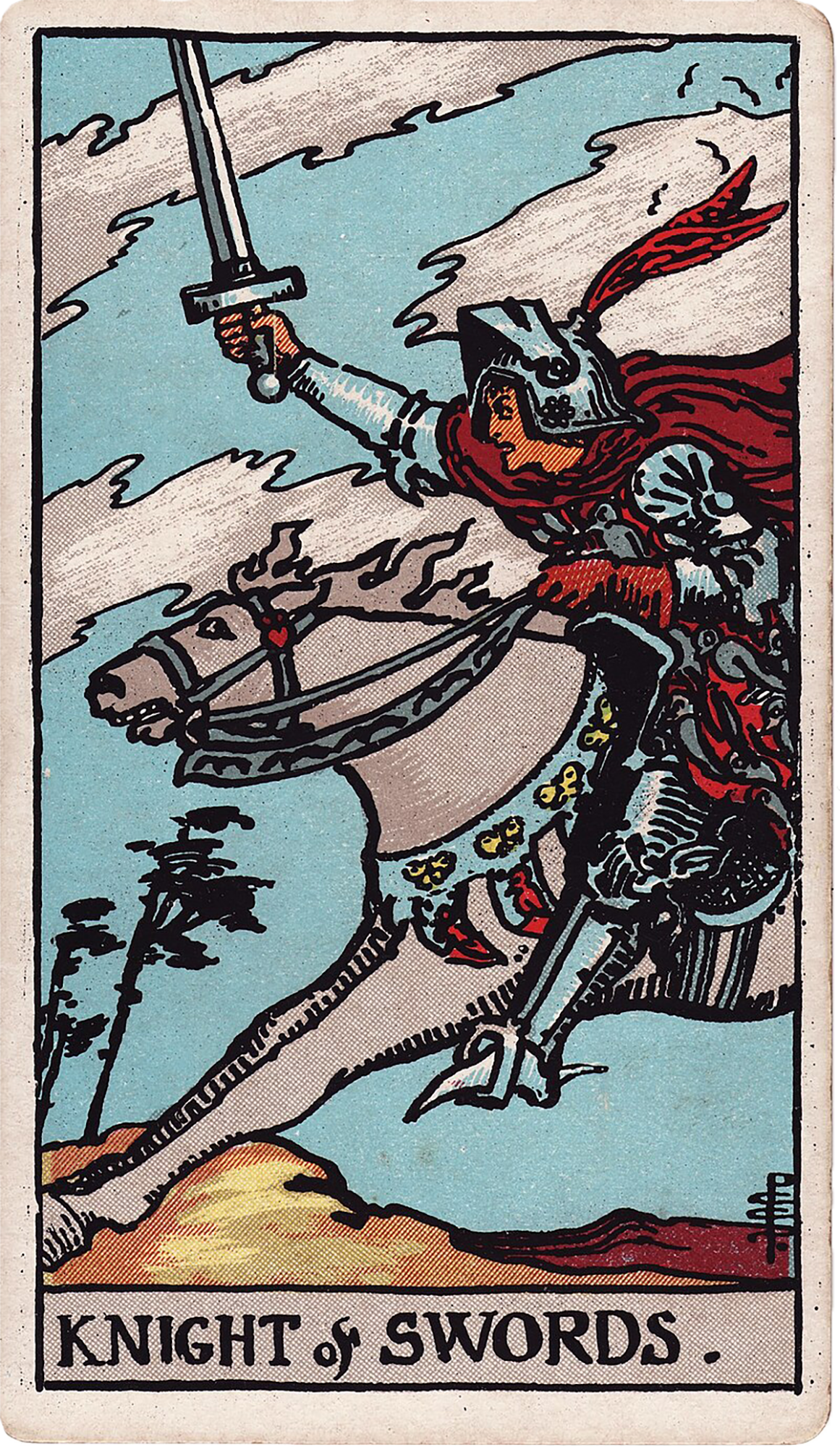 Knight of Swords
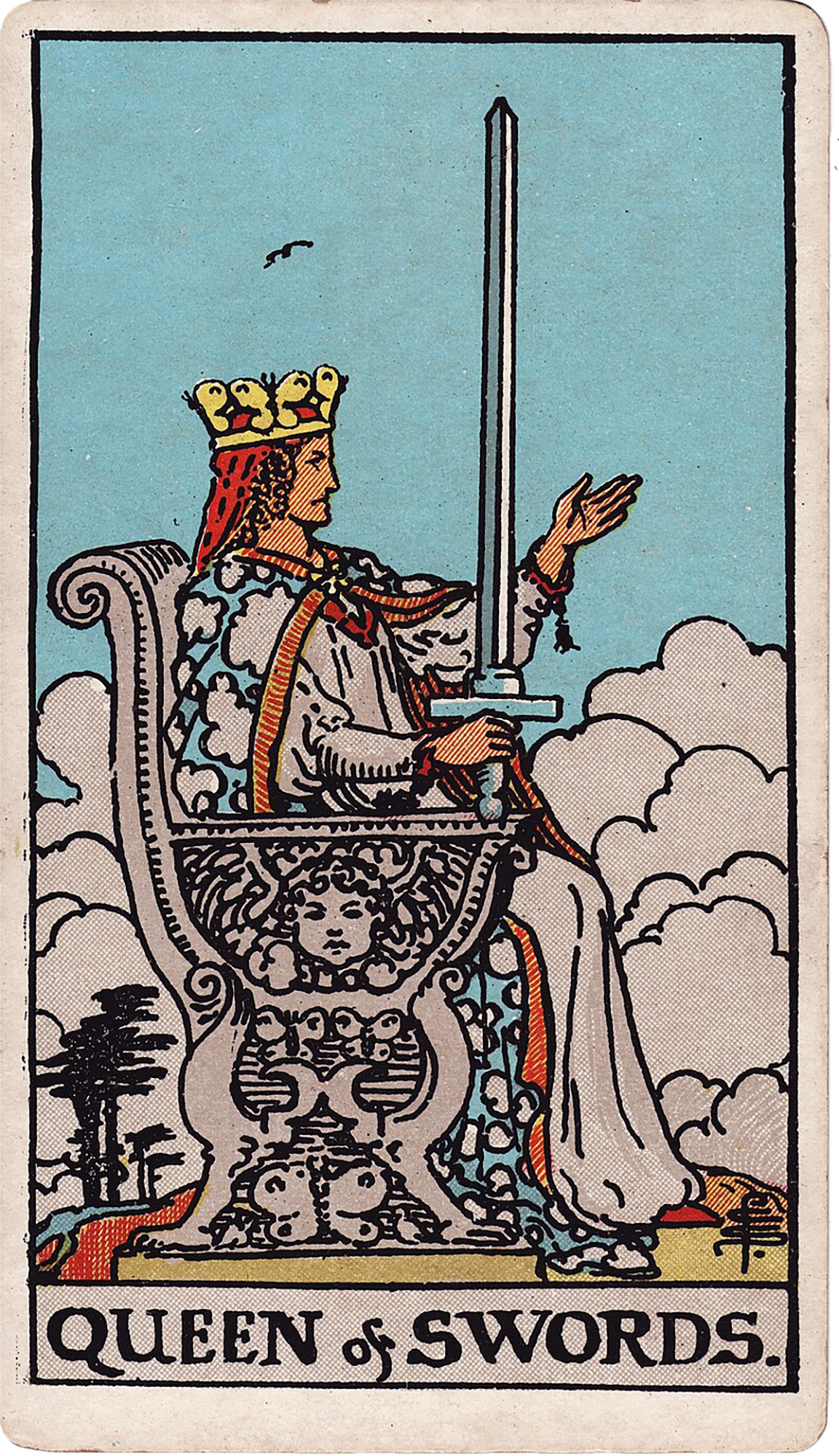 Queen of Swords
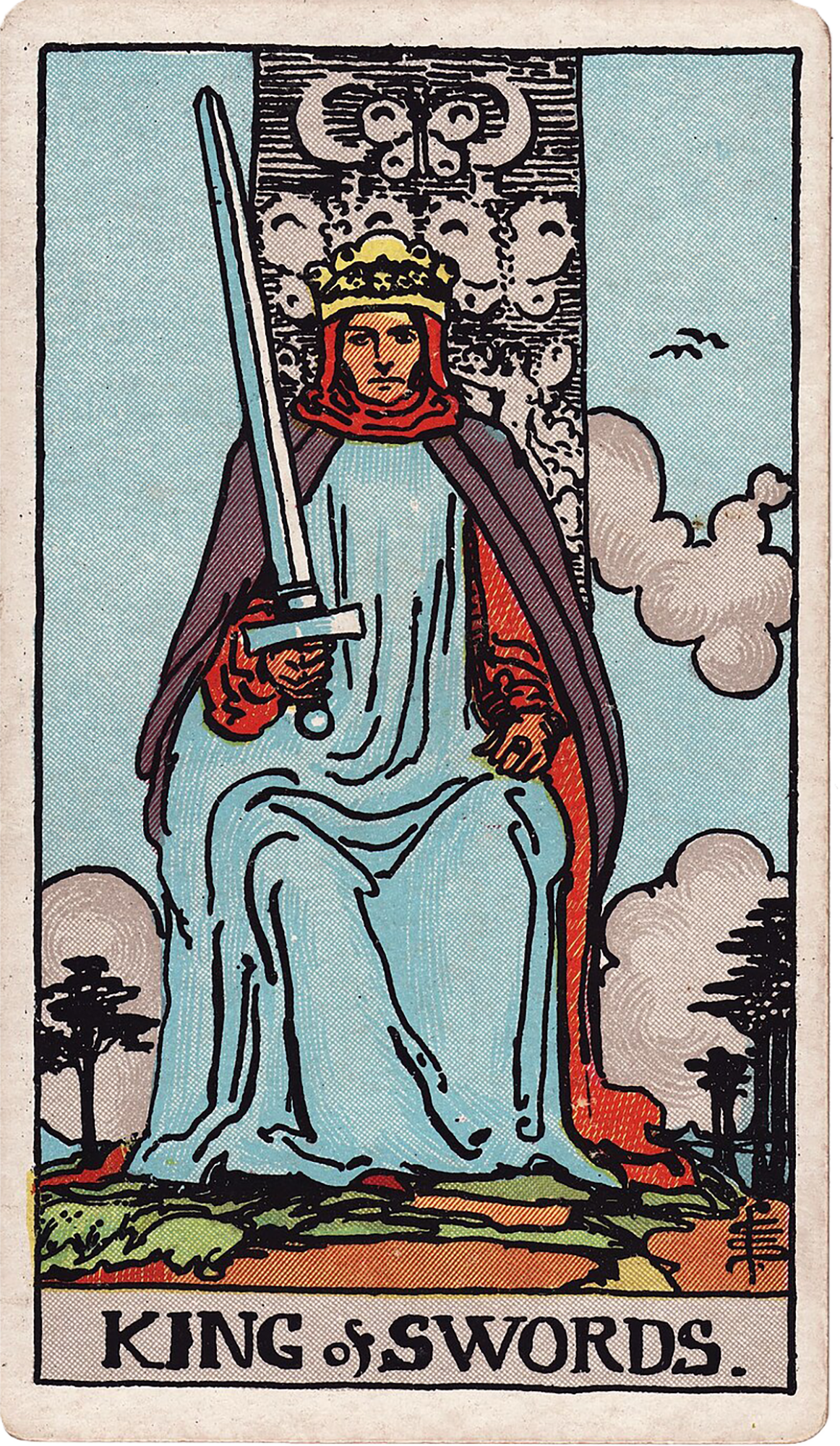 King of Swords
Introduction: Why the Court Cards of Swords Teach Negotiation
The Swords suit governs thought, speech, conflict, strategy and the consequences of mental habits. Its court cards—Page, Knight, Queen and King—are ideal pedagogical tools because they personify discrete and teachable modes of thinking and communicating. When you teach negotiation you are teaching a sequence of mental and communicative stances: gather accurate information, make a clear approach, hold humane boundaries, and marshal judgment and principle when decisions are needed. Each of the four supplied court cards embodies one of those stances in Rider–Waite–Smith symbolism. Using them as archetypes lets learners practice specific skills and notice how shifting from one stance to another changes negotiation outcomes.
Reading the Cards as Negotiation Roles and Stages
Before examining each card, adopt two reading principles: first, read the Swords court cards primarily as modes of communication and decision-making rather than simple personality types; second, treat upright and reversed positions as process diagnostics—not moral judgments. The upright card descriptions you supplied emphasize practical responses that fit the present stage. The reversed entries direct attention to where the process gets stuck and what needs simplification, practice, or release. Use the court cards in two complementary ways: (A) as role models—people or personas learners can inhabit (e.g., the Page as the questioner) and (B) as stages in a negotiation sequence—what to do first, next, and how to escalate or close. Both approaches are useful in training and in reading for practice.
Page of Swords: Curiosity, Vigilance and Information-Gathering
Image and symbolism: In Rider–Waite–Smith the Page of Swords is young, alert, holding the sword upright against a gusting sky. The posture suggests attention and readiness to ask questions rather than immediate action. Use the literal elements—youthful energy, an upright sword, wind—as teaching anchors: curiosity (the open gaze), active listening (the steady grip), and situational scanning (the wind and movement around the figure). Upright lesson: Upright, the supplied meaning emphasizes mental curiosity, vigilance and the desire to gather information. Teach learners to start negotiations with the Page stance: prepare clear questions, verify facts, and keep a practical rather than idealized aim. Exercises: craft fact-checking checklists, practice neutral question frames ("Can you help me understand…"), and roleplay fact-gathering with a timer to prevent premature argument. Reversed warning: The reversed text highlights gossip, defensiveness, scattered attention or speaking before understanding. When a learner behaves like a reversed Page, they may jump to conclusions, spread unverified information, or provoke by asking leading questions. Training fix: practice pausing, summarizing what was said, and asking one clarifying question before responding. Use the Page reversal as a prompt to simplify: what single question will move the negotiation forward? Teaching tip: Use the Page to teach active listening and source discipline. Show the card image, ask learners to describe what the Page notices first, then translate those observations into usable preparatory actions: facts to confirm, stakeholders to identify, and assumptions to surface.
Knight of Swords: Assertive Approach and Decisive Movement
Image and symbolism: The Knight rides forward—horse in motion, cloak flying—symbolizing rapid, decisive momentum. The Knight’s posture is forward-leaning and purposeful in RWS imagery, signaling a cut-through mentality. This card is your archetype for the first assertive move when sufficient information exists. Upright lesson: As your approach stance, the upright Knight of Swords is about swift decisive action and courage in debate. Teach learners to use the Knight when an opening must be claimed or a clear proposal needs to be presented. Exercises: short-prep declaration drills (one-minute briefings of an offer), debate sparring with rules that reward clarity and speed, and planning "cut-through" statements that remove ambiguity (e.g., "Here's the proposal I’m prepared to implement and why it matters"). Reversed warning: Reversed, the Knight calls out recklessness, verbal force, tunnel vision and ignoring nuance. In negotiation this looks like bulldozing, threats, or proposals that don't consider consequences. Corrective practice: slow the pace, run a consequence checklist, and call a timeout to include missing voices. Teach learners to ask: "What am I risking by moving this fast?" Teaching tip: Couple Knight practice with Page preparation. Encourage learners to distinguish between moments that call for research (Page) and moments that call for decisive movement (Knight). Using the two together reduces the risk of Knight-as-rush and Page-as-overscan.
Queen of Swords: Clear-Minded Independence and Boundary Work
Image and symbolism: The Queen of Swords sits composed, sword upright, gaze clear and uncompromising. In RWS she is often depicted with a distant horizon and a single bird—clarity, solitude, and intellectual discernment. She represents the negotiation skill of setting humane boundaries while valuing honesty. Upright lesson: The Queen is the model for maintaining honest boundaries and communicating truth without unnecessary cruelty. Teach learners to frame limits as clear statements of need plus respect for the other's dignity ("I can’t accept X, but here’s what I can do"). Exercises: boundary-script practice, tone calibration drills (same content in three registers: neutral, harsh, and Queen-level clear), and writing one-line statements that package a boundary and a rationale. Reversed warning: Reversed the Queen points to bitterness, excessive criticism, isolation or using intellect to dodge emotion. Students trapped in a reversed Queen posture may win the argument but lose the relationship. Training fix: integrate empathy practice—reflective listening and naming emotional stakes—so the Queen’s clarity becomes connective rather than isolating. Teaching tip: Use the Queen as the card for tone and policy. She is the classroom model for people who must enforce rules or protect team boundaries while keeping the door open to future collaboration.
King of Swords: Strategic Judgment and Principled Authority
Image and symbolism: The King of Swords sits sturdily, holding his sword as a symbol of principled decision-making. The RWS King conveys measured authority and the ability to weigh evidence and principle. He is not merely powerful; he is deliberate—an exemplar of mature intellectual authority. Upright lesson: The King trains learners in strategic judgment: making decisions based on principle and evidence, and communicating those decisions with clarity. Teach the King for negotiating final offers, arbitration, or when someone must summarize a complex discussion into a policy or ruling. Exercises: evidence-based closing drills, roleplay as an impartial arbiter, and practice giving reasoned rationale for a decision in a concise statement. Reversed warning: Reversed, the King indicates coldness, intellectual arrogance, manipulation or abuse of authority. Students in a reversed King role can prioritize procedure over people or use rules to silence others. The corrective is accountability practice: require transparent criteria, invite dissenting perspectives, and practice humility in decision explanations. Teaching tip: Use the King to teach ethical closing skills. Recruit him as the card that reminds learners to justify decisions with evidence, to avoid using authority as a shortcut, and to hold the frame when necessary without dehumanizing participants.
A Four-Card Negotiation Spread Using the Swords Court Cards
Design a focused spread that can be used in training or in practice readings with students. The spread's four positions map directly to the supplied court cards and let learners interpret upright and reversed dynamics in context. Spread positions and prompts: 1) Page of Swords — "What information or questions must be addressed first?" (preparation, assumptions, intelligence gaps) 2) Knight of Swords — "What is the clearest, most decisive approach available now?" (initial offer, assertion, tempo) 3) Queen of Swords — "What boundaries and tone will keep the negotiation sustainable?" (limits, dignity, communication style) 4) King of Swords — "What principle or judgment should guide the outcome?" (decision criteria, arbitration stance) How to read: Start with the Page to diagnose the data situation. If the Page is upright, treat it as permission to ask and gather; if reversed, focus on simplifying questions and curbing gossip. Move to the Knight to decide whether to act and how quickly; an upright Knight suggests assertive speech, a reversed Knight warns against reckless pushes. The Queen calibrates tone and boundary; read her upright as clear humane limits, reversed as a sign to soften critique and restore relational connection. End with the King to identify principled criteria for closure; the King upright asks for evidence-based judgment, reversed signals a need to check for arrogance or manipulation. Practical use in class: Have learners draw the four cards for mock negotiations and write a one-paragraph negotiation plan using the cards’ combined guidance. Debrief by asking which card they found easiest and most difficult to inhabit, and why.
Sample Readings and Classroom Scenarios
Scenario A — Workplace Raise: - Page upright: Research shows comparable salaries within the company; gather documentation and timelines. - Knight upright: Prepare a concise ask with a clear justification and timeline ("I request a 7% adjustment effective next quarter") and be ready to state it confidently. - Queen upright: Set boundaries about how you'll accept feedback and what you won't accept (no vague promises). Use a calm, clear tone. - King upright: Decide what criteria will determine your decision to accept or escalate (e.g., a written offer, timeline for future review). If, for example, the Knight reversed appears, warn the learner against demanding an immediate decision or issuing ultimatums. If the Queen reversed appears, watch for sarcasm or bitterness—coach to reframe. Scenario B — Family Boundary around Caregiving: - Page upright: Ask clarifying questions about needs and capacity among family members; gather concrete tasks and time estimates. - Knight reversed: If the Knight shows reversed energy, resist the urge to impulsively take over; instead, slow down and redistribute tasks after clearer data collection. - Queen upright: Communicate boundaries with compassion (“I can help X days per week but not Y”), keeping the door open for negotiation on the schedule. - King upright: Use evidence (work schedules, medical appointments) to make principled decisions and create a clear plan. Use these examples in roleplay where one student draws the card and assumes that stance while others respond. After each roleplay, ask what changed when a card flipped reversed—this makes the process dynamics concrete.
Common Mistakes When Teaching or Reading These Cards
Mistake 1: Treating reversed cards as moral failure. Reversed Pages, Knights, Queens or Kings often indicate a temporary process issue (too much or too little of an energy) rather than a character flaw. Frame reversals as solvable skill gaps. Mistake 2: Over-identifying students with cards. Court cards are stances to be practiced, not fixed labels. Encourage rotational practice so learners can inhabit defense, assertion, boundary-setting and judgment in turn. Mistake 3: Ignoring the suit context. Remember these are Swords: the focus is on communication and cognition. Avoid using court cards of Swords as emotional comfort tools; they teach clarity, not consolation. Mistake 4: Using the King as a shortcut to authority. Teach students that the King’s authority should be exercised with transparency and evidence. A King without Queen-level empathy or Page-level information is brittle. Mistake 5: Skipping the sequence. Training that starts with the Knight’s action without Page preparation or Queen boundary work risks reckless moves or burned relationships. Encourage sequencing practices in drills.
Practical Exercises, Drills and Assessment
Exercise: Page Minute. Pair learners. One plays an information source; the other has 60 seconds to ask clarifying questions and summarize the response. Rotate and provide feedback focused on specificity and avoidance of assumptions. Exercise: Knight Brief. Each learner has two minutes to state a clear proposal. Others score the brief for clarity, speed and acknowledgement of consequences. Exercise: Queen Boundary Scripts. Students write three boundary statements for different registers (clinical, compassionate, firm). Roleplay softening or toughening the tone while keeping content constant. Exercise: King Evidence Log. Have learners decide a negotiation outcome and write a one-paragraph evidence-based rationale that would make that outcome defensible to an impartial third party. Combined Assessment: Run a composite simulation where teams prepare (Page), present (Knight), negotiate tone/boundaries (Queen) and produce a final decision with justification (King). Evaluate on information quality, clarity of offer, respect for boundaries, and rigor of final justification. Homework: Ask learners to keep a negotiation journal and mark each negotiation episode with which court card stance they began from, which they shifted into, and what caused the shift. Over time they will see patterns.
Interpretation Logic and How to Combine Upright and Reversed Meanings
Interpretation logic requires combining: image cues, upright/reversed meanings (as process indicators), the immediate question, and practical constraints. Use this simple algorithm in readings: 1) Identify whether the card is functioning as role or stage. 2) Read upright text as the recommended skill; read reversed text as the diagnostic of what is stuck. 3) Translate the card into a practical next move—one concrete action. 4) Reassess after that move. Example of combining readings: If the Page upright is followed by the Knight reversed, the logic says: you have enough questions answered to act, but don't. The problem is not lack of information—it's premature impulsivity or scattered energy; the fix is to slow and consolidate the Page’s data into a single tight proposal so the Knight's energy becomes disciplined rather than reckless. Always ask: What is the smallest action implied by this card that will change the negotiation dynamic? The cards are practical prompts; in training, insist that every reading ends with a single next action.
Teaching Strategies and Facilitator Notes
Use the imagery: When teaching, display the supplied card images and ask learners to narrate what the scene suggests about posture, gaze and motion. Ask: Where in the image is energy concentrated? What would the figure do next? Encourage embodied practice: Have learners stand or sit in the posture of each court card for a minute and speak from that stance. Voice and body change communication; the Queen’s steady posture produces a different tone than the Knight’s forward lean. Use reflective debriefs: After roleplays, debrief by asking which card energy felt most foreign and which most natural. That awareness guides individualized practice. Scale complexity: Start novices with single-card exercises (practice being Page-only) then move into two-card sequences (Page then Knight) and finally full four-stage simulations. Ethical note: These cards teach power and authority; emphasize consent, transparency and humility. The King’s authority should never be an excuse for coercion; the Queen’s clarity should not be cruelty.
Conclusion: From Image to Skill
The Page, Knight, Queen and King of Swords form a compact curriculum for negotiation: learn to ask (Page), to move when appropriate (Knight), to hold boundaries with dignity (Queen), and to decide with principle (King). Anchoring exercises to the Rider–Waite–Smith imagery supplied—the windblown Page, the charging Knight, the composed Queen and the measured King—gives learners concrete gestures and scripts to practice. Treat upright meanings as recommended skills and reversed meanings as signs of where the process is stuck. The most practical outcome is a habit: learners who can shift deliberately between these stances will negotiate more clearly, ethically and effectively.
Practice questions
• Which Swords court card stance do you find easiest to inhabit and why?
• When was the last time you acted like a reversed Page of Swords? What stopped you from asking one simple clarifying question?
• Describe a recent negotiation. Which moment would have benefited from a Queen of Swords boundary statement?
• How do you decide when to move from a Page-style information phase to a Knight-style assertive phase?
• What evidence would you need to feel comfortable making a King of Swords decision in your current negotiation?
• How might you coach someone who habitually uses a reversed Knight (recklessness) in negotiations?
• Create one 30-second 'King' closing statement for an issue you care about. What evidence do you include?
• How can you teach the difference between Queen clarity and Queen cruelty in language practice?
Comments
Sign in to comment.
Continue learning
Navigating Conflict Resolution and Inner Struggles with the Five Card Cross Tarot Spread
This article delves into the Five Card Cross Tarot Spread as a practical tool for navigating conflict resolution and inner struggles, especially within family contexts. Using the s...
Understanding The Knight of Swords in Communication Conflict and Career Challenges
The Knight of Swords represents swift, decisive action, intellectual courage, and the power of clear communication in Tarot reading. This article examines how this card operates in...
Exploring The Queen of Swords in Communication Leadership and Emotional Clarity
The Queen of Swords card represents mental clarity, honest boundaries, and communication rooted in truth without cruelty. This article explores its upright and reversed meanings ac...
Using the Five Card Cross Tarot Spread to Enhance Conflict Resolution Skills
The Five Card Cross Tarot Spread is an effective tool for personal insight and conflict resolution, particularly in family or practical relational settings. This article guides lea...
Understanding the Meaning of The King of Swords in Leadership and Communication
The King of Swords in the upright position represents mature intellectual authority, strategic judgment, and decisions grounded in principle and evidence. This article explores the...
Understanding the 2 of Swords in Decision Making and Emotional Balance
The 2 of Swords is a powerful tarot card that focuses on decision making and emotional balance. Upright, it highlights a decision held in suspension due to incomplete information o...
Using the Relationship Five Card Spread to Enhance Emotional Connection and Resolve Conflicts
The Relationship Five Card Spread offers a structured yet flexible framework to examine interpersonal dynamics, especially within family relationships. This article guides learners...
Using the Relationship Five Card Spread to Navigate Emotional Needs Communication and Conflict Resolution
The Relationship Five Card Spread is a practical tool for exploring interpersonal dynamics, emotional needs, communication patterns, and conflict resolution. This article breaks do...
Understanding the Multifaceted Meanings of the Queen of Swords in Communication and Personal Boundaries
The Queen of Swords embodies clarity, independence, and honest communication, serving as a powerful symbol for setting and respecting personal boundaries. This article delves into...
Using the Five Card Cross Spread to Enhance Emotional Balance and Conflict Resolution
This article offers an in-depth guide to the Five Card Cross spread tailored for emotional balance and conflict resolution, emphasizing practical reading techniques and interpretat...