
Turning Court Card Energies into Clear Coaching Questions
This article teaches a method for translating court-card images and their Rider–Waite–Smith meanings into precise coaching questions. Using the Knight of Wands, Queen of Cups, King of Swords, and Page of Pentacles as repeated anchors, you will learn technique, common mistakes, a stepwise reading method, sample scripts, and exercises to practice turning archetypal energy into usable insight for clients.
Cards explored in this article
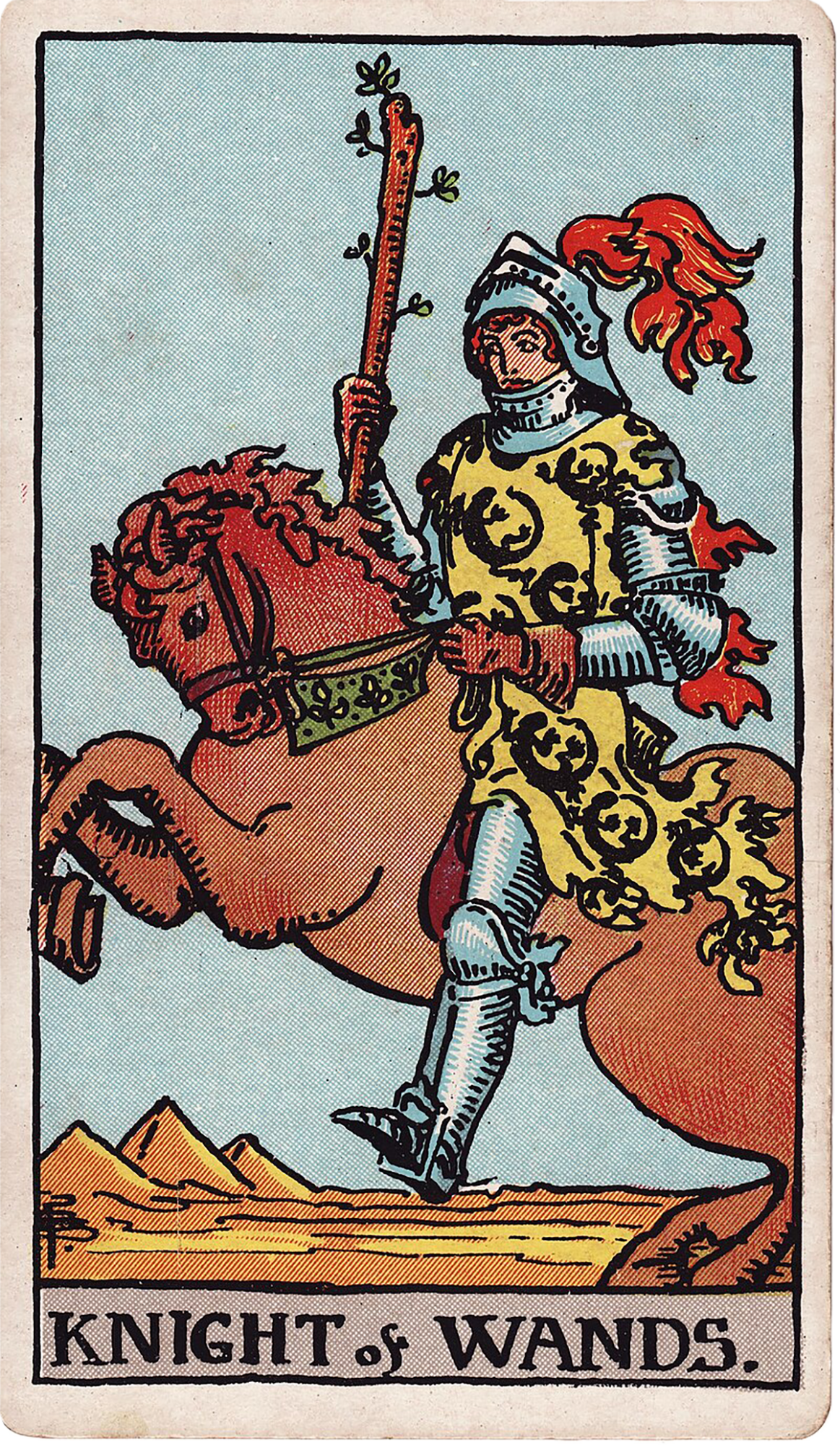 Knight of Wands
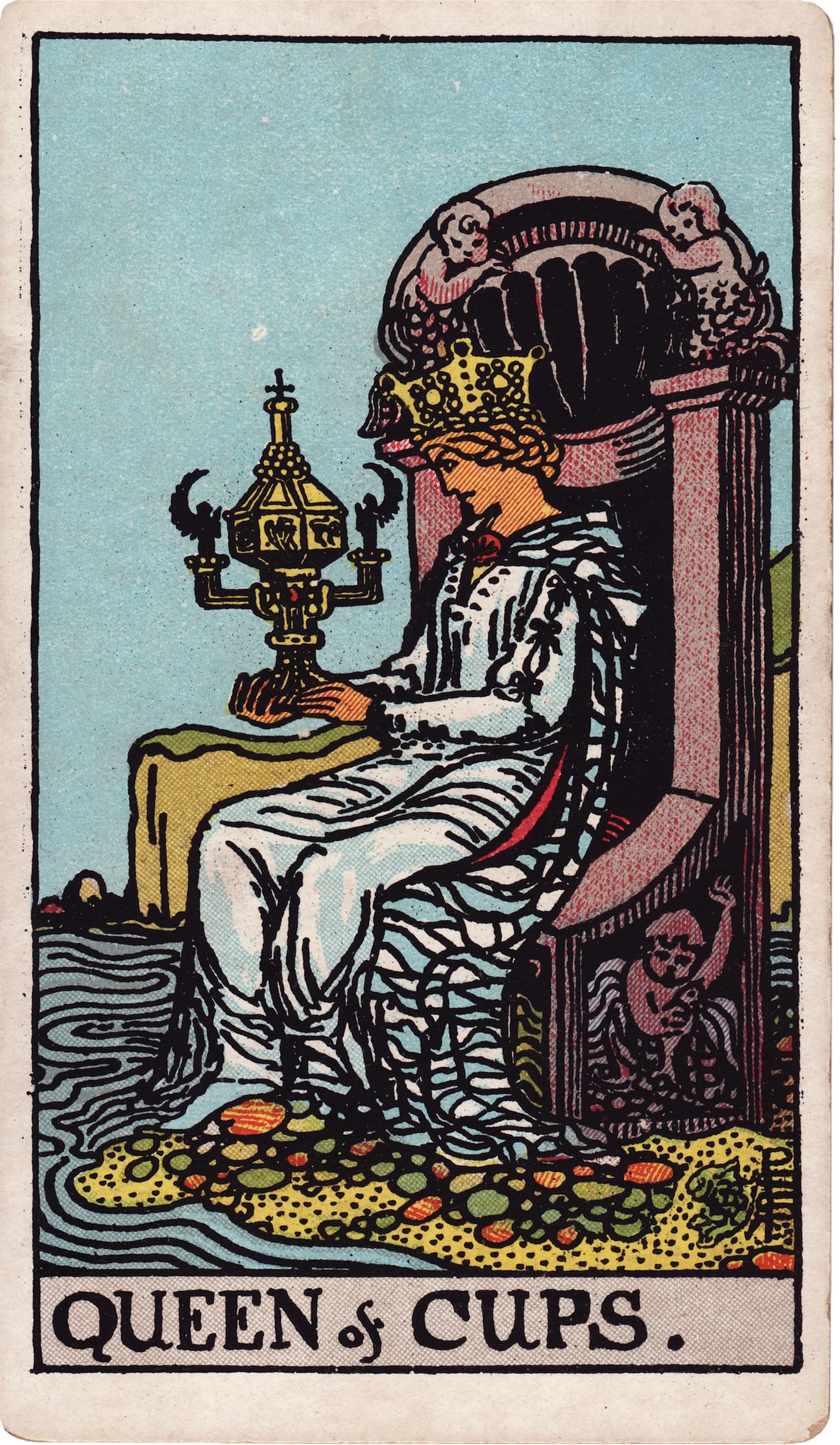 Queen of Cups
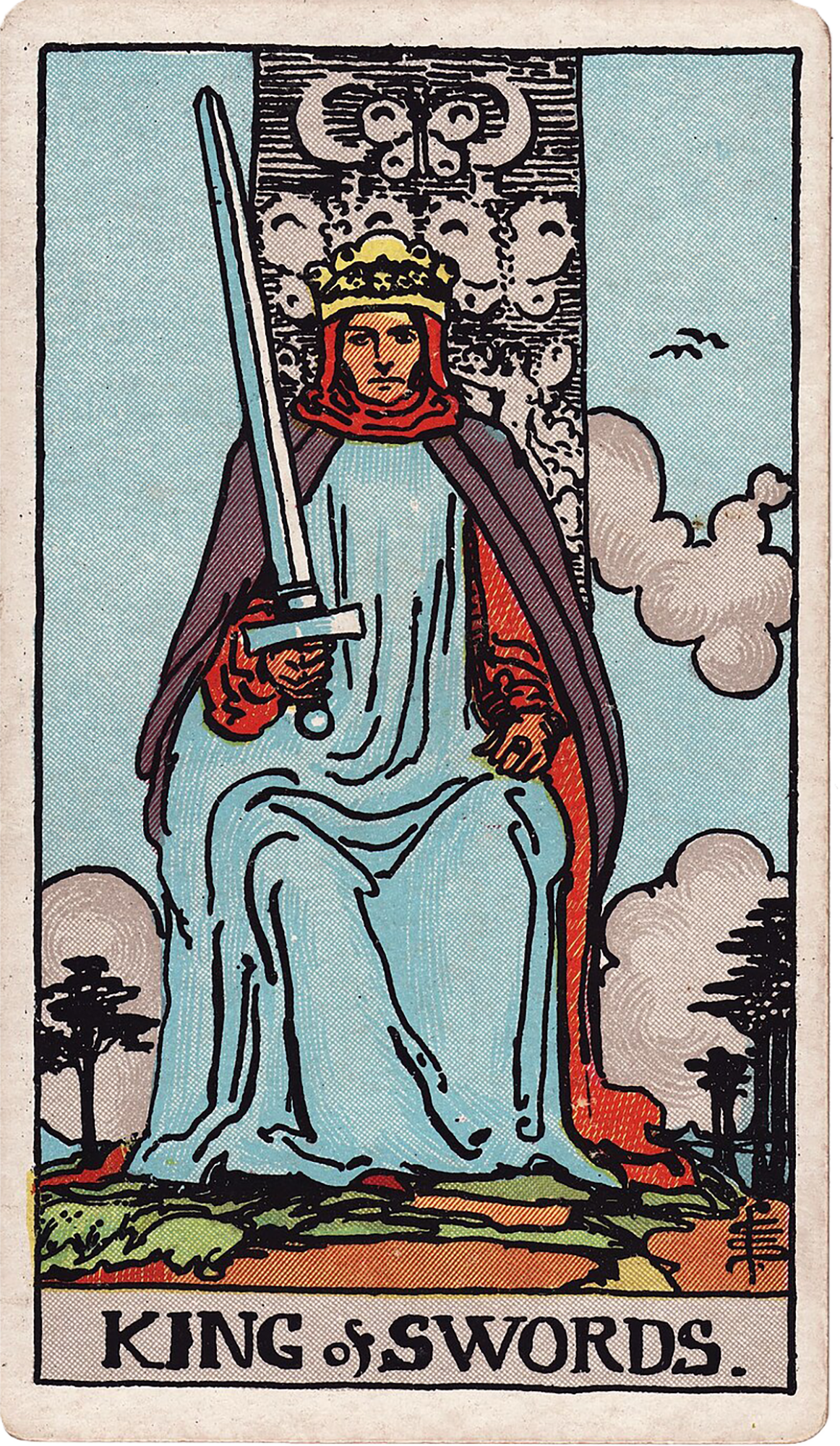 King of Swords
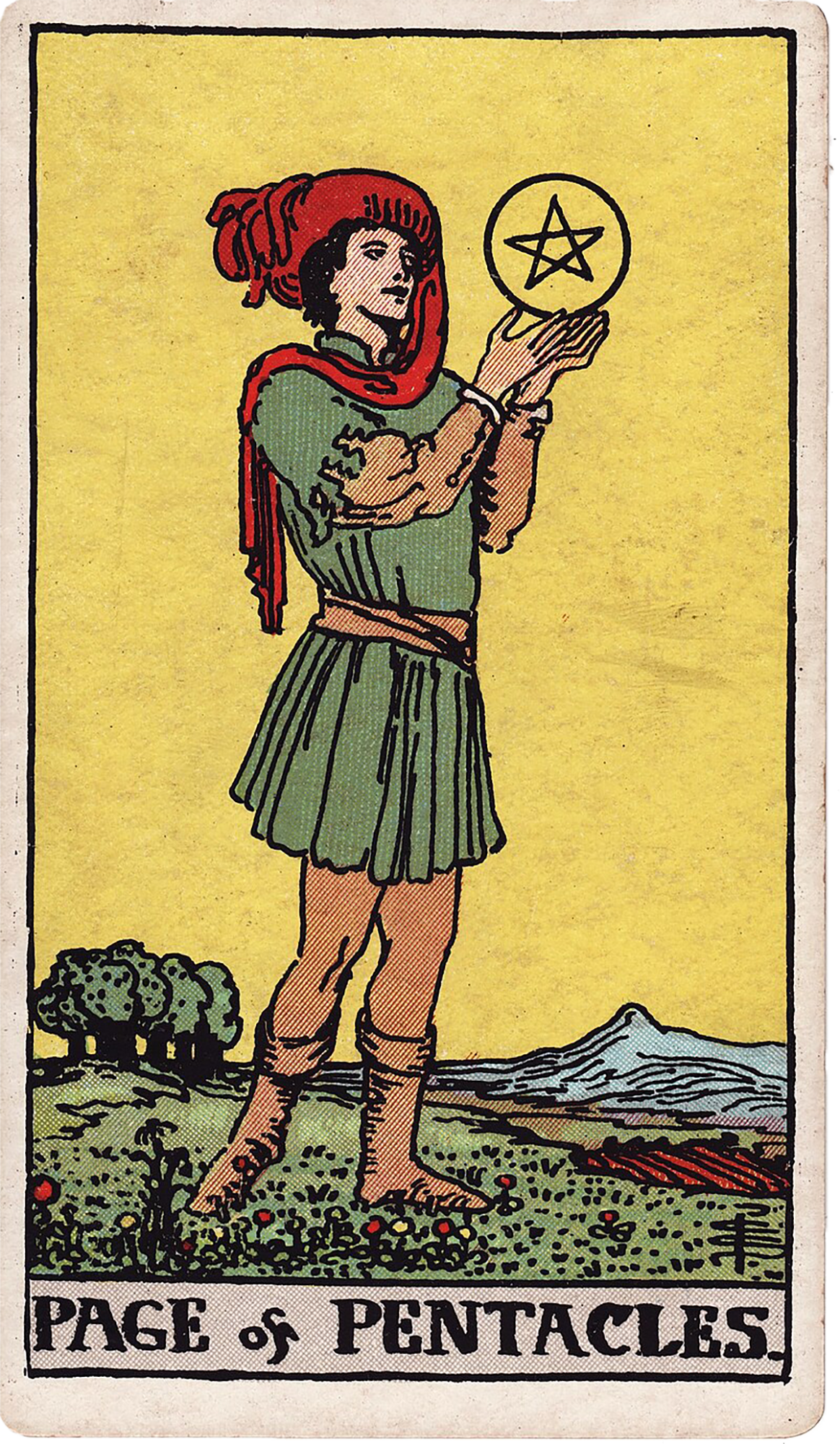 Page of Pentacles
Introduction: Why court cards make excellent coaching prompts
Court cards are person-shaped keys: they point to roles, processes, skills and stages rather than fixed outcomes. For learners, that makes them perfect for coaching-style readings because they invite exploration—who is showing up in this situation, what skill is needed, what stage of development the client is in. When you anchor interpretation to the Rider–Waite–Smith imagery and to each card’s conventional function, a court card stops being a label and becomes an ongoing verb that you can turn into a question. This article focuses on four supplied cards—the Knight of Wands, Queen of Cups, King of Swords and Page of Pentacles—and demonstrates how to form clear, open, actionable coaching questions that respect both the card’s symbolic detail and the suit’s elemental domain. The aim is practical: train your eye and your voice so readings produce options and experiments, not deterministic statements.
Foundations: match suit, rank and image to coaching intention
Before you write questions, map three things from the card: the suit (what domain), the court rank (what stage/role), and distinctive imagery (what in the picture grows the narrative). Use the Rider–Waite–Smith associations: Wands = motivation, identity, creative energy; Cups = emotion, relationships, receptivity; Swords = thought, decision, communication; Pentacles = material skill, routine, resources. Court ranks move across a process arc: Page (learner, new attention), Knight (movement and direction), Queen (mature receptivity and caretaking of the suit’s life), King (authoritative mastery and system-level judgment). Then read the image for practical cues: for example, the Page of Pentacles in RWS stands carefully holding a coin against an earthscape—this suggests study, a careful practical beginning, attention to material detail; use that posture to ask about habits, resources and learning environments. The Knight of Wands, with a rearing horse and a wand held forward amid a sun-baked landscape, suggests rapid forward motion and fiery risk-taking—your coaching question should test direction, pacing and the consequences of speed. Across upright and reversed positions, ask whether a process is forming, accelerating, stuck, or needing containment. Keep your questions in the client’s agency: they should invite action, not assign identity.
Anatomy of a useful coaching question
A coaching question grounded in a court card is clear, open-ended, behavior-focused, time-framed and resource-oriented. Use this formula: Start with an open prompt (What, Where, How), link to the suit energy, name the process or image detail, ask for a specific next step or experiment, and optionally add a short time frame. Example frame: "Given the Knight of Wands energy of rapid forward motion, what specific direction could you choose this week to channel that energy for one concrete result?" Good questions avoid yes/no, avoid moral judgment, and avoid treating the card as fate. They should convert symbolic cues into client-centered options: what can you try, what can you practice, what needs clearer boundaries. Reversed court cards invite containment, simplification, rehearsal or communication. Instead of saying "You are being reckless," transform the reversal into a diagnostic and practical prompt: "Where is this pattern of starting fast and leaving things unfinished showing up in your life, and what one repeatable check could help you follow through?"
Turn the Knight of Wands into coaching prompts
Imagery and meaning: The Knight of Wands in the Rider–Waite–Smith deck shows a mounted knight in mid-gesture, a wand held forward, his horse poised as if charging; flames or salamander motifs and a desert or barren landscape hint at the card’s fiery initiative. Upright, this card emphasizes bold movement, ambition, identity-driven action and the need to match speed with direction. Reversed, it flags restlessness, unfinished ventures, or acting without sustainable plan. Coaching logic: Turn the Knight’s energy into questions about direction, pacing, visible consequences and alignment with values. Sample upright coaching questions: - "What is the single direction you want to commit to for the next two weeks that would let you test this Knight of Wands energy?" - "When you imagine charging forward like the Knight, what similar situations in your past succeeded, and what exactly did you do differently?" - "What one boundary will you add to your outgoing energy so momentum leads to completion?" For the reversed Knight, shift to containment and practice: - "Where have you noticed patterns of starting fast and leaving things unfinished, and what is one small accountability step you could practice this month?" - "If the Knight’s fire is burning too hot, what is one way to slow the launch so a project lasts longer?" Use imagery: ask the client to describe the horse’s direction in their life—where is it pointed?—and to name the desert areas (where energy is being wasted). That visual exercise often reveals whether speed needs a map or a brake.
Turn the Queen of Cups into coaching prompts
Imagery and meaning: The Queen of Cups sits on a throne shaped with sea motifs, holding a lidded cup; the ocean or calm waters behind her indicate deep receptivity, emotional attunement, and governance of feeling without being overwhelmed. Upright, she signals mature empathy, intuitive clarity and the capacity to hold tender things. Reversed, she can show emotional overwhelm, enmeshment, or confusion between intuition and anxiety. Coaching logic: Use the Queen’s imagery to ask about containment, boundaries, source of feeling, and practical ways to translate compassion into action. Upright sample questions: - "Where in your life is the Queen of Cups’ ability to hold feeling already present, and what would help you expand that capacity this month?" - "How can you make time and a safe container to listen to a recurring feeling without reacting immediately?" For reversed positions focus on separation and practice: - "Which relationships are you absorbing too much from, and what is one daily practice to protect your emotional field?" - "When your intuition and anxiety both speak, what reliable test could you use to tell them apart?" Invite sensory imagery: ask the client to describe the cup’s lid—what would need to be opened or closed, and why? Ground the question in care-by-action: rather than simply 'be more empathetic,' ask for a rehearsal or boundary that can be practiced and measured.
Turn the King of Swords into coaching prompts
Imagery and meaning: The King of Swords is a seated, authoritative figure holding an upright sword; he represents mature judgment, clear principles, and decisions rooted in reason and evidence. In Rider–Waite–Smith visuals the king’s posture and sword symbolize decisive thought, the public use of intellect, and the ethical application of authority. Upright, he invites strategic clarity; reversed, he warns of coldness, intellectual domination, or deceptive reasoning. Coaching logic: Use the King to craft questions about clarity, principle, language, and systems. Upright examples: - "What principle or standard would help you decide this week when two options feel equally appealing?" - "Which part of this situation needs a clearer boundary or policy to reduce recurring confusion?" For reversed nuances: - "Where might your commitment to being 'right' be silencing collaboration, and what experiment could invite others to contribute?" - "What small language change (phrasing a request differently) could cut through confusion and avoid perceived harshness?" The King is excellent for turning emotional complexity into a simple decision path: ask clients to enumerate criteria, test them against evidence, and choose the least bad next step. Refer to the sword: what needs cutting—assumptions, options, or narratives?
Turn the Page of Pentacles into coaching prompts
Imagery and meaning: The Page of Pentacles shows a young person standing in a field, gazing carefully at a single pentacle held before them; mountains or cultivated land in the distance suggest patience, apprenticeship and the slow work of material mastery. Upright, the Page names new practical focus, study, or the first serious attempt at a tangible skill. Reversed, the Page can mean procrastination, poor follow-through, or misplaced focus on reward rather than competence. Coaching logic: Translate that studious, tactile posture into questions about habits, resources, learning design and incremental progress. Upright questions: - "What specific practical skill could you start studying this month that would directly impact your stability, and what is the first micro-step?" - "Which small daily habit would most reliably support this Page of Pentacles energy?" For reversed patterns: - "Where have you been promising to practice but failing to follow up, and what is the smallest possible starting task you can commit to for seven days?" - "Are you chasing outcomes (money, status) before building competence, and how would you change that order?" Employ the image: invite the client to describe what the student is seeing in the pentacle—what resource or reality are they noticing that the client has overlooked?
Practical reading method: step-by-step
Use this repeatable method when a court card appears and you want to generate coaching questions. 1) Notice orientation and suit: Is the card upright or reversed? Which suit? That tells you domain and whether the process is enabled or stalled. 2) Name rank and stage: Is it Page (beginner), Knight (movement), Queen (care/containment), King (authority)? This frames the kind of question you need (start, choose direction, hold, decide). 3) Read the picture: Ask the client to describe one notable visual detail—the horse’s posture, the cup’s lid, the held pentacle, the king’s sword. Use that language in your question. 4) Formulate one broad and one specific question: The broad question invites narrative ("What is this card telling you about how you show up?")—use only to orient. The specific coaching question translates image + rank + time frame into an experiment ("What one step will you take in the next 72 hours?"). 5) Offer a containment or accountability structure: When the Knight is fast, propose a 48–72 hour check-in; when the Queen is overwhelmed, propose a boundary or daily 10-minute container; when the Page is procrastinating, prescribe a five-minute practice. 6) Record outcomes and revise: Treat the card’s instruction as a hypothesis. After the chosen frame, ask what shifted and whether a new card-read or question arises. This method turns symbolic insight into iterative practice.
Scripted examples and client dialogues
Below are short examples showing how to convert card energy into coaching prompts in session. Use the client’s words and imagery rather than lecturing. Example 1 — Knight of Wands (upright): Reader: "The Knight of Wands is here—notice the horse and the forward motion. Where in your life does that charging energy feel familiar?" Client: "When I start projects I go full speed but I lose interest." Reader: "Good data. What is one concrete direction you can commit to for the next two weeks so that momentum has a map?" Client chooses a single project and sets a 14-day micro-plan and an accountability check at day 7. Example 2 — Queen of Cups (reversed): Reader: "The Queen’s cup is present but she looks inward. Is there a relationship where you find yourself absorbing too much?" Client: "Yes—my sibling calls and dumps every night." Reader: "What is one boundary to protect your emotional field that still holds care? Could you set a 10-minute limit and suggest a check-in call every third night?" Example 3 — King of Swords (upright): Reader: "The king asks for clarity. What criterion could you use to choose between these two offers?" Client lists three objective criteria; they agree to apply them and make a decision in 48 hours. Example 4 — Page of Pentacles (reversed): Reader: "The Page seems distracted—where are you promising to learn something and not following through?" Client: "Online course starts and I never finish." Reader: "What’s the smallest practice—five minutes a day—you can commit to for seven days to test the habit?" Each script keeps questions specific, time-framed and playable.
Common mistakes and how to avoid them
Mistake 1: Turning imagery into identity statements. Saying "You are the Knight" locks a client into stereotype. Fix: name behavior and options ("This energy is showing up; what will you try?"). Mistake 2: Asking closed or leading questions. Avoid yes/no and 'should' judgments. Fix: prefer 'what' and 'how' questions and neutral phrasing. Mistake 3: Ignoring reversals as nuance. Treat reversed court cards as hints about process failure, not as moral failure. Fix: translate reversal into practice/containment prompts (simplify, rehearse, communicate). Mistake 4: Overfocusing on symbolic minutiae. Don’t require the client to get every detail—use images to prompt their inner story, then focus on concrete next steps. Mistake 5: Designing questions that lack accountability. A good coaching question suggests an experiment with a time or measure. Fix: add a short timeframe or a specific metric (one phone call, three 10-minute practices, a 48-hour check-in).
Integration exercises and practice routines
Practice 1 — Card-to-Question Drill: Shuffle and pull one of the four supplied cards (or imagine its image). Spend five minutes listing five possible coaching questions—first broad, then narrow. Practice 2 — Imagery Translation: With the card visible, describe one visual detail aloud, then turn that description into a micro-experiment (example: "horse facing left" -> "This week, try reversing a recent choice and notice what changes"). Practice 3 — Reversal Reframe: Pull a card and place it reversed. Write one containment question and one release question for the reversed energy. Practice 4 — Paired Accountability: Work with a colleague. You each draw a card and propose a single 72-hour action for the other. Check back and report outcomes. These short drills build the habit of translating imagery into client-centered tasks.
Interpreting logic: From symbol to strategy
The interpretive logic flows from three tiers: symbol -> psychological process -> actionable experiment. Symbol signals a domain (suit) and manner (image); psychological process names the skill needed (e.g., direction, containment, clarity, practice); actionable experiment converts that skill into a small test. For example, the Knight of Wands (symbol: horse, wand, desert) suggests psychological process (choice of direction + sustained energy) and yields experiments (choose one direction this week + set two accountability checks). Keep the client’s context central: ask what the card’s energy would look like in their calendar, body sensations, or specific relationships. Use the King of Swords to generate criteria lists; use the Queen of Cups to design emotional containers; use the Page of Pentacles to blueprint study habits; use the Knight of Wands to create rapid-prototype launches with pauses for review. The card is never the final verdict—it's a prompt to iterate.
Conclusion: train the eye, shape the question, iterate
Court cards are practical agents when read as verbs. Training yourself to notice suit, rank and image will let you form coaching questions that are precise, actionable and resonant. Repeatedly anchor your dialogue in the Rider–Waite–Smith visuals we used here: the Knight’s motion, the Queen’s cup and containment, the King’s upright sword and authority, and the Page’s careful study of the pentacle. Convert the archetypal force into a testable experiment—define the step, timebox it, name the measure, and follow up. Over time, this practice turns symbolic language into a reliable coaching craft that helps clients learn and change rather than feel labeled or predicted.
Practice questions
• Choose one of the four supplied cards. Describe a concrete situation in your life where that card’s energy is visible. What is one experiment you can run in the next seven days to work with that energy?
• When you see the Knight of Wands in a spread, what three questions will you ask to test direction, pacing and accountability?
• How would you transform the Queen of Cups reversed into a two-step plan that protects emotional boundaries while maintaining care?
• Choose an area where you want competence. Using the Page of Pentacles, what daily micro-practice (5–15 minutes) could you commit to for 14 days?
• Think of a decision you are avoiding. Use the King of Swords’ logic to create a criteria list (3 items) and a 48-hour deadline to act. What are the criteria?
• What common pattern do you notice in your questions when court cards appear? Are they open, specific and time-bound? How will you change them?
• In a mock reading, practice converting a reversed court card into a containment question and a release question. What did you learn about framing?
• After running one of your chosen experiments, note what changed and what card you might draw next to reframe the follow-up.
Comments
Sign in to comment.
Continue learning
Navigating Conflict Resolution and Inner Struggles with the Five Card Cross Tarot Spread
This article delves into the Five Card Cross Tarot Spread as a practical tool for navigating conflict resolution and inner struggles, especially within family contexts. Using the s...
Mastering the Court Cards of Wands for Unlocking Personal Drive and Leadership
The Court Cards of Wands represent a dynamic spectrum of personal energy, ambition, and leadership potential within the Minor Arcana. This article offers a comprehensive exploratio...
Unlocking Leadership Styles Through the Court Cards of Wands
The Wands court cards—Page, Knight, Queen, and King—offer a rich spectrum of leadership styles rooted in the fiery energy of motivation, creativity, and initiative. This article de...
Understanding the Personalities and Roles of Knight Queen and King of Swords in Tarot
This article delves into the unique characteristics and roles of the Knight, Queen, and King of Swords within the Tarot Minor Arcana, focusing on the family suit and court card les...
Unlocking the Energies of the King Queen and Knight of Cups for Emotional Intelligence
This article delves into the King, Queen, and Knight of Cups from the Minor Arcana's family Suit and Court Cards, emphasizing how these archetypes embody stages and expressions of...
Unlocking Personality Traits Through the Court Cards of Pentacles
This article delves into the personality traits and life lessons embodied by the court cards of Pentacles: Page, Knight, Queen, and King. Grounded in the practical symbolism of the...
Unlocking the Leadership Styles of the King Queen and Knight of Pentacles
This article delves deep into the leadership styles embodied by the King, Queen, and Knight of Pentacles within the Minor Arcana, focusing on the family Suit of Pentacles and its C...
Unlocking the Personality Traits and Roles of the Knight Queen and King of Pentacles in Tarot
This article offers an in-depth exploration of the Knight, Queen, and King of Pentacles cards in the Minor Arcana, focusing on their personality traits, roles, and lessons within t...
Understanding the Court Cards of Pentacles for Practical Wisdom and Grounded Ambition
The Court Cards of Pentacles—Page, Knight, Queen, and King—offer a rich framework for understanding practical wisdom, grounded ambition, and stewardship of material resources. Anch...
Unlocking Personality and Leadership Qualities with the King Queen and Knight of Pentacles
This article delves into the King, Queen, and Knight of Pentacles court cards within the Minor Arcana, focusing on their symbolism of personality traits and leadership within the f...