
Uncovering the Historical Origins and Enduring Mysteries of The Devil Card in Tarot Tradition
The Devil card holds a powerful and often misunderstood place in Tarot tradition. Rooted in centuries of symbolic evolution, this card challenges readers to confront unhealthy attachments, fears, and desires that bind us. This article explores the historical origins of The Devil card, highlights its traditional Rider-Waite-Smith imagery, and offers practical guidance for interpreting both upright and reversed positions. By grounding interpretations in the card’s vivid symbolism and reflecting on its layered meanings, learners can deepen their understanding and avoid common pitfalls in reading this complex card.
Cards explored in this article
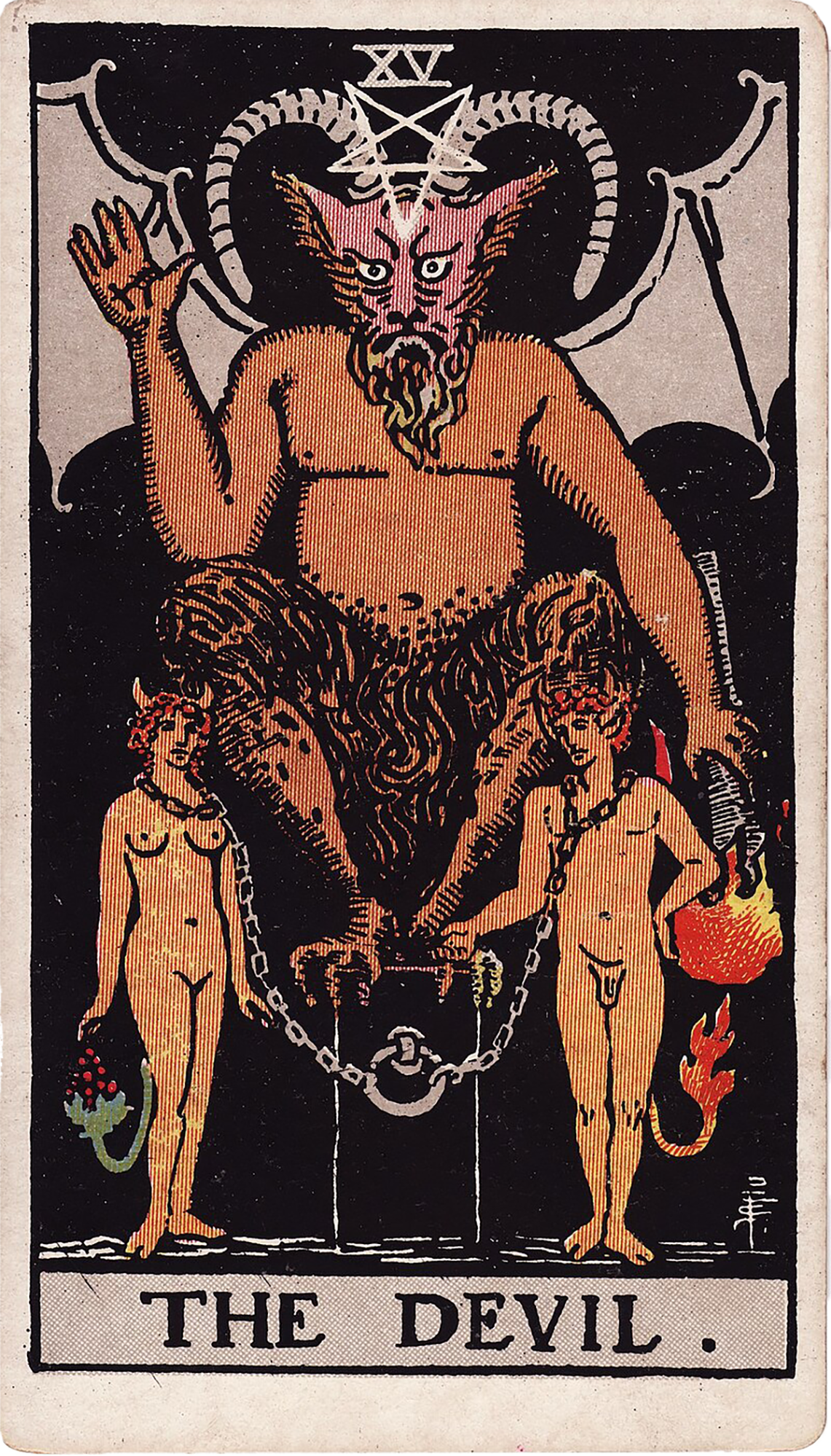 The Devil
The Historical Origins of The Devil Card in Tarot Tradition
The Devil card is one of the 22 Major Arcana cards found in traditional Tarot decks. Its origins trace back to early European card games and esoteric traditions of the 15th century, evolving through centuries of mystical and artistic interpretation. Early decks such as the Tarot of Marseille featured a figure known as 'Le Diable,' often depicted as a horned, winged creature reminiscent of medieval Christian iconography representing temptation and sin. This imagery conveyed societal and moral anxieties surrounding vice, bondage, and spiritual fall. By the time the Rider-Waite-Smith deck was created in 1909, The Devil card had absorbed multiple layers of symbolic meaning. Artist Pamela Colman Smith, under the guidance of occultist A.E. Waite, introduced a card that visually emphasized bondage and illusion rather than direct evil. The traditional depiction of a horned, goat-like figure chained to two humans reflects themes of entrapment through materialism, addiction, and unconscious desires rather than literal damnation. This historical evolution illustrates how The Devil card serves as a mirror for human bondage to self-imposed limitations rather than external evil forces.
Exploring the Rider-Waite-Smith Symbolism of The Devil Card
The supplied image of The Devil card from the Rider-Waite-Smith tradition is rich with symbolism. The central horned figure represents primal instincts and earthly temptations, combining features of a goat, a symbol of fertility and vitality, with demonic traits to highlight duality. The bat wings signify darkness and the unseen, while the inverted pentagram on the figure’s forehead traditionally symbolizes the material world overshadowing the spiritual. Beneath The Devil, two human figures—one male and one female—are chained by their necks, yet the chains appear loose, suggesting the bondage is voluntary or mental rather than physical. This imagery encapsulates the card’s message: unhealthy attachments, fear, or gratification become forms of psychological or spiritual bondage when unexamined. The figures’ nudity symbolizes vulnerability and the raw exposure of desires. In the background, flames or shadows deepen the sense of entrapment but also hint at transformative potential. Practically, when this card appears upright, it invites readers to recognize where they may be giving power to fears, addictions, or destructive desires. The card does not predict doom; rather, it encourages identification of unhealthy patterns and exploration of clearer boundaries or conscious choices to begin change.
Interpreting The Devil Upright in Practical Readings
When The Devil card appears upright in a reading, it highlights areas where a person may be trapped by unhealthy attachments or illusions. These attachments can be to people, substances, beliefs, or material conditions that limit freedom. Instead of simply warning of danger, the card emphasizes awareness and honest naming of desires. For example, a querent struggling with codependency may find The Devil urging them to recognize the real nature of their attachments rather than denying or idealizing them. The card encourages working with present circumstances to take pragmatic next steps. Asking questions like 'Where am I giving my power away?' or 'What fears keep me bound?' can illuminate paths toward clearer boundaries or deliberate choices. Unlike cards that promise easy resolutions, The Devil indicates a process requiring conscious effort and introspection. It signals that the central issue has become visible enough to be addressed but does not guarantee immediate change. Common mistakes when reading The Devil upright include interpreting it as a moral judgment or a sign of external evil rather than internal patterns. Another pitfall is reading it deterministically as fate rather than a call to examine personal responsibility and awareness.
Understanding The Devil Reversed and Its Complex Implications
The reversed position of The Devil card brings additional nuance to interpretation. Often, it points toward breaking a destructive pattern, denial of desire, or struggles with shame. The reversal signals that the energy depicted upright is blocked, delayed, or expressed out of balance. For instance, a reversed Devil may suggest that a querent is beginning to recognize their unhealthy attachments but has not yet fully liberated themselves. This card reversed does not automatically signify positive change; instead, it highlights the complexity of psychological processes involved. It may indicate resistance to facing truth, internalized shame, or a temporary pause in the cycle of bondage. Readers should look carefully at the surrounding cards for context to discern whether reversal suggests recovery, excess, or internal conflict. The useful interpretive approach is to ask, 'Where is this energy becoming distorted or difficult to access?' and 'What subtle changes are beginning to take place beneath the surface?' This perspective helps avoid common errors such as assuming reversal means instant freedom or negation of issues.
Techniques for Reading The Devil Card with Depth and Sensitivity
Interpreting The Devil card effectively requires balancing its symbolic weight with practical sensitivity and context awareness. First, it is important to anchor all interpretations in the card’s imagery and traditional meanings. Use the visual cues—chains, figures, symbolism on The Devil itself—to ground the reading rather than projecting external fears or stigmas. Second, encourage questions that invite self-reflection rather than fear-based conclusions. For example, ask where unhealthy attachments, fears, or illusions are present and how the querent might consciously respond. Emphasize that The Devil represents challenges to awareness, not definitive outcomes. Third, consider the card’s position in the spread and its relation to neighboring cards to gauge whether the energy is active, blocked, internalized, or in transition. This contextual approach prevents overgeneralization and supports nuanced readings. Finally, avoid moralizing language or assuming the card always implies negativity. The Devil card can illuminate important lessons about boundaries, honesty, and the shadow self when approached as a tool for growth rather than judgment.
Common Questions and Misconceptions About The Devil Card
Many learners and querents have questions about The Devil card due to its provocative imagery and name. A common misconception is that The Devil predicts evil or external malevolence. In Tarot tradition, The Devil symbolizes internal states of bondage rather than an external entity. Another frequent question is whether the card signifies addiction or abuse. While it can point to these themes, it is not a direct diagnosis but an invitation to explore patterns and choices around attachment. Queriers often worry that drawing The Devil means they are 'cursed' or morally flawed. This misunderstanding can cause undue fear. The card’s purpose is to highlight areas for conscious work and transformation, not condemnation. Finally, learners sometimes struggle with reading The Devil reversed. Remember that reversal complicates meaning and often indicates an internal process or emerging awareness rather than a simple good/bad dichotomy. By addressing these common questions thoughtfully, readers can reduce anxiety around the card and deepen their interpretive skills.
Anchoring Interpretation in Family and Tradition Contexts
Understanding The Devil card within the broader context of family history and tradition enriches its interpretation. Families often carry inherited patterns of behavior, belief, and emotional dynamics that can resemble the bondage symbolized by The Devil. In readings focused on family or tradition, this card can invite inquiry into unconscious attachments passed through generations. For example, patterns of addiction, codependency, or fear of freedom may have roots in familial conditioning. The card encourages naming these inherited influences honestly and considering where clearer boundaries or conscious choices can disrupt repetitive cycles. Linking The Devil card to family history also helps readers appreciate the card’s role as a mirror reflecting collective and personal shadows. This approach promotes compassionate awareness and the potential for healing longstanding relational dynamics rather than simplistic blame.
Practical Example of Reading The Devil Card in a Spread
Consider a spread where The Devil appears upright, surrounded by cards indicating personal growth and challenge. The querent may be facing a decision about a relationship or career path marked by dependency or fear of change. The Devil signals that unhealthy attachments or self-limiting beliefs are central to the situation. In this reading, the practitioner might ask the querent to identify where they are giving power to fear or gratification that limits their freedom. Questions about what boundaries need reinforcement or where deeper honesty is required can guide the conversation. The card’s imagery—the chained figures and the Devil’s ambiguous dominance—serves as a visual metaphor for these dynamics. If The Devil appears reversed later in the spread, it could indicate that the querent is beginning to see these patterns more clearly but has not yet fully transformed them. This nuanced approach helps the querent understand the card as a guide for practical action and psychological insight rather than fate.
Practice questions
• Where in my life might I be unknowingly giving my power away to unhealthy attachments or fears?
• How can I use the symbolism of the chained figures on The Devil card to better understand my own patterns of bondage?
• What steps can I take to introduce clearer boundaries or deeper honesty as suggested by the upright Devil card’s lesson?
• In what ways might denial or shame be distorting the energy of The Devil card when it appears reversed?
• How do family history and inherited patterns influence my understanding of bondage and freedom as symbolized by The Devil?
Comments
Sign in to comment.
Continue learning
Interpreting the Dance of Justice and The Devil: Balancing Morality and Temptation in Tarot Readings
The combination of Justice and The Devil in tarot presents a profound exploration of morality, temptation, and personal accountability. This article unpacks how these cards influen...
Understanding The Devil Card in Overcoming Addictions and Finding Personal Freedom
The Devil card, often misunderstood as purely negative, offers profound insights into addiction, bondage, and personal empowerment when approached with awareness. This article unpa...
Using the Five Card Cross Spread to Navigate Ethical Dilemmas with Confidence
The Five Card Cross spread is a practical and versatile tool for exploring complex ethical dilemmas and making confident decisions. This article guides learners through each positi...
Mastering Dual Interpretations with The Hanged Man and The Devil in Tarot Readings
This article guides tarot learners through mastering the dual interpretations of The Hanged Man and The Devil cards. Using traditional Rider-Waite-Smith symbolism and supplied card...
Unlocking the Dynamics of The Devil and The Tower for Facing Life's Challenges
This article delves into the rich and complex relationship between The Devil and The Tower tarot cards as a powerful combination for navigating significant life challenges. By grou...
Understanding the Devil Card in Overcoming Personal Shadows and Temptations
The Devil card in the Tarot deck is often misunderstood as a simple symbol of evil or misfortune. However, its true power lies in illuminating unconscious bonds, desires, and fears...
Unlocking Emotional Healing and Hope with The Star and The Devil Tarot Combination
This article delves into the powerful card combination of The Star and The Devil from the Rider-Waite-Smith tarot deck, revealing how their symbolic interplay unlocks pathways to e...
Understanding the Multifaceted Role of The Devil in Overcoming Inner Blocks and Personal Growth
The Devil tarot card holds deep lessons about unhealthy attachments, fear, and desire that can both block and catalyze personal growth. This article explores The Devil’s upright an...
Exploring The Devil Card in Overcoming Inner Blocks and Embracing Personal Freedom
The Devil card in tarot embodies complex themes of attachment, desire, fear, and bondage. This article examines how The Devil’s upright and reversed positions provide deep insights...
Understanding The Devil Card in Overcoming Inner Blocks and Personal Growth
The Devil card in Tarot is often misunderstood as a purely negative omen, but in truth, it offers profound insights into the nature of inner bondage, unhealthy attachments, and the...