
Understanding The Devil Card in Addiction Temptation and Personal Empowerment
This article delves into the complex symbolism and interpretations of The Devil card from the Rider-Waite-Smith deck, focusing on addiction, temptation, and personal empowerment. Using the upright and reversed positions, it teaches how to recognize unhealthy attachments, understand desires honestly, and apply boundaries constructively. Through detailed examination across multiple tarot reading contexts—including love, career, money, advice, challenge, person, outcome, and spiritual reflection—learners discover practical methods for integrating The Devil card’s lessons into insightful tarot readings. The article emphasizes visual anchoring in the supplied Devil card imagery, avoiding common interpretative pitfalls and encouraging deliberate, conscious engagement with this powerful archetype.
Cards explored in this article
 The Devil
Introduction to The Devil Card and Its Symbolism
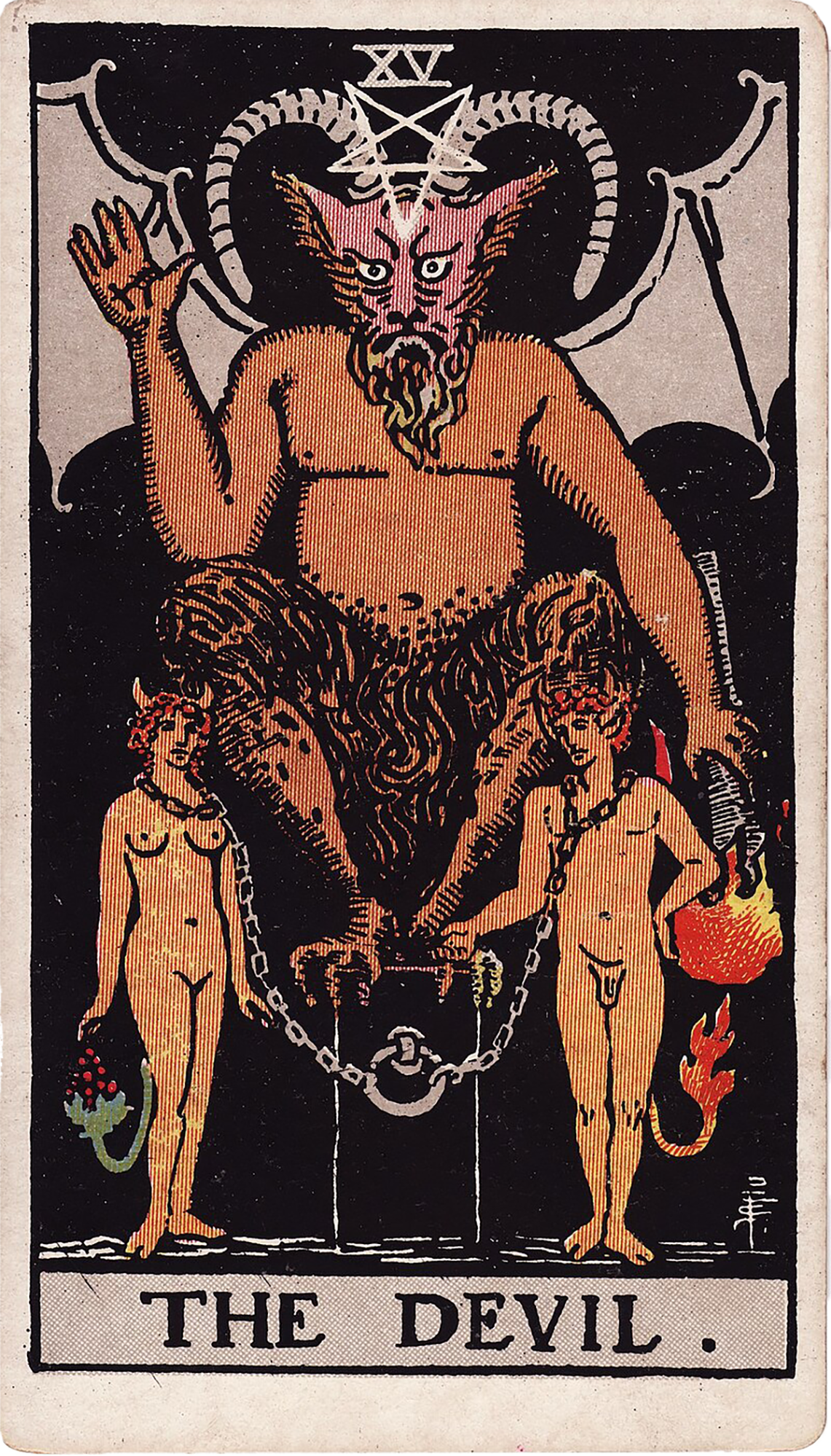
The Devil card is one of the most visually striking and thematically intense cards of the Major Arcana in the Rider-Waite-Smith tarot deck. Depicted as a horned, winged figure perched upon a pedestal, the Devil holds a torch, symbolizing the ignition of dark passions and desires. At the card's base, two naked humans—one male and one female—are chained, representing bondage to materialism, addiction, or unexamined desires. The card’s imagery is rich with symbolism tied to temptation, enslavement to base instincts, and self-imposed limitations. It challenges the reader to confront what binds them internally or externally. The presence of the pentagram inverted on the Devil’s forehead hints at misaligned priorities, while the chains around the figures’ necks underscore the illusion of imprisonment—often the shackles are loose enough to remove, suggesting that liberation is a conscious choice.
Upright Meaning in Addiction Temptation and Empowerment
When The Devil appears upright, it emphasizes the need to recognize unhealthy attachments, whether to substances, behaviors, or toxic relationships. Rather than suggesting automatic doom, the card encourages honest identification of desires and the fears or gratifications that have become forms of bondage. This upright position is about seeing the situation clearly and naming what has enslaved you. It asks the querent to consider where clearer boundaries, deeper honesty, or deliberate choices could create constructive change. For example, in addiction contexts, this upright card signals the moment when denial fades and reality is visible enough to take a conscious step forward. It encourages working with what is available now instead of waiting for perfect conditions. Empowerment comes from this awareness and the intentional act of naming and confronting the chains that bind.
Reversed Meaning and Its Psychological Implications
The Devil reversed often points to the internal battle of breaking free from patterns of addiction or temptation. It may indicate denial, shame, or the risk of premature declarations of freedom without fully addressing the root cause of attachment. This reversal is not inherently negative; it can reveal that the energy of the upright card is blocked, delayed, or exaggerated. In psychological terms, this suggests the querent is beginning to see the old pattern but has yet to fully release it. The reversed Devil can also mark a private, internal process of confronting shadow aspects. When reading this card reversed, look for nuances such as resistance to change or early stages of recovery. Nearby cards will help clarify if this is a pause, a setback, or a hopeful opening.
Applying The Devil Card to Love and Relationships
In love readings, The Devil urges honest examination of unhealthy attachments, co-dependencies, or addictive patterns within relationships. Upright, it highlights where desire or fear has created bondage, such as obsession, jealousy, or manipulative dynamics. The imagery of the chained couple reminds us that these bonds are often self-imposed and can be loosened through awareness and communication. The card invites questions like: Where are my boundaries unclear? What desires or fears fuel this connection? Reversed, the card may indicate the beginning of emotional release or denial about the problematic nature of the relationship. It urges reflection on whether the querent is ready to break free or is still entangled in shame or avoidance. This nuanced understanding prevents oversimplification and encourages compassionate clarity.
The Devil’s Role in Career and Work Contexts
In career readings, The Devil card represents unhealthy attachments to work, such as workaholism, unethical practices, or feeling trapped in an unsatisfying job. Upright, the card draws attention to where fear of loss or desire for material gain might create bondage. The querent is invited to observe where clearer boundaries or conscious choices could improve their situation. The torch held by the Devil symbolizes illumination—the light needed to see the chains and take action. Reversed, the card may signal a growing awareness of these traps, or resistance to change despite dissatisfaction. It suggests that empowerment lies in acknowledging the patterns and actively choosing how to engage with career challenges rather than feeling resigned.
Money and Materialism Through The Devil Lens
The Devil card in financial contexts highlights the dangers of unhealthy attachments to money, material possessions, or debt. Upright, it warns about the seductive pull of consumerism or risky financial behaviors driven by fear or gratification. The card’s imagery suggests that monetary bondage is often psychological—desires and fears create illusions of necessity that can be consciously unraveled. It encourages taking a direct, proportionate step toward financial clarity, such as setting boundaries on spending or seeking honest advice. When reversed, the card can indicate denial of financial problems or premature attempts to declare fiscal freedom without addressing underlying issues. The reader must carefully explore neighboring cards to assess whether the querent is moving toward empowerment or further entrapment.
Advice and Challenge Contexts Featuring The Devil Card
As advice, The Devil urges conscious engagement with the parts of life where unhealthy patterns exist. Upright, it encourages the querent to name these patterns honestly and take deliberate steps toward clearer boundaries or more authentic choices. This can be difficult—acknowledging addiction, temptation, or control issues is often uncomfortable but necessary. The card advises working with what is available now rather than waiting for an ideal moment. Reversed, The Devil challenges the querent to probe denial, shame, or superficial declarations of change. The key question shifts from 'What disaster is coming?' to 'Where is this energy becoming distorted or inaccessible?' This perspective supports nuanced, non-judgmental reading and practical empowerment.
Person and Outcome Interpretations Using The Devil
When The Devil represents a person in a reading, it typically symbolizes someone who embodies temptation, control, or unhealthy attachment dynamics. This individual may be manipulative, addictive, or simply a mirror reflecting the querent’s shadow traits. Upright, the person is potent but potentially destructive, demanding awareness and boundaries. Reversed, this figure may be undergoing personal transformation or denial about their influence. As an outcome card, The Devil suggests that the querent may face a situation where they must confront addictive or binding patterns. Upright, it signals a critical moment of awareness where conscious choice can lead to empowerment. Reversed, it indicates ongoing internal struggle or early stages of breaking free, underscoring the importance of sustained intention.
Spiritual Reflection and The Devil Card Insights
Spiritually, The Devil card invites reflection on shadow work and integration. It highlights the necessity of naming desires, fears, and attachments honestly to move toward authentic empowerment. The chains seen in the card’s imagery symbolize self-imposed limitations which spiritual practice can help dissolve through awareness and deliberate action. Upright, the card acknowledges the reality of temptation and bondage but also the potential for conscious engagement and healing. Reversed, the card points to the psychological complexity of the spiritual path—resistance, denial, or partial insights may color the experience. For spiritual seekers, The Devil is less about evil and more about the call to choose conscious freedom over unconscious captivity.
Common Mistakes and Practical Reading Techniques
A frequent mistake with The Devil card is to label it as purely negative or as a prediction of external evil forces. In reality, the card’s power lies in recognizing internal dynamics and conscious choice. Readers should avoid deterministic interpretations and instead focus on empowerment through awareness. Another error is ignoring the reversal nuance—The Devil reversed is not ‘good’ or ‘cured’ but a complex state often involving denial, shame, or incomplete change. Practically, when The Devil appears, ask open-ended questions to clarify what the querent is attached to and how these chains manifest. Anchor interpretations in the card’s visual elements—chains, the torch, the pentagram, and the figures—and relate these symbols to the querent’s situation. Use neighboring cards for context and remain sensitive to the querent’s emotional readiness to face these challenges.
Practice questions
• Where in my life might I be unconsciously chained to a desire or fear?
• How can I name and honestly assess my attachments without judgment?
• What small, deliberate step can I take today to move toward healthier boundaries?
• Am I aware of any denial or shame around my addictive patterns?
• How do the symbols on The Devil card reflect my current state or challenges?
• In what ways might temptation or control be shaping my relationships or career?
• How can spiritual reflection help me confront shadow aspects represented by The Devil?
Comments
Sign in to comment.
Continue learning
Interpreting the Dance of Justice and The Devil: Balancing Morality and Temptation in Tarot Readings
The combination of Justice and The Devil in tarot presents a profound exploration of morality, temptation, and personal accountability. This article unpacks how these cards influen...
Understanding The Devil Card in Overcoming Addictions and Finding Personal Freedom
The Devil card, often misunderstood as purely negative, offers profound insights into addiction, bondage, and personal empowerment when approached with awareness. This article unpa...
Using the Five Card Cross Spread to Navigate Ethical Dilemmas with Confidence
The Five Card Cross spread is a practical and versatile tool for exploring complex ethical dilemmas and making confident decisions. This article guides learners through each positi...
Mastering Dual Interpretations with The Hanged Man and The Devil in Tarot Readings
This article guides tarot learners through mastering the dual interpretations of The Hanged Man and The Devil cards. Using traditional Rider-Waite-Smith symbolism and supplied card...
Unlocking the Dynamics of The Devil and The Tower for Facing Life's Challenges
This article delves into the rich and complex relationship between The Devil and The Tower tarot cards as a powerful combination for navigating significant life challenges. By grou...
Understanding the Devil Card in Overcoming Personal Shadows and Temptations
The Devil card in the Tarot deck is often misunderstood as a simple symbol of evil or misfortune. However, its true power lies in illuminating unconscious bonds, desires, and fears...
Unlocking Emotional Healing and Hope with The Star and The Devil Tarot Combination
This article delves into the powerful card combination of The Star and The Devil from the Rider-Waite-Smith tarot deck, revealing how their symbolic interplay unlocks pathways to e...
Understanding the Multifaceted Role of The Devil in Overcoming Inner Blocks and Personal Growth
The Devil tarot card holds deep lessons about unhealthy attachments, fear, and desire that can both block and catalyze personal growth. This article explores The Devil’s upright an...
Exploring The Devil Card in Overcoming Inner Blocks and Embracing Personal Freedom
The Devil card in tarot embodies complex themes of attachment, desire, fear, and bondage. This article examines how The Devil’s upright and reversed positions provide deep insights...
Understanding The Devil Card in Overcoming Inner Blocks and Personal Growth
The Devil card in Tarot is often misunderstood as a purely negative omen, but in truth, it offers profound insights into the nature of inner bondage, unhealthy attachments, and the...