
Understanding the Devil Card in Personal Transformation and Breaking Free from Limiting Beliefs
The Devil card is a profound symbol in tarot representing unhealthy attachments, desires, fears, and forms of bondage that can limit personal growth. This article unpacks the Upright and Reversed meanings of The Devil card, illustrating how it can serve as a tool for conscious engagement with addiction, denial, and boundary setting. Through detailed exploration of its symbolism and appearance in different life contexts such as love, career, money, advice, challenge, person, outcome, and spiritual reflection, readers will gain practical methods for integrating this card’s lessons into their personal transformation journey. Emphasis is placed on moving beyond fear or gratification toward deliberate choice and clearer honesty, helping to break free from limiting beliefs.
Cards explored in this article
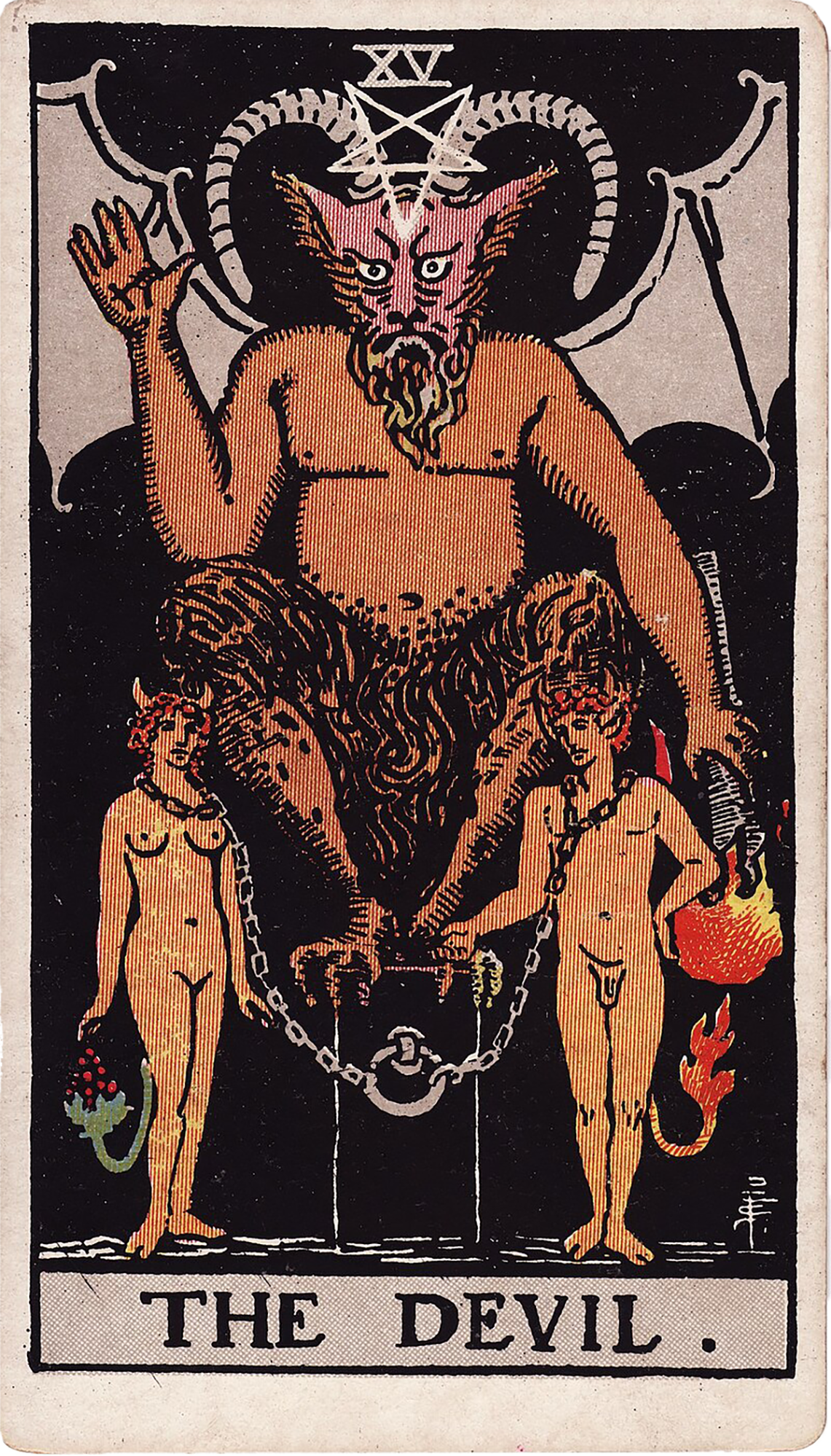 The Devil
Introduction to The Devil Card and Its Symbolism
The Devil card in the Rider-Waite-Smith tarot deck features a horned, humanoid figure perched on a pedestal with two chained figures—typically a man and a woman—bound below him. Traditional symbolism includes the inverted pentagram on the Devil’s forehead, symbolizing distorted spiritual focus, and the chains representing bondage. This imagery evokes themes of entrapment, desire, and illusion. However, The Devil card is not simply a harbinger of doom or evil; instead, it highlights where unhealthy attachments, fears, and compulsions hold sway. Recognizing these patterns is the first step toward transformation. The chains on the figures are often loose enough for them to remove, indicating that their bondage is partly self-imposed or maintained by willful ignorance. The card challenges the reader to confront where pleasure, fear, or denial have become traps rather than liberating forces.
Upright Meaning and Constructive Engagement
When The Devil appears upright, it signals that unhealthy attachments, addictions, or illusions have become visible enough to address consciously. This does not mean the issue will resolve quickly or easily, but it does offer a quality to work with: honest naming of desire and fear, clearer boundaries, and deliberate choice. The upright card encourages the reader to avoid waiting for perfect clarity or external rescue; instead, it suggests taking a next proportional step based on what is currently accessible. For example, in a reading about personal habits, this might mean committing to a boundary or naming a compulsion rather than trying to eliminate it all at once. The upright Devil also asks where gratification or fear has become a form of bondage, inviting reflection on what is truly serving growth versus what maintains limitation or denial.
Reversed Meaning and Breaking Patterns
The Devil reversed directs attention toward breaking free from these patterns, but often the process is incomplete or complicated by denial, shame, or an internal struggle to claim freedom. The reversal is not inherently negative; instead, it points to energy that is blocked, internalized, or being expressed without balance. For instance, a reversed Devil might indicate someone is beginning to see the chains that bind them but has not yet fully loosened or removed them. It can also reflect an internal psychological battle where the person denies their desire or feels shame about it, which can delay transformation. The reversed card invites questions like: Where is resistance or excess blocking change? What part of the bondage is still being recreated unconsciously? In readings, the context and neighboring cards help determine if this is a pause, a step toward recovery, or a sign of internal distortion.
The Devil in Love and Relationships
In love readings, The Devil card highlights unhealthy attachments such as codependency, obsession, or relationships built on fear or material gratification rather than mutual growth. Upright, it suggests recognizing where desire or fear may be driving choices and setting clearer boundaries to avoid entrapment. For example, a person might realize they are staying in a relationship out of fear of loneliness or financial dependence. The card encourages honest communication about needs and limits. Reversed, The Devil can indicate beginning to break free from toxic patterns or denial about relationship dynamics. However, it may also warn of premature declarations of freedom without addressing the root cause, such as jumping into new relationships too quickly or suppressing desire without healing. In either position, the symbolism of the chained figures and the Devil’s commanding presence encourages reflection on autonomy versus control in intimacy.
The Devil in Career and Work Contexts
When The Devil appears in career readings, it often points to unhealthy attachments related to work such as obsession with status, fear of failure, or exploitation—either self-imposed or external. Upright, the card suggests naming these dynamics honestly and considering where clearer boundaries or deliberate choices could improve the situation. For example, a person might be trapped in a job that demands too much at the cost of well-being due to fear of economic instability or social pressure. The card invites working consciously with these realities rather than waiting for external change. Reversed, The Devil can signify beginning to question these patterns, possibly signaling burnout, denial of ambition, or internal resistance to change. The reversal might also indicate a psychological shift where one recognizes the need to reclaim autonomy from toxic workplace dynamics but has not yet fully enacted it.
The Devil’s Role in Financial or Material Matters
In financial readings, The Devil card draws attention to unhealthy attachments to money, possessions, or status symbols that can create bondage. Upright, it encourages honest naming of desires and fears around money, such as compulsive spending, debt, or fear-driven hoarding. The card suggests taking a practical next step that reflects conscious engagement with these patterns, like setting a budget boundary or seeking financial advice. It reminds readers that the bondage is often psychological and self-maintained, symbolized by the loose chains. Reversed, The Devil might reveal denial about financial problems or shame regarding material desires, possibly indicating the beginning of awareness but also resistance or internal conflict. The reversal challenges the reader to examine where distorted beliefs about money are preventing real freedom and to seek balance in financial behavior.
Practical Advice and Challenge Interpretation
As advice, The Devil card invites directness: identify where unhealthy attachments and fears operate, and take reasonable, deliberate steps toward clarity and boundary-setting. It discourages waiting for perfect conditions or external validation and instead promotes working with what is available now. The card asks, 'Where can I be more honest with myself? Where can I say no or yes more clearly?' As a challenge, The Devil highlights the difficulty of confronting deep-rooted patterns that give a false sense of security or gratification. This challenge involves risking discomfort and uncertainty to move toward authentic freedom. Recognizing this challenge prevents common mistakes such as blaming external forces exclusively or overestimating one’s current readiness to break free without gradual steps.
Person Representation and Outcome Reflection
When The Devil represents a person in a reading, it typically describes someone who embodies or triggers unhealthy attachments, control, temptation, or intense desires. This person may be charismatic but also manipulative or bound by their own compulsions, reflecting the Devil’s dual nature as both captor and captive. Recognizing this helps the querent understand relational dynamics without demonizing but with awareness. As an outcome card, The Devil suggests that the situation will bring a clear confrontation with bondage or illusion that requires conscious work. It does not promise easy liberation but indicates that the central issue has surfaced to be actively engaged rather than ignored. The imagery of the chained figures reminds us that freedom is possible but demands conscious effort and honesty.
Spiritual Reflection and Personal Transformation
Spiritually, The Devil card invites deep reflection on the nature of bondage—not as an external evil but as internal patterns of fear, desire, and denial that obscure true freedom. The upside-down pentagram and chained figures symbolize distorted priorities and self-imposed limitations. The card encourages recognizing these shadows honestly as a path to transformation. Rather than demonizing parts of oneself, it asks the seeker to claim all aspects, including shadow desires and fears, to integrate and transcend them. This process is often gradual and non-linear, involving moments of recognition (upright) and breaking or resistance (reversed). Through this lens, The Devil becomes a teacher of liberation through self-awareness and deliberate choice rather than a symbol of condemnation.
Common Mistakes and Effective Reading Techniques
A common mistake when interpreting The Devil card is assuming it predicts disaster or moral failure. Instead, it should be seen as a prompt to examine where attachments and fears shape behavior. Another error is ignoring the card’s invitation to engage with present circumstances consciously, waiting instead for external change or certainty. Effective reading techniques include grounding the interpretation in the card’s imagery—such as the loose chains, the posture of the figures, and the Devil’s expression—and asking practical questions about boundaries, desires, and fears. Readers should also consider the card’s position in the spread and neighboring cards to determine if the Devil’s energy is being resisted, integrated, or distorted. Encouraging querents to reflect on specific behaviors or feelings related to the card’s themes fosters insight and transformation.
Practice questions
• Where in my life am I experiencing attachments that feel limiting or unhealthy?
• What desires or fears might I be avoiding naming honestly?
• How do I currently respond to situations where gratification or fear creates a sense of bondage?
• What small, deliberate step can I take now to set clearer boundaries or choices?
• Where might I be denying or shaming parts of myself related to The Devil’s symbolism?
• How do I distinguish between true freedom and illusions of freedom in my personal patterns?
• In what ways might I be recreating the same limiting attachments unconsciously?
Comments
Sign in to comment.
Continue learning
Interpreting the Dance of Justice and The Devil: Balancing Morality and Temptation in Tarot Readings
The combination of Justice and The Devil in tarot presents a profound exploration of morality, temptation, and personal accountability. This article unpacks how these cards influen...
Understanding The Devil Card in Overcoming Addictions and Finding Personal Freedom
The Devil card, often misunderstood as purely negative, offers profound insights into addiction, bondage, and personal empowerment when approached with awareness. This article unpa...
Using the Five Card Cross Spread to Navigate Ethical Dilemmas with Confidence
The Five Card Cross spread is a practical and versatile tool for exploring complex ethical dilemmas and making confident decisions. This article guides learners through each positi...
Mastering Dual Interpretations with The Hanged Man and The Devil in Tarot Readings
This article guides tarot learners through mastering the dual interpretations of The Hanged Man and The Devil cards. Using traditional Rider-Waite-Smith symbolism and supplied card...
Unlocking the Dynamics of The Devil and The Tower for Facing Life's Challenges
This article delves into the rich and complex relationship between The Devil and The Tower tarot cards as a powerful combination for navigating significant life challenges. By grou...
Understanding the Devil Card in Overcoming Personal Shadows and Temptations
The Devil card in the Tarot deck is often misunderstood as a simple symbol of evil or misfortune. However, its true power lies in illuminating unconscious bonds, desires, and fears...
Unlocking Emotional Healing and Hope with The Star and The Devil Tarot Combination
This article delves into the powerful card combination of The Star and The Devil from the Rider-Waite-Smith tarot deck, revealing how their symbolic interplay unlocks pathways to e...
Understanding the Multifaceted Role of The Devil in Overcoming Inner Blocks and Personal Growth
The Devil tarot card holds deep lessons about unhealthy attachments, fear, and desire that can both block and catalyze personal growth. This article explores The Devil’s upright an...
Exploring The Devil Card in Overcoming Inner Blocks and Embracing Personal Freedom
The Devil card in tarot embodies complex themes of attachment, desire, fear, and bondage. This article examines how The Devil’s upright and reversed positions provide deep insights...
Understanding The Devil Card in Overcoming Inner Blocks and Personal Growth
The Devil card in Tarot is often misunderstood as a purely negative omen, but in truth, it offers profound insights into the nature of inner bondage, unhealthy attachments, and the...