
Using Court Card Dialogues to Resolve Conflicting Inner Voices
Court cards can function as distinct inner voices—energetic, emotional and intellectual—and conducting a structured dialogue among them helps surface hidden needs, negotiate compromises and create actionable resolutions. Anchored to the Page of Wands, Queen of Cups and King of Swords, this article explains technique, reading layouts, interpretation logic tied to Rider–Waite–Smith imagery, handling reversals, common mistakes and practical integration exercises for learners.
Cards explored in this article
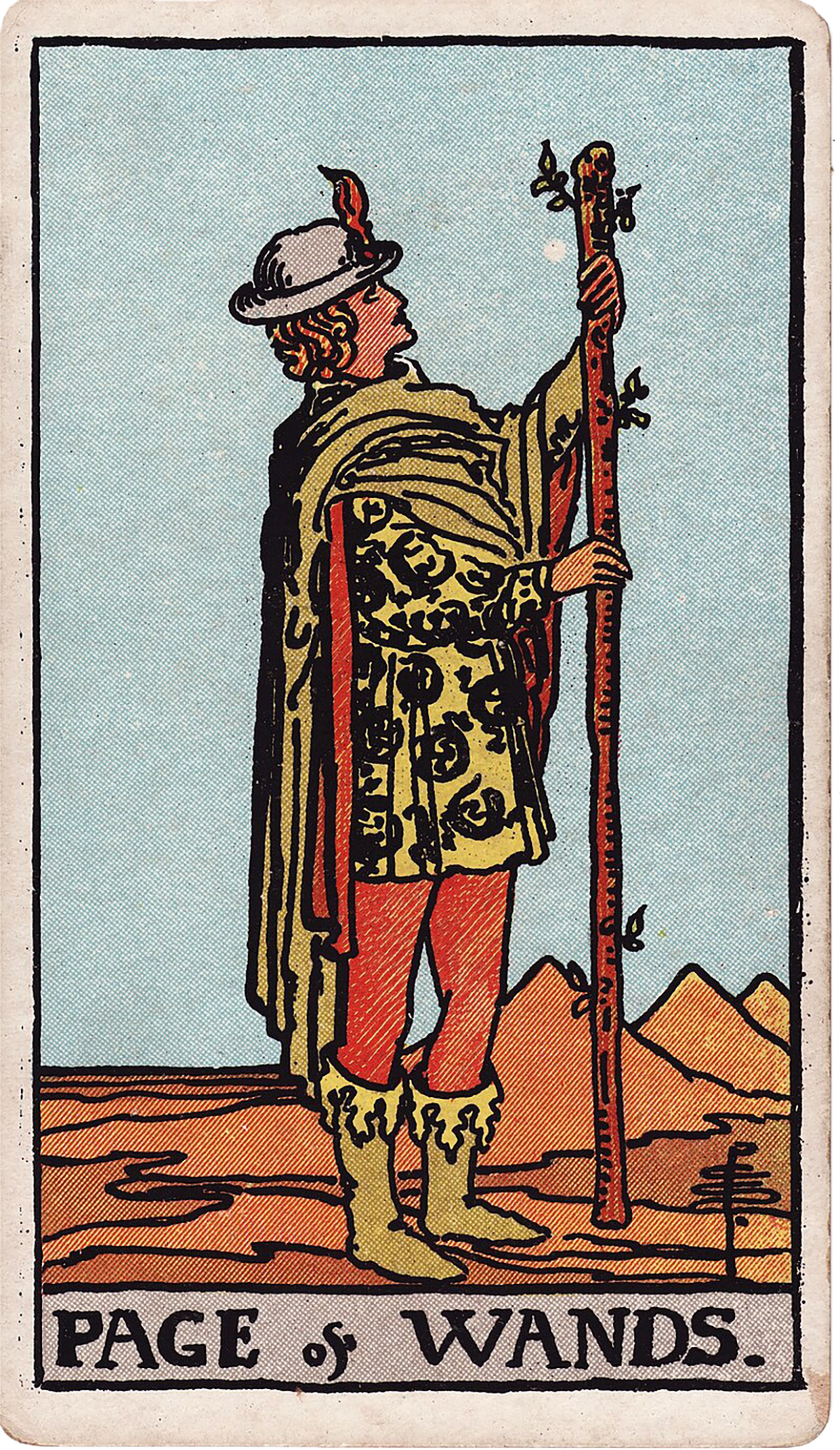 Page of Wands
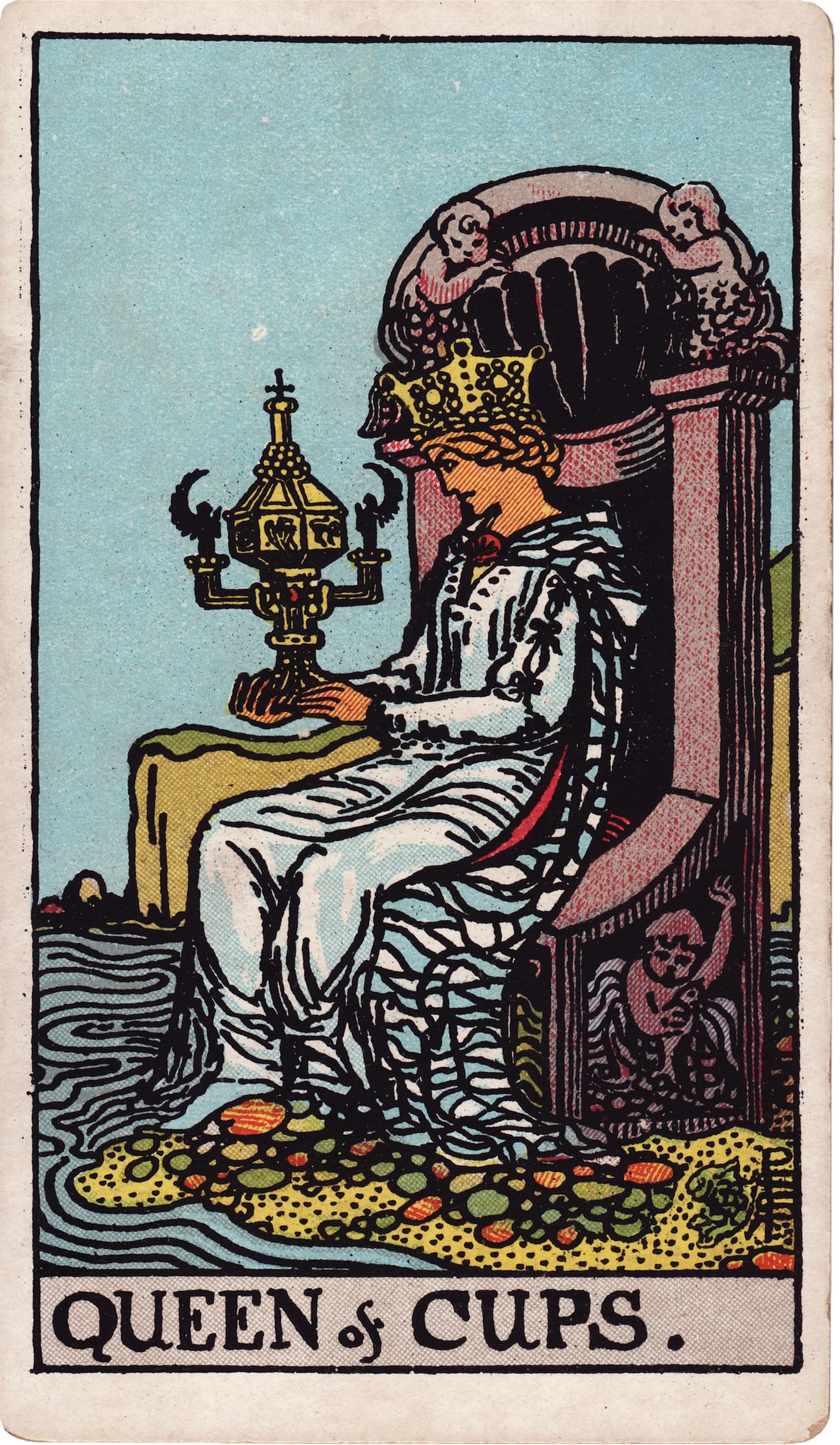 Queen of Cups
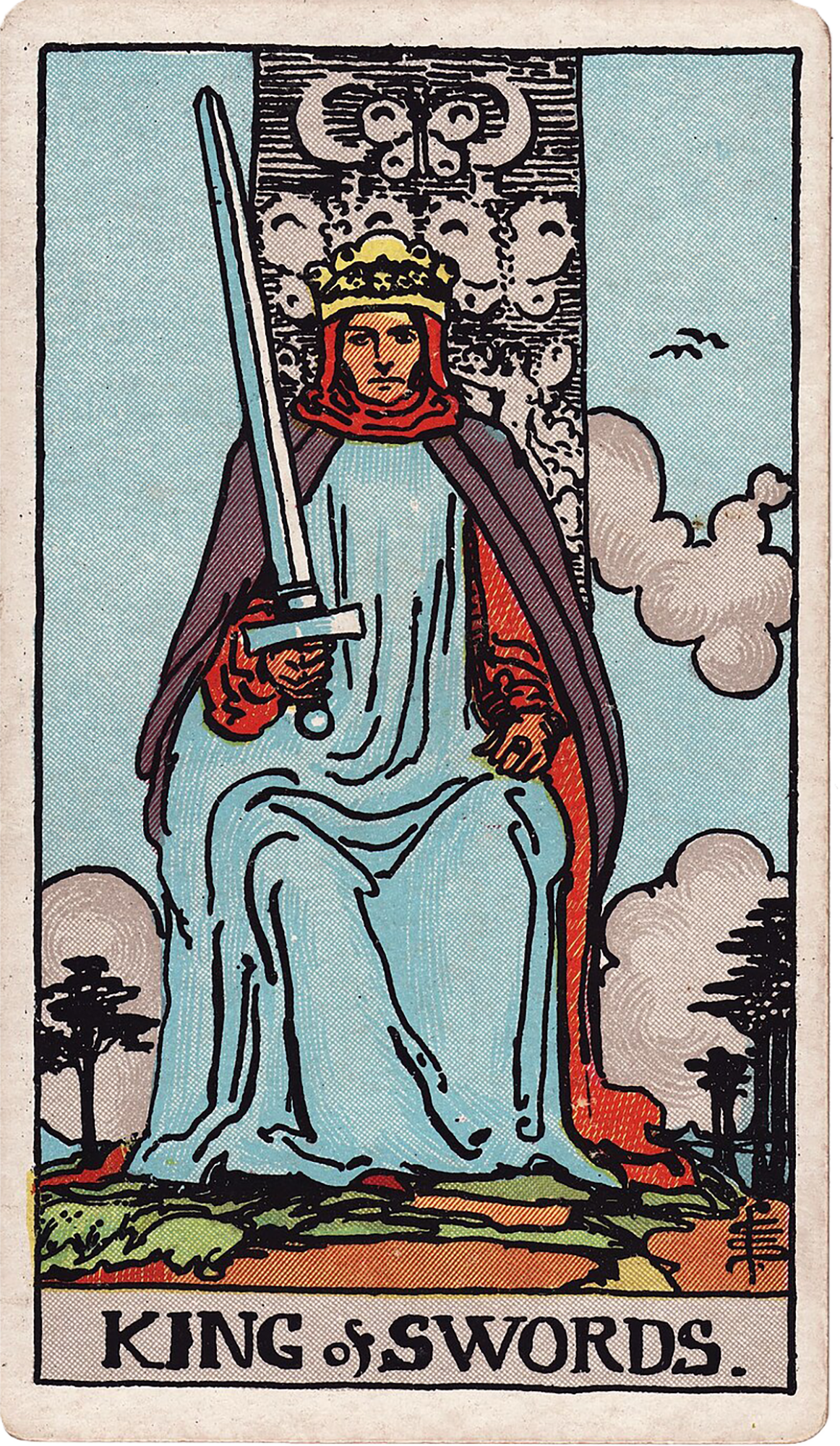 King of Swords
Introduction: Why use court card dialogues for inner conflict
Court cards are especially well suited to working with inner voices because they present personality-styled archetypes rather than abstract forces. When you see a Page, Queen or King in a spread, you are often being invited to notice a mode of relatedness — a way of acting, feeling or thinking — that is active in the situation. Using court card dialogues means deliberately treating each court card as a distinct voice in your internal family: someone with motives, strengths and blind spots. The technique is not fortune-telling; it is a reflective method that borrows archetypal clarity from the cards to help you name, listen to and negotiate among conflicting priorities. In this article we anchor the practice repeatedly to three specific, supplied court cards: Page of Wands, Queen of Cups and King of Swords. Each will act as a guest in the internal conversation so you can see how the imagery and traditional meanings guide interpretation and practical outcomes.
Court cards as inner voices: suit and rank in interpretive logic
To use court cards as voices you need two interpretive habits: attend to the suit for functional skill, and to the rank for maturity/role. Suits: Wands = fire and identity (initiative, creativity, how energy is directed); Cups = emotion and relating (feelings, receptivity, memory); Swords = thought and communication (judgment, conflict, truth). Ranks: Pages often speak as learners, messengers, initiators or nascent impulses; Queens embody mature, receptive or expressive interior skill; Kings represent authority, strategy and public-facing decision. When the Page of Wands, Queen of Cups and King of Swords appear together, the interpretive logic is immediate: you have a youthful or nascent fire impulse, a mature emotional container, and a formal, principled intellect. The questions that follow are: what does the Page want to try, what does the Queen feel needs tending, and what does the King judge must be decided? The Rider–Waite–Smith imagery reinforces these roles: the Page of Wands stands in a desert holding a sprouting wand — a clear symbol of beginning, curiosity and drive that is still untested; the Queen of Cups sits at the water's edge on a throne, cradling a closed cup — the image of contained empathy and careful intuition; the King of Swords sits upright with his sword planted vertically, a visual shorthand for clarity, law-like principle and structured thought.
Technique overview: setting up a court card dialogue
This is a practical, repeatable method you can use with a single reading or as a daily reflective practice. Required: the three supplied cards (Page of Wands, Queen of Cups, King of Swords) physically or mentally present, a quiet space, journal and 20–45 minutes. Option A — draw and assign: shuffle and draw three court cards for a single issue, then assign them to positions (Voice of Initiative, Voice of Heart, Voice of Mind). Option B — choose anchored set: use the supplied trio as archetypal voices even if your spread includes other cards. For our teaching example we will use a three-position layout: 1) The Page of Wands — What wants to begin or be tried? 2) The Queen of Cups — What needs to be felt, held or received? 3) The King of Swords — What must be decided, disciplined or clarified? Prepare by briefly noting the situation you want to work on in one sentence. The structure of the dialogue uses three moves: Inquiry (ask each voice what it wants or fears), Response (allow other voices to react), and Negotiation (agree on an action plan or boundary). Use the imagery-based prompts below to keep the voices faithful to RWS symbolism.
Imagery-based prompts: listening with the Page of Wands, Queen of Cups and King of Swords
Working from the images helps keep the voices specific and honest. For the Page of Wands: look at the youth standing against the open, often barren landscape, holding a sprouting wand. Ask: Where are you curious? What experiment would feel possible even if it is small? What are you afraid of appearing inexperienced about? Remember that upright Page energy is beginner curiosity and practical invitation to act; reversed it draws attention to immaturity, inconsistency or fear of trying. For the Queen of Cups: observe her throne by the sea, the closed cup, the gentle posture. Ask: What needs safe containment? What feelings need naming or compassionate listening? Is there a habit of absorbing others’ moods? The upright Queen offers mature receptivity and intuition; reversed signals emotional overwhelm, boundary erosion or confusion between intuition and anxiety. For the King of Swords: notice the planted sword, his clear gaze and authoritative posture. Ask: What principle must be upheld? What decision needs a clear standard? How do we avoid cold detachment or manipulation? Upright King energy supplies strategic judgment rooted in evidence and principle; reversed warns of arrogance, cruelty or treating people as problems rather than participants. Keep these prompts accessible and literal: the Page speaks of a new idea or trial, the Queen speaks of feelings and containment, the King speaks of rules, limits and consequences.
Step-by-step reading method with dialogue script
1) Place the cards in a triangle or line labeled clearly: Page of Wands — 'Initiative', Queen of Cups — 'Heart', King of Swords — 'Mind'. 2) State the issue aloud in one sentence. 3) Begin Inquiry Round: Invite each card to speak in the first person and answer three short prompts (60–90 seconds each): a) What do I want? b) What do I fear? c) What do I need to feel safe or effective? Use the imagery prompts as a guide to keep answers aligned with the card's suit/rank. 4) Response Round: After each voice answers, give each of the other voices 30–60 seconds to respond. For example, after the Page says what it wants, the Queen can say how that makes her feel; the King can say whether it meets his standards. Keep responses grounded in the card's role (Queen speaks compassionately but with boundaries, King speaks with criteria and consequences). 5) Negotiation Round: Ask the three voices to propose one practical step each that would move the situation forward within the next week. Encourage specificity: the Page might propose 'try a 15-minute prototype', the Queen might ask for 'a daily 5-minute check-in to name emotions', the King might demand 'set a deadline and a single metric for evaluating the trial'. 6) Integration: Journal the three steps, note conflicts, and craft a combined action plan that respects safety (Queen), experimentation (Page) and clarity (King). If necessary, reassign tasks: the Page tests, the Queen monitors emotional impact, the King evaluates outcome.
Example reading: a practical case anchored to the supplied cards
Scenario: You feel pulled between wanting to start a creative project, worrying about emotional overwhelm, and needing to make a clear decision about time commitments. Card positions: Page of Wands — wants to begin; Queen of Cups — wants emotional safety; King of Swords — wants a decision with standards. Imagined dialogue, using Rider–Waite–Smith cues: Page (excited, looking at the sprout on the wand) says, 'I want to sketch and experiment for an hour every morning. I’m afraid I’ll look silly or waste time.' Queen (hands on closed cup, listening to tides) replies, 'I feel tender and need not to be forced; I ask for a gentle plan that won't trigger overwhelm. I fear being swept by every mood into starting and stopping.' King (sword upright, measured) answers, 'I require a clear criterion: three sketches in two weeks to evaluate whether to continue. If they are not happening, we stop for review.' Negotiation yields three concrete steps: Page will do 15-minute sketches on three mornings this week; Queen will schedule a 5-minute emotional check-in after each session to notice overwhelm; King will set a 14-day review with objective count and a decision-tree: continue, adapt schedule, or pause. The action plan respects the Page's need to try, the Queen's need for containment and the King’s need for structure. Because the Page's imagery indicates a beginner stage, we kept tasks small; because the Queen's closed cup suggests careful inner listening, we added short emotional check-ins; because the King's sword signals decisive evaluation, we insisted on an objective metric.
Working with reversals and 'stuck' processes
Reversals in the supplied card contexts signal that the energy is either excessive, deficient or stuck internally. Page of Wands reversed points to immaturity or all excitement and no follow-through; ask what needs simplification, practice or honest acknowledgement. If the Page appears reversed in your dialogue, you can give it a homework clause: 'You may experiment but must report three small outcomes to the King and one emotional note to the Queen.' Queen of Cups reversed highlights overwhelm or boundary loss; when she appears flipped, have her specify the boundary she needs and let the King draft it. A common misstep is to treat the reversal as the exact opposite of upright; instead, ask, 'Where is this pattern stuck?' For example, a reversed Queen might still be highly empathic but lacking containment; the negotiated task could be to create a physical ritual (a closed cup ritual, brief breathing practice) that restores the container. King of Swords reversed warns against coldness or intellectual arrogance. If he is reversed, insist that his judgments pass a ‘humane test’ administered by the Queen: Does this policy preserve dignity? If not, the King must revise with humility. Across all reversals, useful corrective moves include scaling tasks down, adding specific accountability, and naming emotional consequences in a nonjudgmental way.
Common mistakes and how to avoid them
1) Forcing cards to fit a pre-existing narrative: The cards should reveal perspectives, not justify decisions you already made. Avoid confirmation bias by inviting surprising answers. 2) Moralizing voices: Don’t let the King of Swords become a tyrant who 'shoulds' the other voices. If judgment dominates, ask for evidence and humane impact. 3) Ignoring rank and suit: Treating the Page like a King or the Queen like a passive ornament weakens the method. Use suit and rank distinctions to keep voices credible. 4) Neglecting the imagery: The Rider–Waite–Smith details are purposeful; the Page’s desert, the Queen’s closed cup, the King’s planted sword each suggest particular temperaments and constraints. Use those cues. 5) Overcomplicating steps: Keep negotiations practical and time-limited. The Page benefits from short trials; the Queen from bounded reflective practices; the King from clear criteria. 6) Failing to integrate: A dialogue without a written plan forgets its outcomes. Always end with a concrete plan and a scheduled review.
Integration practices: carrying the dialogue into daily life
A single dialogue can generate an actionable routine. Use short, repeatable practices tied to each court role. For the Page of Wands: micro-experiments — five to fifteen minute sprints that privilege curiosity over perfection. Log outcomes briefly. For the Queen of Cups: a daily emotional inventory using three prompts: 'What I felt, what I needed, one self-compassion phrase.' Keep it two to five minutes. For the King of Swords: create evaluation criteria and a weekly decision time — set one measurable metric and a yes/no threshold. Combine these into a simple weekly template: three micro-experiments (Page), daily two-sentence check-ins (Queen), and a weekly 15-minute review (King). Use the images as anchors: glance at the Page’s sprouting wand to remind yourself to begin, touch a closed cup or imagine it to create containment, and take a breath while visualizing the King’s sword before making a judgment. Over time the practice trains each internal voice to operate in its proper capacity rather than overstepping.
Advanced variations and extensions
Once comfortable with the basic triadic dialogue, try these extensions. 1) Expanded cast: Keep the same method but invite additional court cards if they appear in a broader spread (still restrict yourself to cards supplied if you are anchoring to a set). 2) Time-lining: Ask each voice to speak for different time horizons — immediate action (Page, next week), emotional safety (Queen, ongoing habit), and long-term governance (King, quarterly review). 3) Written role-play: Write three letters from each voice to the others and then write a joint policy statement. 4) Somatic anchoring: Combine each voice with a movement or breath pattern to integrate feelings and decisions into the body. 5) Group facilitation: Use the method in a counseling or coaching setting by inviting the client to embody each voice aloud, or by using puppets/objects for externalization. Always remember that court card dialogues are a reflective tool, not a substitute for professional mental health care when issues are severe.
Conclusion: what this dialogue offers learners
Using court card dialogues with the Page of Wands, Queen of Cups and King of Swords gives learners a repeatable, image-grounded method to make inner conflict productive. The Page supplies the impulse to try and experiment; the Queen provides a compassionate container and attention to emotional impact; the King offers criteria, structure and evaluation. When these voices are given space to speak in their appropriate capacities, inner conflict often shifts into negotiation and experiment rather than stalemate. Anchor your practice in the cards' Rider–Waite–Smith imagery — the sprouting wand, the closed cup, the vertical sword — and treat reversals as prompts for what is stuck rather than as moral failings. With clear questions, short practical steps and a scheduled review, this technique helps transform competing impulses into a coordinated plan you can test and revise.
Practice questions
• Which of the three supplied voices — Page of Wands, Queen of Cups or King of Swords — speaks most loudly in your day-to-day decisions, and how does that show up?
• When the Page of Wands wants to try something new, what is the smallest possible experiment you could permit while satisfying the King of Swords’ need for clarity and the Queen of Cups’ need for containment?
• If the Queen of Cups feels overwhelmed, what explicit boundary could the King of Swords draft that still preserves compassion?
• Describe a past decision where the King of Swords dominated and later caused regret. How would including the Page’s curiosity or the Queen’s receptivity have changed the outcome?
• After a dialogue, what specific metric will you use to evaluate the Page’s experiment, and who will check emotional wellbeing during that trial?
Comments
Sign in to comment.
Continue learning
Navigating Conflict Resolution and Inner Struggles with the Five Card Cross Tarot Spread
This article delves into the Five Card Cross Tarot Spread as a practical tool for navigating conflict resolution and inner struggles, especially within family contexts. Using the s...
Mastering the Court Cards of Wands for Unlocking Personal Drive and Leadership
The Court Cards of Wands represent a dynamic spectrum of personal energy, ambition, and leadership potential within the Minor Arcana. This article offers a comprehensive exploratio...
Unlocking Leadership Styles Through the Court Cards of Wands
The Wands court cards—Page, Knight, Queen, and King—offer a rich spectrum of leadership styles rooted in the fiery energy of motivation, creativity, and initiative. This article de...
Understanding the Personalities and Roles of Knight Queen and King of Swords in Tarot
This article delves into the unique characteristics and roles of the Knight, Queen, and King of Swords within the Tarot Minor Arcana, focusing on the family suit and court card les...
Unlocking the Energies of the King Queen and Knight of Cups for Emotional Intelligence
This article delves into the King, Queen, and Knight of Cups from the Minor Arcana's family Suit and Court Cards, emphasizing how these archetypes embody stages and expressions of...
Unlocking Personality Traits Through the Court Cards of Pentacles
This article delves into the personality traits and life lessons embodied by the court cards of Pentacles: Page, Knight, Queen, and King. Grounded in the practical symbolism of the...
Unlocking the Leadership Styles of the King Queen and Knight of Pentacles
This article delves deep into the leadership styles embodied by the King, Queen, and Knight of Pentacles within the Minor Arcana, focusing on the family Suit of Pentacles and its C...
Unlocking the Personality Traits and Roles of the Knight Queen and King of Pentacles in Tarot
This article offers an in-depth exploration of the Knight, Queen, and King of Pentacles cards in the Minor Arcana, focusing on their personality traits, roles, and lessons within t...
Understanding the Court Cards of Pentacles for Practical Wisdom and Grounded Ambition
The Court Cards of Pentacles—Page, Knight, Queen, and King—offer a rich framework for understanding practical wisdom, grounded ambition, and stewardship of material resources. Anch...
Unlocking Personality and Leadership Qualities with the King Queen and Knight of Pentacles
This article delves into the King, Queen, and Knight of Pentacles court cards within the Minor Arcana, focusing on their symbolism of personality traits and leadership within the f...